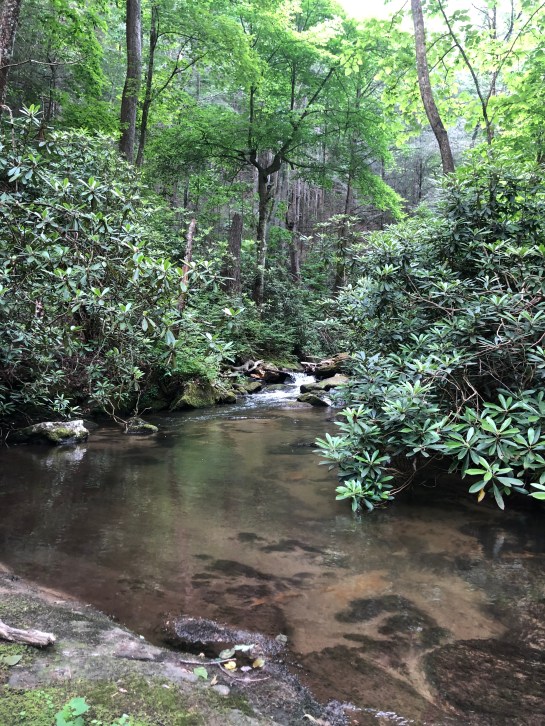
Early this summer we took a family trip to my parent’s cabin in North Georgia to escape all the COVID mess. It’s easy to keep your distance from other people up that way. We had a great time with my parents, getting the kids outside, hiking in the mountains, and just taking in a different environment than they are used to down here. We are bonafide flatlanders. I was also able to fish a bit on the creek at the cabin and even managed a trip to a blueline one day to fish with a couple of buddies from Alabama.
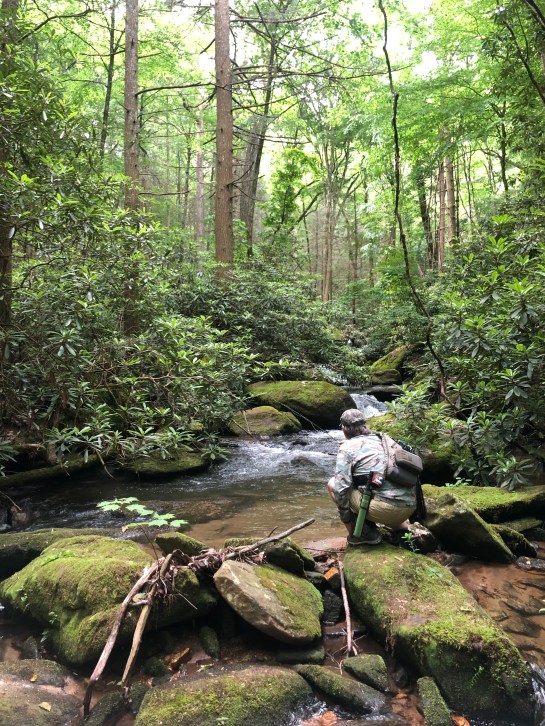
We met up at the creek early in the morning, but not too early. Sunrise had happened already so I was able to see the fog, on the drive, as it hung around, clinging to the sides of the mountains.
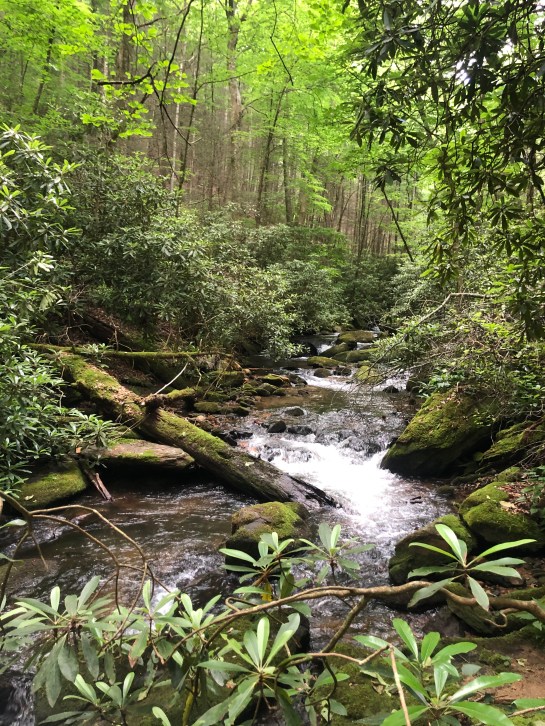
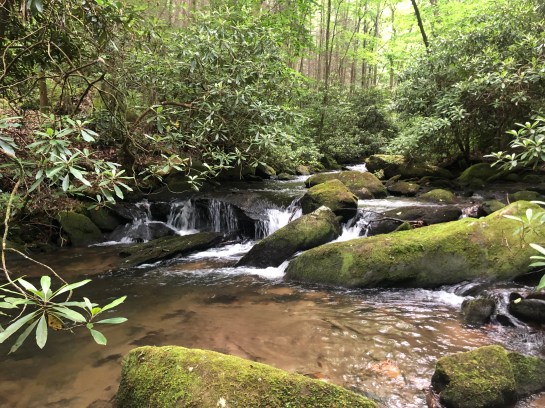
I met up with Mark and James, guys I have had the pleasure of fishing with in the past, though I don’t recall that we’ve ever hit a blueline in Georgia together. We hit a favorite creek of mine which requires a short hike in and depending on the amount of time you want to spend on the trail you may even make it into brookie country. I always approach it with the hope that I catch all three wild trout species in Georgia, but rarely does it happen. Wild Georgia brown trout tend to be pretty elusive for me.
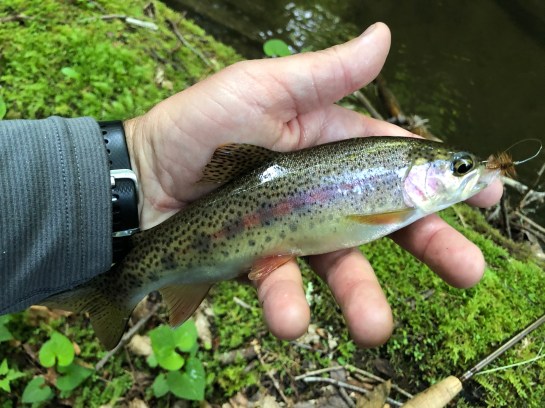
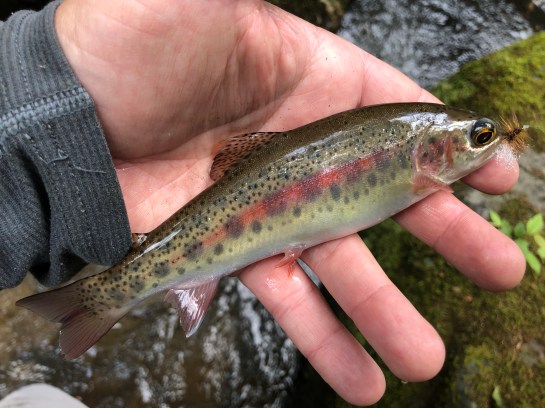
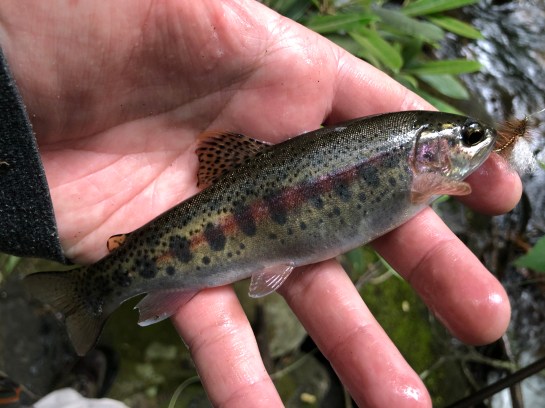
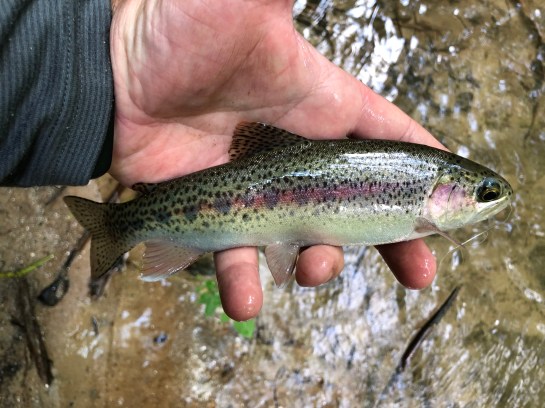
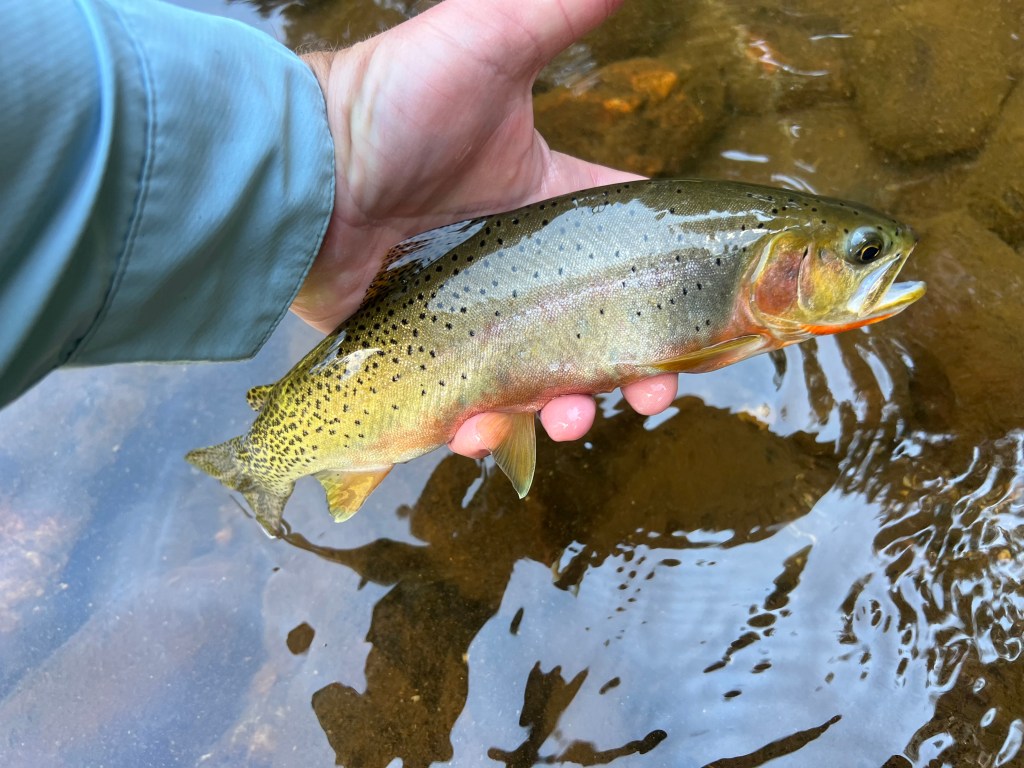
It didn’t take long to catch fish, wild rainbows. I had a sparkle trude pattern on that I could see well on the water and it proved effective all day.
Lots of fish were caught between the three of us as we fished up the creek alternating shots at the best looking water.
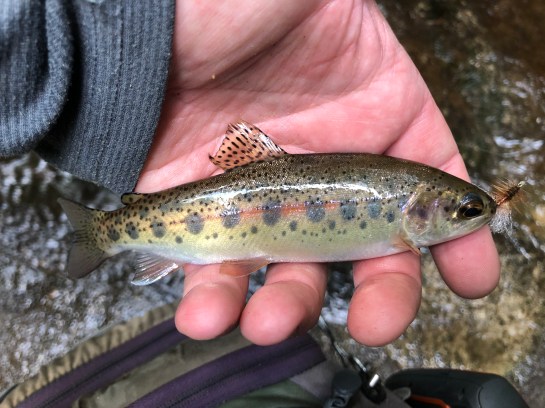
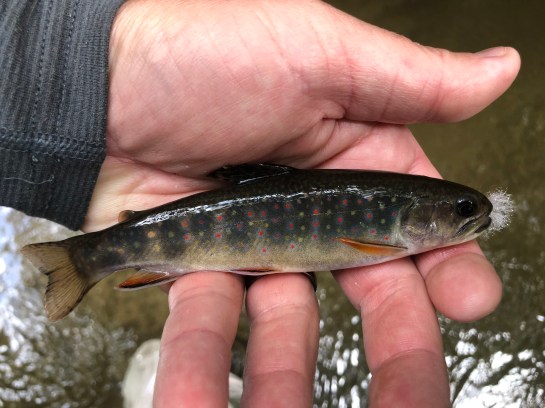
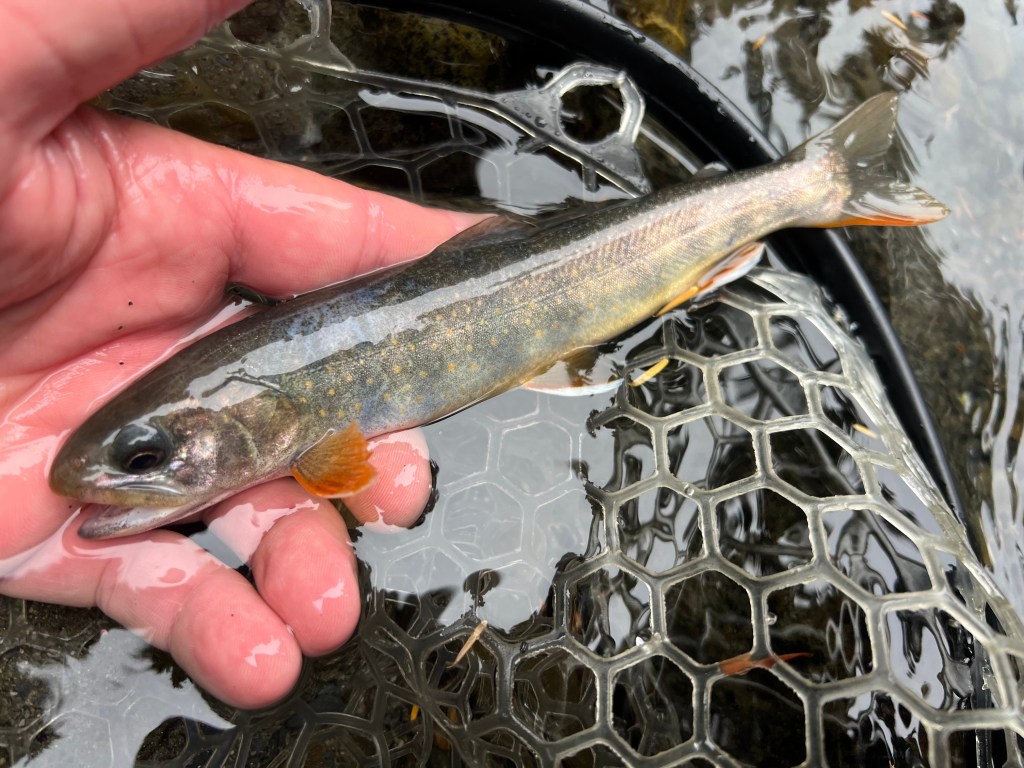
Eventually I lucked up a caught a brookie. Lower in elevation than where I thought it would be, but I’m not complaining. Love the natives.
I caught a second brookie later, both were mixed in with the rainbows indicating to me that I was still below a barrier falls. They were pleasant surprises on the day.
Something cool happened to us on the hike out. We spooked a turkey hen that had three little chicks with it. It was bedded down on the trail and I think both parties were equally shocked to be in such close contact with each other. That hen moved up the hillside into the woods, leaving the chicks behind, and followed us as we hiked for what seemed like forever, making a racket the whole time. All I could think was that she was trying to distract us and protect her babies, it was wild.
It was a great day outside, catching wild trout on dries, can’t wait to do it again.
The salmonids are in family Salmonidae, which has 10-11 genera that is divided into 3 subfamilies; Coregoninae(whitefish), Thymallinae(grayling), and Salmoninae(char/trout/salmon). Living in the Southeast you have access to a very limited amount of salmonids and I’ve caught the 3 that occur in Georgia. The brook trout is the only native trout species in Georgia and it is actually a char.
Updated, December 2025: I made my first trip out West in September of 2012 to Colorado and caught several “greenback” cutthroat trout in Rocky Mountain National Park – or what were considered greenback trout at the time. Made another trip out West in August of 2013 to Teton and Yellowstone National Parks where I picked up another cutthroat species and mountain whitefish. In August of 2015 I was able to complete the Wyoming Cutt Slam, picking up Wyoming’s four native cutthroat species (they do have a fifth, the Westslope, that is not required for the slam). In July of 2017 I completed the Utah cutthroat slam, which didn’t necessarily add any new species to the list, but I was able to add Bonneville cutthroat outside of the Bear River drainage and Bear River cutthroat, which some consider genetically distinct. In June of 2021 I made it out to Arizona and New Mexico to catch Apache and Gila trout in their native range. In August of 2022 I made it up to northern Idaho and caught several Westslope cutthroat in their native range. In July of 2023 I made a northern New Mexico/southern Colorado trip and caught lots of Rio Grande cutthroat in their native range. Finally, in August of 2025 I made it out to the Olympic peninsula of Washington and caught coastal rainbow trout in their native range, coastal cutthroat, southern Dolly Varden, as well as the genetically distinct Lake Crescent cutthroat trout.
Dr. Robert Behnke is the man when it comes to salmonid knowledge. Pick up his book if you want to learn more about this particular family, “Trout and Salmon of North America”. Another great resource is Gary Marston’s Native Trout Fly Fishing blog, he has a Trout and Salmon species page with pictures and information of all those that he has caught (which may be all that are found in the U.S.). Gary’s trip reports are a good read as well, he has had some epic road trips to catch trout in their native range.
Trout found in the Southeastern United States
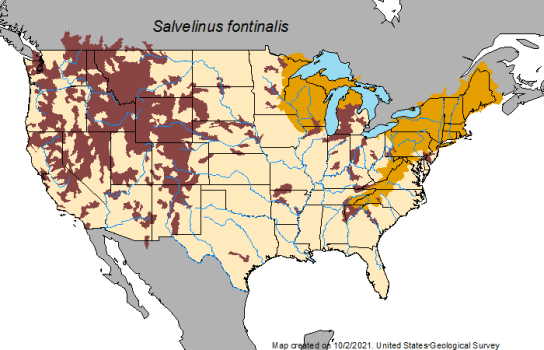
Salvelinus fontinalis – Brook trout
Brook trout are the first native trout species I ever encountered as they do live in Georgia.
Salmo trutta – Brown trout
Brown trout are not native to North America.
Oncorhynchus mykiss – Rainbow trout
The first trout species I ever caught, happy to say that I have now caught them in their native range too!
According to Wikipedia, the coastal cutthroat trout occurs in four distinct forms. A semi-anadromous or sea-run form is the most well known. Freshwater forms occur in both large and small rivers and streams and lake environments – pictured above is the stream resident freshwater form. The historic native range of the coastal cutthroat trout extends south from the southern coastline of the Kenai Peninsula in Alaska to the Eel River basin in Northern California.
Oncorhynchus clarkii clarkii crescentii – Coastal cutthroat trout – Lake Crescent form
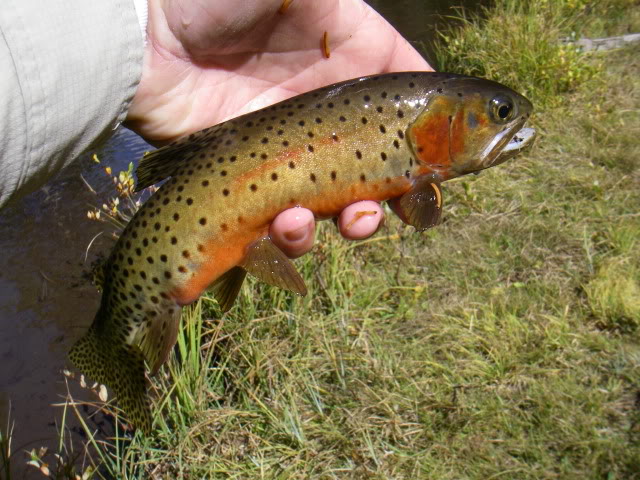
At the time this fish was considered a greenback, but it’s more likely that it isn’t after genetic research determined that the true greenback was limited to only one stream, outside of it’s native range, in Colorado. Work has been done to re-establish populations throughout it’s native range and hopefully I’ll have the opportunity to fish for a true greenback cutt. Their historic range is pretty much in the state of Colorado on the Front Range, with some watersheds slipping into Wyoming. They are found in the headwaters streams of the South Platte and Arkansas River drainages.
Oncorhynchus clarki pleuriticus – Colorado River cutthroat trout
Their historic range is headwaters streams in the Green and Colorado Rivers, as far south as the San Juan River, west of the Continental Divide. They are currently limited to a few small headwater streams of the Green and upper Colorado rivers in Colorado, Utah, and Wyoming, including the Escalante River drainage in southern Utah.
Oncorhynchus clarkii virginalis – Rio Grande cutthroat trout
Their historic range is headwater streams in the Pecos and Rio Grande watersheds in Colorado and New Mexico.
They are found in the headwaters streams of the Bear River. No range map was given from NatureServe or the USGS for the Bear River cutthroat trout, but they are native to the Bear River and it’s tributaries, including Bear Lake.
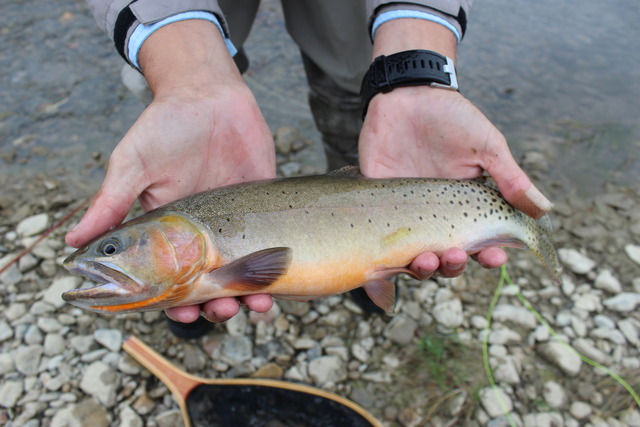
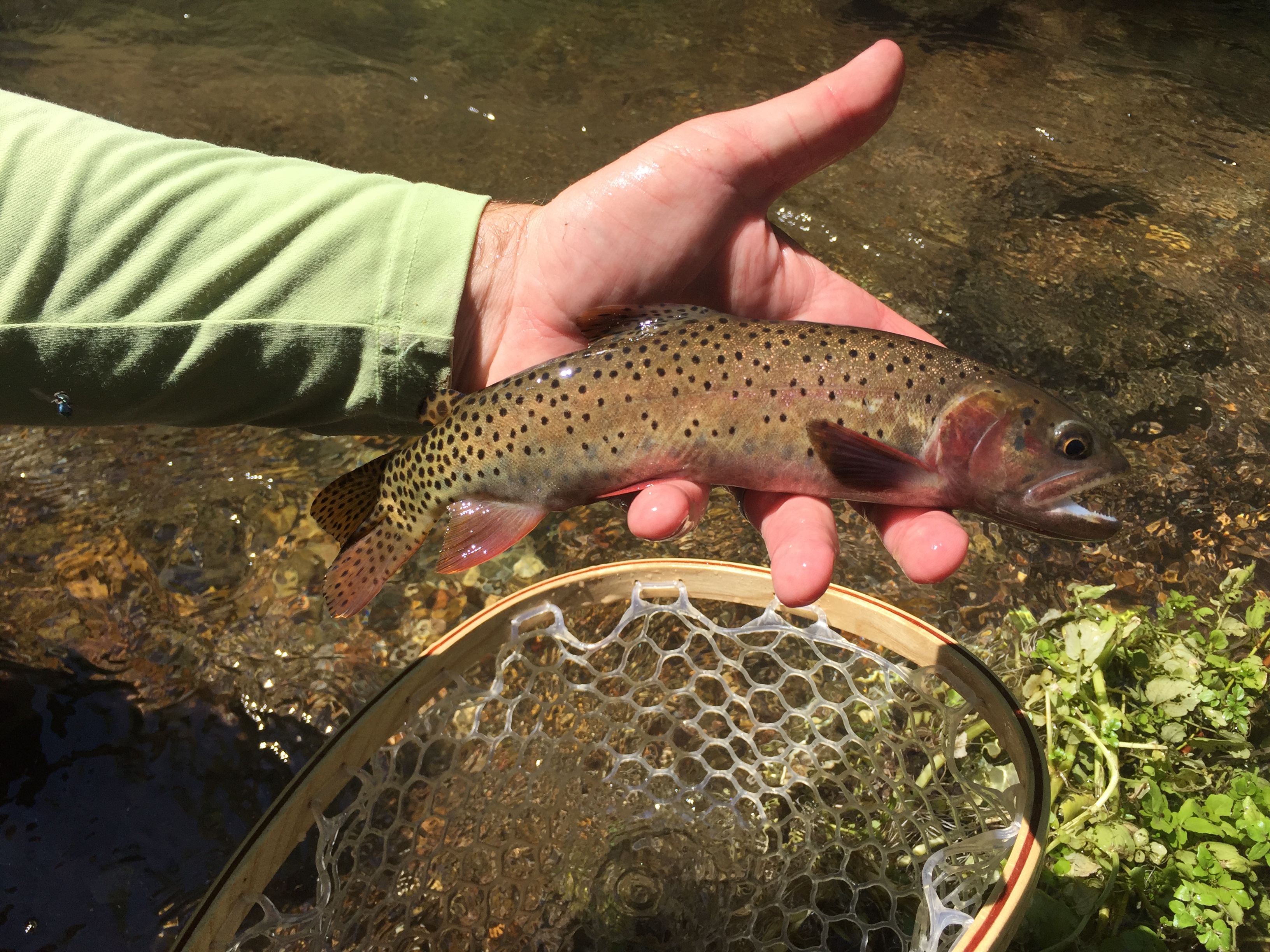
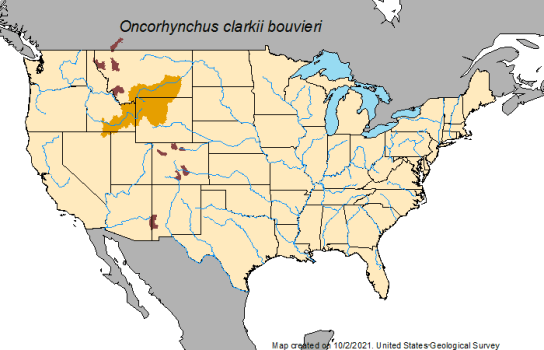
Their historic range is the Yellowstone River drainage in Montana and Wyoming and the Snake River drainage in Wyoming and Idaho. Their current range overlaps with that of the Finespot in the Snake River drainage above Shoshone Falls.
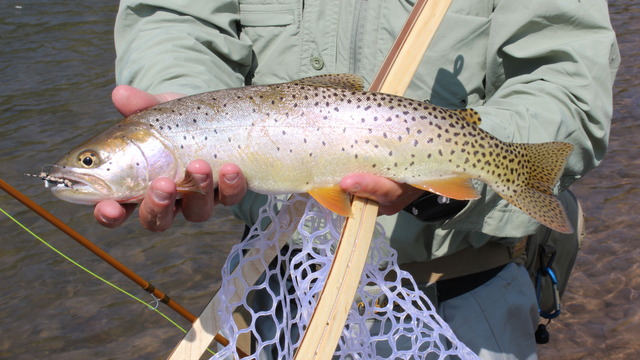
Oncorhynchus clarkii behnkei – Finespotted Snake River cutthroat trout
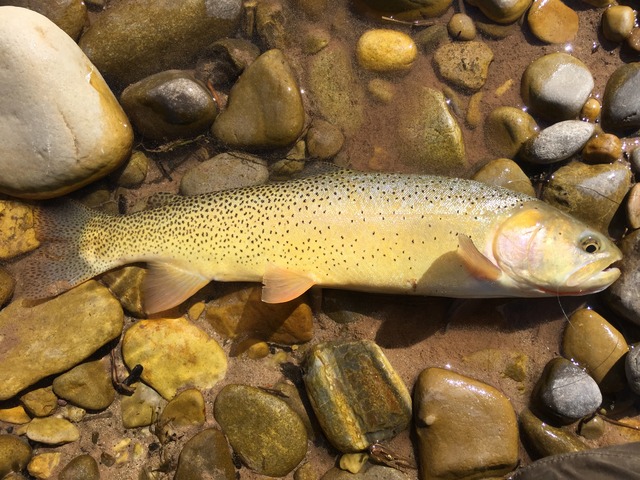
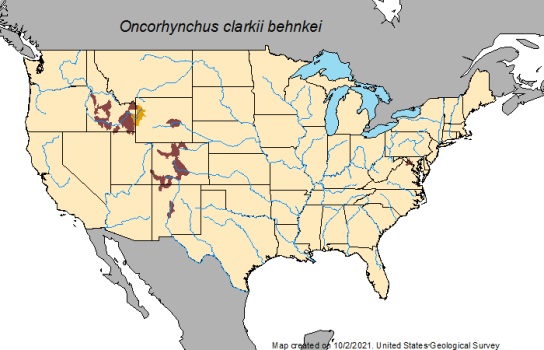
Their historic range overlaps the Yellowstone cutt in the states of Wyoming and Idaho. They are found in the headwaters streams of the Snake River, particularly the South Fork.
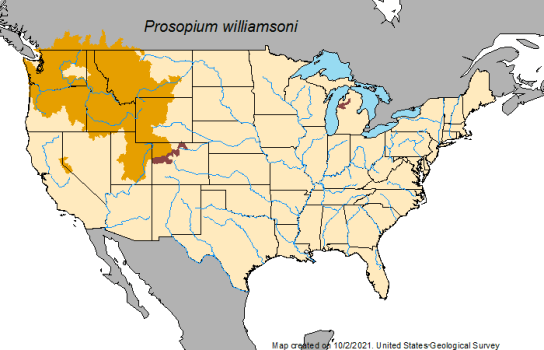
According to Wikipedia, Westslope cutthroat trout are native in northern Idaho’s and British Columbia’s upper Columbia River system and northern tributaries of the Snake River. East of the Continental Divide in Alberta and Montana, Westslope cutthroat trout are native to the upper Missouri, Milk and North Saskatchewan rivers. In Montana, the historic range extended east to the mouth of the Judith River and south into the Madison, Gallatin and Jefferson river systems. Isolated populations of Westslope cutthroat trout exist in upper tributaries of the John Day River in the Strawberry Mountains of Oregon and Columbia River tributaries along the eastern side of the Cascade Range in Washington. Isolated populations exist in the Fraser River basin in British Columbia.
Other Native Salmonids
Salvelinus malma – Southern Dolly Varden
According to Gary Marston, the Southern subspecies of Dolly Varden are native to coastal watersheds from the Susitna River, Alaska south to the Quinault River, Washington.























 Mountains to Marsh