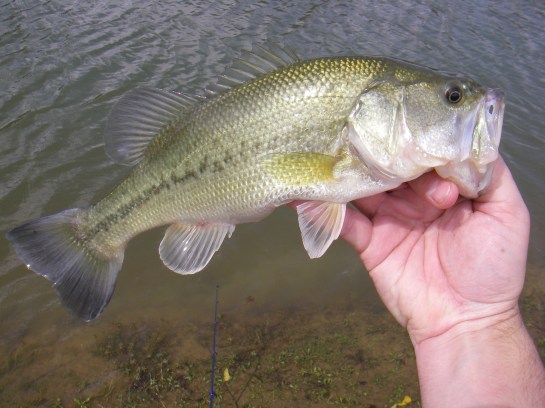
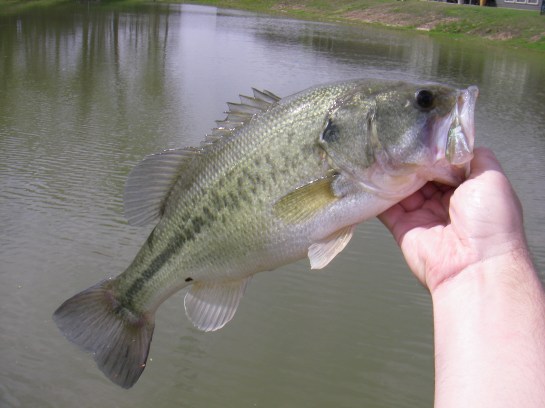
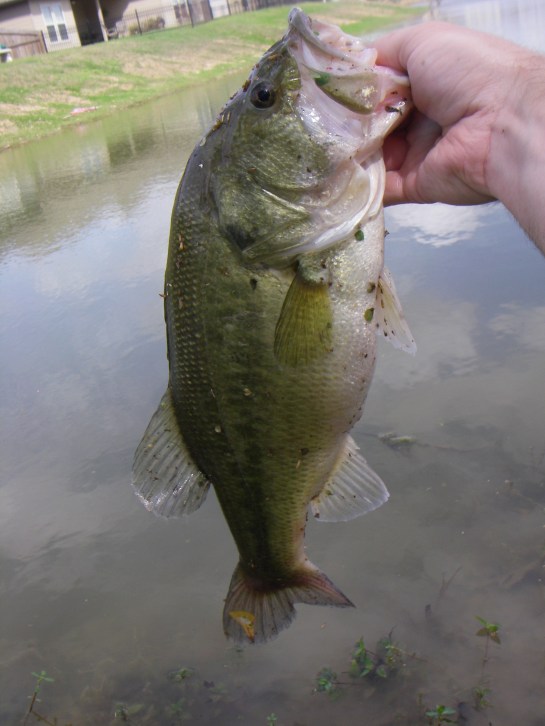
Got a chance to wet a line today in the neighborhood pond. I haven’t fished it since late January when I caught some channel cats and a pretty nice bass. Well it didn’t disappoint again. Winds today were pretty severe so I just used spinning gear, but I ended up catching 3 bass with 2 over 3lbs. I was throwing a jointed Rapala and all the hits came next to the bank. I don’t think the bass are currently on the beds, but I think they will be soon. I noticed we have at least 3 koi in this pond as well. I’ve got to figure out how to catch them on the fly. Time to do a little research….
Outside of the sunfishes and the salmonids I haven’t caught multiple species from one family, so I lumped them all together here. Most of these were caught as bycatch while fishing for bass. I have begun to target some of them a little more these days with the fly rod. The picture quality on a couple of these is less than stellar. It is pretty funny looking back at some of these old pictures, I could tell when I got my Pentax Optio, quality improved, it was 2006-2007, sometime when I was living in Alabama. Also, I haven’t included every different chub or shiner that I’ve caught. There are so many different kinds out there and previously I really didn’t feel it was worth my time to research just what kind of chub or shiner I had caught as bycatch. I’m working to rectify that, I’ll try and keep tabs on them from here on out.
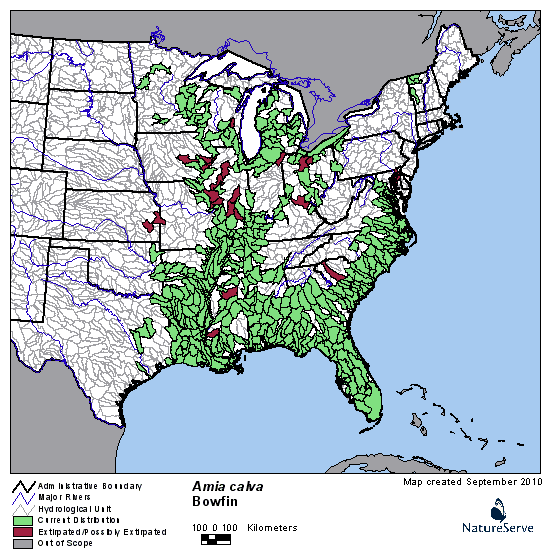
Amia calva – Bowfin (choupique)
The bowfin is actually the only surviving member of the family Amiidae.
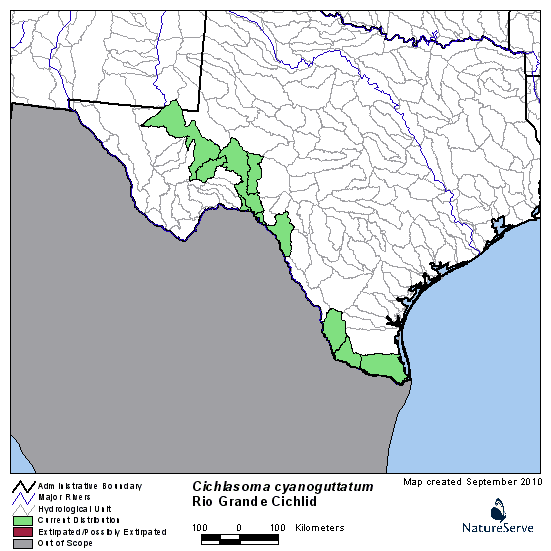
Cichlasoma cyanoguttatum – Rio Grande cichlid
The Rio Grande cichlid is the only cichlid species native to the U.S. They’ve been introduced to the City Park lagoons in New Orleans.
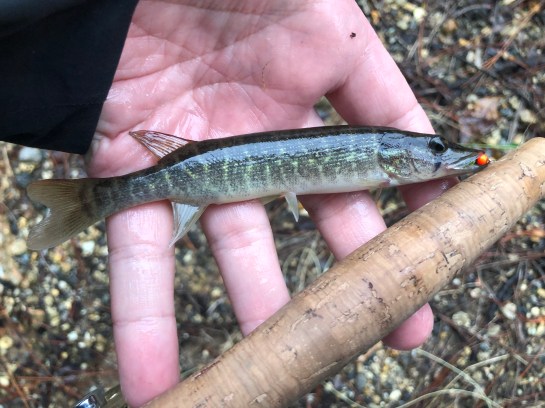
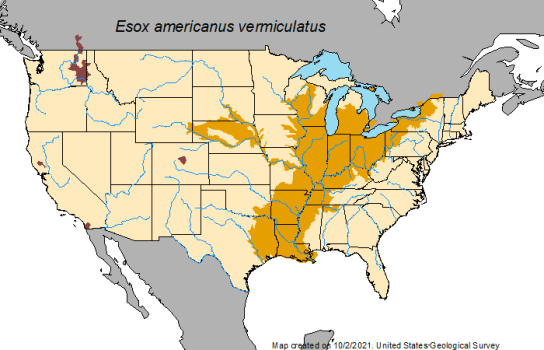
Esox americanus vermiculatus – Grass pickerel
Esox niger – Chain pickerel
The chain pickerel is a member of the family Esocidae, for which Esox is the only living genus. Musky and pike are also Esox.
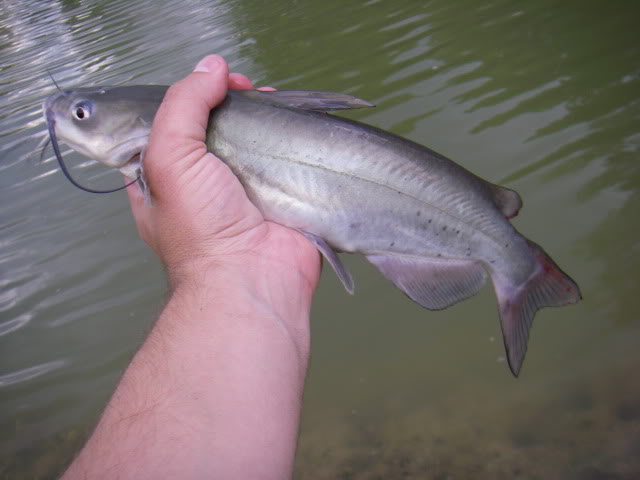
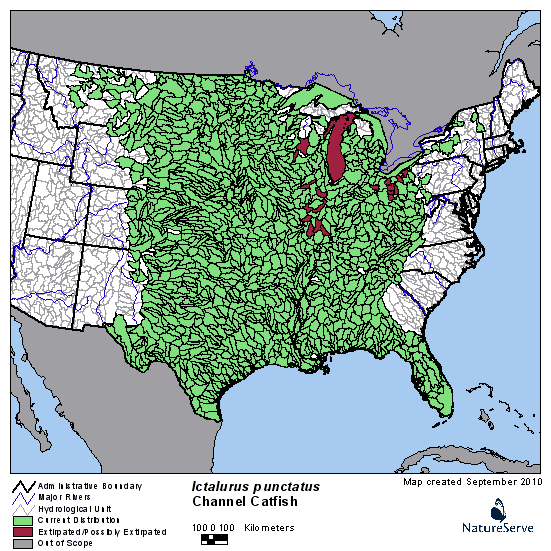
Ictalurus punctatus – Channel catfish
The channel catfish is in the Ictaluridae family, they are a family of North American catfishes. There are plenty of ictalurids out there, I just never target them.
Lepisosteus oculatus – Spotted gar
The spotted gar is in the family Lepisosteidae, which has 7 living species in 2 genera. Gar are another fish I rarely target, though they are everywhere around here.
Lepisosteus osseus – Longnose gar
Cyprinus carpio – Common carp
Nocomis micropogon – River chub
We catch these in the creek at the cabin, in fact, you will often run into them while fishing for trout in Georgia, they readily take flies. The tubercles on their heads are prominent during the spawn.
Semotilus atromaculatus – Creek chub
Cyprinella venusta – Blacktail shiner
A species of shiner commonly found in our Florida parish streams here in Louisiana.
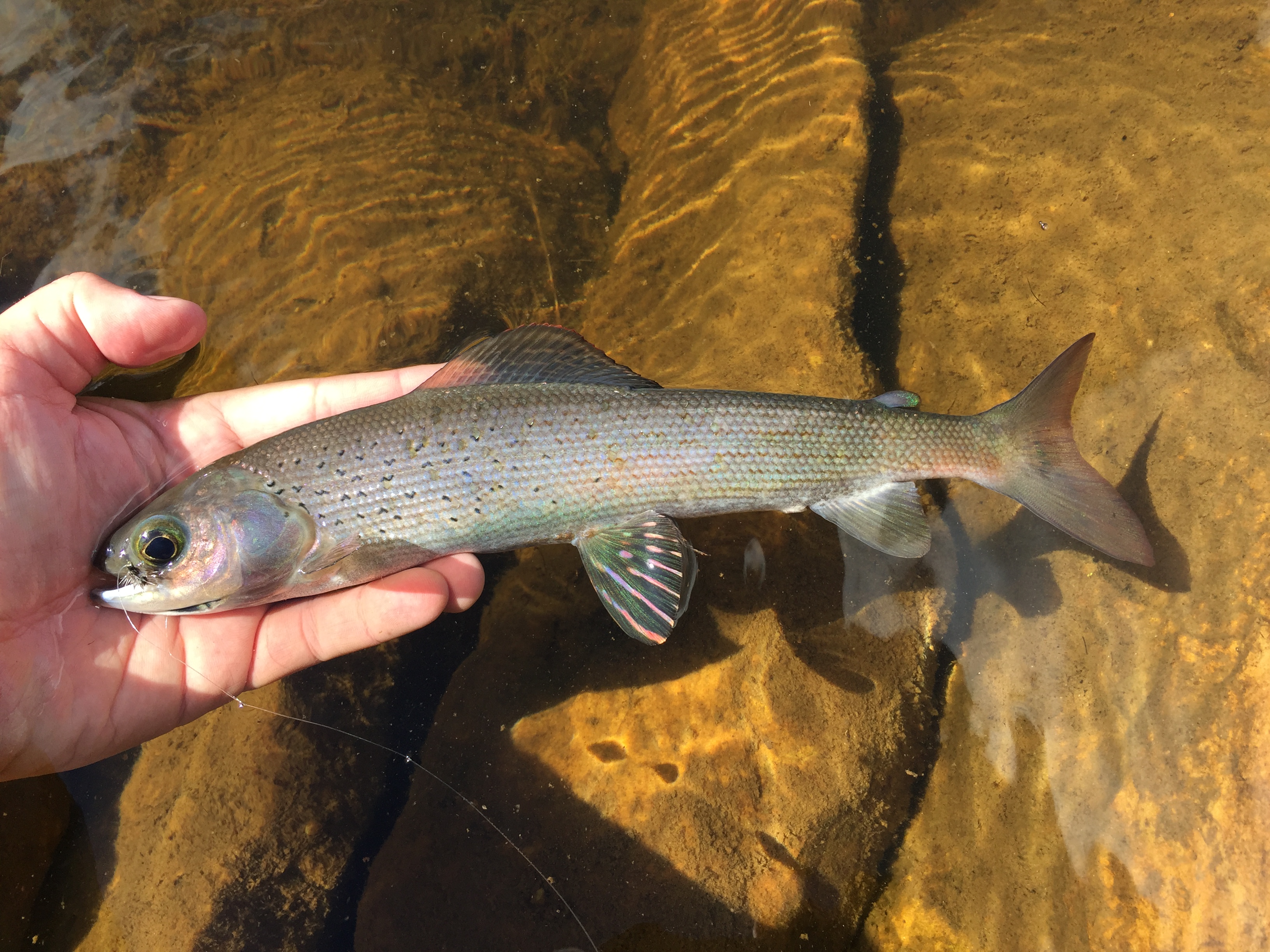
The salmonids are in family Salmonidae, which has 10-11 genera that is divided into 3 subfamilies; Coregoninae(whitefish), Thymallinae(grayling), and Salmoninae(char/trout/salmon). Living in the Southeast you have access to a very limited amount of salmonids and I’ve caught the 3 that occur in Georgia. The brook trout is the only native trout species in Georgia and it is actually a char.
Updated, December 2025: I made my first trip out West in September of 2012 to Colorado and caught several “greenback” cutthroat trout in Rocky Mountain National Park – or what were considered greenback trout at the time. Made another trip out West in August of 2013 to Teton and Yellowstone National Parks where I picked up another cutthroat species and mountain whitefish. In August of 2015 I was able to complete the Wyoming Cutt Slam, picking up Wyoming’s four native cutthroat species (they do have a fifth, the Westslope, that is not required for the slam). In July of 2017 I completed the Utah cutthroat slam, which didn’t necessarily add any new species to the list, but I was able to add Bonneville cutthroat outside of the Bear River drainage and Bear River cutthroat, which some consider genetically distinct. In June of 2021 I made it out to Arizona and New Mexico to catch Apache and Gila trout in their native range. In August of 2022 I made it up to northern Idaho and caught several Westslope cutthroat in their native range. In July of 2023 I made a northern New Mexico/southern Colorado trip and caught lots of Rio Grande cutthroat in their native range. Finally, in August of 2025 I made it out to the Olympic peninsula of Washington and caught coastal rainbow trout in their native range, coastal cutthroat, southern Dolly Varden, as well as the genetically distinct Lake Crescent cutthroat trout.
Dr. Robert Behnke is the man when it comes to salmonid knowledge. Pick up his book if you want to learn more about this particular family, “Trout and Salmon of North America”. Another great resource is Gary Marston’s Native Trout Fly Fishing blog, he has a Trout and Salmon species page with pictures and information of all those that he has caught (which may be all that are found in the U.S.). Gary’s trip reports are a good read as well, he has had some epic road trips to catch trout in their native range.
Trout found in the Southeastern United States
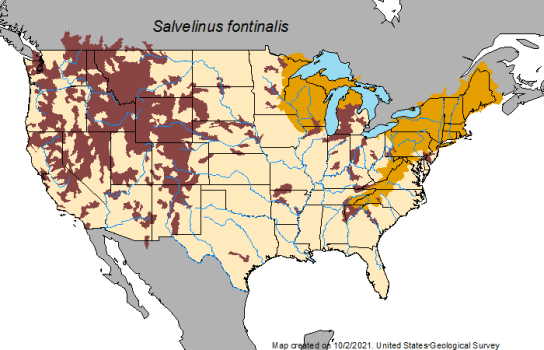
Salvelinus fontinalis – Brook trout
Brook trout are the first native trout species I ever encountered as they do live in Georgia.
Salmo trutta – Brown trout
Brown trout are not native to North America.
Oncorhynchus mykiss – Rainbow trout
The first trout species I ever caught, happy to say that I have now caught them in their native range too!
According to Wikipedia, the coastal cutthroat trout occurs in four distinct forms. A semi-anadromous or sea-run form is the most well known. Freshwater forms occur in both large and small rivers and streams and lake environments – pictured above is the stream resident freshwater form. The historic native range of the coastal cutthroat trout extends south from the southern coastline of the Kenai Peninsula in Alaska to the Eel River basin in Northern California.
Oncorhynchus clarkii clarkii crescentii – Coastal cutthroat trout – Lake Crescent form
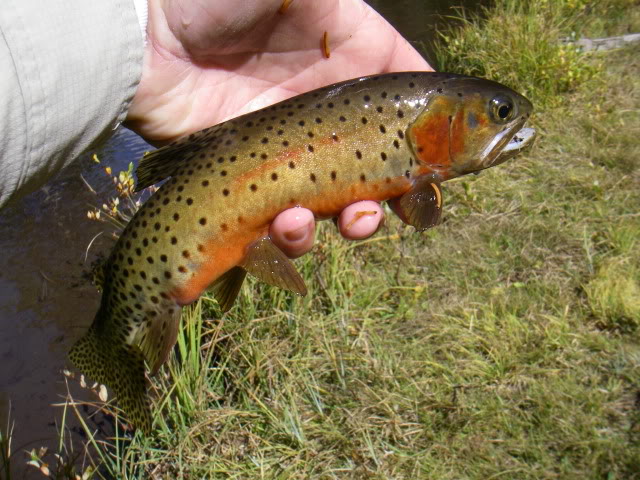
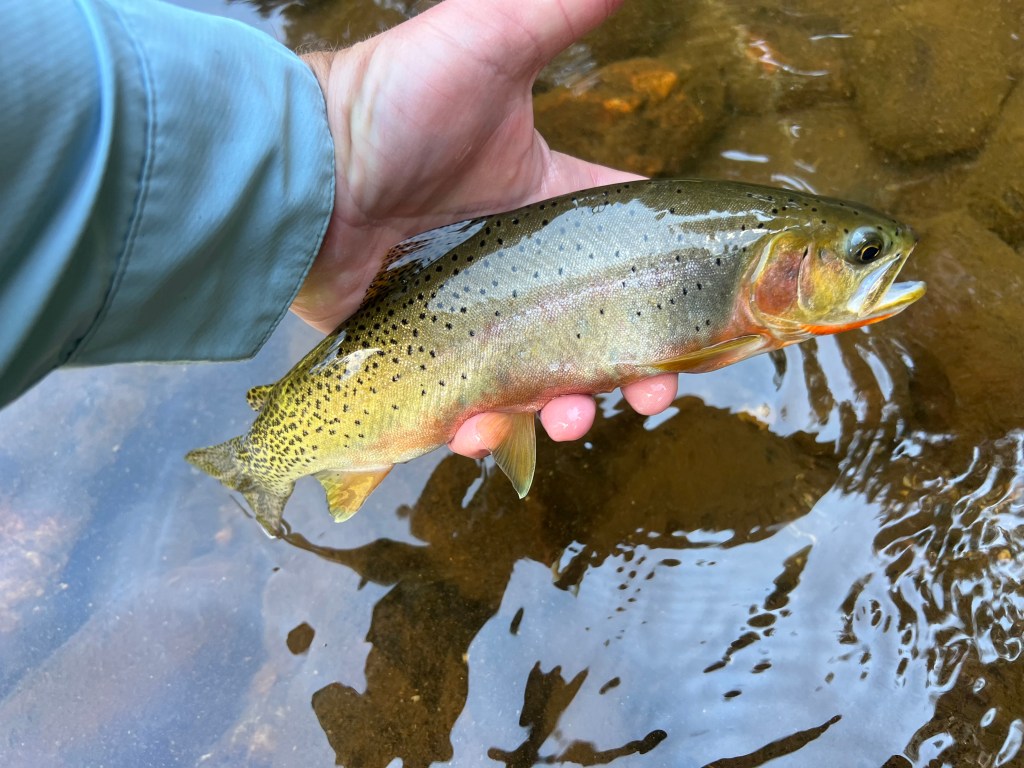
At the time this fish was considered a greenback, but it’s more likely that it isn’t after genetic research determined that the true greenback was limited to only one stream, outside of it’s native range, in Colorado. Work has been done to re-establish populations throughout it’s native range and hopefully I’ll have the opportunity to fish for a true greenback cutt. Their historic range is pretty much in the state of Colorado on the Front Range, with some watersheds slipping into Wyoming. They are found in the headwaters streams of the South Platte and Arkansas River drainages.
Oncorhynchus clarki pleuriticus – Colorado River cutthroat trout
Their historic range is headwaters streams in the Green and Colorado Rivers, as far south as the San Juan River, west of the Continental Divide. They are currently limited to a few small headwater streams of the Green and upper Colorado rivers in Colorado, Utah, and Wyoming, including the Escalante River drainage in southern Utah.
Oncorhynchus clarkii virginalis – Rio Grande cutthroat trout
Their historic range is headwater streams in the Pecos and Rio Grande watersheds in Colorado and New Mexico.
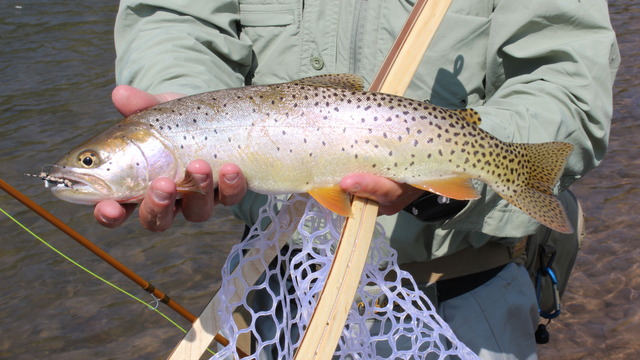
They are found in the headwaters streams of the Bear River. No range map was given from NatureServe or the USGS for the Bear River cutthroat trout, but they are native to the Bear River and it’s tributaries, including Bear Lake.
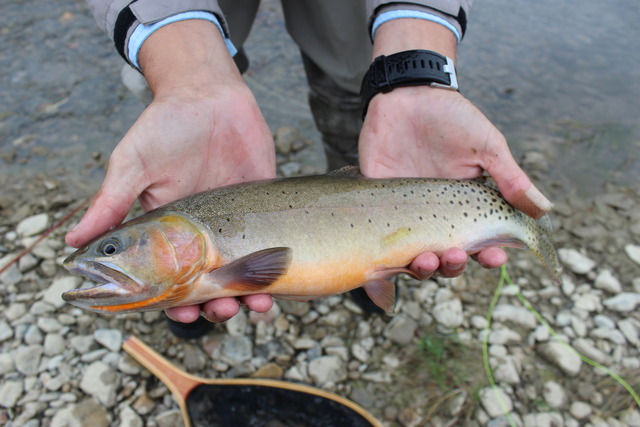
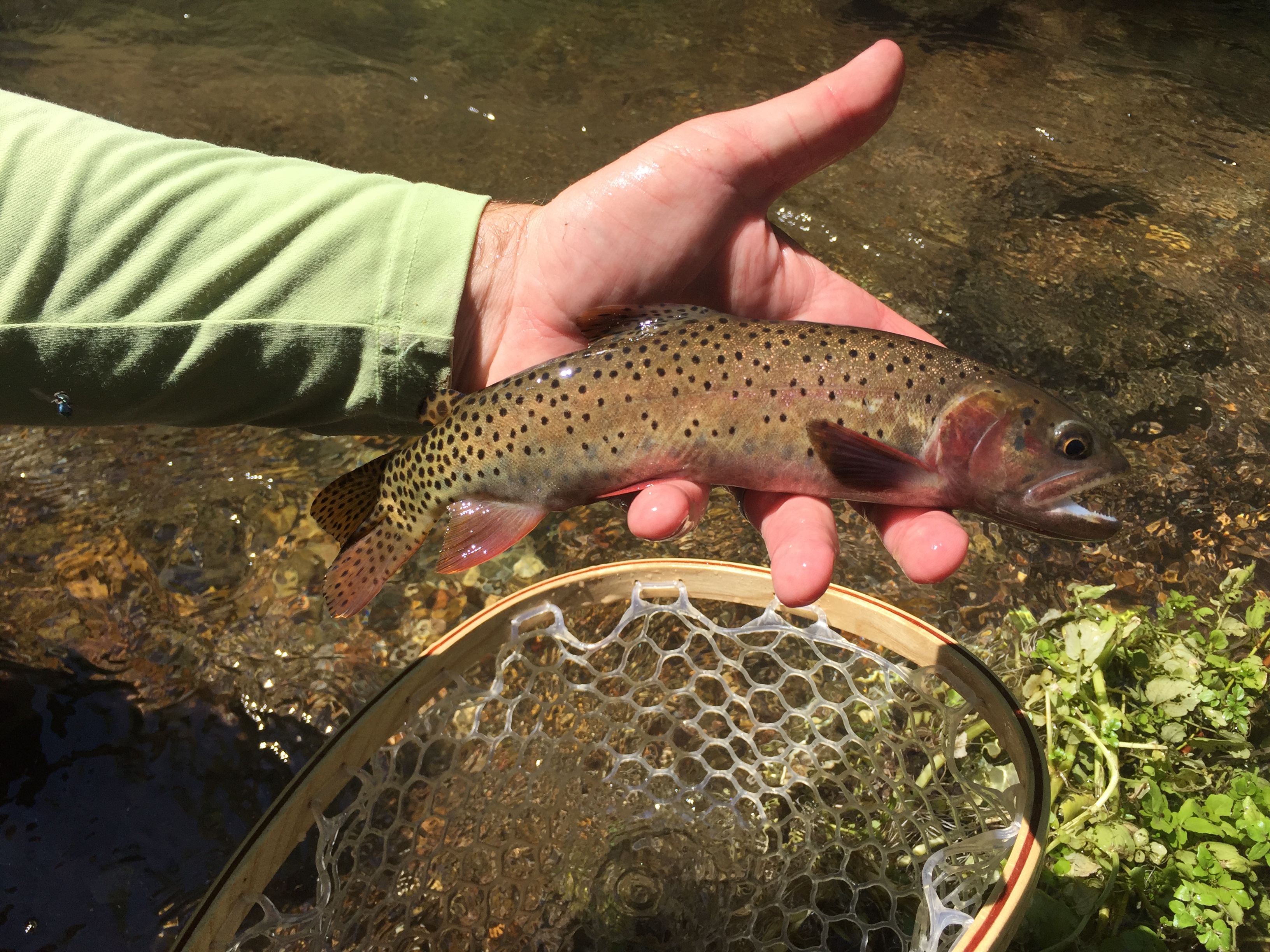
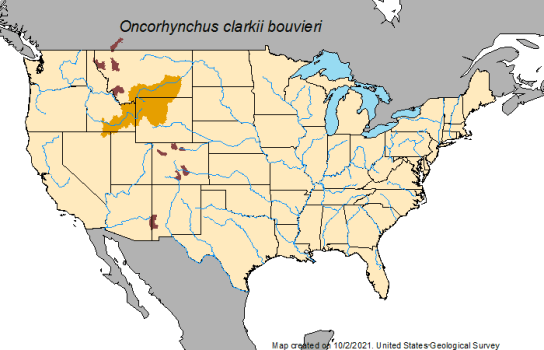
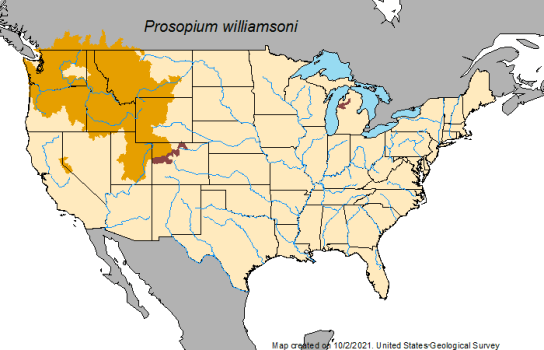
Their historic range is the Yellowstone River drainage in Montana and Wyoming and the Snake River drainage in Wyoming and Idaho. Their current range overlaps with that of the Finespot in the Snake River drainage above Shoshone Falls.
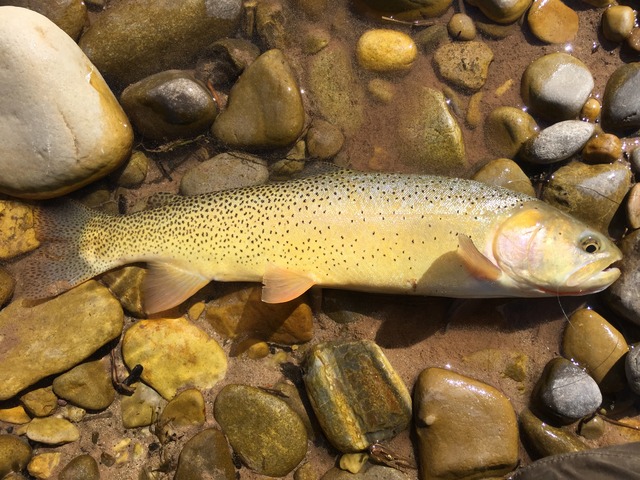
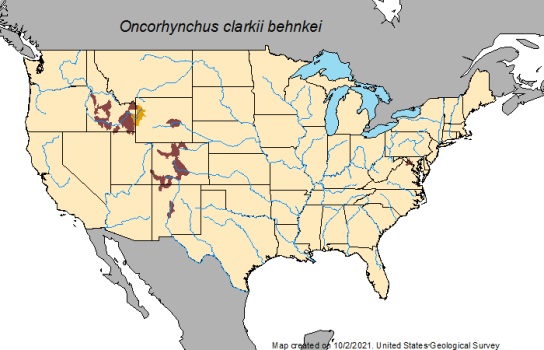
Oncorhynchus clarkii behnkei – Finespotted Snake River cutthroat trout
Their historic range overlaps the Yellowstone cutt in the states of Wyoming and Idaho. They are found in the headwaters streams of the Snake River, particularly the South Fork.
According to Wikipedia, Westslope cutthroat trout are native in northern Idaho’s and British Columbia’s upper Columbia River system and northern tributaries of the Snake River. East of the Continental Divide in Alberta and Montana, Westslope cutthroat trout are native to the upper Missouri, Milk and North Saskatchewan rivers. In Montana, the historic range extended east to the mouth of the Judith River and south into the Madison, Gallatin and Jefferson river systems. Isolated populations of Westslope cutthroat trout exist in upper tributaries of the John Day River in the Strawberry Mountains of Oregon and Columbia River tributaries along the eastern side of the Cascade Range in Washington. Isolated populations exist in the Fraser River basin in British Columbia.
Other Native Salmonids
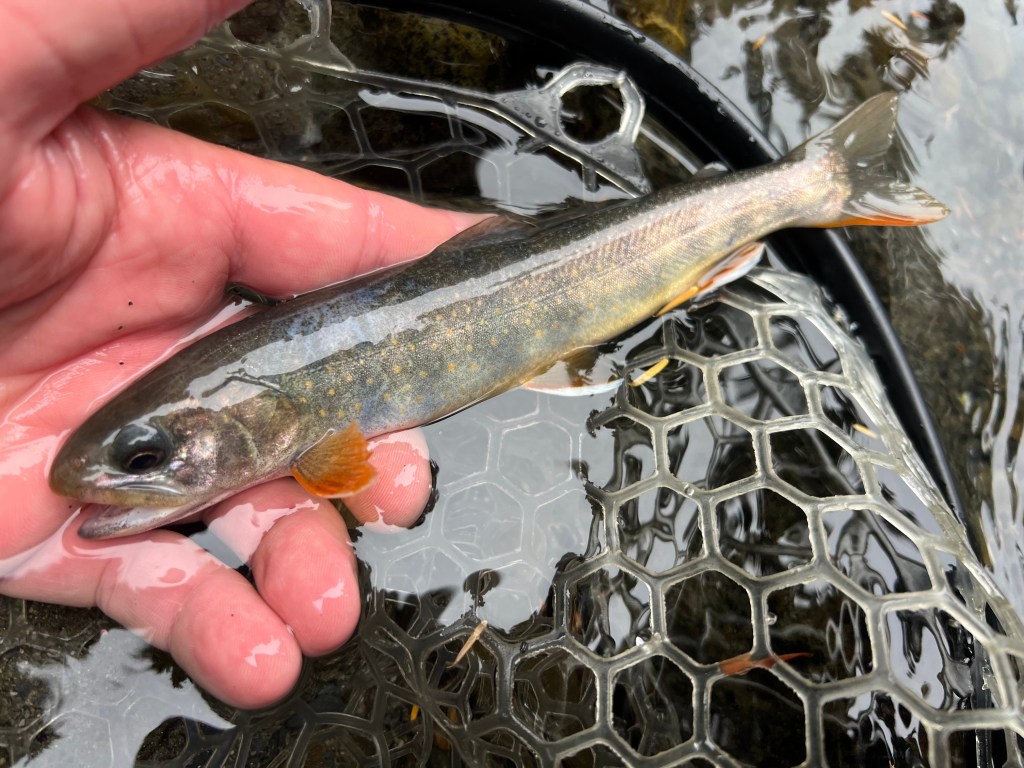
Salvelinus malma – Southern Dolly Varden
According to Gary Marston, the Southern subspecies of Dolly Varden are native to coastal watersheds from the Susitna River, Alaska south to the Quinault River, Washington.




















 Mountains to Marsh