Archive

Tag Archives: Redeye Bass

redeyebasscoverredeyebassback

A friend of mine has written a book on the subject of redeye bass.  Here is the teaser on Amazon:

“Do you like fishing secluded, flowing streams that involve hiking and climbing waterfalls to catch native fish? Fly fishing for redeye bass is similar to fly fishing mountain streams for native brook trout. They are actually referred to as “The Brook Trout of Alabama.” Fly Fishing for Redeye Bass is a complete book on redeye bass and how to catch these beautiful fish throughout the picturesque of the southeastern United States. Learn about the rivers they call home, the dangers that threaten those waters, and why some species of redeye bass need our immediate help. Understand how to read water and locate optimum redeye bass habitat, what food they eat, and how to best imitate that food with flies. After reading, you will have a firm understanding of why they are the perfect fish for the adventurous fly fisherman.”

I haven’t had the chance to read it yet, but knowing his passion for the species I know it will be a must-have for any Southern fly fisherman.  It’s currently available on Amazon, but be on the lookout for it in fly shops across the South.

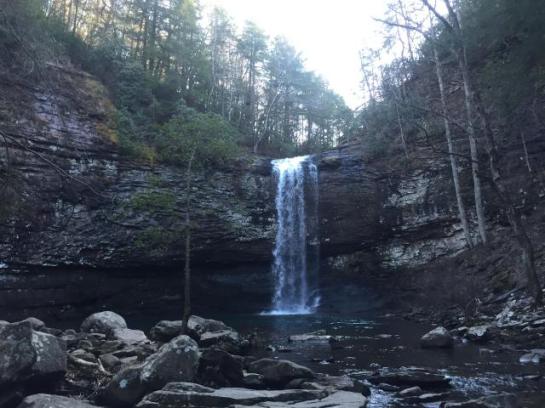
Had some work to finish up in Georgia the week before Mardi Gras, which took me on a driving tour from Columbus to Macon, up through the East side of metro Atlanta and finally toward Chattanooga.  When I finished I found myself in the NW part of the state near a park I had always wanted to check out in person – Cloudland Canyon, which is on the western part of Lookout Mountain.  It was late in the day and I had about two hours left of daylight, but the folks at the front office assured me I had plenty of time to see the sights.  They were spot on too because in no time I was treated to this view.

IMG_4489

Cloudland Canyon was full of scenic vistas like this one at the top of the canyon.  Being a sucker for waterfalls I hiked the waterfall trail which was basically a there-and-back trip down to the bottom of the canyon.  It was a breeze going down, but I had to take my time coming back up – lots of stairs.  It was a really cool trail though with a lot of exposed rock.

IMG_4511

Daniel Creek lies at the bottom of the canyon and looks like it would be fun place to sling some flies.  I’ll bet it has it’s share of redeye bass.  It also boats a couple impressive waterfalls that I’m told become trickles in the summer – so I got to see them when they had decent flow.  I’m sure they rage after a storm.  Daniel and Bear Creek meet a short ways downstream at that point of my first picture as they flow through Sitton’s Gulch, views extend over both canyons via an overlook trail.

IMG_4510

IMG_4514

IMG_4523

IMG_4528

IMG_4530

Cloudland Canyon made for a nice end to my sojourn through Georgia, definitely worth a visit if you ever find yourself up that way – it is not too far off of I-59 near Trenton, GA.  After I left the park I made my way down to Attalla, AL to have a beer with my buddy Josh before I made the drive home the next morning.  He told me that those crazy Jacksons run Bear Creek when it has enough water.  Wasn’t too hard to find some film of this:

These are exciting times for fish nerds like myself. In March it was published in Lake Magazine that four new species of redeye bass have been discovered. I say “discovered”, but it’s more like “recognized”. They’ve always been there, people had always fished for them, but no one really knew they were genetically divergent from the Coosa strain redeye bass.

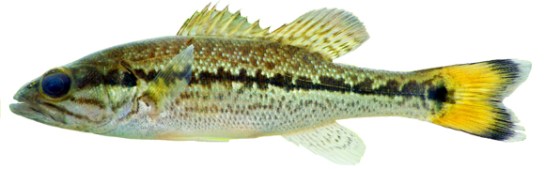
The same is true for the newly described Choctaw Bass. The Florida Fish and Wildlife Conservation Commission (FWC) announced on May 7th that the spotted bass that inhabit the streams of the Florida panhandle are actually an entirely different species, though they are almost identical in appearance. They offer the name Choctaw Bass as they shared the same geographic footprint as the Native American Choctaw tribe. Example pic and map below courtesy of FWC:

choctaw bass

What peaks my interest though in the Choctaw Bass (besides the fact that they are an entirely new species – that is fascinating in it’s own right) is their proposed range map:

choctaw_bass_map

FWC seems to suggest that the bass I catch in Florida parish streams that don’t drain into the Mississippi River are possibly Choctaw bass, rather than spotted bass. I’ve long suspected that the spotted bass I catch around here are somehow different than those that lived in the Tennessee River drainages in Northern Alabama, mainly because they look different with their orange eyes and their habitat is completely different, and given the amount of time they’ve been cut off from the Mississippi River, I imagine their genetics have to be somewhat divergent. So I think it IS possible that they are Choctaw bass, but I also think it’s possible they are their own species, and the reason they aren’t already described is because no one has funded the research. The difference would most likely be genetic, just like with the Choctaw bass, and I guess that is important as it would illustrate diversity. But if it looks just like a spotted bass, acts just like a spotted bass, tastes just like a spotted bass, is it not just a spotted bass?