Archive

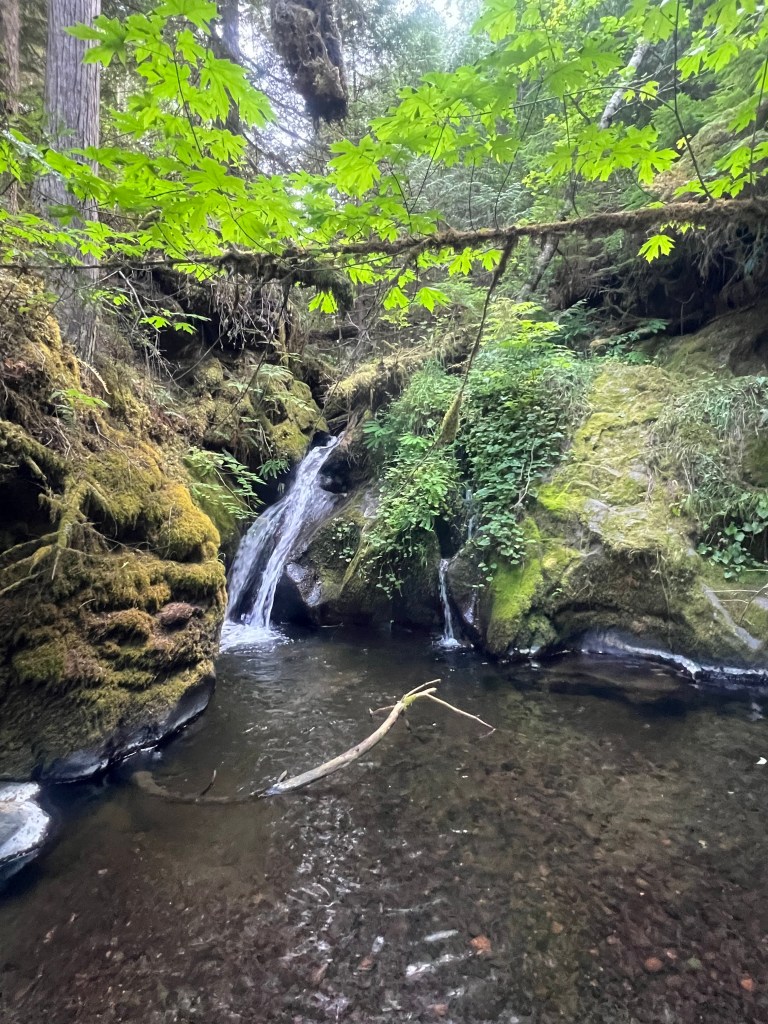
Waterfall

Blake and I took a trip last August up to the Olympic peninsula in Washington. We weren’t in search of steelhead, or salmon, but rather coastal cutthroat trout. Obviously, a salmon, or steelhead, would have been pretty badass to catch, but I really just wanted to experience fishing a temperate rainforest – or at least on the fringes of one – and catch the oldest form of cutthroat trout. I’m also not interested in taking trips to not catch fish, so steelhead aren’t high on the priority list as of right now.
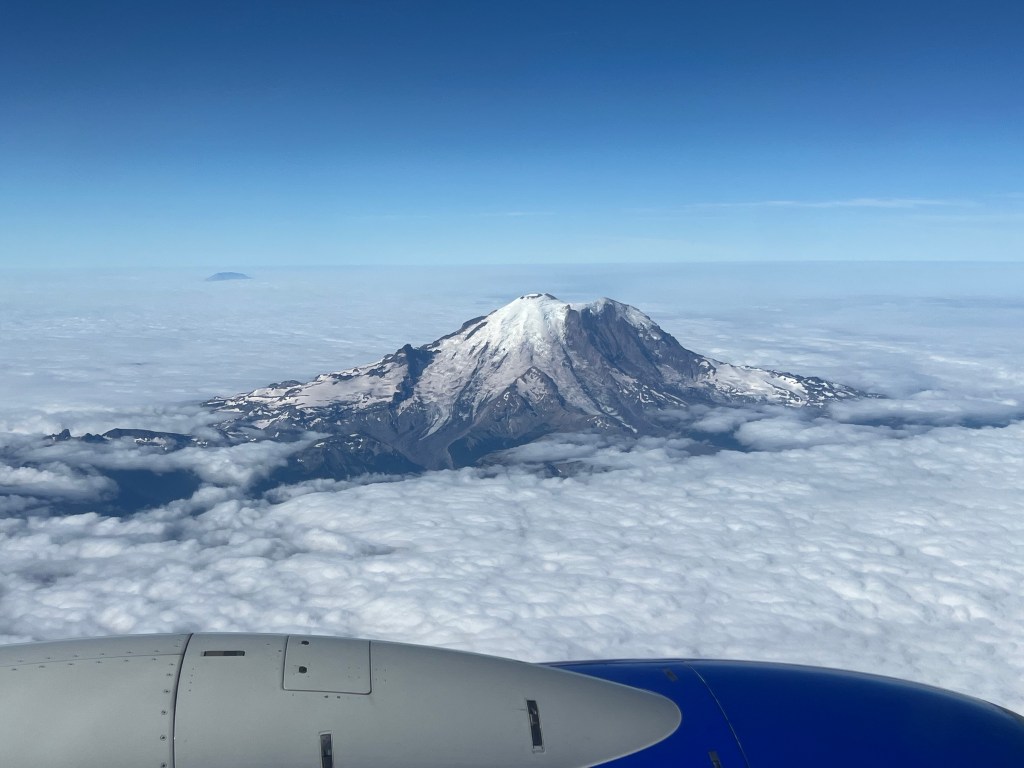
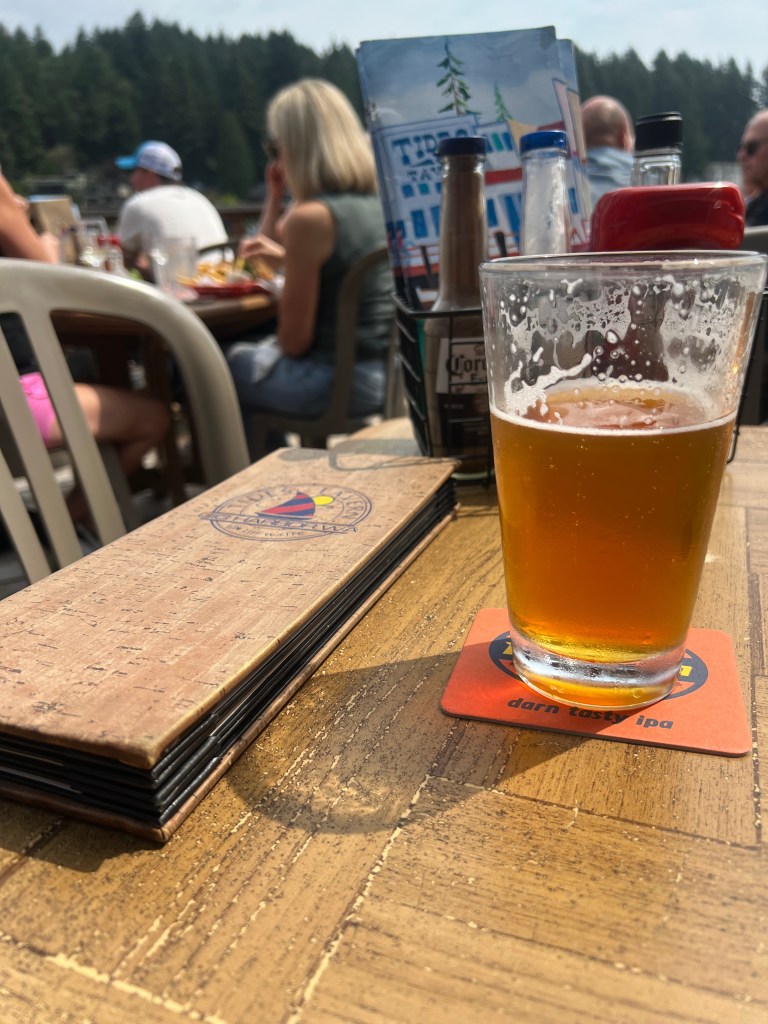
We got a pretty good look at Mt. Rainier on the flight into Seattle – this was my first time going to Seattle so this was a pretty cool site to see from the plane – a dormant volcano rising above the clouds. We picked up our Turo rental and headed to Gig Harbor – where we had lunch and made a stop at Gig Harbor Fly Shop. The young guy working was nice and as helpful as he could be being that they weren’t located on the Olympic peninsula so he didn’t get that way too often. The big takeaway for us was that he made it sounds like catching resident coastal cutthroat wouldn’t be too hard so long as we were on streams that had them. This is pretty much how it goes with native blueline fish everywhere, which is one reason I like them so much, they’re always hungry and generally not that picky. Lunch was good too and Gig Harbor was a cool little seaside town, but we weren’t staying long as we wanted to set up camp and try and get out and fish before it got dark.
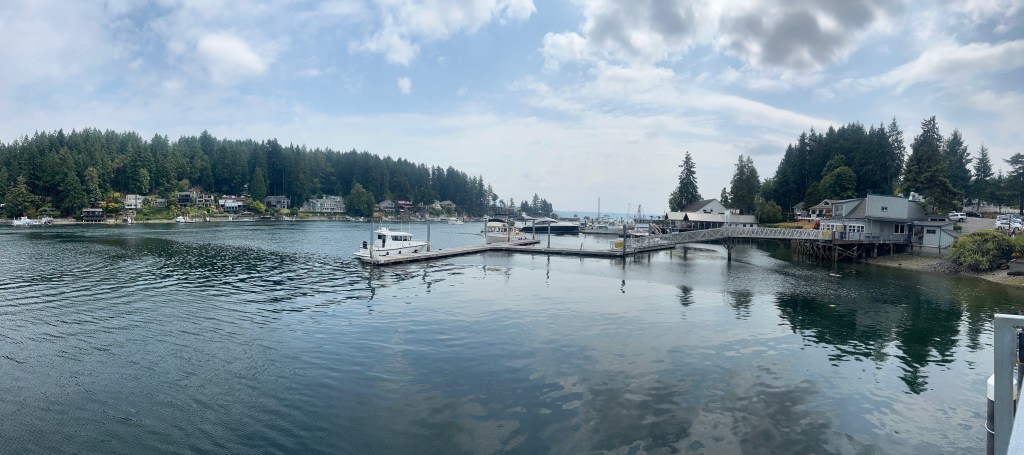
For this trip we decided to set up camp in one spot and just venture out from there. Our home base for the trip was Sequim Bay State Park. I picked that spot because I figured camping in the rainshadow part of the Olympic peninsula was probably a good idea and we weren’t that far from streams on the northern and eastern side of the peninsula. I was a little worried that being so close to the highway we’d hear road noise all night, but that wasn’t an issue at all. It was a beautiful little park, right on Sequim Bay, and ended up being a great spot for the whole trip. After we set up camp we set out for the Olympic NF to get some time on the water that evening.
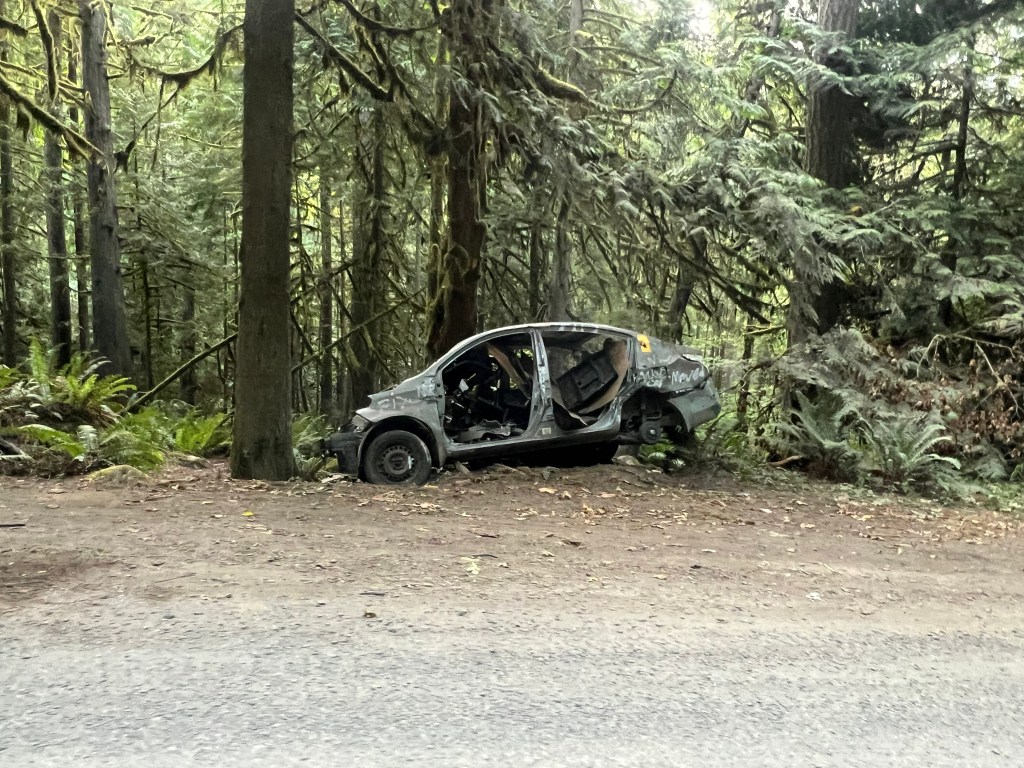
I’m so used to having to go high in elevation to fish for trout that these Olympic peninsula trout were throwing me off in my planning because that wasn’t the case here. We didn’t need to go high in elevation as they also live in the estuaries – they’re found throughout the entire system. That’s a wild concept to someone from the south, lol. So we drove into the national forest and headed for a creek we were told had them, parked at the first spot I could find, then hiked down to the creek. In hindsight I may have wanted to be a bit more discerning when it came to parking spots, as there was a small RV parked in a spot much further ahead, but I was eager to fish, and wasn’t sure the parking/hike-in situation further up. One would think seeing a burned out car right when you cross the forest service boundary would be a deterrent, but man I was itching to get on the water!
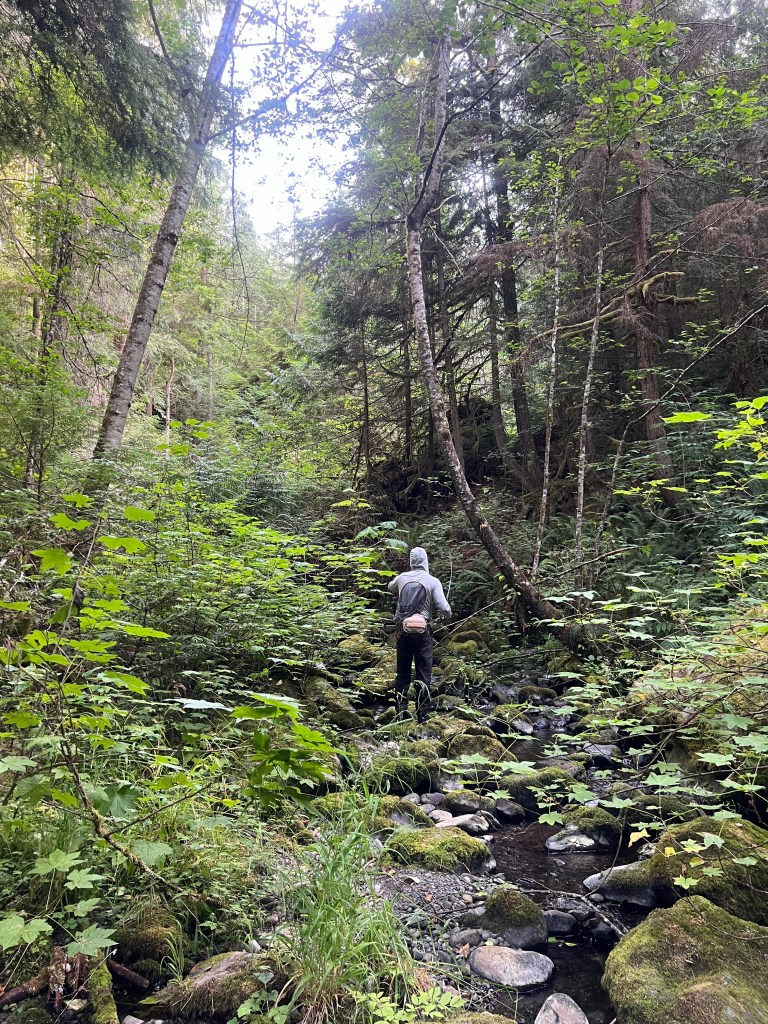
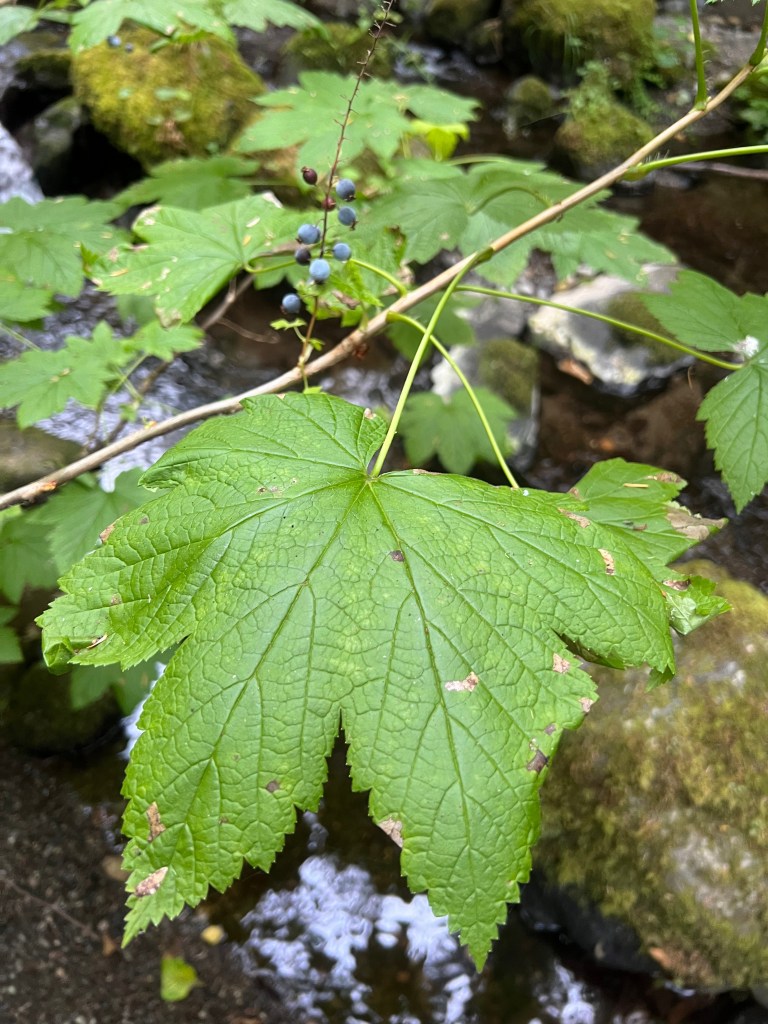
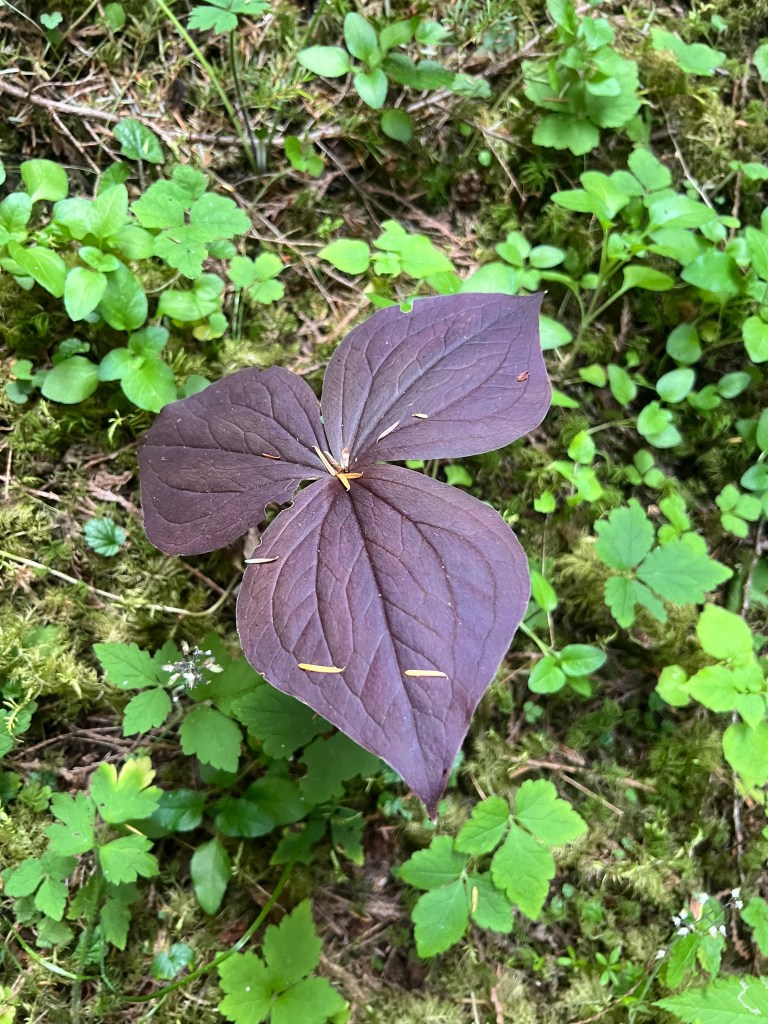
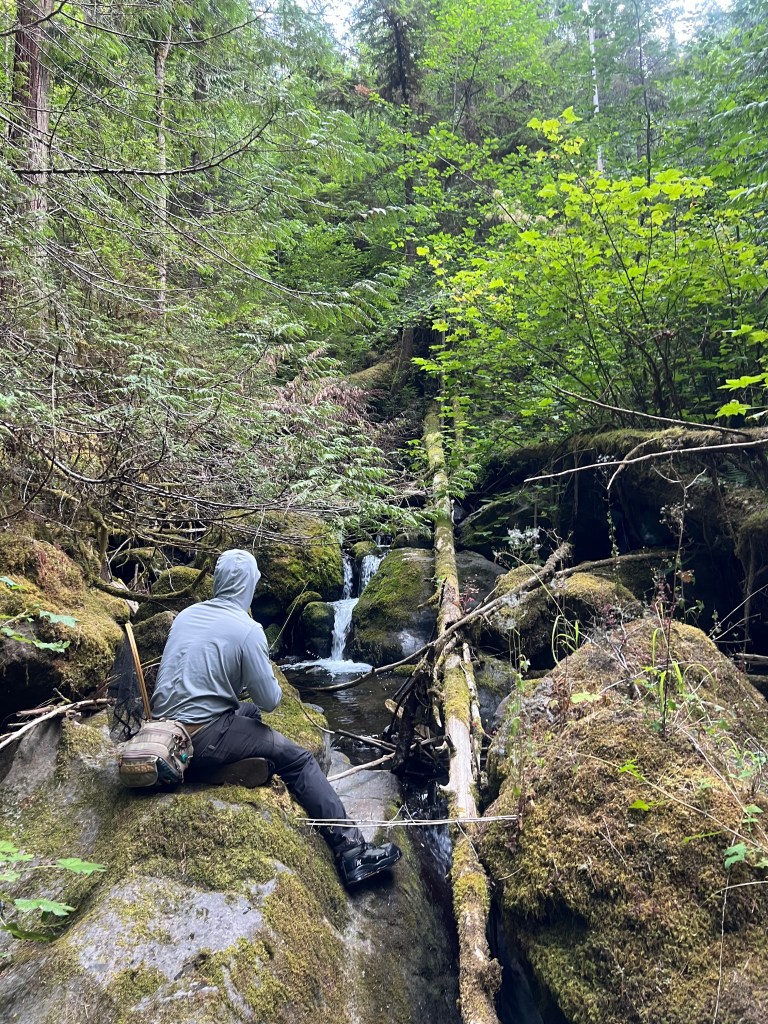
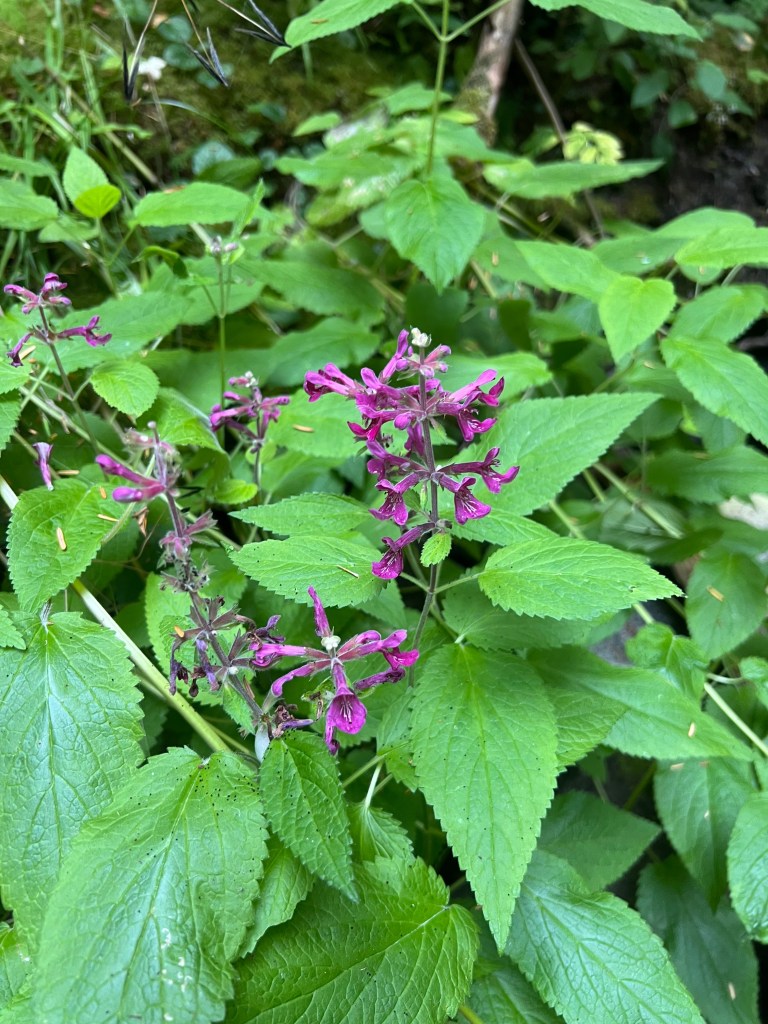
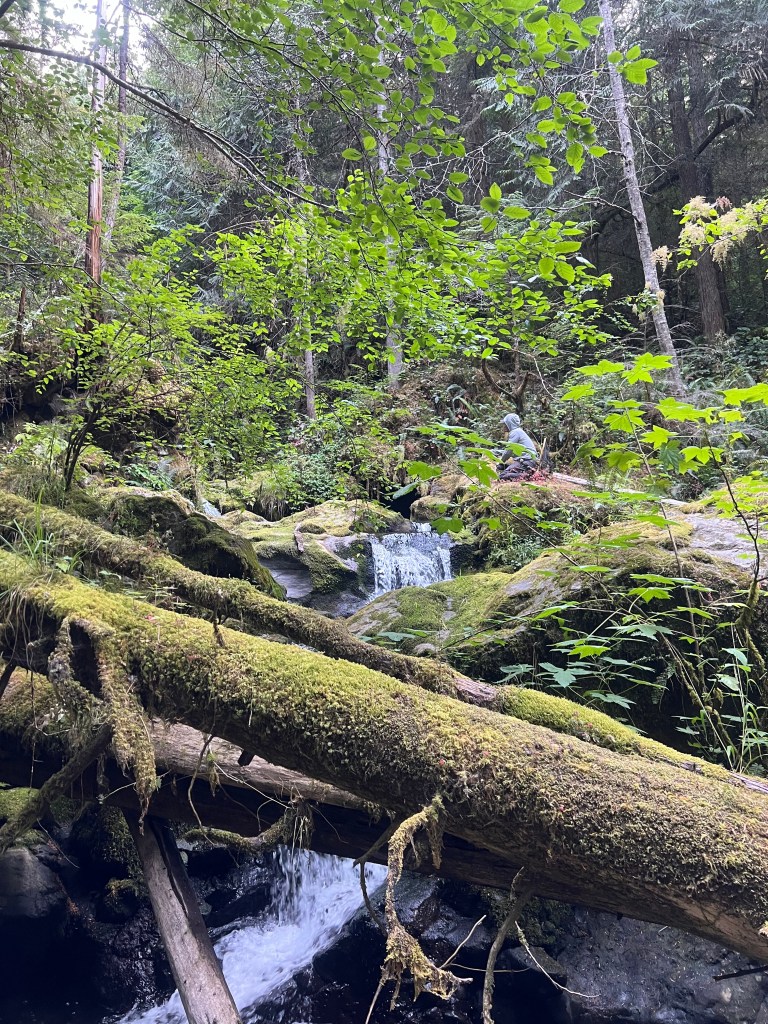
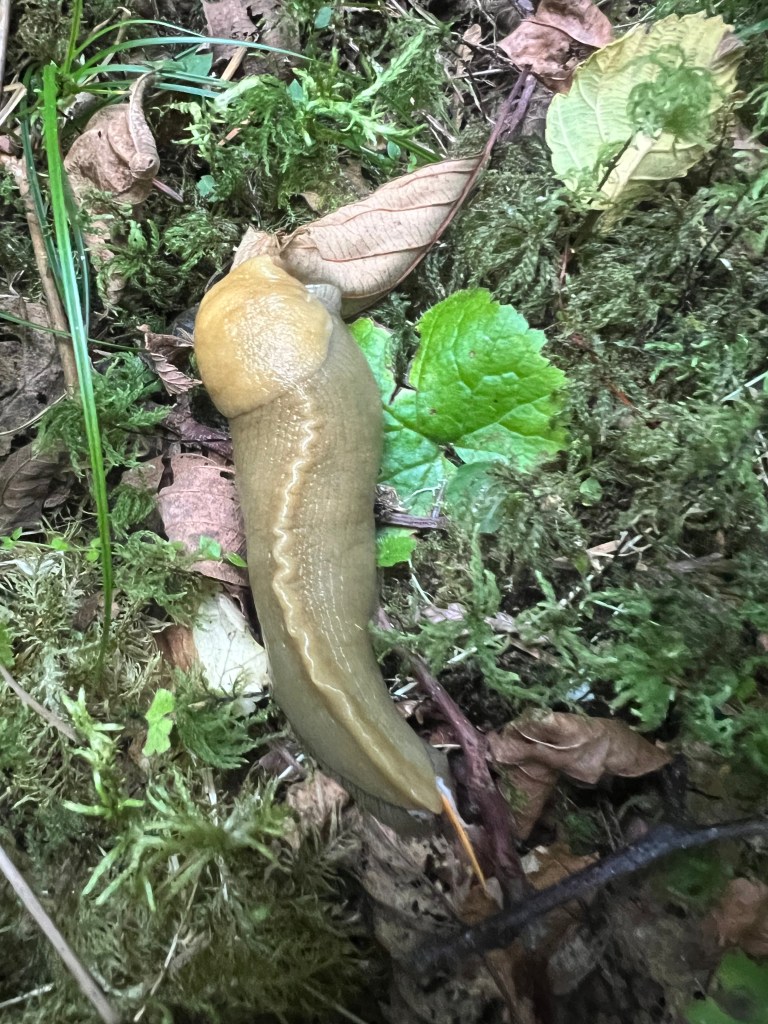
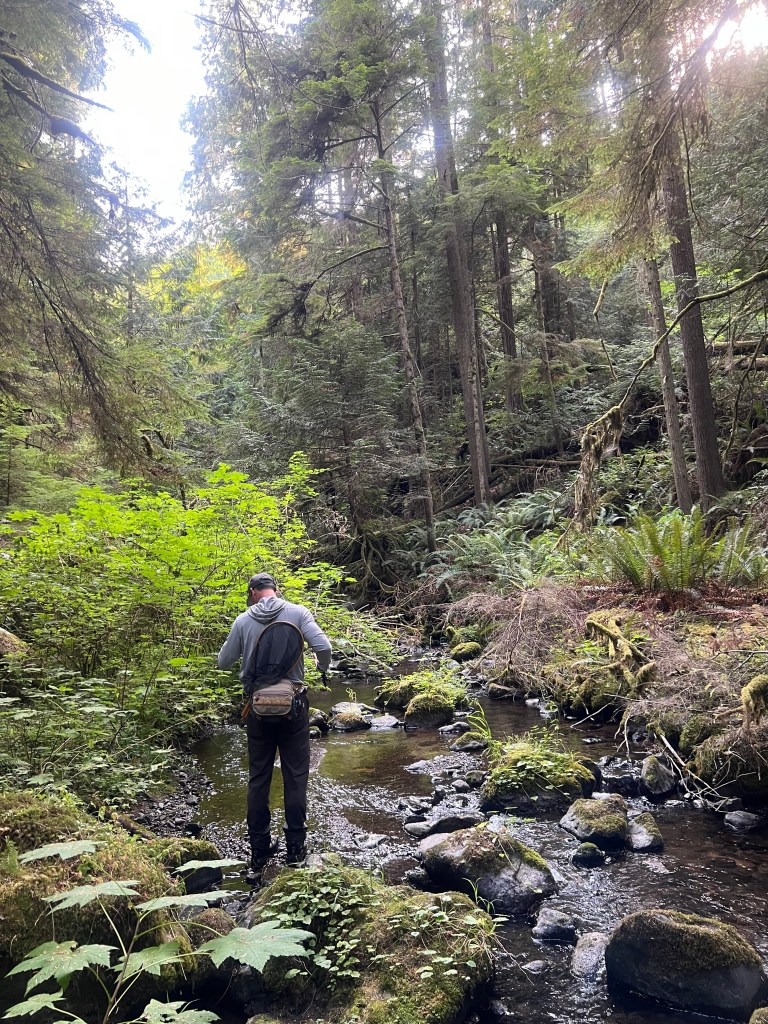
When we made it down to the creek it was pretty clear this was going to be some tight, technical fishing. The water was pretty low and clear as well. This seems like pretty typical late summer conditions in any mountain range. Honestly the creek didn’t seem that different than those you fish in North Georgia, so I really didn’t feel too out of place here. The forest felt different though – the plants were certainly different than what you’d see down south. The forest floor was porous too – bushwhacking in meant stepping through the ground in places – that’s how much organic material was on the ground, kinda wild stuff.
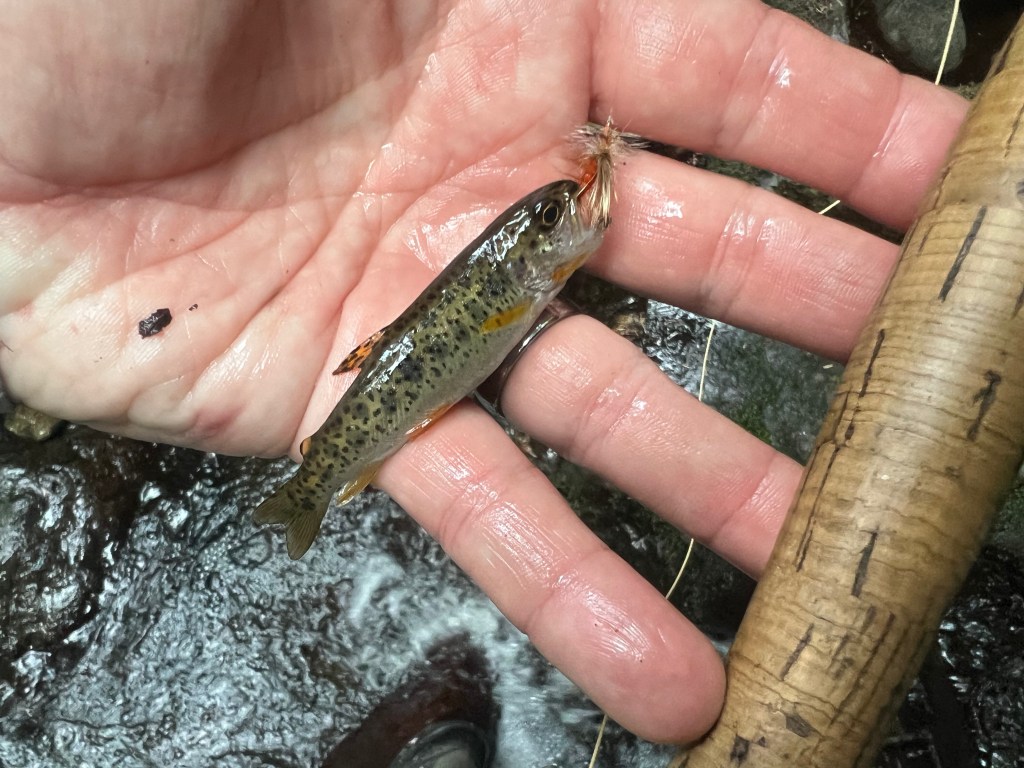
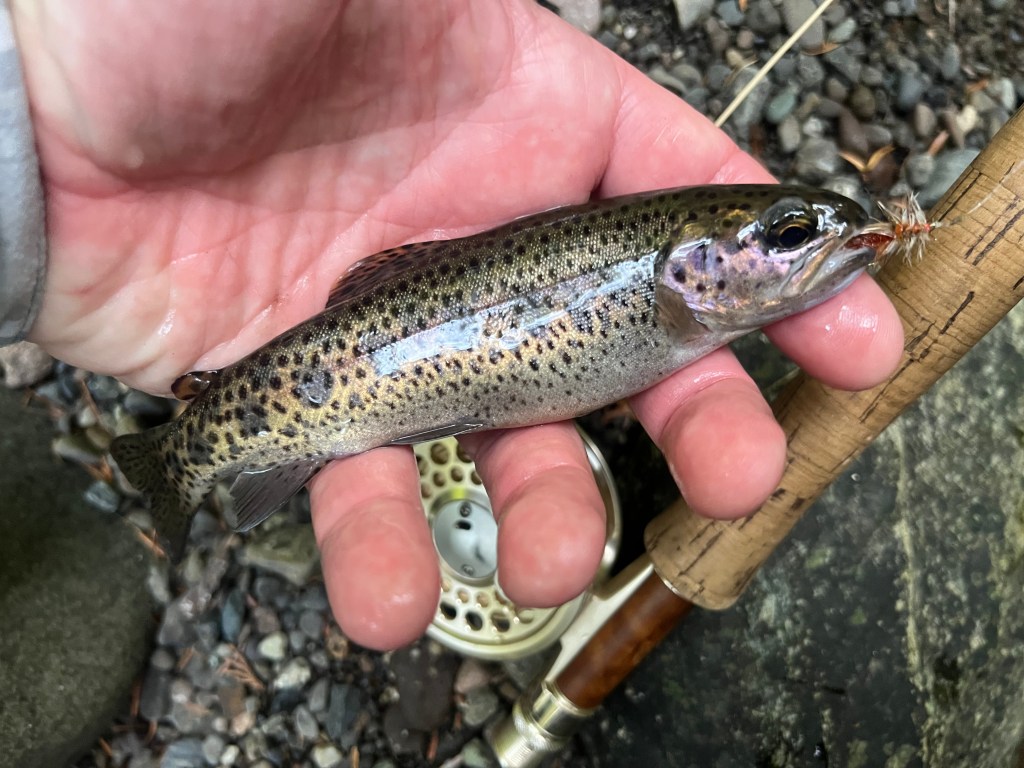
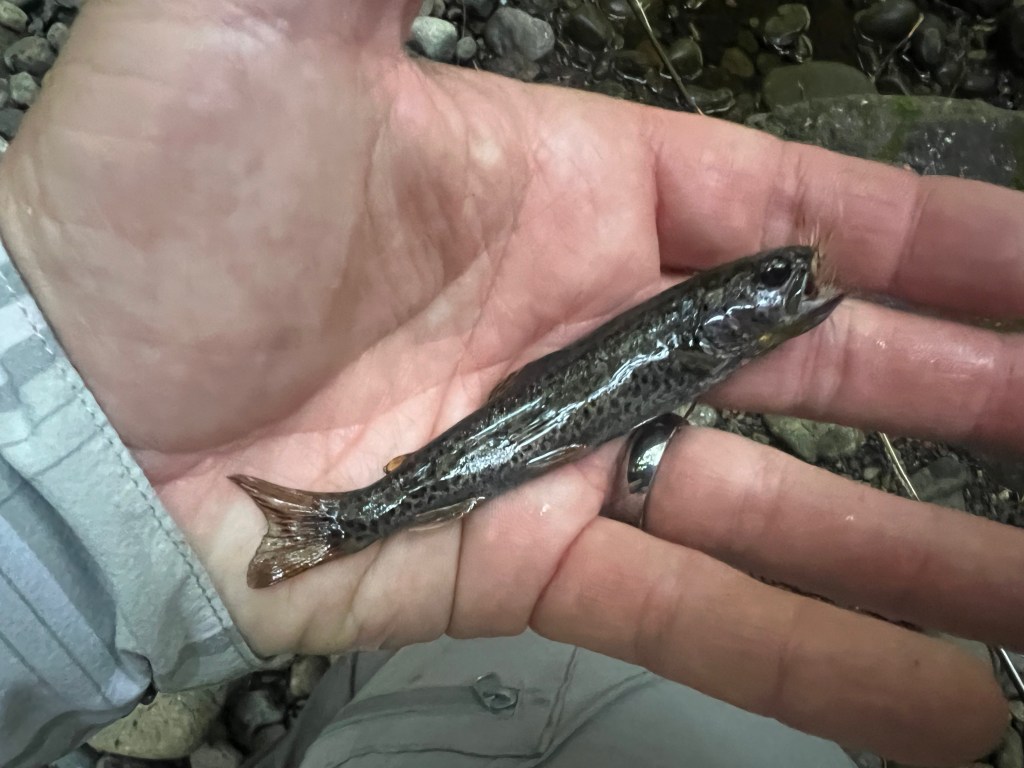
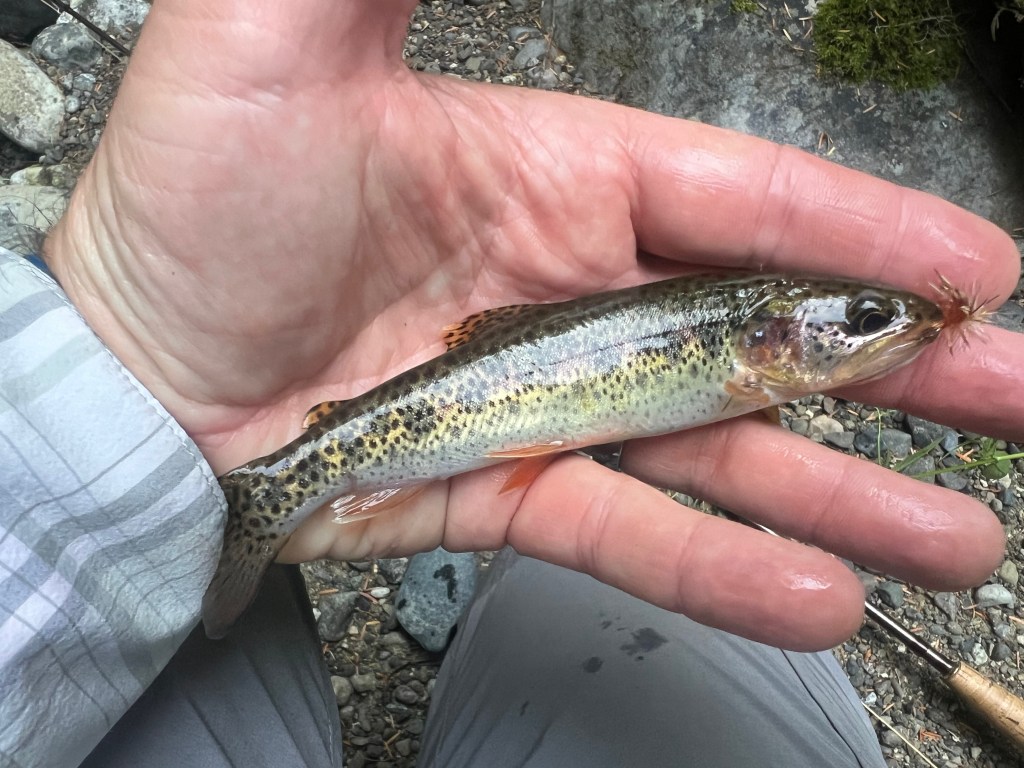
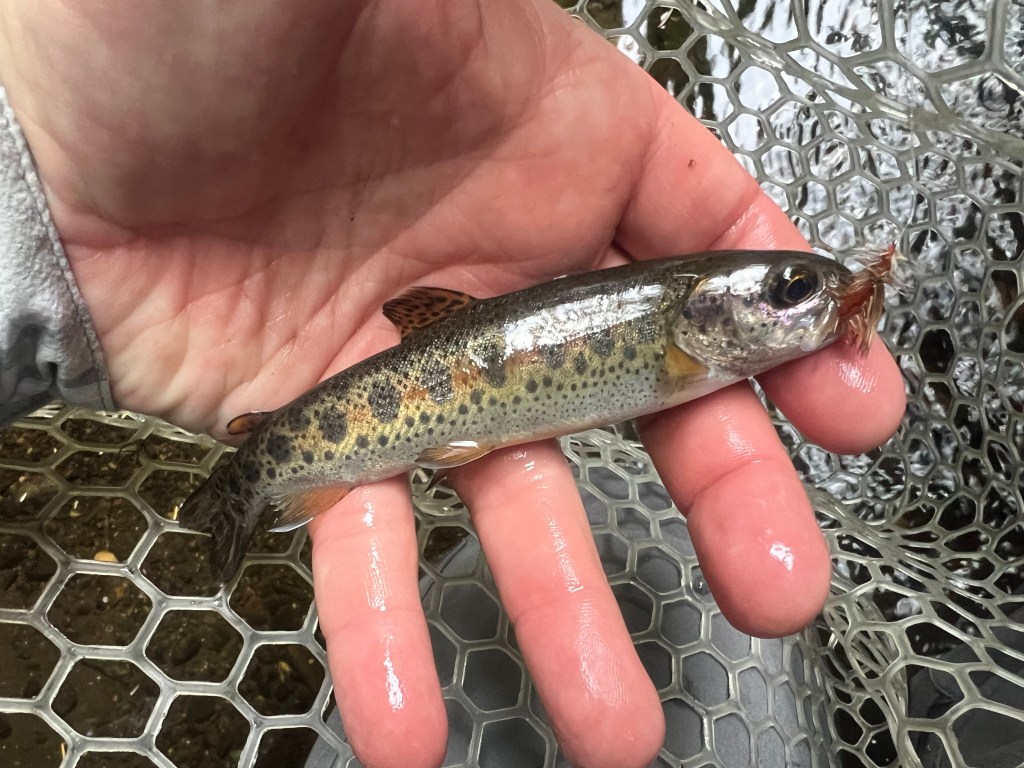
I caught a little trout pretty early on, that I think was a coastal cuttroat, then followed it up with a slightly bigger fish, but I honestly couldn’t tell you if it was a pure coastal cutt, or if there was some rainbow trout genetics here. I followed that up with another small salmonid that I honestly don’t know what it was – I’m just realizing this now as I’m looking back at the pictures, lol. There were lots of little fish here, but catching something is always better than catching nothing, so I was pretty happy about fish rising to take dries.
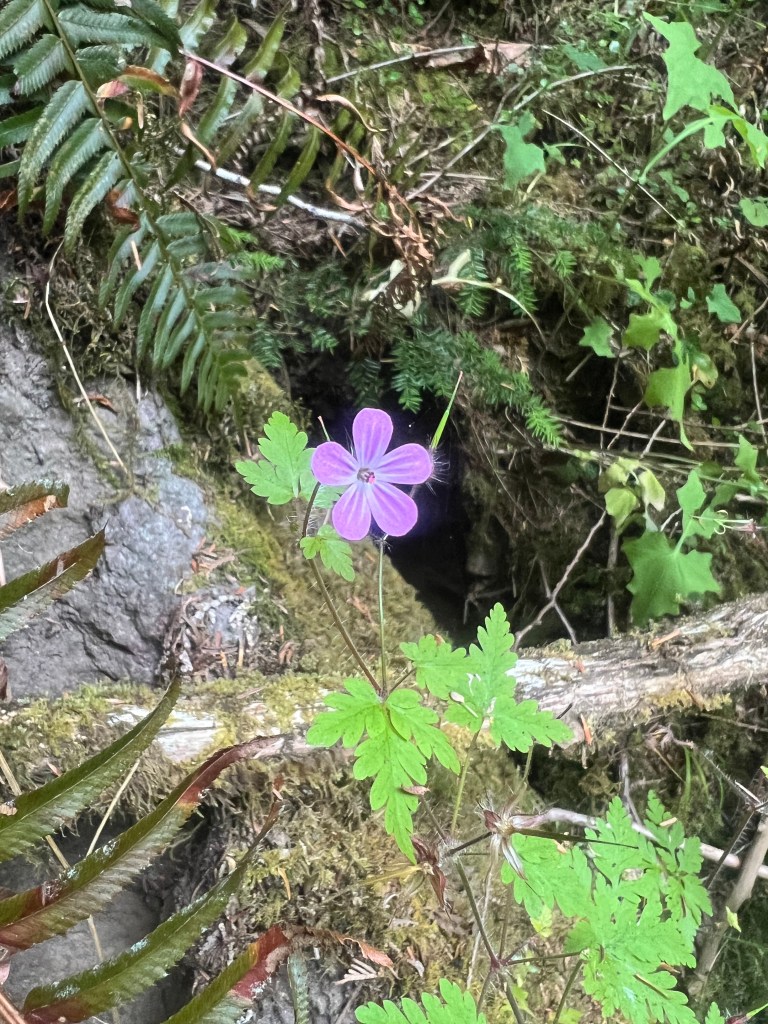
The stream elevation started to increase and with that the waterfall/pool complexes did as well, but we made it to a section of the creek that just really weirded us out. We started noticing a bunch of homemade shelters on the side of the hill and there were some obviously well worn paths around this part of the creek. I even found a stash of supplies. I was guessing we had made it below where the RV was parked. Seeing as how it was getting late anyway and we weren’t really interested in making new friends with anyone who may call this spot home, we decided to hike out. The easiest route out would take us right up to where the RV was parked, which in hindsight probably wasn’t very smart on our part, but thankfully no one was outside. As we passed Blake pointed out the Narcan packaging sitting out on their camp table ready to be put to use! It really did feel a lot like North Georgia up here after all, lol.
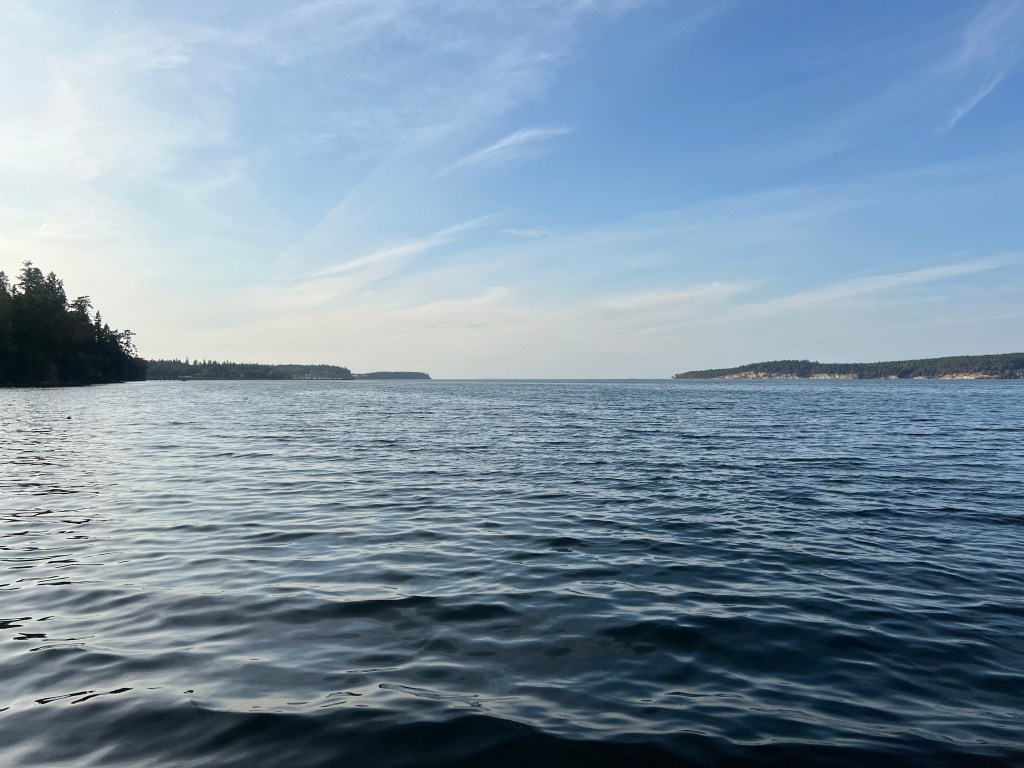
We caught some fish and made it back to the campsite without issue – so first day was a success. Tomorrow we’d try to catch some “no doubter” resident coastal cutts, hopefully a little bit farther away from civilization.
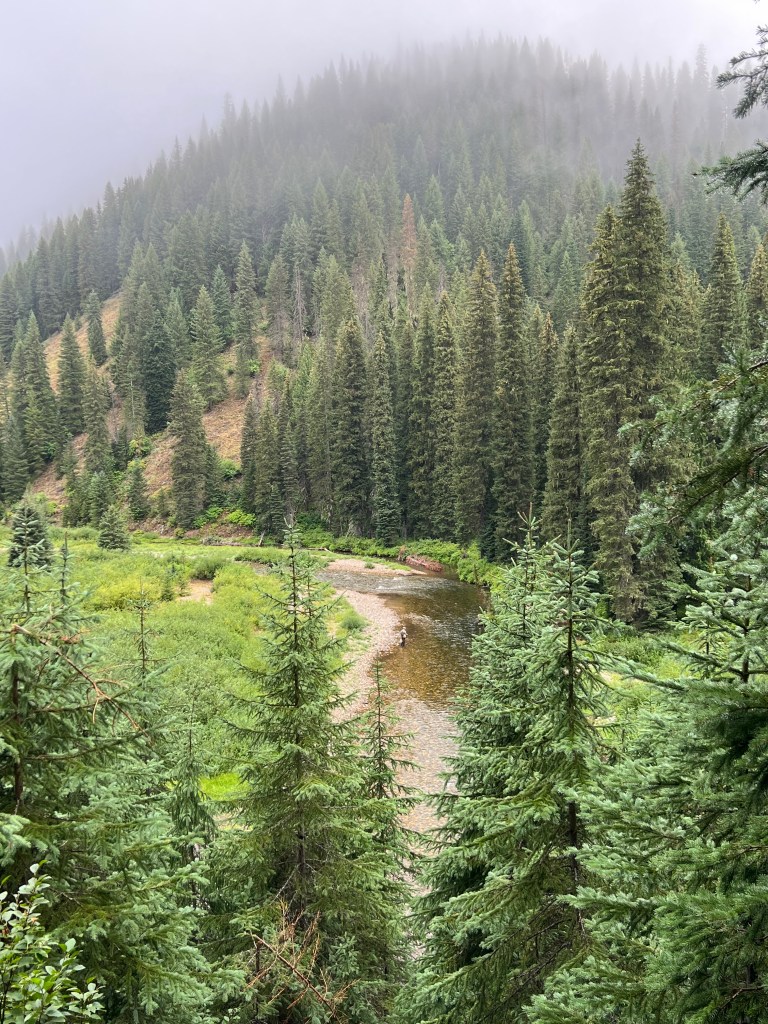
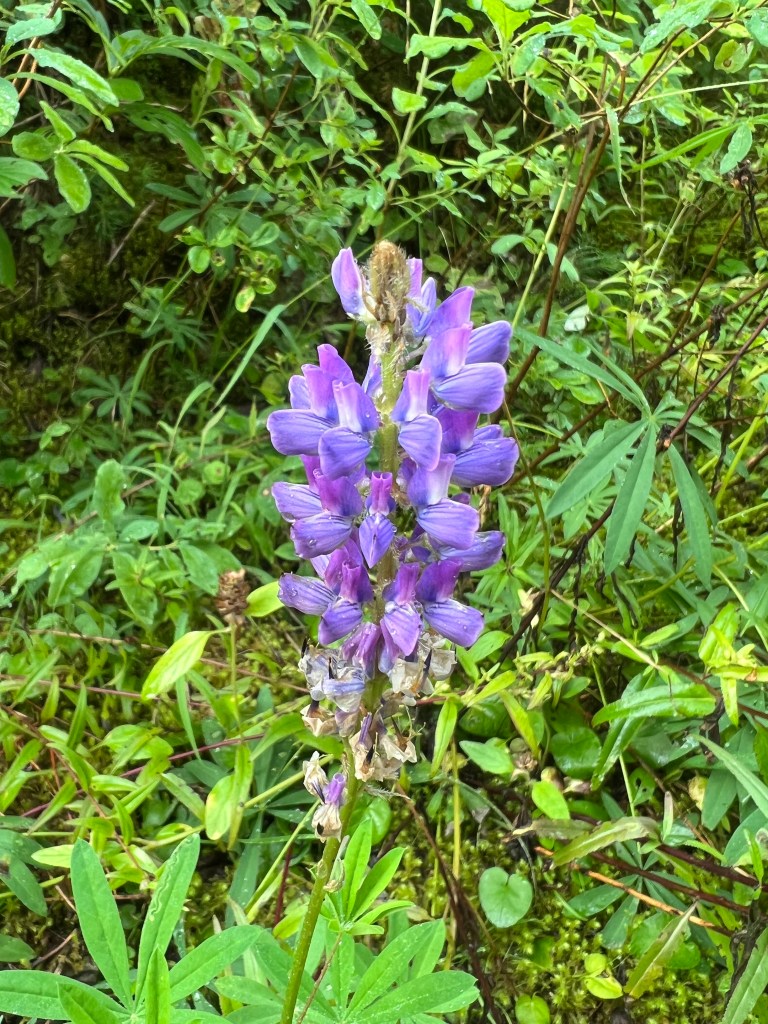
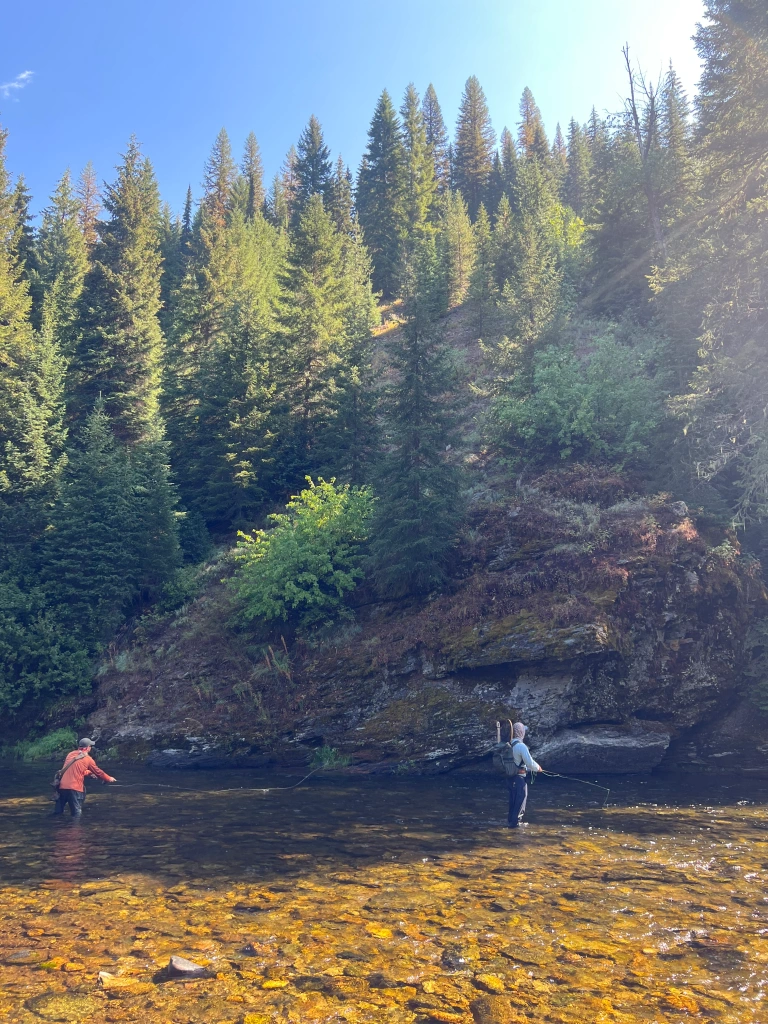
On our first full day of fishing in Northern Idaho we hiked upstream from our campsite, on the trail that ran along the river and away from the roadside accesses, and into the backcountry. When the itch to fish was too strong to ignore we found a goat trail to descend down to get the day on the water started.

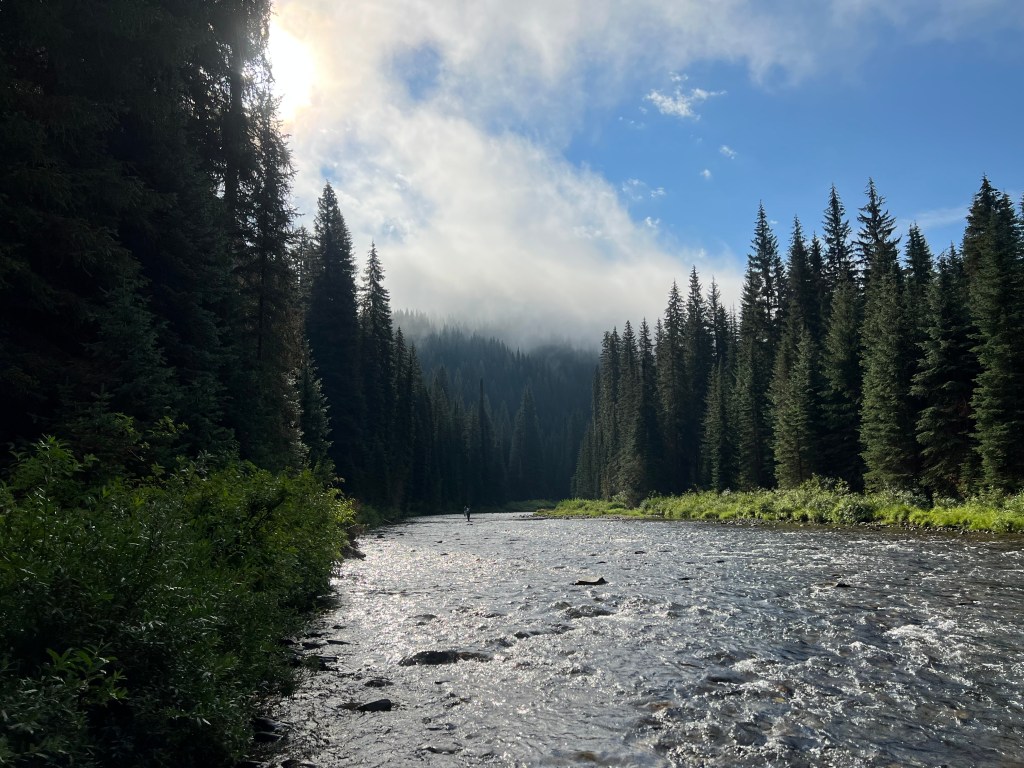
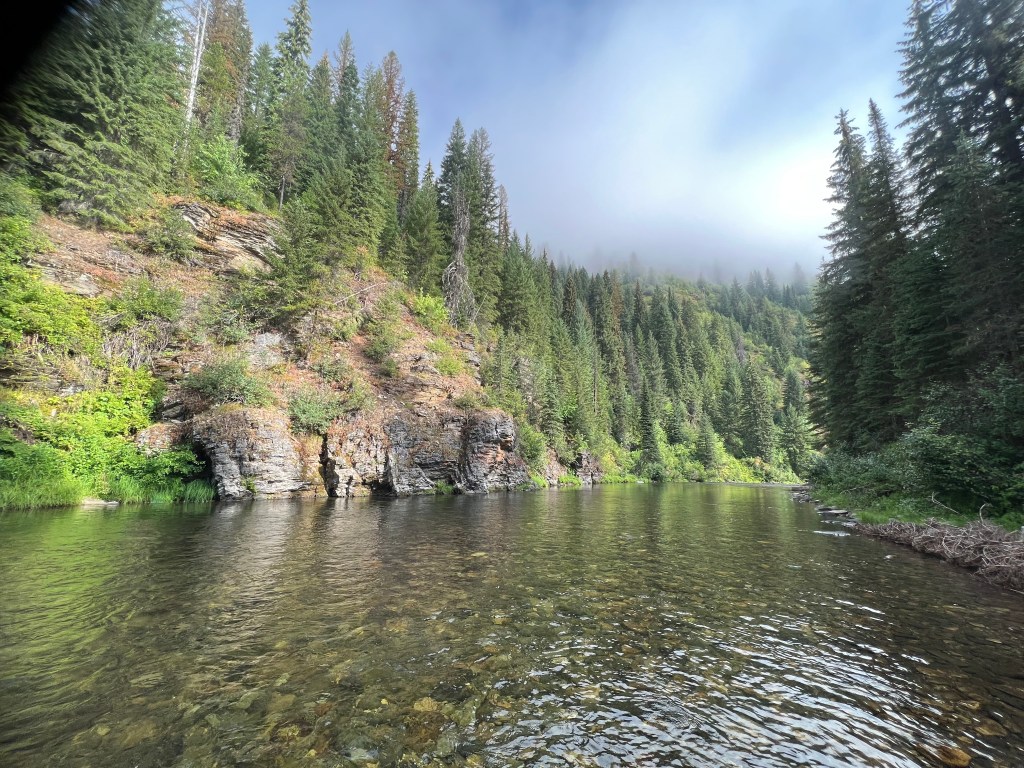
It was hard to see the river through the thick vegetation so when we did pop out of the woods to the riverbank, the setting was pretty idyllic. The fog over the river was beginning to burn off and to the downstream side on the far bank was a big rock wall that looked fishy as hell. It was hard to imagine a better place to start fishing. I didn’t start catching immediately though. I was fishing a dry-dropper setup with a pretty big Chubby Chernobyl up top and a fairly large stonefly imitation below and was getting lots of interest and several bumps on the dry. I downsized my rig and starting getting into fish.

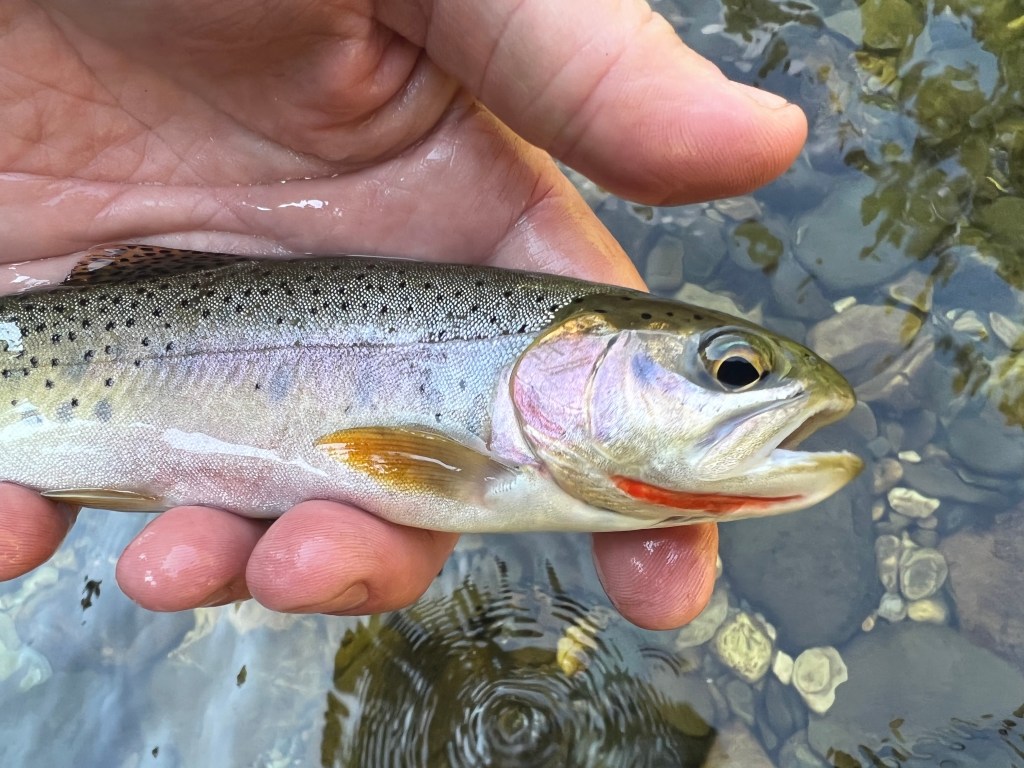
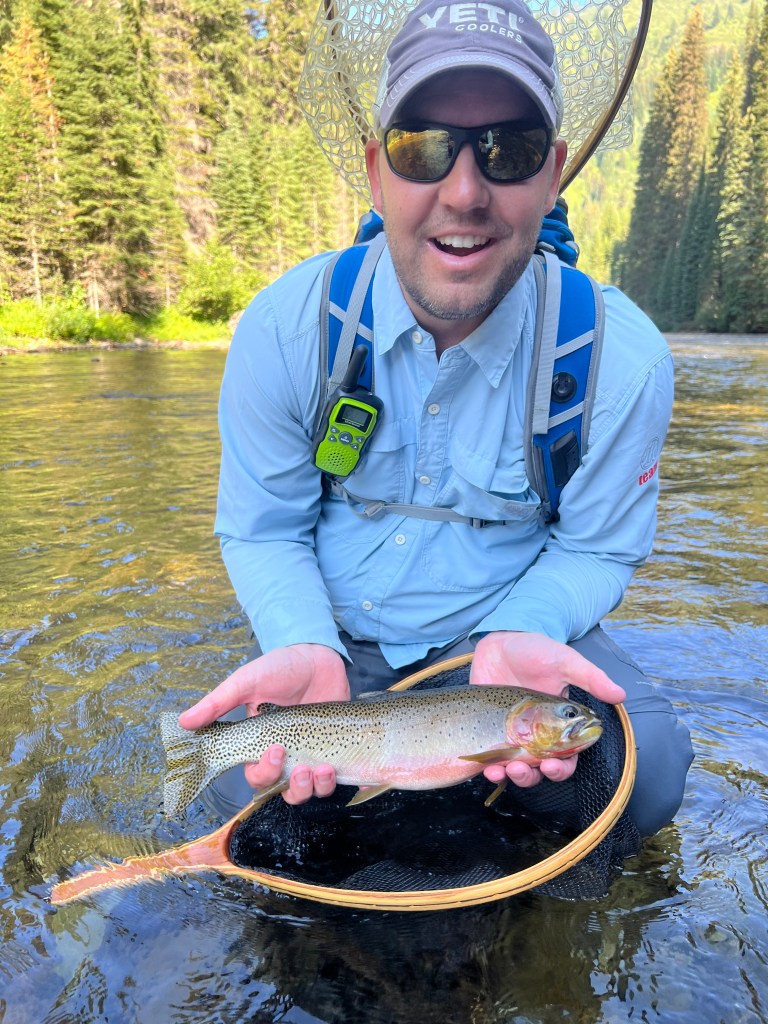
Westslope cutthroat trout (Oncorhynchus clarkii lewisi)
That telltale cutthroat slash

Things were going pretty well, fish were being caught, however we were missing just as many fish as we were catching, if not more. The regulations on this river dictate that we were fishing single, barbless hooked flies and coming from the land of the meathaul, it took a little time to get adjusted to that.

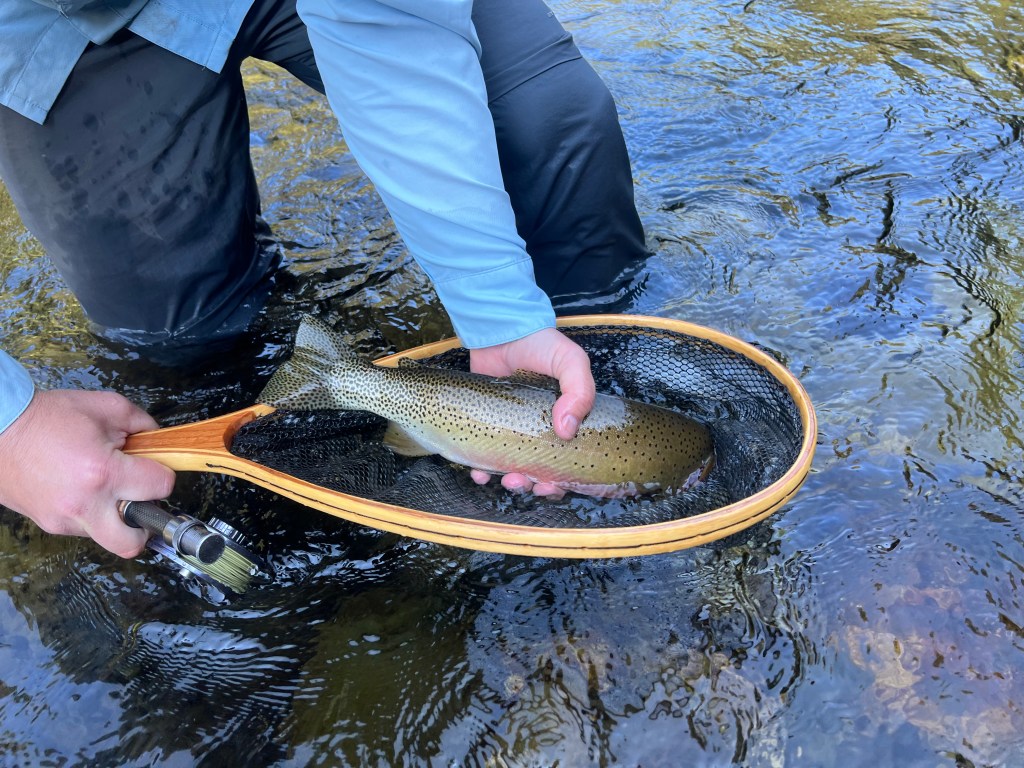
About an hour and a half into fishing I tied into a fish with some size. It ended up being the largest fish I would catch on the trip and one of the main reasons we came to this specific watershed. Catching an above-average Westslope was something I wanted to accomplish on this trip and this fish checked that box for me. This was the first Westslope I had caught with the rose and salmon coloring on it’s belly, something I’d find out later most of the bigger fish were sporting. It made for an absolute beauty of a fish, a special fish, one that was a lot of fun to tangle with.

We just recently got back from a family vacation to North Georgia. I was able to get a little fishing in on the creek behind the cabin while up there and I even snuck away to a blueline one morning to fish for some brook trout. The southernmost native range for the brook trout is found in North Georgia. Don’t mistake that for being fringe habitat, Georgia is a great place to target little wild brookies.

The water was low and clear the entire week we were up there, making fishing on the creek at the cabin a little more technical and a bit tough. I figured I’d be in dry fly heaven on a blueline trip, but waited all week to go and overnight a bunch of rain dumped in this little watershed that’s a tributary to the Toccoa River. I really didn’t know what to expect heading out to fish, but figured at worst I’d have a nice walk in the woods, so I was heading out to fish regardless.

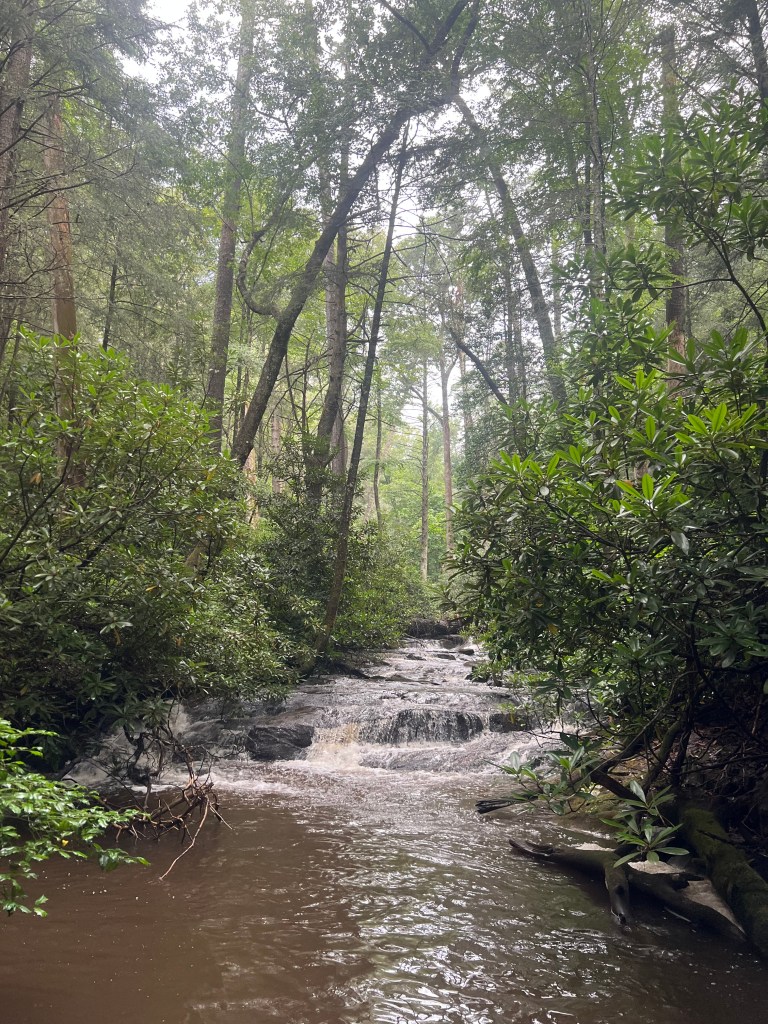
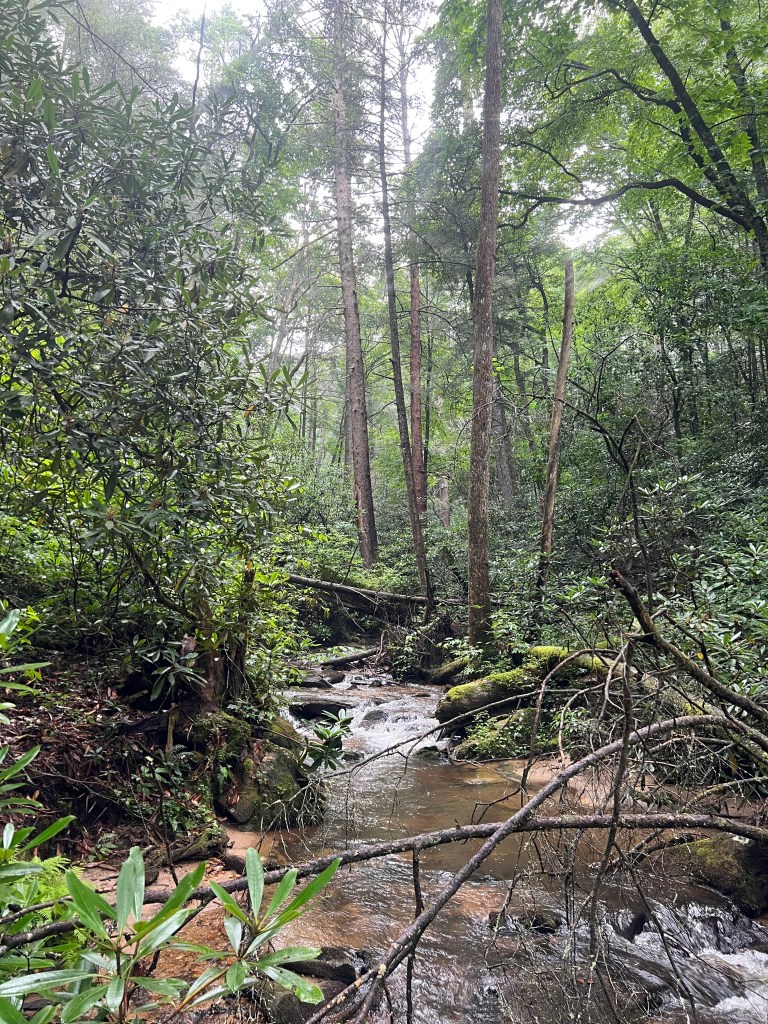
Upon walking up to the creek, it was obvious the water was high and stained, but I could still see bottom in areas so I wasn’t completely disappointed. I just had to change up my dry fly expectations and focus on something subsurface. I tied on a jig bugger and went to work.

I’ve never fished this creek before so this was also a bit of a scouting trip. I knew it had brook trout based on research, but I really wasn’t sure how far up I had to go before I found them. I planned out my access from a topo map and would fish up to a road crossing from there.

The creek was a bit of a mess early on. Lots of downed timber and tight casting windows through rhododendron tunnels. Lots of bow and arrow casts were made. Water that would be perfect for a dry fly had the conditions been there for it. There were spots where it opened up a bit and eventually, maybe an hour into my trip, I even missed a strike. That was the glimmer of hope I was looking for!

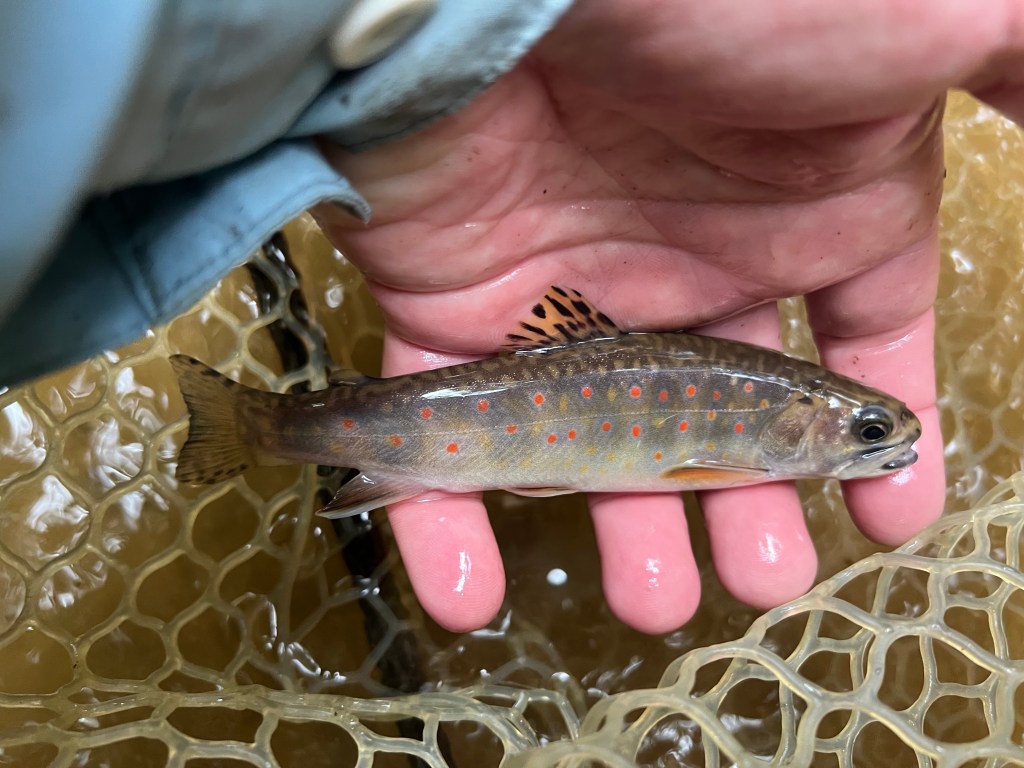
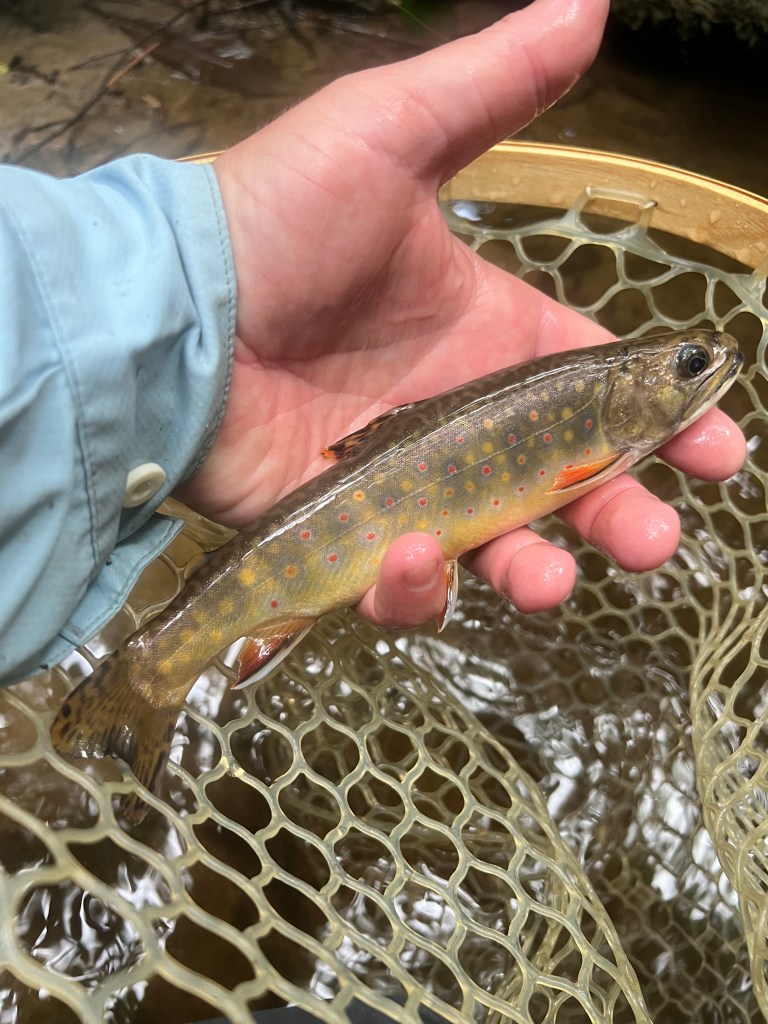
A few holes later and I actually had my first fish on. When I got it into the net I could tell it was a brook trout and had validation that this indeed was a good place to access the creek.

It was a little guy, but a native brook trout nonetheless, mission accomplished. Pressure was off now, but I wasn’t done fishing. I kept climbing up the holes and the further I got upstream the better the water started to look. It could have been time since the last rain, passing up a big feeder creek, or a combo of both, but eventually I felt like I may be able to now catch them on a dry-dropper rig, so I re-rigged.

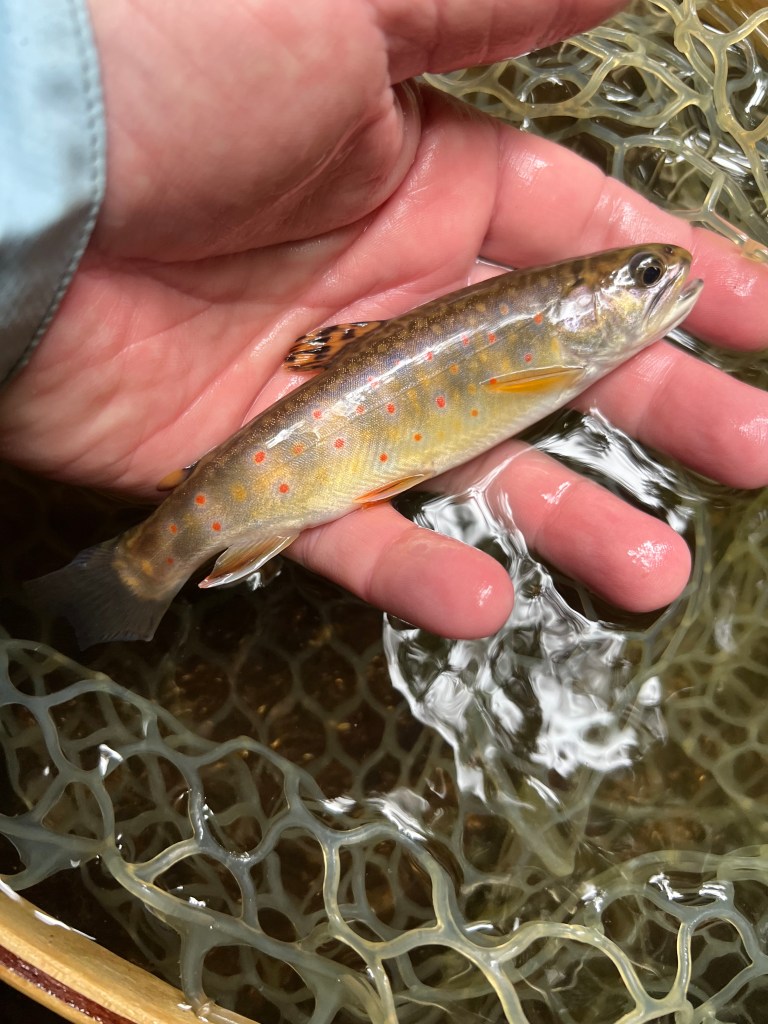
The re-rig wasn’t a failure as soon after I landed another brook trout, this one a little bigger than the last. He ate the dropper nymph, which was a little BHRLHE (beadhead rubber-legged Hare’s Ear). It was a good fight on my 3/4wt TFO Finesse glass rod.

Things were going pretty good, I was continuing to work my way upstream, and I felt like the fishing was picking up. It was about this time that God decided I needed a little excitement in my life. As I moved around a live tree that was downed in the water I went to cast to the next hole and got buzzed by a big fly. Next thing I know this sucker lands on me and I feel a big punch on my eyebrow. It was a big ass hornet! He wasn’t alone either. I threw down my rod, started swatting around my face with my hat, dropping my sunglasses in the process, got stung two more times on my left hand, and tore off upstream a short distance until there was a logjam I’d have to navigate over or around. I was hopeful this was far enough away that they were done chasing and thankfully it was. I swiftly and calmly recollected my things and nursed my wounds as I traversed the logjam now keenly aware of my surroundings. As far as I knew I wasn’t allergic to hornets and when I didn’t see any significant swelling on my hands I figured I could press on.

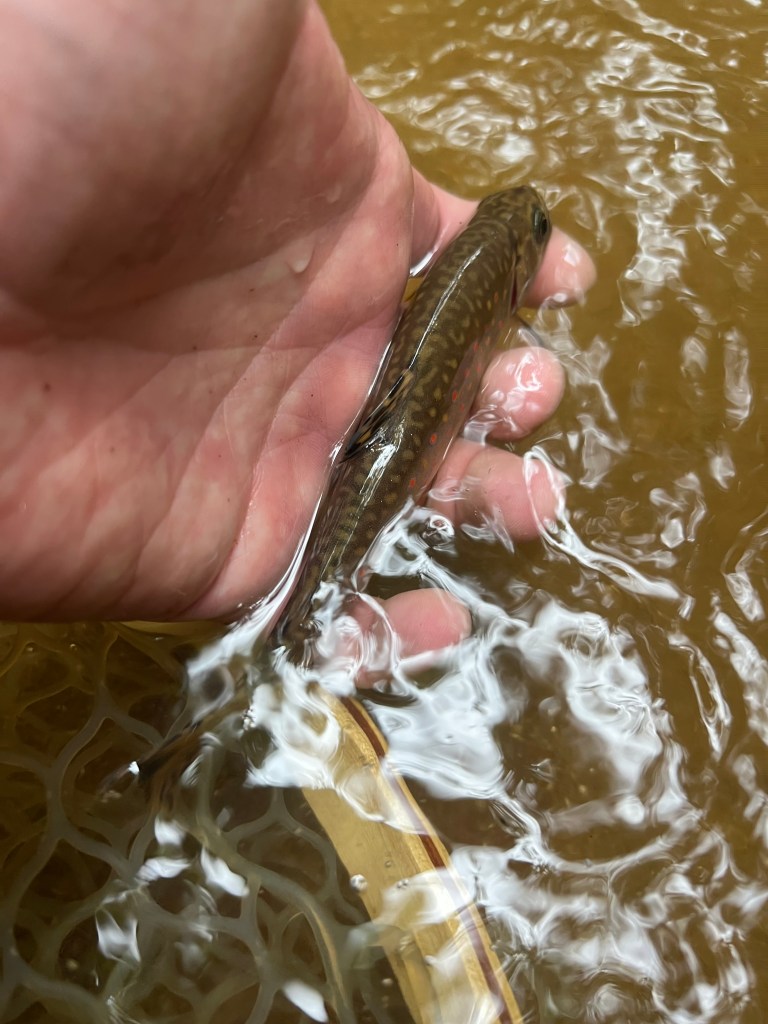
I was glad I didn’t panic and kept fishing because things were heating up. I caught two in a row shortly thereafter and then my biggest fish of the day. It happened while I was fishing a tight run under some overhanging rhodos. It was a good fish, longer than my hand, which was saying something for a North Georgia native. The sky darkened up on me just as I was landing the fish so the pics don’t really do it justice – it was so dark out that my phone was in night mode taking pics.

It was only a matter of time before the skies would open up, but for some reason that wasn’t much of a concern to mean until they did. I failed to pack a rain jacket or even an extra pair of clothes so it was sure to be a wet ride home. I managed one more little guy before I got to a massive barrier falls. I didn’t even know it was here as it wasn’t labeled on the topo map. It was impressive though. It was here that the rain started falling and it fell hard.

It was raining, it was lunch time, I had reached a surprise waterfall, caught a few brookies and survived a run in with some hornets. It seemed like as good a time as any to head out. It was cool catching brookies below this barrier falls, perhaps there was another one downstream. I know there are plenty of rainbows in the mainstream of this watershed so something has to be preventing them from getting up this far. I’ll have to re-visit this blueline next time I’m in town and see if I can find that point further downstream.