Archive

Tag Archives: Arctic grayling

It took a while to go to sleep the night before, thanks to the noisy neighbors, but once I fell asleep I was out.  It was the only night we would be sleeping above 10,000 ft and I feared it would be the coldest night of the trip, but it wasn’t, it was actually quite mild and I was very comfortable.  I needed a good night’s sleep too as we prepared to hike in about three miles to the lake we wanted to fish.  This time we would be targeting arctic grayling, another new species to us.

Arctic_grayling_JosephRTomelleri_copyright

We planned to fish Marjorie Lake, a lake that according to Utah DWR was last stocked in 1952 with grayling, so the population has been naturally sustaining itself ever since.  I don’t think grayling were ever native so Utah, so I’d say that was as close as we were going to come to a natural population – at least on this trip.  Here’s more from Utah DWR about fishing for grayling in the Uintas:

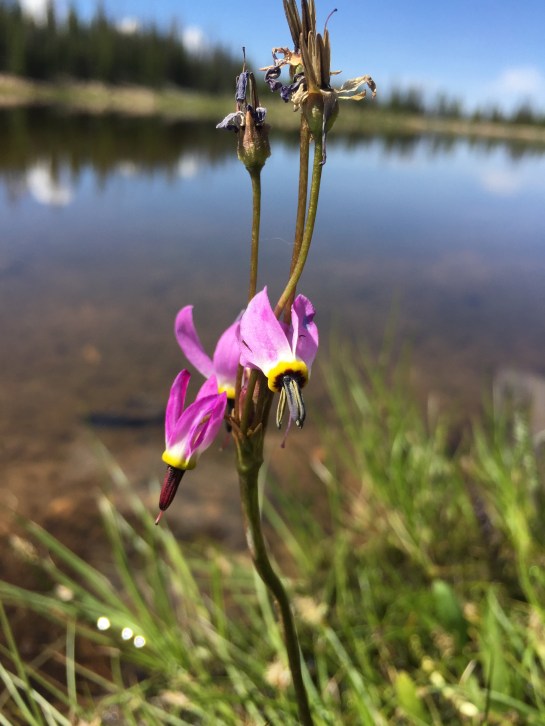
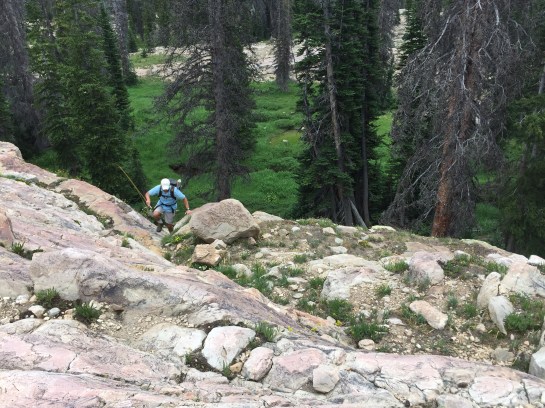
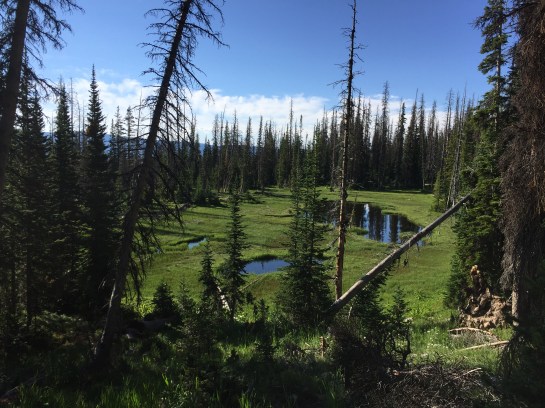
The hike in from the Crystal Lake trailhead was relatively flat, there is one mountain you have to skirt around, but the grade is not killer.  The hike takes you past several ponds, open meadows full of wildflowers, a few creeks, and it has great views of some of the nearby mountain peaks, like Mt. Watson for one.

IMG_2985

IMG_2986

IMG_2990

About two miles in we ran into some local wildlife, a herd of cattle.  It’s kind of amazing to see them at such a high elevation.  They had a bull with them who was keeping watch, thankfully he wasn’t aggressive and we were able to navigate around them.

IMG_2991

IMG_2992

IMG_2993

IMG_2995

I had some time to think during the hike and I was a little nervous that when we’d arrive at the lake we’d find that it was just like the lakes we fished yesterday and action was going to very minimal – I didn’t know what to expect having never been there.  The good thing was that there are several other nearby lakes so we had options should one not work out.

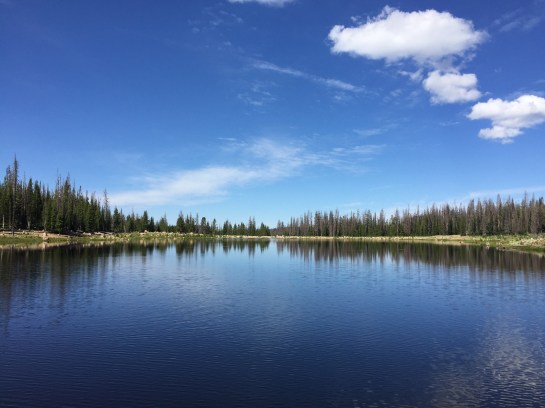
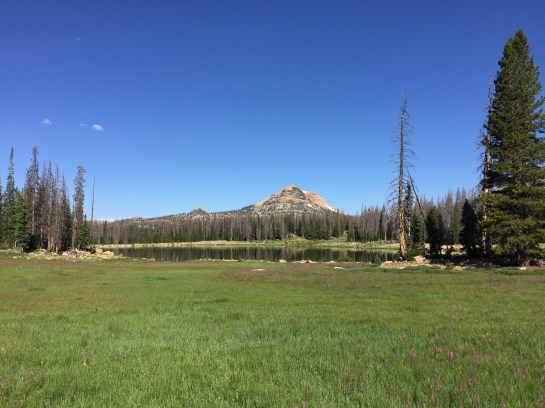
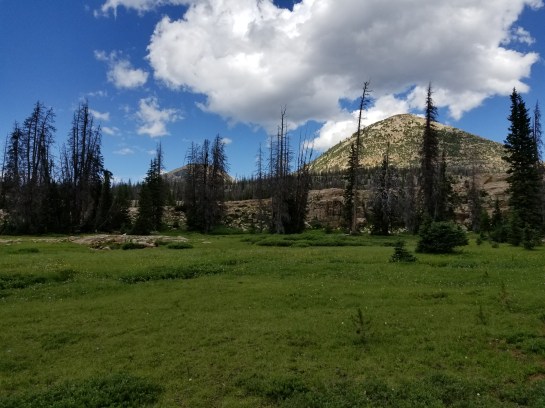
The lake was so beautiful at first sight that any kind of mild apprehension I had of how the day would go vanished, because even if the fishing sucked, at least the scenery didn’t.
IMG_3001

IMG_2999

When we got alongside the lake we noticed several rising fish just at the edge of our casting distance.  There wasn’t any discernible bug coming off the water so I tied on a Griffith’s gnat and hoped for the best.

IMG_3003

IMG_3008

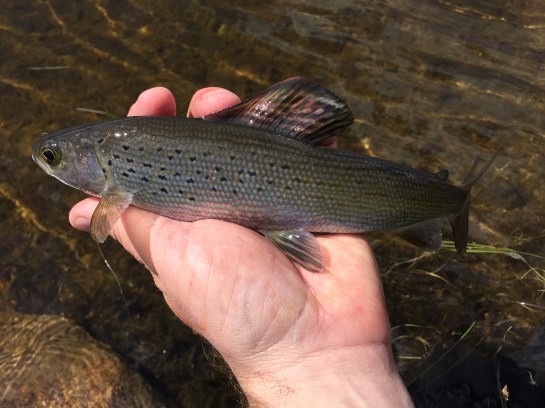
After a few misses I was finally able to get one on the line.  They have very quick takes and you really have to be ready to lift the rod when they eat.  I also suspect we were around a lot of small fish and they were just a bit harder to hook.  Catching them was just a matter of casting to a rise ring and waiting for the eat.  If you could get it in the ring shortly after you saw one then chances were good it was still in the area and would find your fly.  Thankfully the fishing here would not suck!

We started making our way around the lake, looking for bigger fish.  Fish were rising all around the lake so it wasn’t like we were leaving fish to find fish.

IMG_3014

IMG_3015

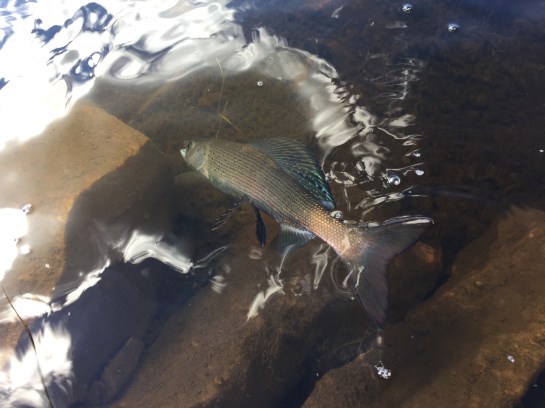
I didn’t have to go too far to find the big fish on the day.  I made it to a point that was surrounded by deeper water and cast to a rise out in the deeper water and was rewarded with a good eat from a solid fish.  With the water being a bit deeper any fish with size put a bend in the glass rod and this one was giving me some solid runs.
IMG_3020

IMG_3026

IMG_3030

I don’t know what his size was, I just know he was the biggest on the day, and he was bigger than I anticipated we’d run into.  I caught a few more fish off that point before I caught back up to Blake.

IMG_3042

IMG_3043

IMG_3044

When I did catch up to Blake he was catching some nice fish from some old tree trunks sticking up out of the water.  Someone came up here and sawed them off years ago and now they made for great casting platforms.

20170730_110502

20170730_111128

IMG_3051

IMG_3050

20170730_105444

20170730_105526

20170730_113405

After catching several grayling we decided to make a move to another nearby lake that I read had a population of cutthroat in it.

IMG_3059

20170730_12120620170730_121754

IMG_3063

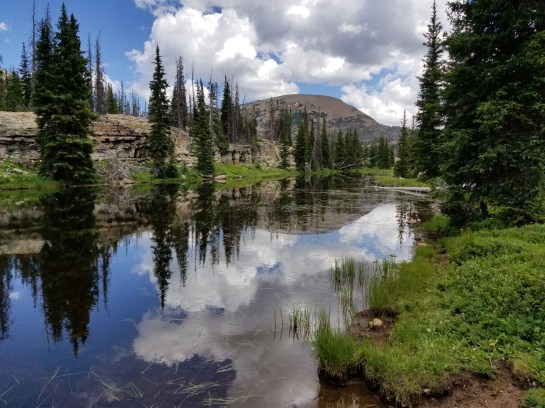
I had read some good reports from Long Pond so we decided to check it out.  The name is pretty self explanatory, it’s a long pond that is part of the outflow to Long Lake.  There were not nearly as many fish rising here, but we managed to catch a few.
20170730_122109

IMG_3065

They just weren’t cutthroat, they were brookies.  It was still a pretty place to fish though.

IMG_3064

IMG_3071

20170730_130353

20170730_125141

20170730_124700

As we were fishing Long Pond the clouds began to grow, thunder started to roll, and our once bluebird day turned into one that looked pretty ominous.  Rain started to fall and that even turned into hail at one point so we decided that we should probably hike out.  We caught our grayling, we were currently only catching brookies, and we still had a slam to complete so it was time to move on.

IMG_3077

20170730_132738

IMG_3082

IMG_3079

IMG_3087

Thankfully, we got back to the trailhead without getting soaked.  The rain was fairly light and patchy, but the clouds were still dark and foreboding, so we drove on down the mountain to go find the last campsite we’d need on our trip.  We were on the home stretch, just needed to catch a Bonneville cutthroat to finish out the slam.
IMG_3097

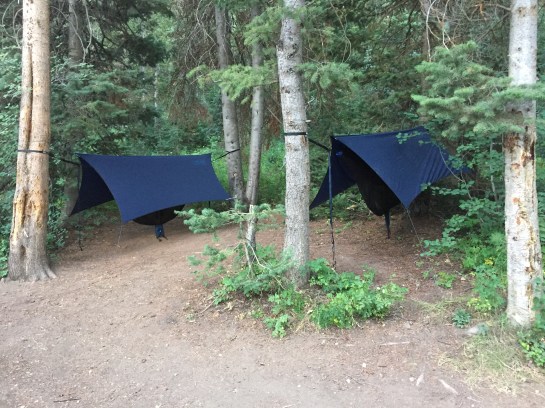
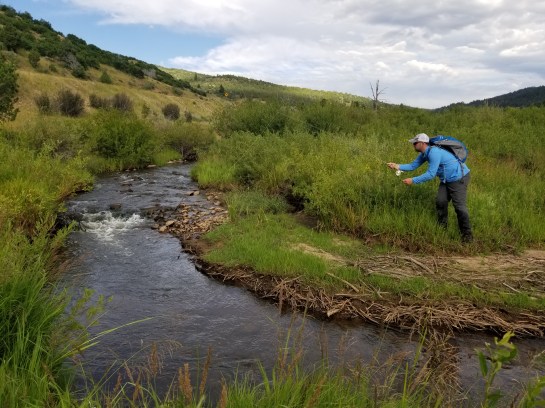
With it being Sunday afternoon finding a campsite was a breeze and after setting up our hammocks we headed to a Weber River trib right off the highway to try and complete the slam.  It looked fantastic from the road and I think we both thought finishing the slam today wouldn’t be much of a problem.

IMG_3090

IMG_3091

I should have known that if the only fish to attack my fly in a good pool was some kind of shiner that we’d be in for a tough afternoon.
20170730_175613(0)

20170730_182355

We covered a lot of ground, fished a lot of good looking water, there just wasn’t many fish.  I have no idea why they weren’t there, the water was a bit on the warm side, that might of had something to do with it.  Blake was finally able to catch one small cutthroat and with that he had completed his slam!  The pressure was off now for him so it was now up to me to catch one.

IMG_3092

20170730_174447

IMG_3095

I never caught one though.  It was a bummer, but we still had tomorrow.  It would be our last day to fish, so I had to complete the slam then.  We headed back to the campsite, got a fire going (with wood someone had graciously left behind), ate dinner, then called it an early night.  This time there weren’t any neighbors around to keep us up.

IMG_3096

Edit Page

The salmonids are in family Salmonidae, which has 10-11 genera that is divided into 3 subfamilies; Coregoninae(whitefish), Thymallinae(grayling), and Salmoninae(char/trout/salmon). Living in the Southeast you have access to a very limited amount of salmonids and I’ve caught the 3 that occur in Georgia.  The brook trout is the only native trout species in Georgia and it is actually a char. 

Updated, December 2025: I made my first trip out West in September of 2012 to Colorado and caught several “greenback” cutthroat trout in Rocky Mountain National Park – or what were considered greenback trout at the time.  Made another trip out West in August of 2013 to Teton and Yellowstone National Parks where I picked up another cutthroat species and mountain whitefish.  In August of 2015 I was able to complete the Wyoming Cutt Slam, picking up Wyoming’s four native cutthroat species (they do have a fifth, the Westslope, that is not required for the slam).  In July of 2017 I completed the Utah cutthroat slam, which didn’t necessarily add any new species to the list, but I was able to add Bonneville cutthroat outside of the Bear River drainage and Bear River cutthroat, which some consider genetically distinct. In June of 2021 I made it out to Arizona and New Mexico to catch Apache and Gila trout in their native range. In August of 2022 I made it up to northern Idaho and caught several Westslope cutthroat in their native range. In July of 2023 I made a northern New Mexico/southern Colorado trip and caught lots of Rio Grande cutthroat in their native range.  Finally, in August of 2025 I made it out to the Olympic peninsula of Washington and caught coastal rainbow trout in their native range, coastal cutthroat, southern Dolly Varden, as well as the genetically distinct Lake Crescent cutthroat trout.

Dr. Robert Behnke is the man when it comes to salmonid knowledge. Pick up his book if you want to learn more about this particular family, “Trout and Salmon of North America”. Another great resource is Gary Marston’s Native Trout Fly Fishing blog, he has a Trout and Salmon species page with pictures and information of all those that he has caught (which may be all that are found in the U.S.). Gary’s trip reports are a good read as well, he has had some epic road trips to catch trout in their native range.

Trout found in the Southeastern United States

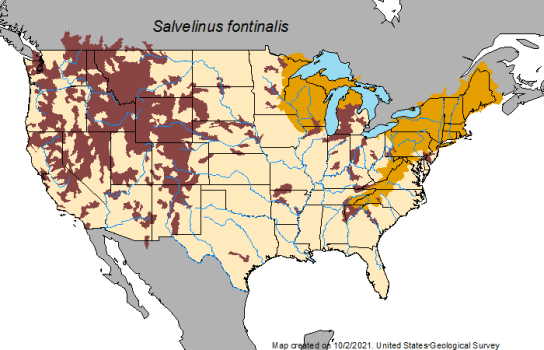
Salvelinus fontinalis – Brook trout

IMGP5747

Brook trout are the first native trout species I ever encountered as they do live in Georgia.

Salmo trutta – Brown trout

IMGP5730

Brown trout are not native to North America.

Oncorhynchus mykiss – Rainbow trout

IMGP5637

The first trout species I ever caught, happy to say that I have now caught them in their native range too!

Western Native Trout

Oncorhynchus apache –  Apache trout

Oncorhynchus gilae –  Gila trout

Cutthroat Trout

Western native trout range map source: Coyote Gulch blog

Oncorhynchus clarkii clarkii – Coastal cutthroat trout

According to Wikipedia, the coastal cutthroat trout occurs in four distinct forms. A semi-anadromous or sea-run form is the most well known. Freshwater forms occur in both large and small rivers and streams and lake environments – pictured above is the stream resident freshwater form.  The historic native range of the coastal cutthroat trout extends south from the southern coastline of the Kenai Peninsula in Alaska to the Eel River basin in Northern California.

Oncorhynchus clarkii clarkii crescentii – Coastal cutthroat trout – Lake Crescent form

Oncorhynchus clarki stomias – Greenback cutthroat trout

IMGP7693

At the time this fish was considered a greenback, but it’s more likely that it isn’t after genetic research determined that the true greenback was limited to only one stream, outside of it’s native range, in Colorado.  Work has been done to re-establish populations throughout it’s native range and hopefully I’ll have the opportunity to fish for a true greenback cutt.  Their historic range is pretty much in the state of Colorado on the Front Range, with some watersheds slipping into Wyoming. They are found in the headwaters streams of the South Platte and Arkansas River drainages.

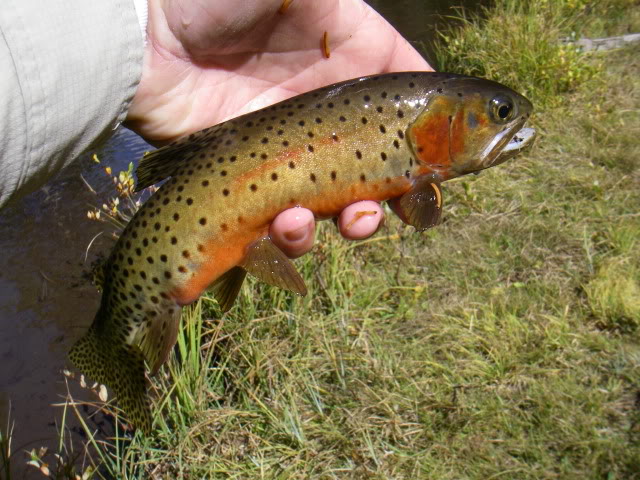
Oncorhynchus clarki pleuriticus – Colorado River cutthroat trout

IMG_2922

Their historic range is headwaters streams in the Green and Colorado Rivers, as far south as the San Juan River, west of the Continental Divide.  They are currently limited to a few small headwater streams of the Green and upper Colorado rivers in Colorado, Utah, and Wyoming, including the Escalante River drainage in southern Utah.

Oncorhynchus clarkii virginalis – Rio Grande cutthroat trout

This image has an empty alt attribute; its file name is img_8375.jpg

Their historic range is headwater streams in the Pecos and Rio Grande watersheds in Colorado and New Mexico.

This image has an empty alt attribute; its file name is riogrande_cutt.png

Oncorhynchus clarkii utah – Bonneville cutthroat trout

IMG_2871

Their historic range is pretty much in the state of Utah, with some watersheds slipping into Wyoming, Idaho, and Nevada.

Oncorhynchus clarkii utah – Bonneville cutthroat trout – Bear River strain

IMG_2727

They are found in the headwaters streams of the Bear River.  No range map was given from NatureServe or the USGS for the Bear River cutthroat trout, but they are native to the Bear River and it’s tributaries, including Bear Lake.

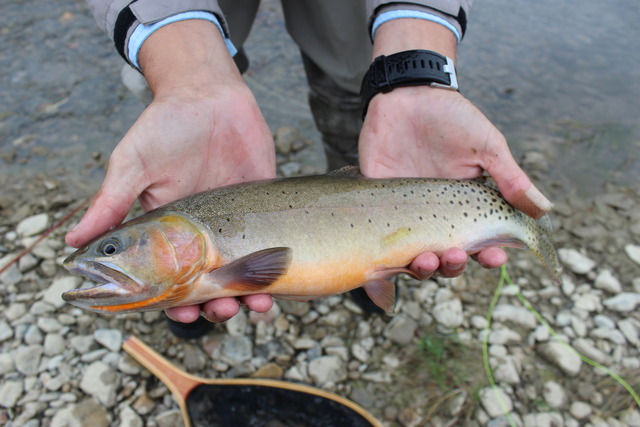
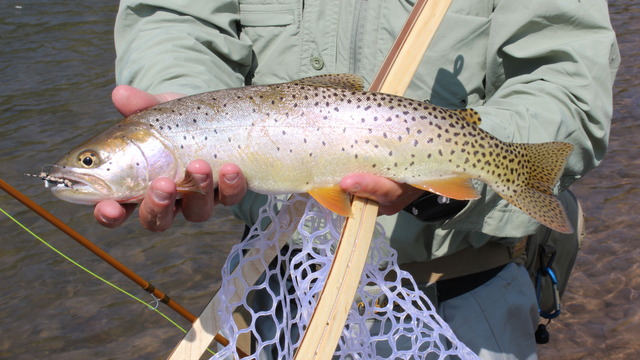
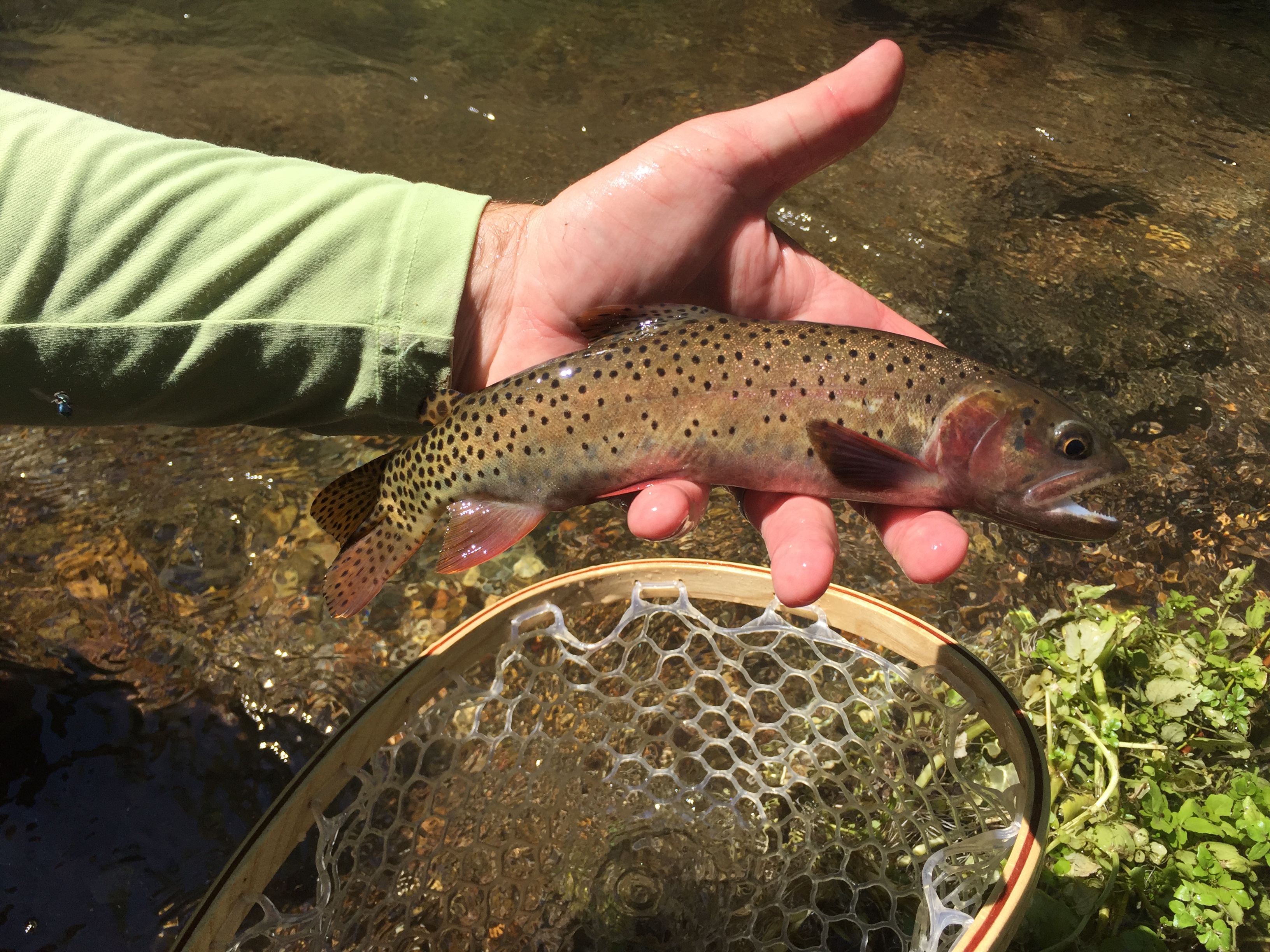
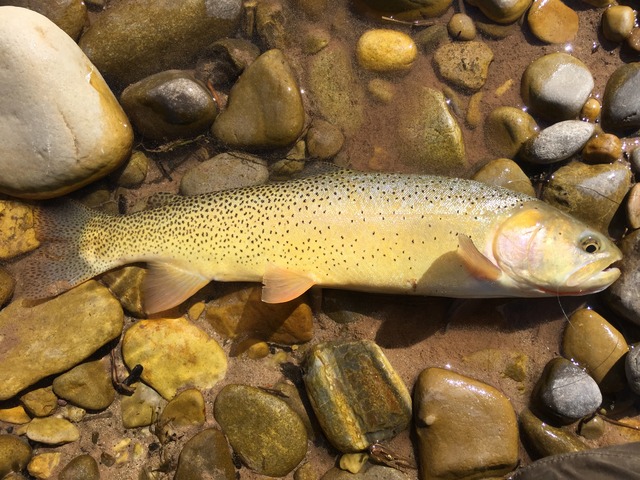
Oncorhynchus clarkii bouvieri – Yellowstone cutthroat trout

IMG_5982

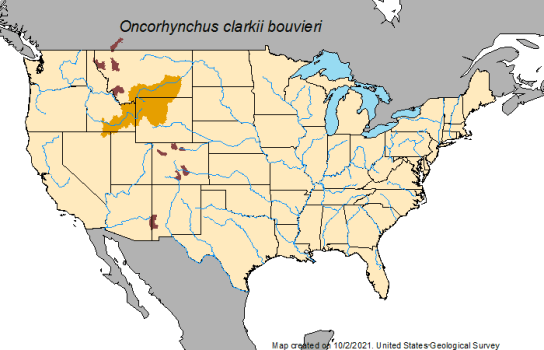
Their historic range is the Yellowstone River drainage in Montana and Wyoming and the Snake River drainage in Wyoming and Idaho.  Their current range overlaps with that of the Finespot in the Snake River drainage above Shoshone Falls.

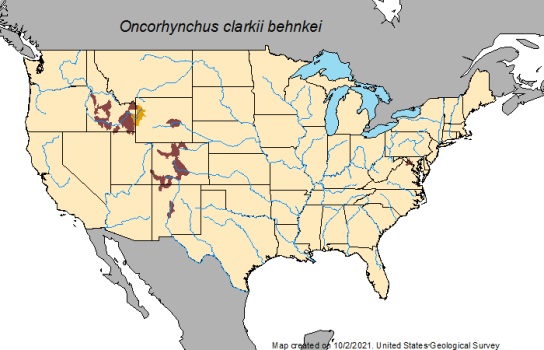
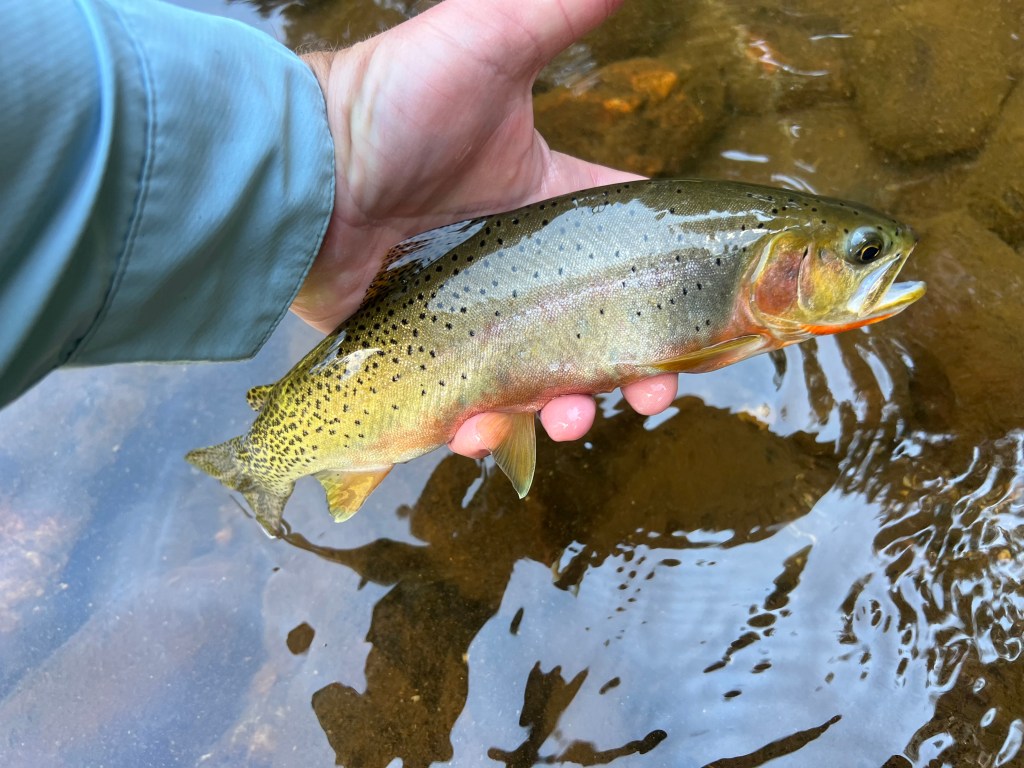
Oncorhynchus clarkii behnkei – Finespotted Snake River cutthroat trout

IMG_6017

Their historic range overlaps the Yellowstone cutt in the states of Wyoming and Idaho. They are found in the headwaters streams of the Snake River, particularly the South Fork.

Oncorhynchus clarkii lewisi – Westslope cutthroat trout

This image has an empty alt attribute; its file name is img_4158.jpg

According to Wikipedia, Westslope cutthroat trout are native in northern Idaho’s and British Columbia’s upper Columbia River system and northern tributaries of the Snake River. East of the Continental Divide in Alberta and Montana, Westslope cutthroat trout are native to the upper Missouri, Milk and North Saskatchewan rivers. In Montana, the historic range extended east to the mouth of the Judith River and south into the Madison, Gallatin and Jefferson river systems. Isolated populations of Westslope cutthroat trout exist in upper tributaries of the John Day River in the Strawberry Mountains of Oregon and Columbia River tributaries along the eastern side of the Cascade Range in Washington. Isolated populations exist in the Fraser River basin in British Columbia.

This image has an empty alt attribute; its file name is westslope.png

Other Native Salmonids

Salvelinus malma – Southern Dolly Varden

According to Gary Marston, the Southern subspecies of Dolly Varden are native to coastal watersheds from the Susitna River, Alaska south to the Quinault River, Washington.

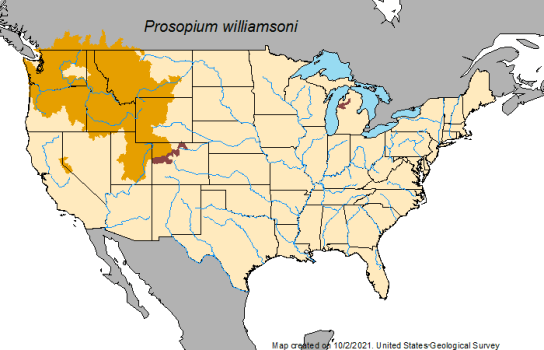
Prosopium williamsoni – Mountain whitefish

IMG_3009

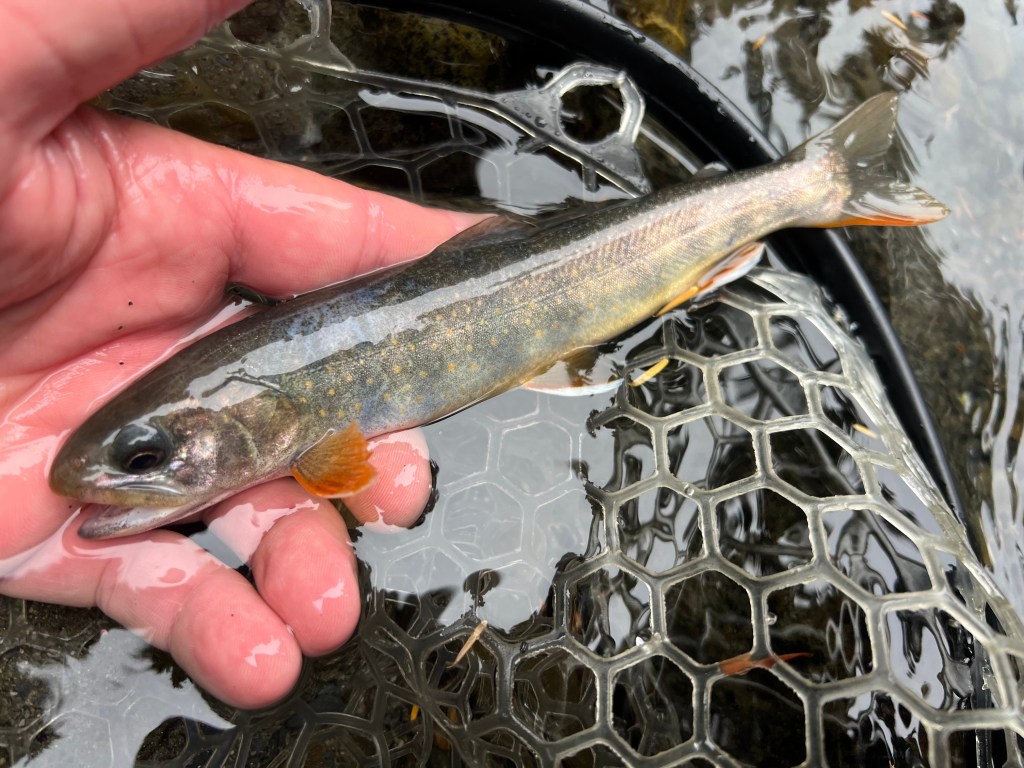
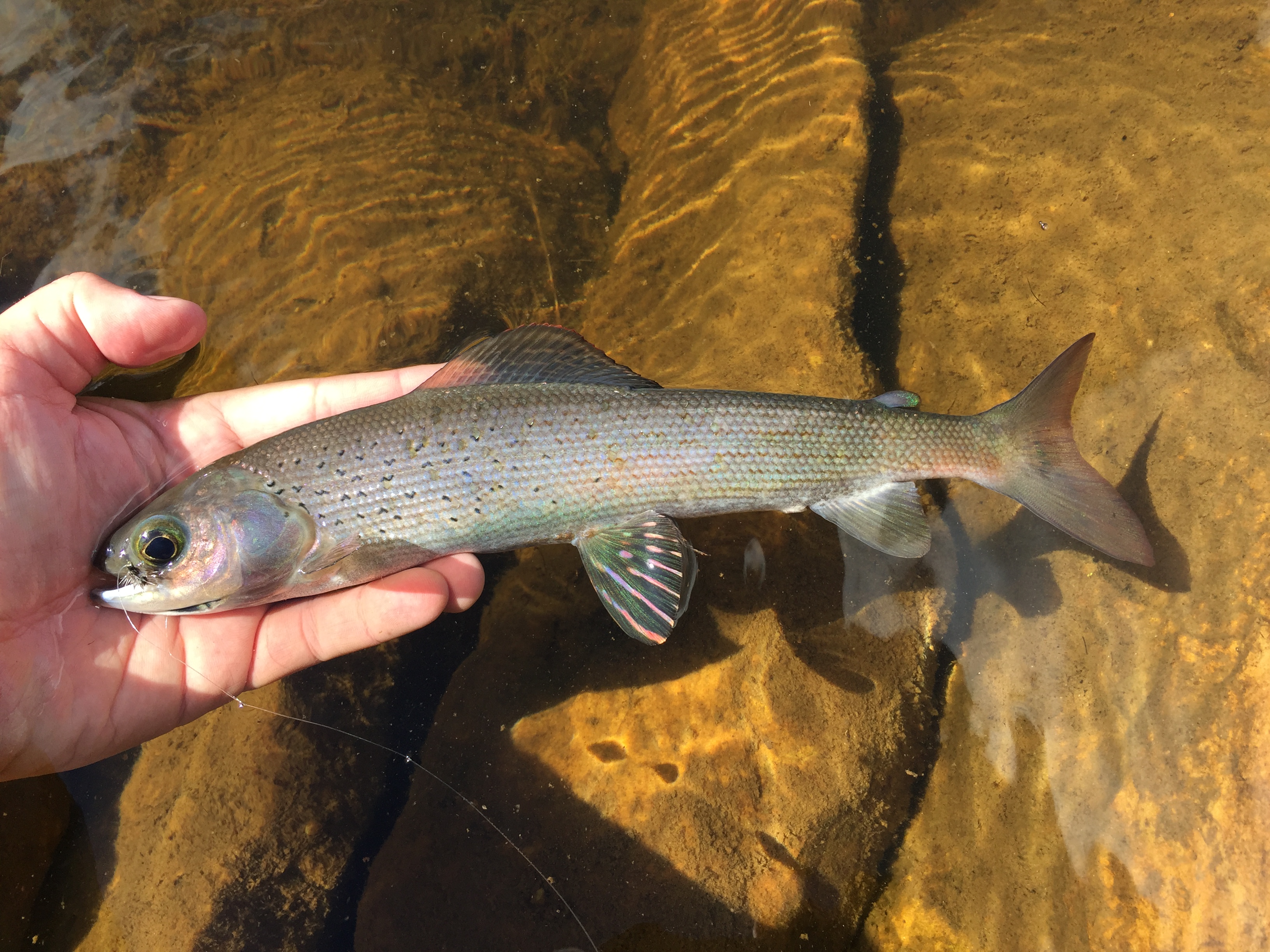
Thymallus arcticus – Arctic grayling

IMG_3039