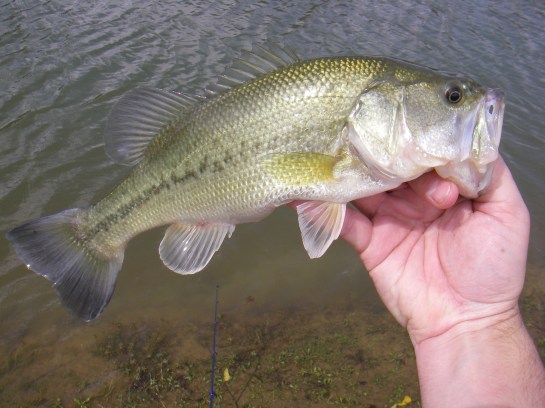
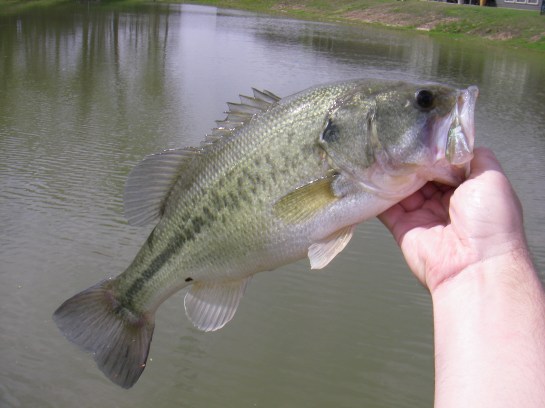
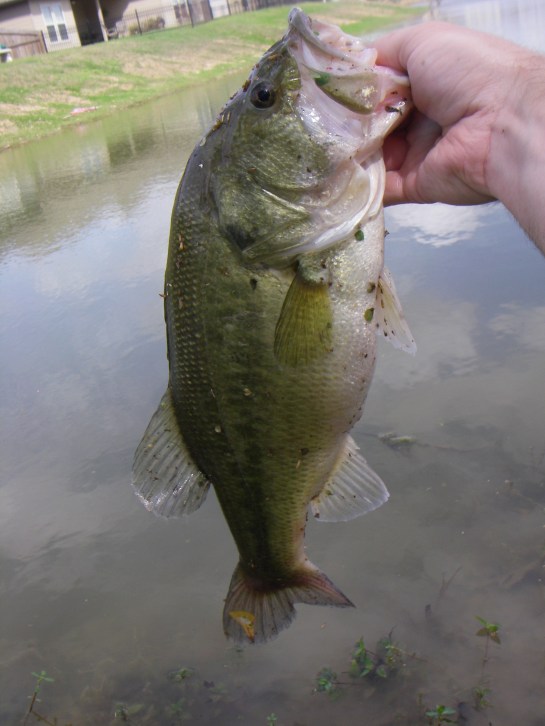
Got a chance to wet a line today in the neighborhood pond. I haven’t fished it since late January when I caught some channel cats and a pretty nice bass. Well it didn’t disappoint again. Winds today were pretty severe so I just used spinning gear, but I ended up catching 3 bass with 2 over 3lbs. I was throwing a jointed Rapala and all the hits came next to the bank. I don’t think the bass are currently on the beds, but I think they will be soon. I noticed we have at least 3 koi in this pond as well. I’ve got to figure out how to catch them on the fly. Time to do a little research….
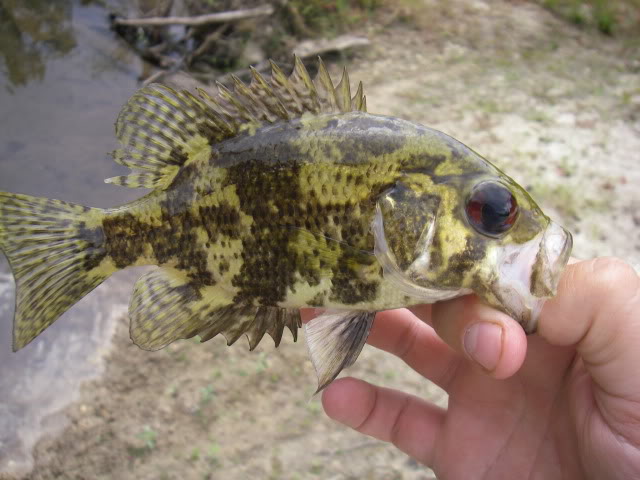
It’s the last day of February, but our temps in Louisiana are already in the 70’s. Azaleas and Japanese magnolia are in full bloom – a good sign that the bluegill are active.
I wanted to put together a total list of fish species I’ve caught, just to try and keep a running tab. Hopefully it will continue to grow as I fish more new waters. I think I get just as excited catching new species as I do catching truly big fish. I’m not on any kind of mission to catch a certain number of species, I just think it will be interesting to maintain and revisit the list from time to time. It should also help to serve as a place to ID a fish that you’ve caught, but have no idea what it is. Of course, I’m not a biologist, so take what I post with a grain of salt, most of my knowledge comes from experience, and the internet. In time I will add other freshwater fish from different families, then move on to saltwater, but for now here are the sunfishes.
Warning to some though, things are about to get nerdy. I’ll separate each species according to it’s taxonomy. Today I’ll start in freshwater with the sunfishes, family Centrarchidae, which has 8 genera, and 34 species native to North America. So far I’ve caught 21 of them. It helps to live in the Southeastern U.S. if you want to catch a variety of sunfish.
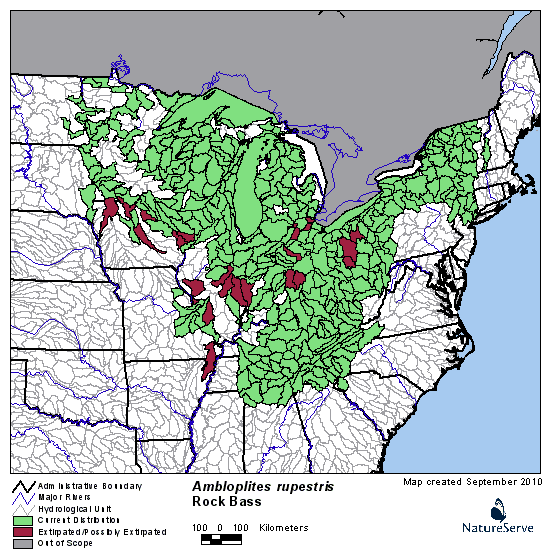
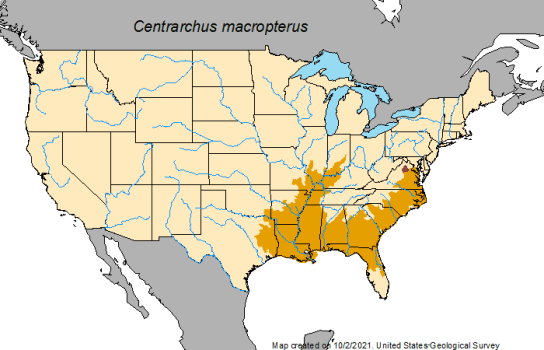
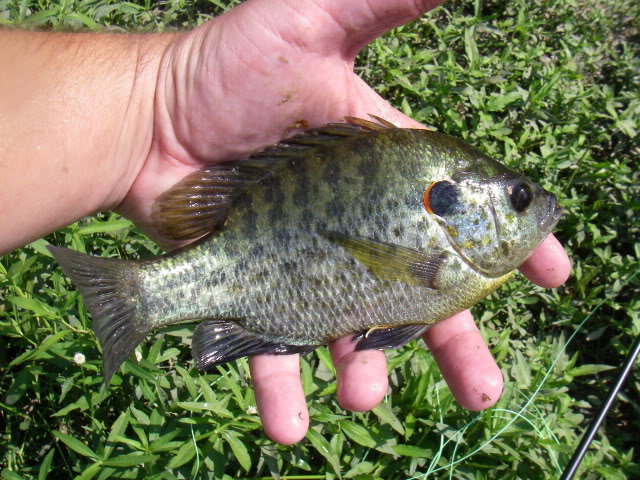
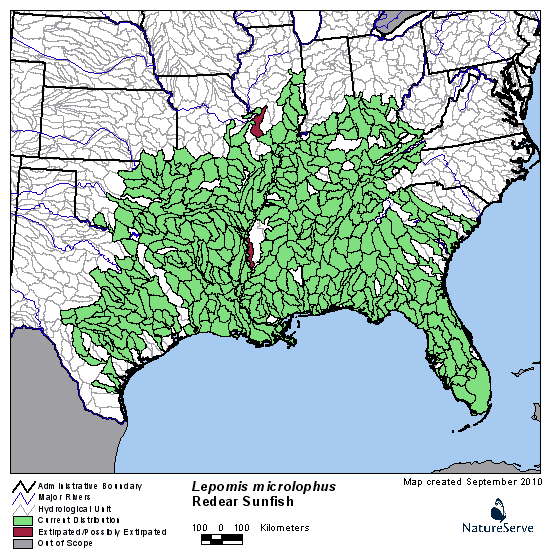
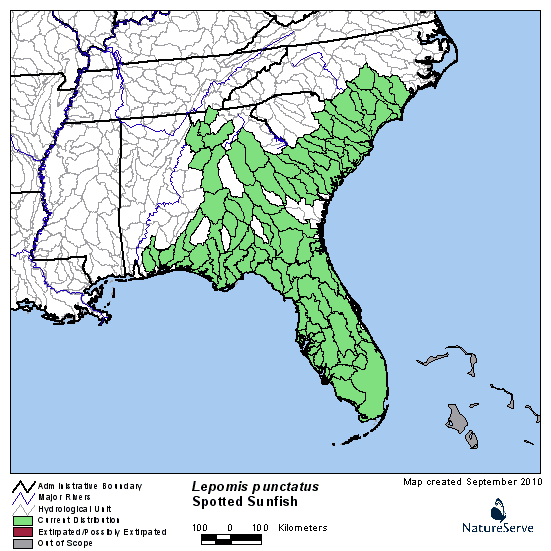
Where possible I’ll put up a picture and a distribution map of those that I’ve caught. Click the map for more information about that particular species. The distribution maps come from the original NatureServe Explorer or the USGS Nonindigenous Aquatic Species site. Both are pretty good resources for finding information on specific plants and animals. I did not produce these distribution maps so I can’t confirm their complete accuracy, but I do trust they are mostly accurate.
Update, June 2018: Both of Lance Coley’s articles on black bass species have gone the way of the do-do. Tim Bonvechio and Patrick Cooney have a pretty good article on black bass up on The Fisheries Blog highlighting the 9 species that the scientific community are in agreement on. Work is being done to add more and those are mentioned in the article as well, so be sure to check it out.
Update, April and August 2021: I added a few new-to-me species this year and updated range maps for species that didn’t have one or where the range map info was old and outdated
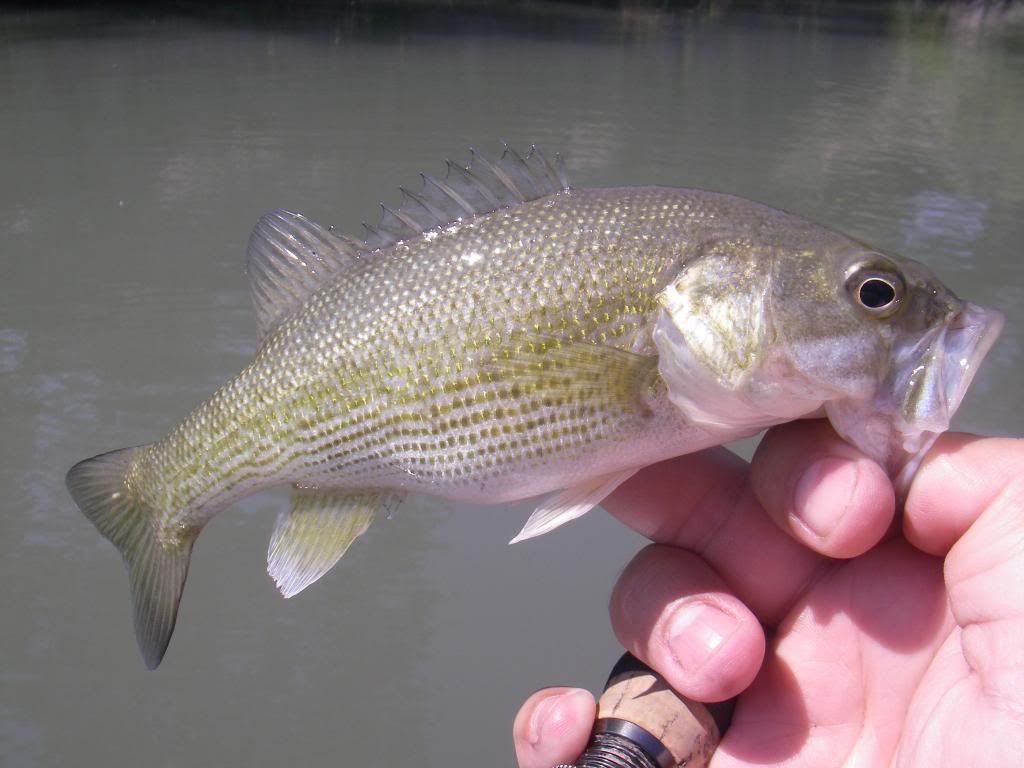
Micropterus hensalli – Alabama bass (formerly Spotted bass, of the Mobile River drainage)
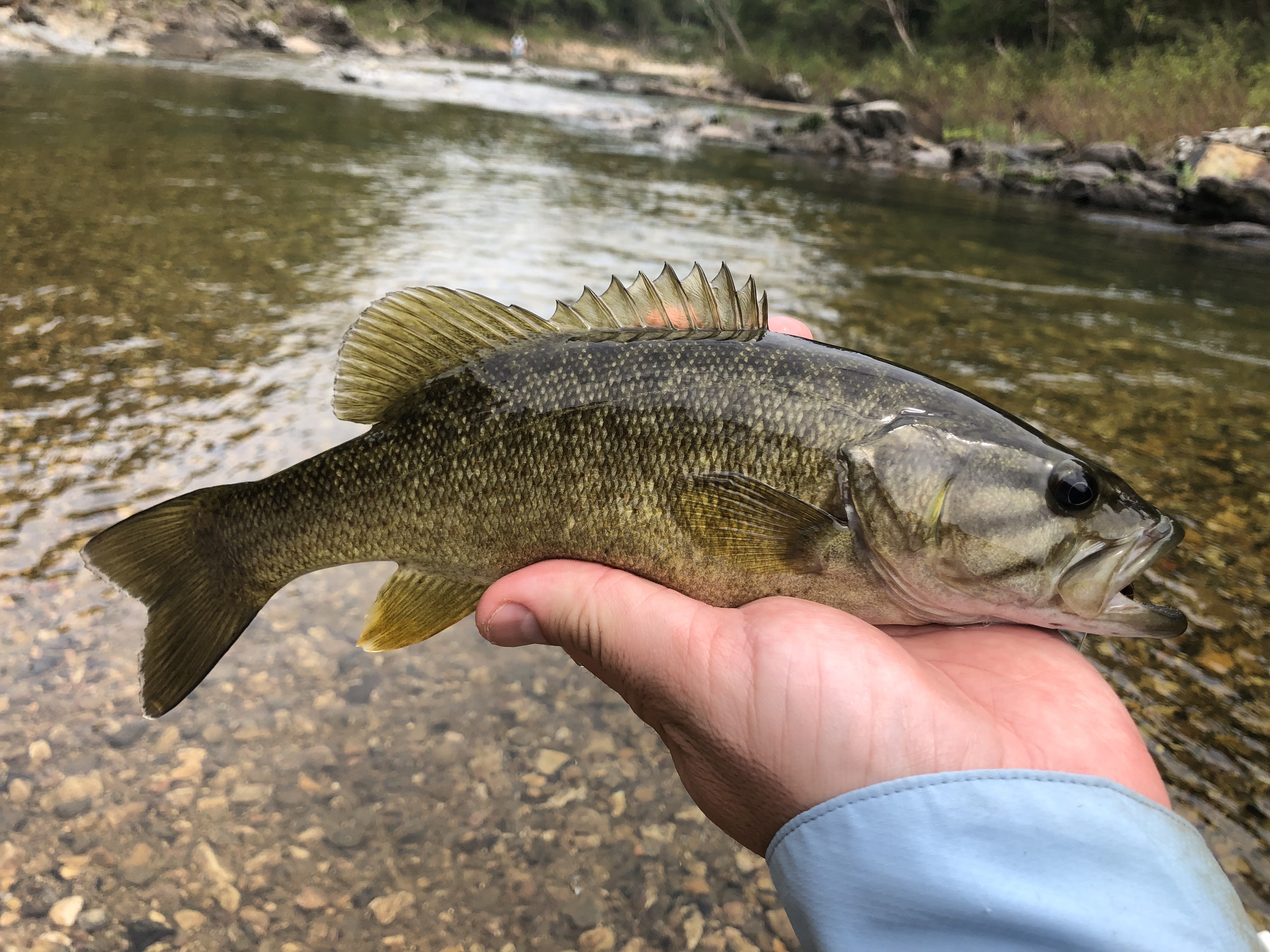
Micropterus punctulatus – Spotted bass (Kentucky)
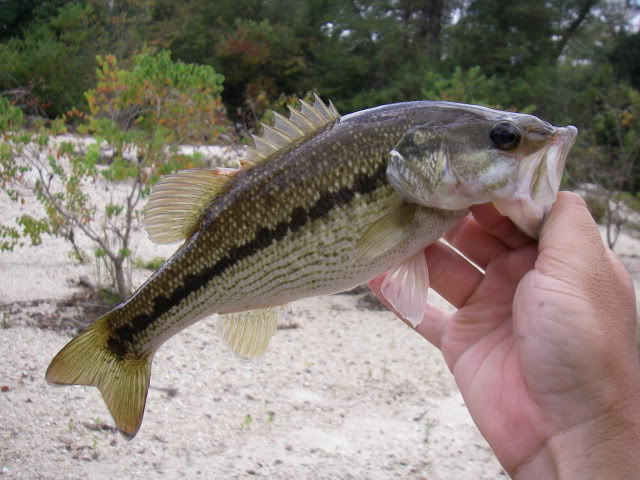
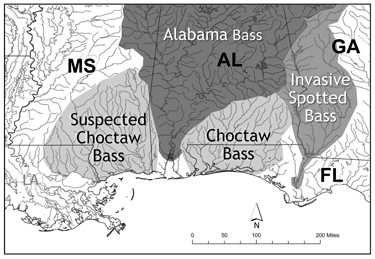
Micropterus haiaka – Choctaw bass
The newest member of the black bass family as discovered by biologists with the Florida Fish and Wildlife Conservation Commission. Their range falls in between the Alabama bass and the Shoal bass in Gulf draining streams on the Florida panhandle and in Alabama.


















 Mountains to Marsh