Archive

Coldwater

We just recently got back from a family vacation to North Georgia. I was able to get a little fishing in on the creek behind the cabin while up there and I even snuck away to a blueline one morning to fish for some brook trout. The southernmost native range for the brook trout is found in North Georgia. Don’t mistake that for being fringe habitat, Georgia is a great place to target little wild brookies.

The water was low and clear the entire week we were up there, making fishing on the creek at the cabin a little more technical and a bit tough. I figured I’d be in dry fly heaven on a blueline trip, but waited all week to go and overnight a bunch of rain dumped in this little watershed that’s a tributary to the Toccoa River. I really didn’t know what to expect heading out to fish, but figured at worst I’d have a nice walk in the woods, so I was heading out to fish regardless.
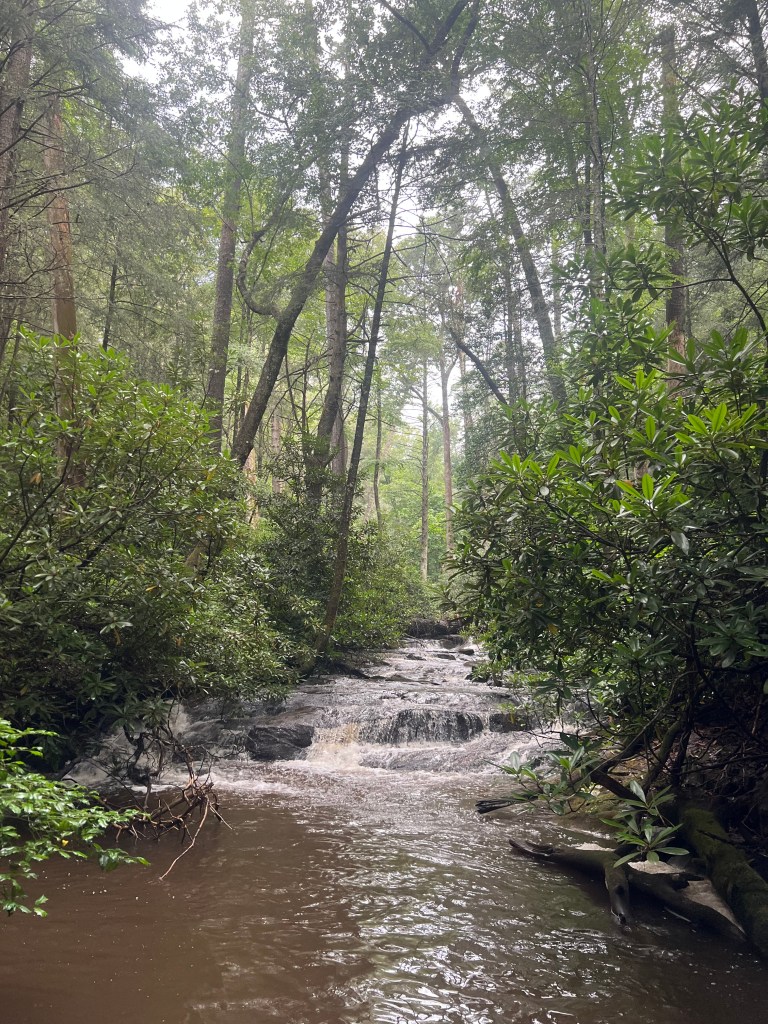
Upon walking up to the creek, it was obvious the water was high and stained, but I could still see bottom in areas so I wasn’t completely disappointed. I just had to change up my dry fly expectations and focus on something subsurface. I tied on a jig bugger and went to work.
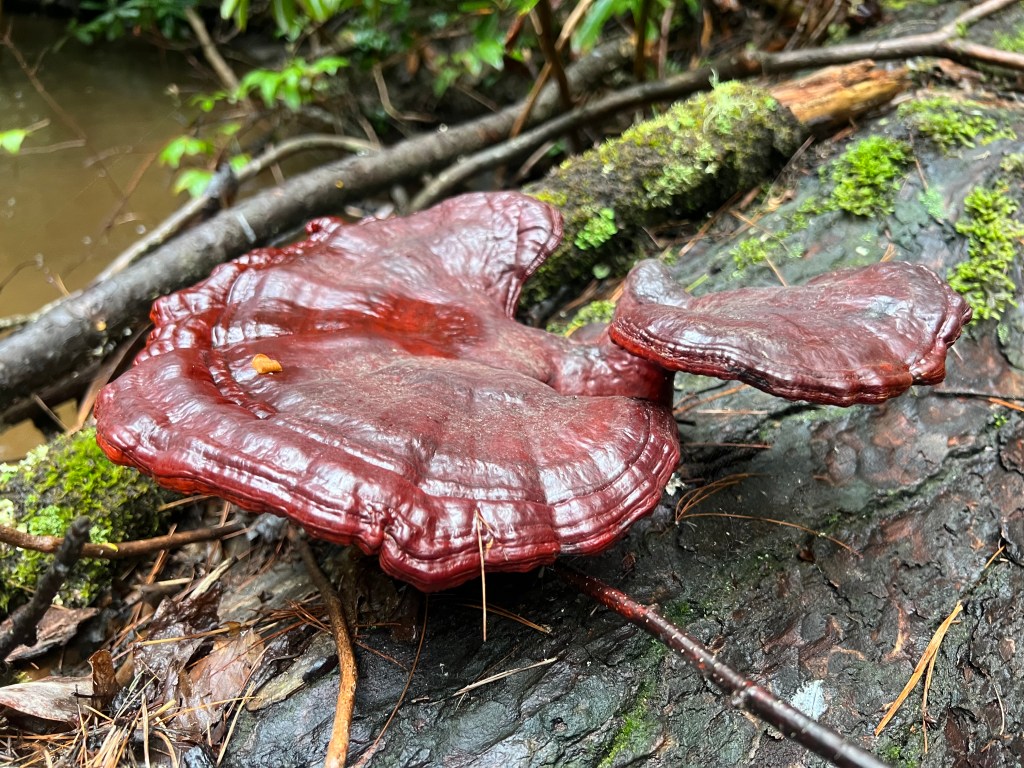
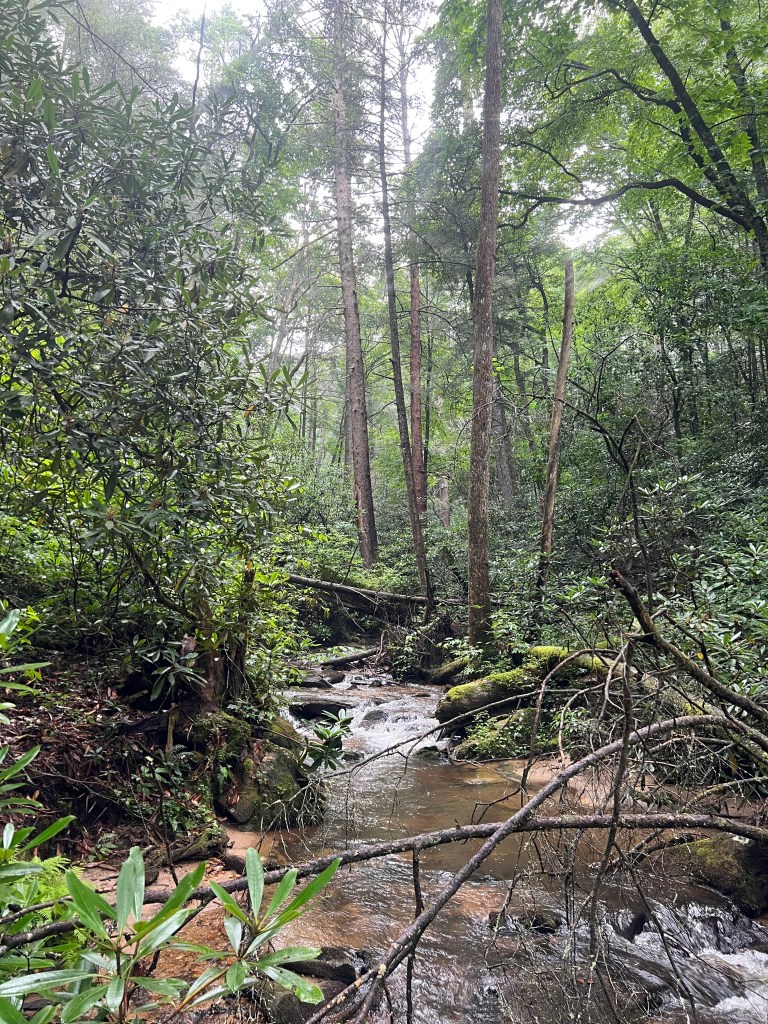
I’ve never fished this creek before so this was also a bit of a scouting trip. I knew it had brook trout based on research, but I really wasn’t sure how far up I had to go before I found them. I planned out my access from a topo map and would fish up to a road crossing from there.

The creek was a bit of a mess early on. Lots of downed timber and tight casting windows through rhododendron tunnels. Lots of bow and arrow casts were made. Water that would be perfect for a dry fly had the conditions been there for it. There were spots where it opened up a bit and eventually, maybe an hour into my trip, I even missed a strike. That was the glimmer of hope I was looking for!

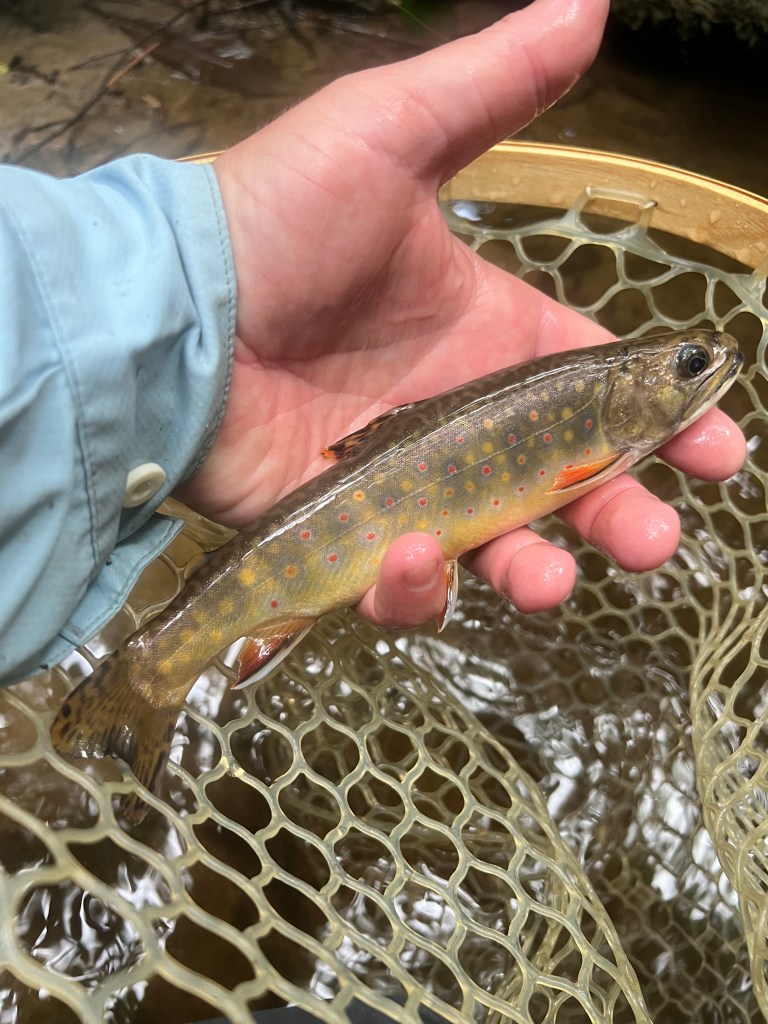
A few holes later and I actually had my first fish on. When I got it into the net I could tell it was a brook trout and had validation that this indeed was a good place to access the creek.
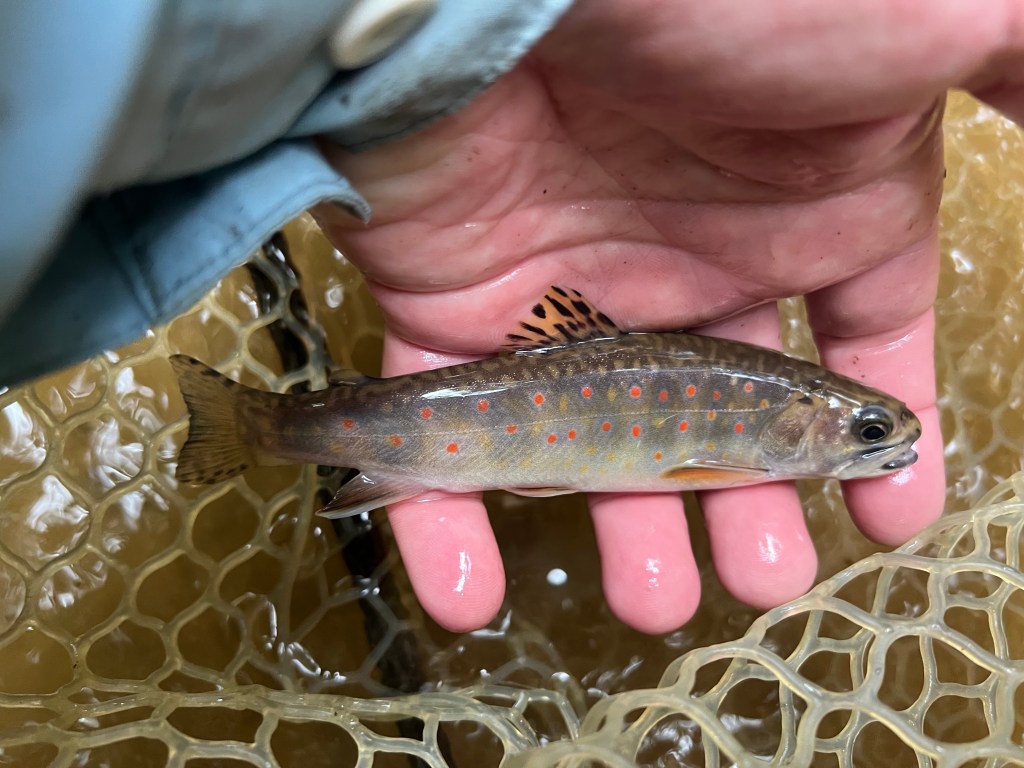
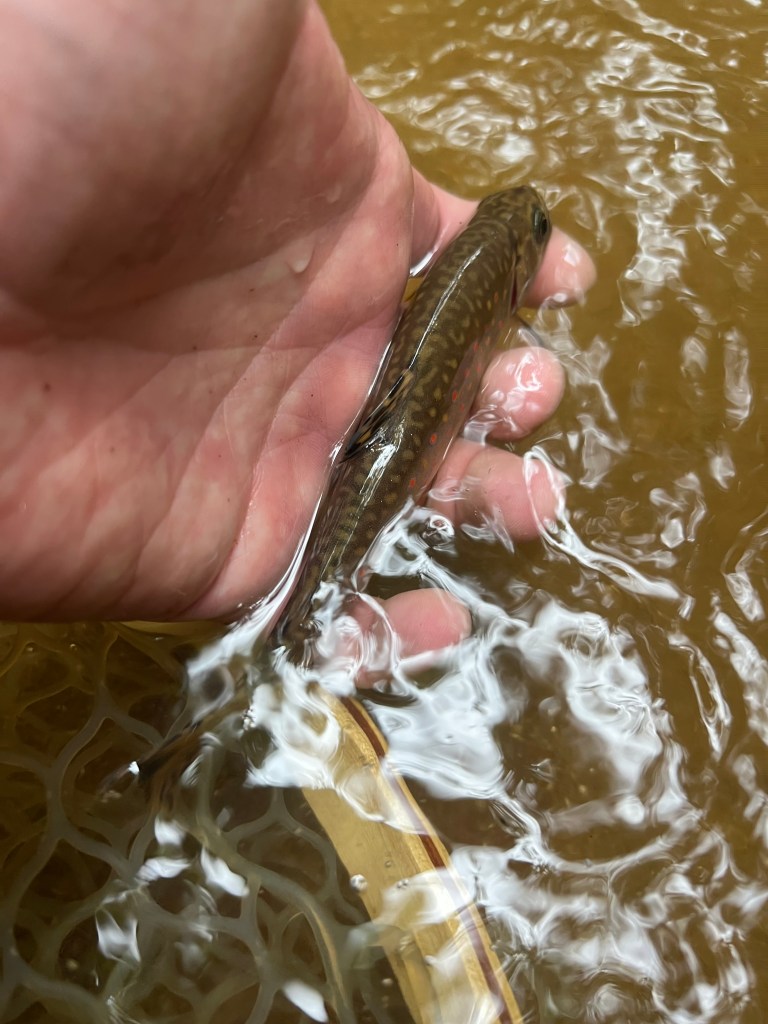
It was a little guy, but a native brook trout nonetheless, mission accomplished. Pressure was off now, but I wasn’t done fishing. I kept climbing up the holes and the further I got upstream the better the water started to look. It could have been time since the last rain, passing up a big feeder creek, or a combo of both, but eventually I felt like I may be able to now catch them on a dry-dropper rig, so I re-rigged.
The re-rig wasn’t a failure as soon after I landed another brook trout, this one a little bigger than the last. He ate the dropper nymph, which was a little BHRLHE (beadhead rubber-legged Hare’s Ear). It was a good fight on my 3/4wt TFO Finesse glass rod.

Things were going pretty good, I was continuing to work my way upstream, and I felt like the fishing was picking up. It was about this time that God decided I needed a little excitement in my life. As I moved around a live tree that was downed in the water I went to cast to the next hole and got buzzed by a big fly. Next thing I know this sucker lands on me and I feel a big punch on my eyebrow. It was a big ass hornet! He wasn’t alone either. I threw down my rod, started swatting around my face with my hat, dropping my sunglasses in the process, got stung two more times on my left hand, and tore off upstream a short distance until there was a logjam I’d have to navigate over or around. I was hopeful this was far enough away that they were done chasing and thankfully it was. I swiftly and calmly recollected my things and nursed my wounds as I traversed the logjam now keenly aware of my surroundings. As far as I knew I wasn’t allergic to hornets and when I didn’t see any significant swelling on my hands I figured I could press on.

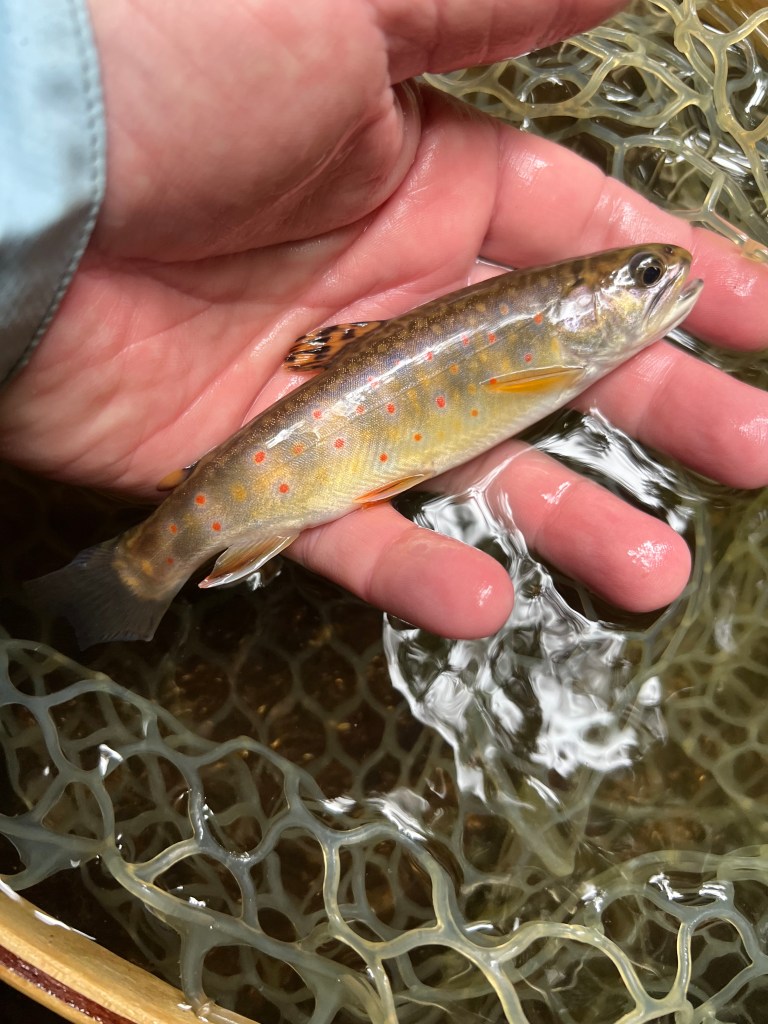
I was glad I didn’t panic and kept fishing because things were heating up. I caught two in a row shortly thereafter and then my biggest fish of the day. It happened while I was fishing a tight run under some overhanging rhodos. It was a good fish, longer than my hand, which was saying something for a North Georgia native. The sky darkened up on me just as I was landing the fish so the pics don’t really do it justice – it was so dark out that my phone was in night mode taking pics.

It was only a matter of time before the skies would open up, but for some reason that wasn’t much of a concern to mean until they did. I failed to pack a rain jacket or even an extra pair of clothes so it was sure to be a wet ride home. I managed one more little guy before I got to a massive barrier falls. I didn’t even know it was here as it wasn’t labeled on the topo map. It was impressive though. It was here that the rain started falling and it fell hard.
It was raining, it was lunch time, I had reached a surprise waterfall, caught a few brookies and survived a run in with some hornets. It seemed like as good a time as any to head out. It was cool catching brookies below this barrier falls, perhaps there was another one downstream. I know there are plenty of rainbows in the mainstream of this watershed so something has to be preventing them from getting up this far. I’ll have to re-visit this blueline next time I’m in town and see if I can find that point further downstream.

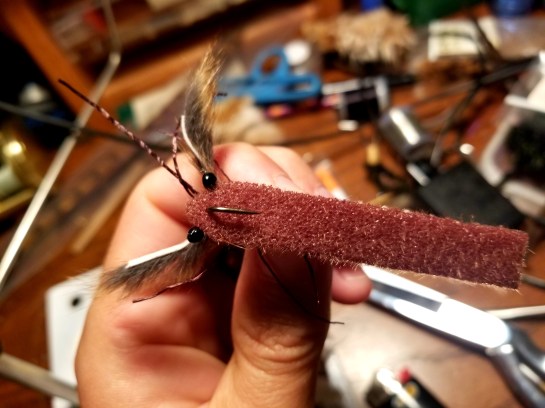
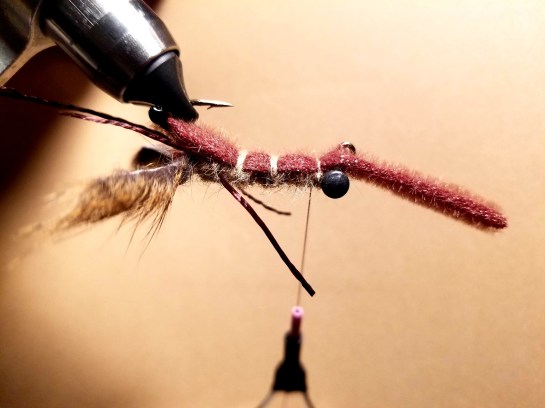
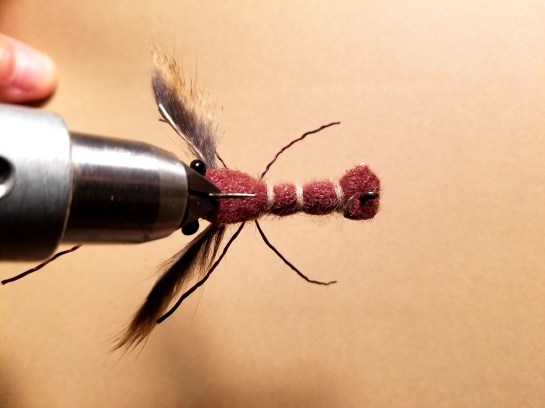
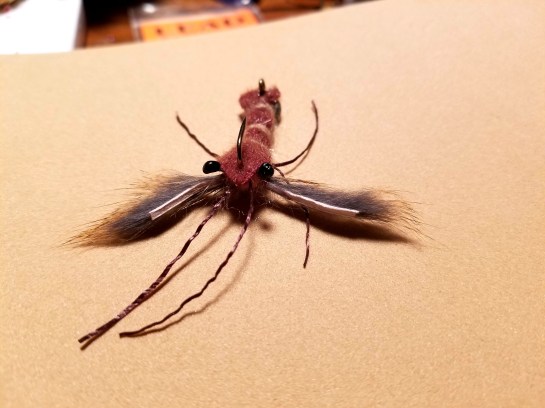
I mentioned in a previous post that I’d try to get Blake to send me a SBS of the crawfish pattern that I’ve had success with and wouldn’t you know the man came through. See his instructions below if you want to tie up a really effective crawfish fly that various species of bass and sunfish love:

This fly is a variant of the Crayfish X tied by Dron Lee. There wasn’t an SBS on his site and I liked how it looked so I tied it how I assumed it was tied. You can find more patterns by Mr. Lee here: https://flytyingnation.com/

Materials:

  • Eagle Claw 410 Jig size 2
  • Lead Dumbbell Eyes sized to match hook and sink rate
  • Spanflex
  • Sow Bug Dubbing
  • Fox Squirrel Zonkers
  • Mono Eyes
  • Furry Foam

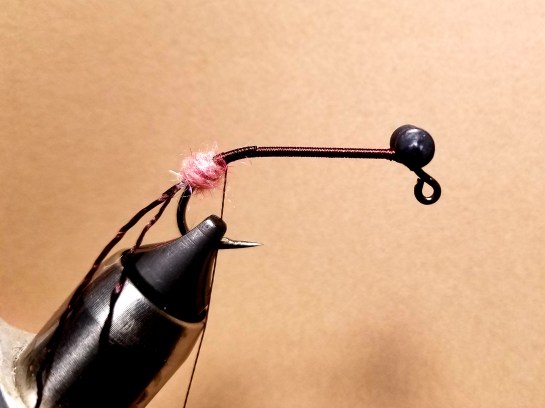
Tie dumbbell eyes in at the front of the hook right at the bend. This helps to ensure that the fly falls hook point up and will allow space to whip finish later in the process.

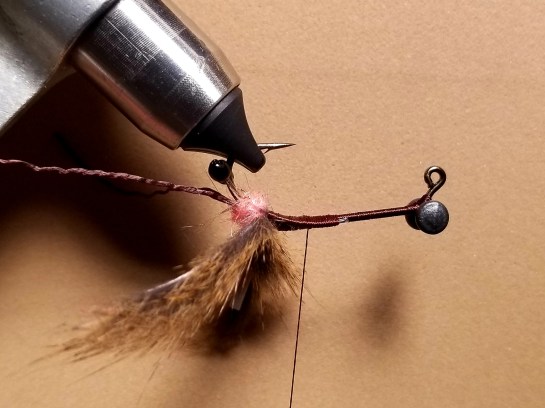
Tie in the antennae and wrap to a point around the bend.

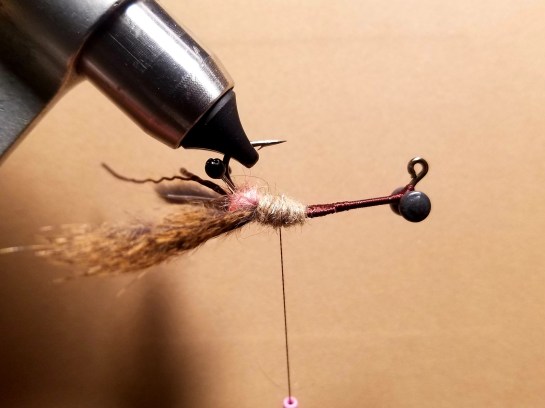
Make a small ball of dubbing right behind the antennae. This is to help splay out the claws and eyes.

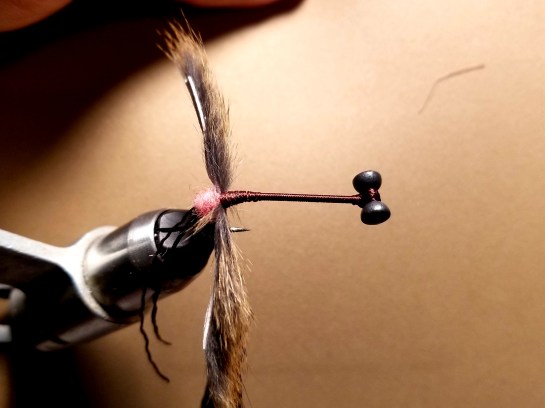
Cut two zonker strips to length. These were 1” of hide that ended up being 1.5” in total length. Wrap them all the way up to the dubbing ball.

Pull each zonker strip out and hit the base with some UV resin (or super glue). Probably not a necessary step but I think it reduces fouling and also makes the claws spread out when the fly is sitting on the bottom.

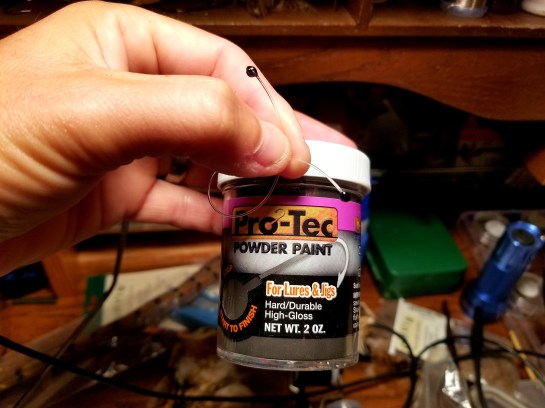
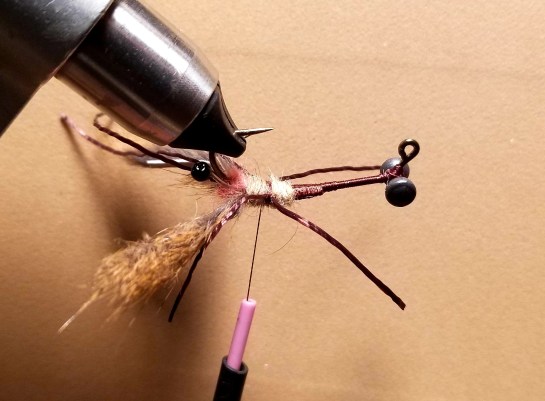
Tie in some mono eyes on either side of the hook. I like to tie them so that they lay right above the claws to further reduce fouling. I make my own by heating up some 50 pound mono and then dipping it in some powder paint. I will then run it through the lighter again to smooth out the powder if needed. The final step is to use a cauterizing tool to bend them how you want them. You don’t have to actually touch the mono with the tool. Just get it close and the mono will bend towards the heat. Takes some practice to not melt other materials but makes setting the eyes in position pretty easy.

Dub the body to the hook point, tie in a leg on either side, then finish the area off by using figure 8 wraps to set the legs in a position you like. I prefer to add some dubbing before tying in the legs so that I’m not trying to build bulk in the area while having to deal with the legs. Build the bulk, tie in the legs, cover the tie-in.

Bring thread to the hook eye and dub back to the hook point.

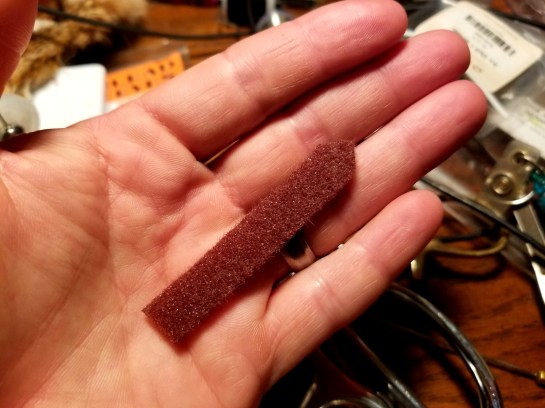
Cut a piece of furry foam that is the size of the hook gap, cut a point on one end, and put it on the hook.

Place the hook back into the vise and tie the foam in somewhere near the point. Dub the tie in point to show some segmentation in the body, then dub your way to a point in the middle between the hook eye and first body segment. Repeat the process to right behind the hook eye.

Finish dubbing the final tie-in and whip finish between the hook eye and the furry foam. Trim the foam to form the tail.

I like to brush out the bottom of the fly with a dubbing brush.

Finished Fly

Whenever I research a slam trip like this I make sure to have backup options for each species in mind for just this type of situation. If I wanted to complete the Arizona wild trout challenge I needed to catch a brook trout and I was down to my last afternoon/evening to do it. Insert your clever sports cliché here. I knew of three creeks with brook trout in Arizona, two in the White Mountains, one on the Mogollon Rim. I’m sure there are several more, but in my research I only came across three. No one publicizes small streams, even ones with invasive species, so it’s up to me to try and develop intel with the help of local knowledge or books, other publications, and things I come across online.

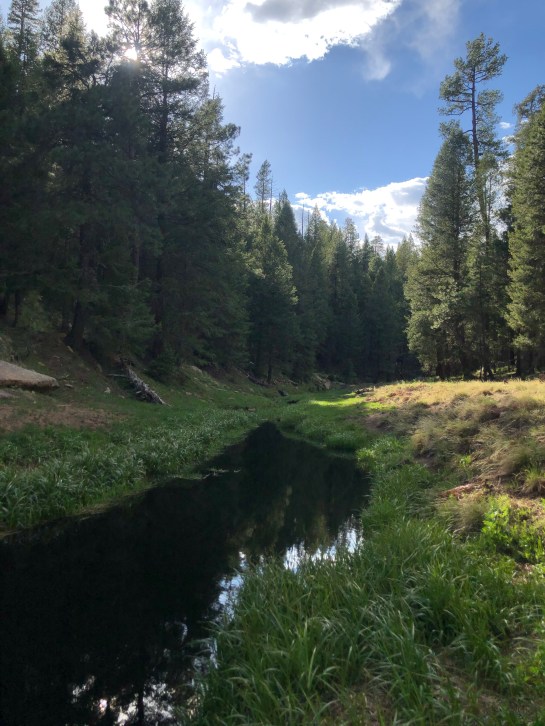
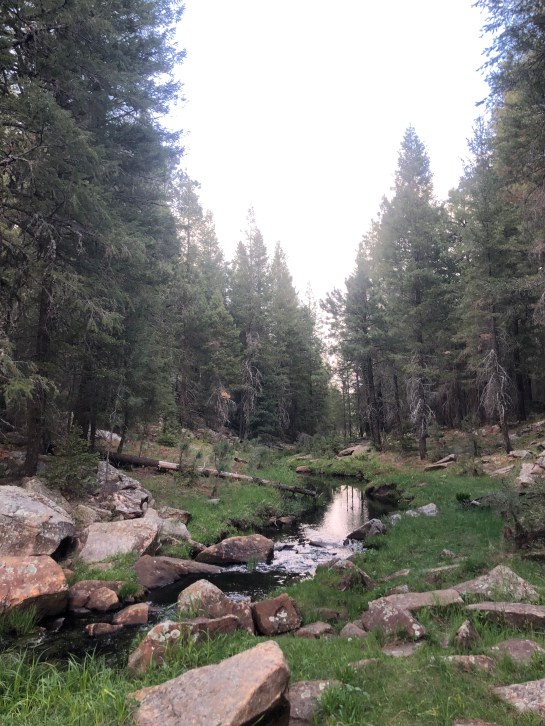
Blake and I drove a couple hours from the Whites to the Rim to a lake outlet stream that I had heard held brook trout. After striking out twice this was last my chance so I took the lead on the creek. This creek was unlike any other we’d come across thus far on our trip. It was a narrow creek, one you could jump across in spots, but it held deep, still tannic water so you couldn’t see the bottom where it was deepest due to it being so dark. It was full of submerged vegetation too and really seemed like a good place for any coldwater fish species to live.

I started with a dry-dropper rig and really worked the spots faster than I should have been as Blake ended up catching a brook trout in a likely looking spot behind me.

It had come out from under a rock and hit the dropper nymph. I continued to cover water ahead of him at a faster pace than I should have, throwing a rig I probably shouldn’t have been. I was too focused on targeting the one dumb fish that every stream has, you cover enough water and you find him. Every once in a while I’d see a fish holding near the bottom, but they never took interest in my offering. After some time a young lady fly angler came by on the adjacent trail heading downstream of us. I took the opportunity to gather some much needed intel and switched up my rig after speaking with her. She convinced me to go small streamer and the closest thing I had was a tungsten jig bugger that my local Orvis in Baton Rouge always has in stock. I use it a lot for the bass and sunfish at home, it’s a good all purpose fly. The first or second hole I dropped it in and starting swimming along a weed edge I feel the rod come tight.

It was a damn brown trout. A gorgeous one, but these things are apparently like cockroaches in Arizona. I sent him back along his way and kept at it. I was looking for the obvious spots and fishing them hard. After Blake’s fish came from under a big boulder I had structure in mind.

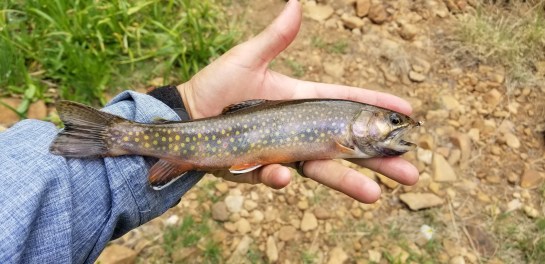
Eventually I was able to swim the fly by a submerged log and out came the brook trout I was looking for. After a quick pic and a sigh of relief I realized just how far ahead of Blake I was and started trekking my way back toward him.

After I met back up with Blake that same young lady fly angler came walking back by. I thanked her for her help and I’m sure she thought I was completely nuts, but I had blinders on before talking to her and she showed me the light! With daylight fading we made our way back to the vehicle and continued on up to Payson. In Payson we found a hotel, had a proper Mexican meal, and found a local IPA worthy enough to count as a trip capper.