Archive

Yearly Archives: 2013

I’ve had a few requests recently to show how I mount my camera while in the kayak. If you’re looking to get the “over-the-shoulder” angle that you see in most of my videos, this is how it’s done. You can see the angle here:


If you use a milkcrate or a BlackPak or anything else that gives you vertical rod holders in the tankwell than this set up will be simple and effective for you. If not they are different products out there that will achieve the same results. I’ve been happy with the products available from YakAttack.

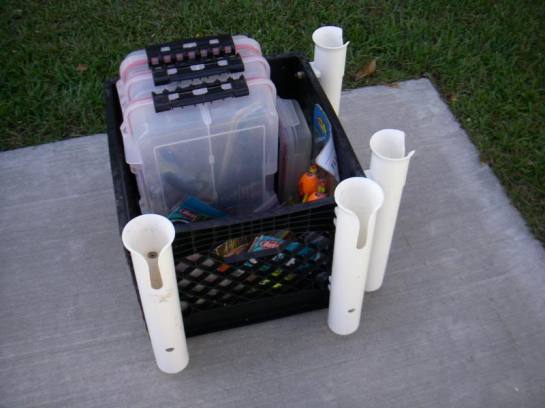
Here’s how I do it – first let’s take a look at the milkcrate:
IMGP8397

IMGP8398

It’s a standard milkcrate that I’ve attached 4 rod holders to. With the 2 that come standard in the Cuda 12, I have 6 total vertical rod holders behind me, which is plenty of storage for rods, a net, and a camera mount. The rod holders were purchased at Academy and are fairly inexpensive. Make sure to install the rodholders as snug as possible to the milkcrate as any looseness will allow for camera shake. Try not to overtighten though because you’re mounting them to plastic, which can, and will break. If you screw them in like I have, use flathead screws to allow for your camera mount to slide in the holder, also use washers on the backside to distribute the load.

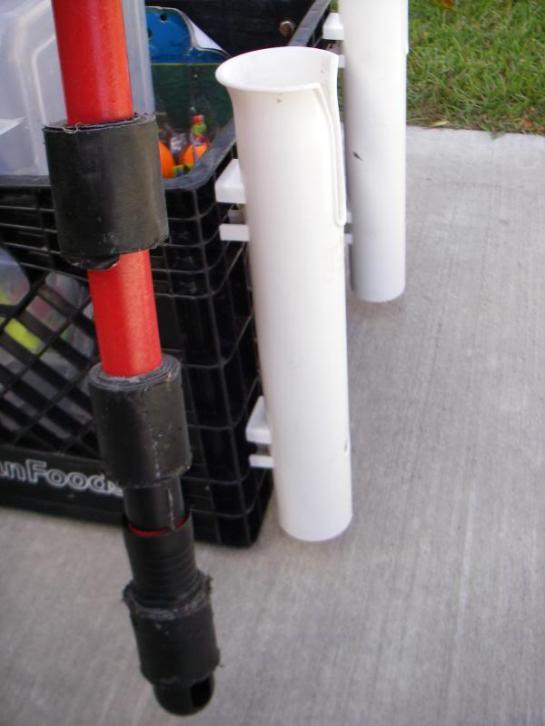
Next you will need a pole of some sort that will fit in the rod holder. I use an extension pole that I bought at either Lowe’s or Home Depot. The extension pole came at the suggestion of either Drew Gregory or Sean Brodie, who have been filming much longer than I have and are much better at it as well. The extension pole allows for higher camera angles if I want to do something different, but I’ve found that I just use the lowest possible one because the higher the angle, the more the shake. You also have to turn the camera on and off somehow and it’s easier to reach when it’s lower.

IMGP8412

IMGP8400

IMGP8402

IMGP8403

IMGP8404

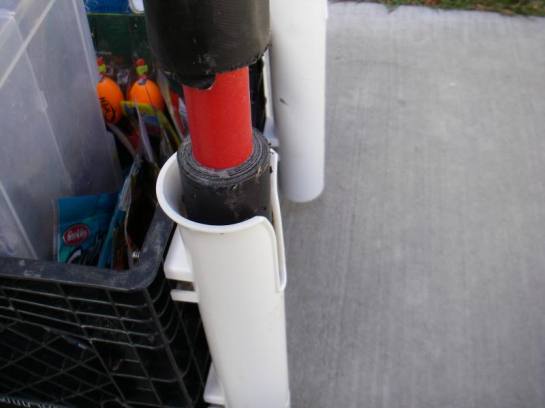
As you can tell from the photos the extension pole doesn’t fit snug in the rod holder, and if it’s not snug the camera will shake. I wrapped the end that goes into the rod holder with Gorilla tape, but regular old duct tape will work, or you can get creative and figure out another way to bulk up the bottom of the extension pole. Tape is nice because you can layer until you get the right amount or reduce if you’ve put too much on there.

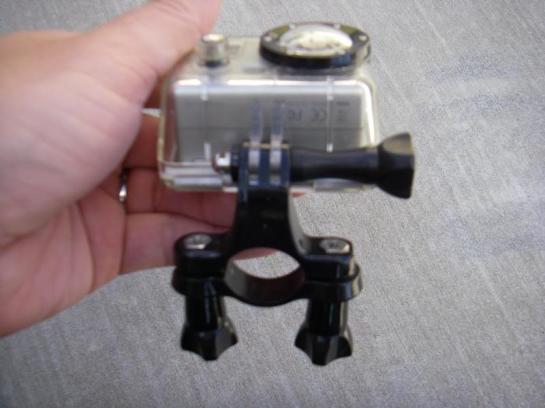
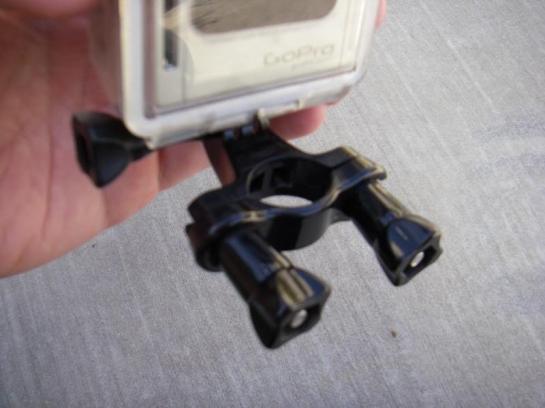
Now you’ve got a pole in a rodholder that’s attached to your milkcrate in the tankwell of your kayak. You still need to mount your camera to the pole. I use a GoPro Hero 1 to film. I got it a few years back and it is still kicking so no need to upgrade yet. The GoPro is nice because it is easy to use, comes in a waterproof housing and has several accessories that make mounting it easy. The best way I’ve found to mount a GoPro to an extension pole is with their handlebar/seatpost mount.

IMGP8406

IMGP8405

IMGP8407

IMGP8409

IMGP8410

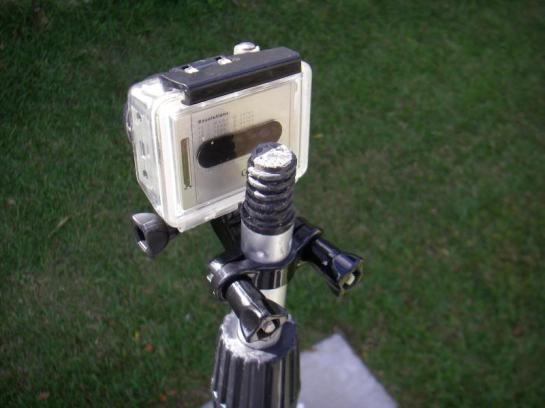
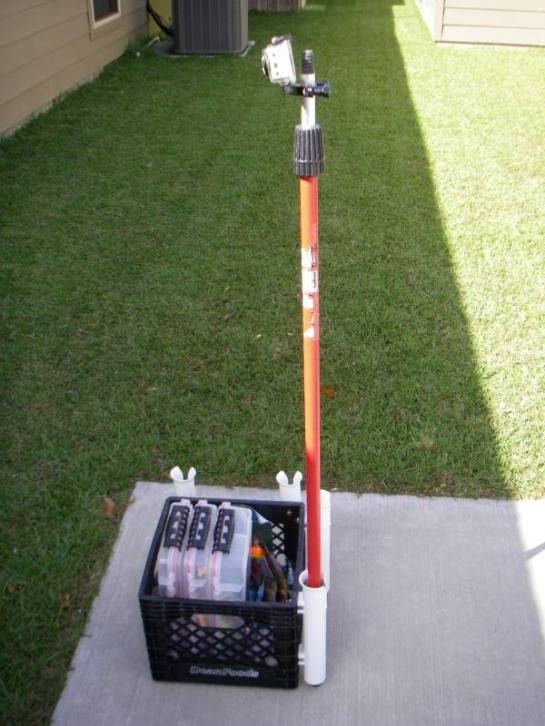
That mount will slide over the extension pole with ease and you can tighten it as much as possible to prevent slippage. The angle of the GoPro you see there is what I generally film at. With the wide angle lens on the GoPro you don’t have to point it downward too much at all to capture everything in front.
IMGP8411

That’s all there is to it. It’s simple, snug, and fairly inexpensive. I don’t see too much shake whether I’m sitting or standing in the kayak. You will want to make sure that you use the provided tankwell bungees to strap the milkcrate down, you don’t want it sliding. Here’s how it looks in the kayak:


IMG_1660


IMG_0592

IMGP7791

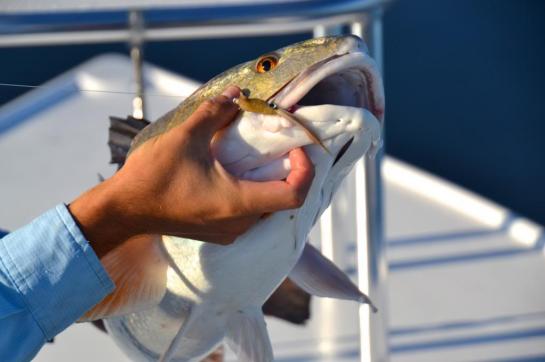
October’s fly of the month is Blake’s take on a bait that we don’t often talk about here, squid. We don’t talk about it much because we fish a lot of brackish water where you won’t find many squid, however, there’s no doubt in my mind that redfish like to eat squid and this may be the best time of year to throw this pattern, as we begin to target big bulls that are making their way inshore. It looked to be a good fly choice this past weekend for Blake as he and Barret had a pretty good day catching slot and bull reds.

Materials (in order of application):

  • Lead tape (same tape that was used here: Blake’s deceiver variant

  • Your favorite long shanked streamer hook

  • Bucktail

  • Ostrich herl

  • Flash

  • Saddle hackles

  • Flash chenille

  • Stick-on eyes

  • Pseudomarabou

Step 1. Cut a piece of lead tape so that it covers the shank of the hook. Leave yourself enough room at the bend to tie in the tailing materials and leave room at the front to finish off the fly. Cover the tape with a layer of thread.

IMG_1404

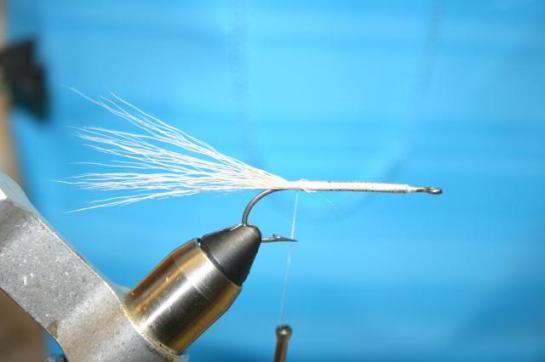
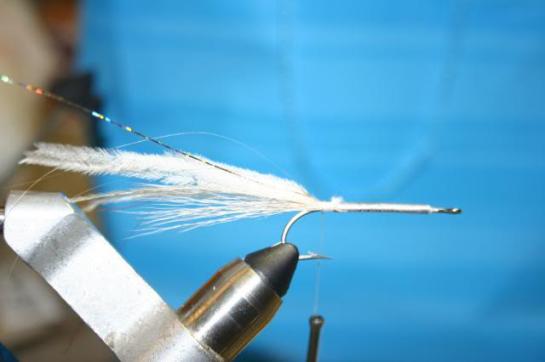
Step 2. Bring thread to a spot right before the bend of the hook. Tie in a small clump of bucktail.

IMG_1405

Step 3. Tie in a few ostrich herls over the top of the bucktail. I like this to extend farther than the bucktail.

IMG_1406

Step 4. Tie in a few pieces of flash either on top or on either side of the fly, your choice.

IMG_1407

Step 5. Find four somewhat small and webby saddles and tie them in, splayed out, with two on either side of the fly. I used some cheap saddles that I got from one of those Cabela’s feather grab bags. Tidy up the shank a little.

IMG_1411

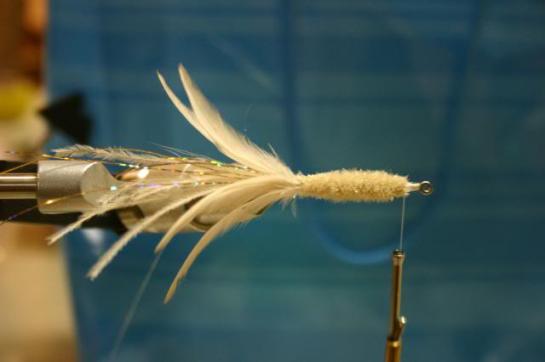
Step 6. Tie in chenille at the back of the fly and palmer it forward. I like to coat the shank with super glue or SHAN before palmering the chenille to make the fly a little more durable. Tie the chenille down leaving some room at the eye.

IMG_1412

Step 7. Trim the chenille to a point at the front of the fly. This will help the veil lay back rather than splay out in a future step. Cut the back ends of the chenille body flat on either side to make a good base to glue the eyes.

IMG_1415

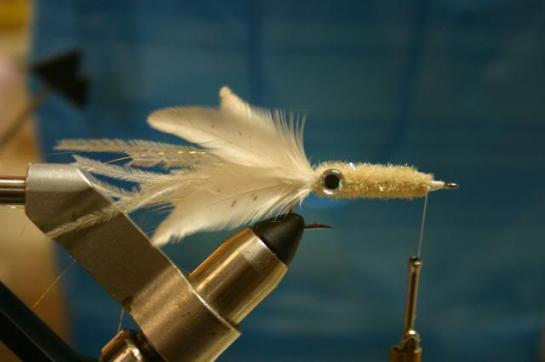
Step 8. Glue the eyes on the base that you made. I use the stick on eyes and glue them on using household goop. Notice the pointed end of the chenille at the front of the hook. I should have used some bigger diameter eyes for this fly because squid have huge eyes for their size, but I didn’t have any.

IMG_1416

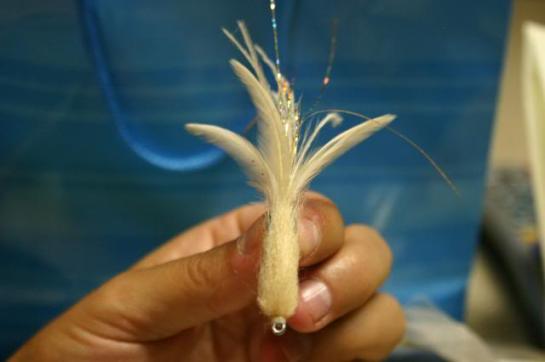
Step 9. Tie in a clump of pseudo marabou at the eye. I do this by making a cylinder with the material, making a small hole in the middle of the cylinder, and pushing it over the front of the fly until the material is as far back as I want it. Take a few gathering wraps of thread , push the butt ends back and tie everything back on the shank.

IMG_1418

Step 10. You could leave the fly as it is in the previous pic, but I decided to trim the collar down. I just want it to show a little motion in the water.

IMG_1423

Finished Fly:

IMG_1432

IMG_1429

Proof of concept:

DSC_1454

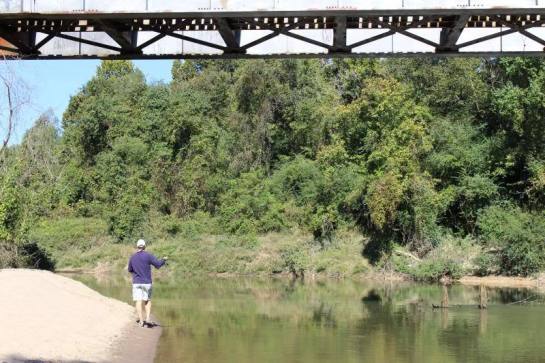
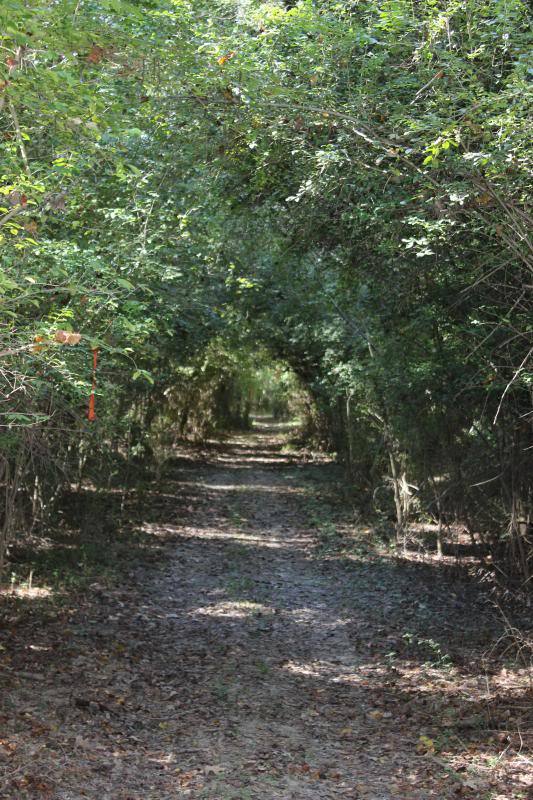
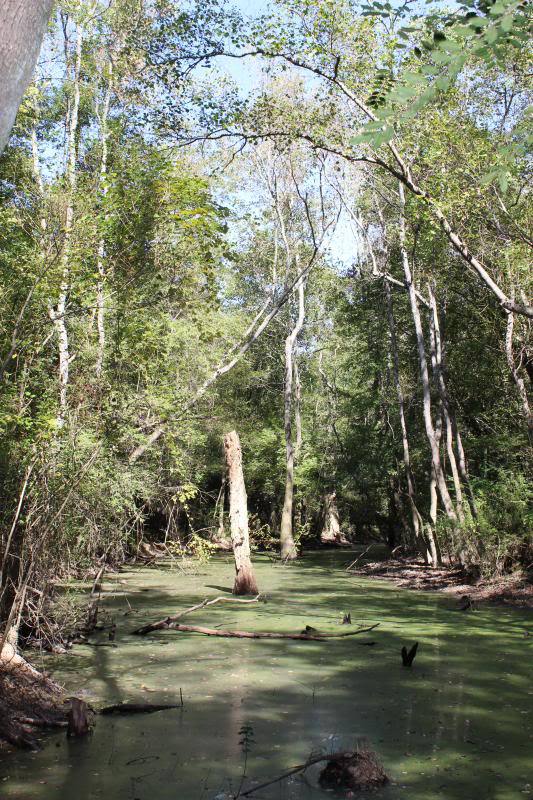
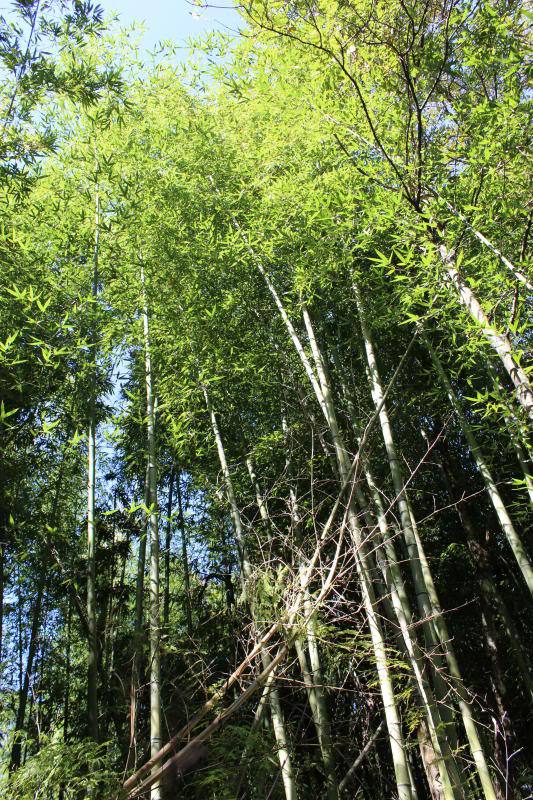
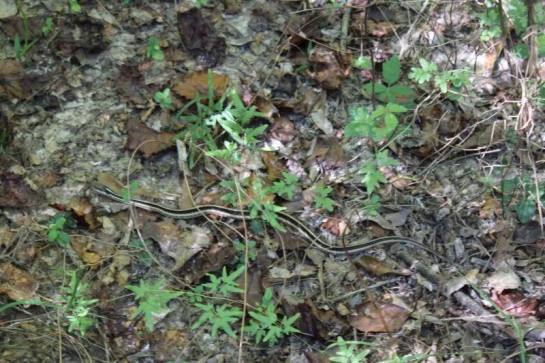
This past Saturday Amanda and I had a chance to check out BREC’s newest park, the Frenchtown Road Conservation Area, which is the biggest conservation area in the system at 495 acres. It encompasses most of the land between the Amite and Comite Rivers, south of the Illinois Central Railroad. Currently there are a little over three miles of hiking trails on the property through mostly bottomland hardwood forest.

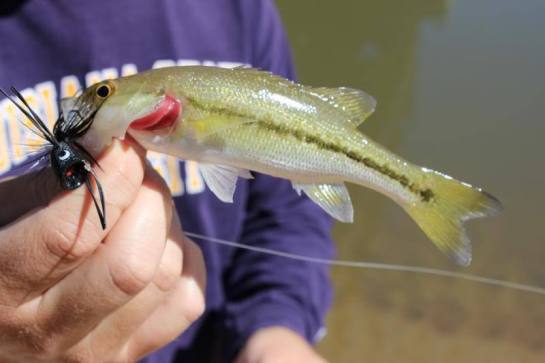
These trails are just the beginning of the park’s intended development. I’m hopeful that established kayak/canoe launches are in the master plan, as it sits now the only river access that is available is via a 0.7 mile railroad trail to a beach on the Amite River at the park’s NE corner. Any new access to our area’s scenic rivers is a good thing, but it looks like I’ll have to invest in a cart before I can give this stretch of water a proper go. I did manage to get a few mid-hike casts off from the beach and was rewarded with a little spotted bass for my efforts.

IMG_0029

IMG_0040

IMG_0053

IMG_0057

IMG_0068

IMG_0078

IMG_0085

IMG_0087

IMG_0100

IMG_0104

IMG_0111

IMG_0112

It was a nice day for a hike and I look forward to using this area more in the future. There was a little confusion on the trails though. Seems a nearby property owner was not too pleased at the location of the big loop trail in the park and “No Trespassing” signs were placed toward the end of the trail turning this loop into a long one way. According to the park’s facebook page it sounds like a bypass trail has been added and the area can be avoided. You’d think they would figure these things out before opening the park, but live and learn I guess.