Archive

Tag Archives: Fly of the Month

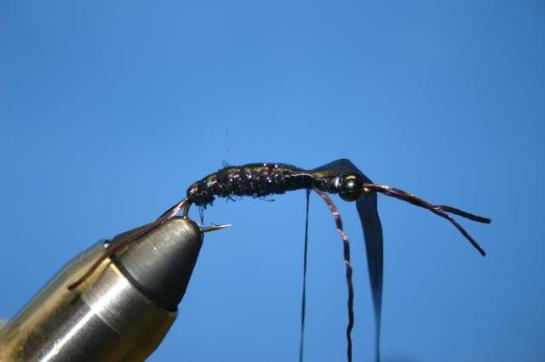
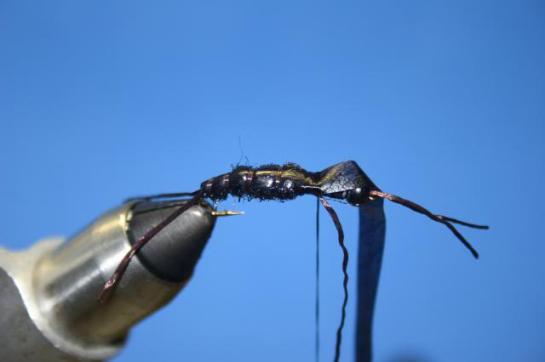
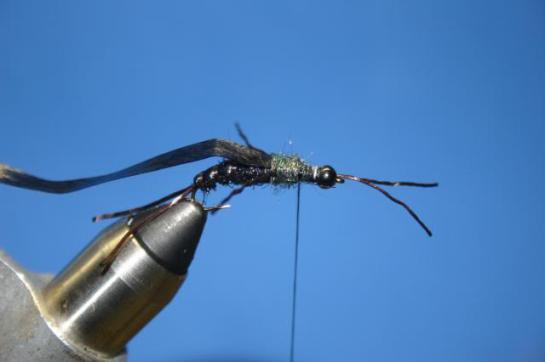
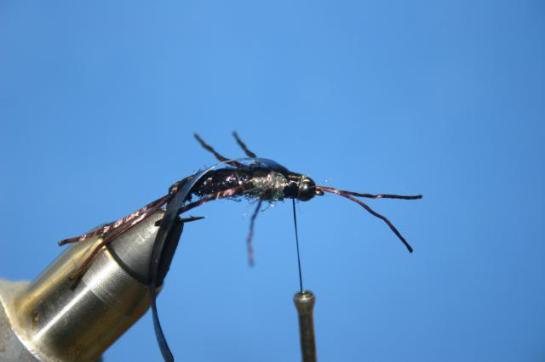
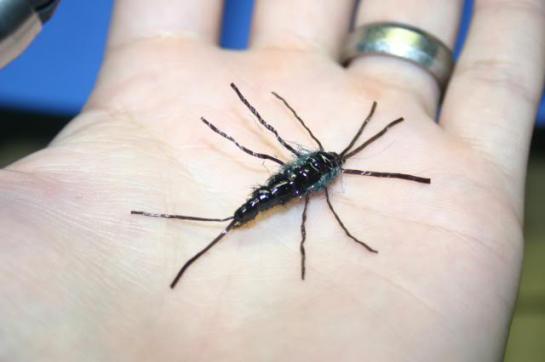
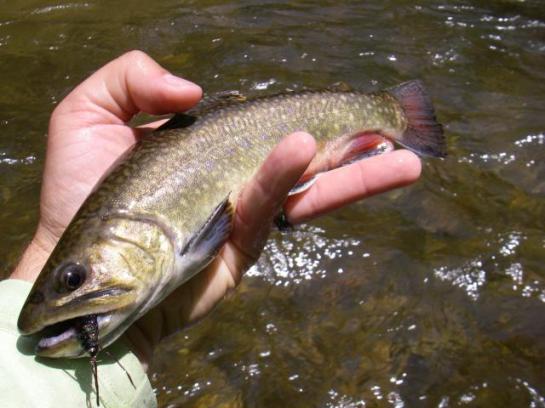
May’s fly of the month is a stonefly pattern that Blake had tied up that proved very effective on the trout at the cabin. Blake notes that “this fly is an amalgam of several different patterns. I just chose the different things I liked from them and put them all together.” Truth is, this wasn’t the pattern that slayed them on Thursday, that was a Pat’s Rubber Legs, a much easier tie, but what fun is that for a SBS.  Pick whichever you prefer, as Blake so eloquently stated, “or you could just tie the easier and equally effective “pickle” and not be as ticked off when you lose one on a snag.”

Materials:

– 3x long curved shank hook

– Spanflex legs and ribbing

– Stretch skin for back and casing

– Black and peacock ice dub

– Bead

– Lead wire of various sizes 

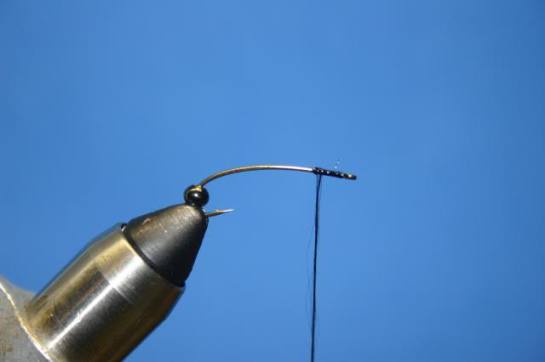
Step 1. Put bead on hook and start thread behind the eye. Make a small thread base and coat with glue.
IMG_0753

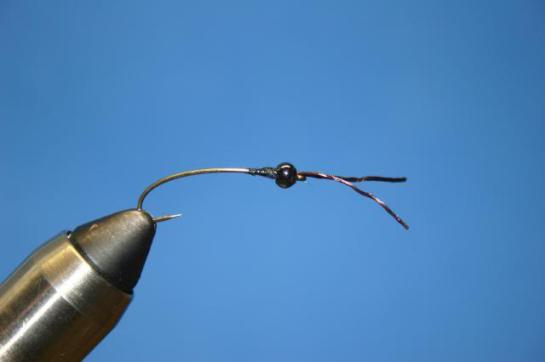
Step 2. Tie in legs to create two antennae. Push bead up over the tie in area to make sure that it will fit. Pull bead back, then whip finish and part off the thread. Add some glue to the tie in area and push bead to the eye to secure it.
IMG_0755


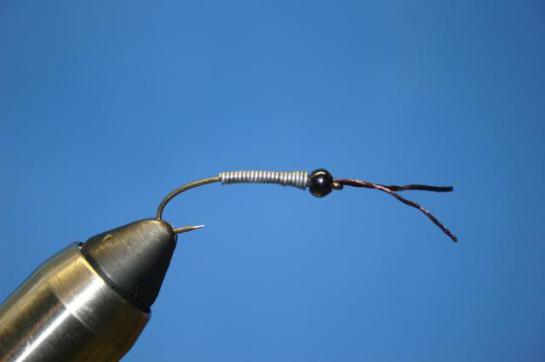
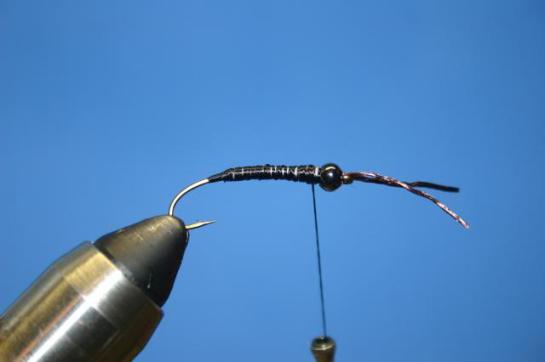
Step 3. Start to build up the body with a layer of lead along the shank up to the back of the bead. I use a good bit of lead on this fly to reduce the amount of shot that I have to put on the line to get it down to where the fish are.
IMG_0756


Step 4. Start thread and lay down a layer over the lead.
IMG_0757


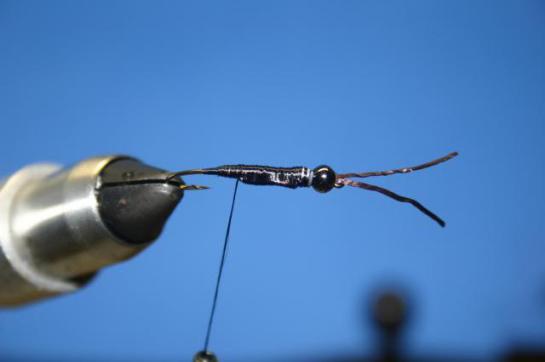
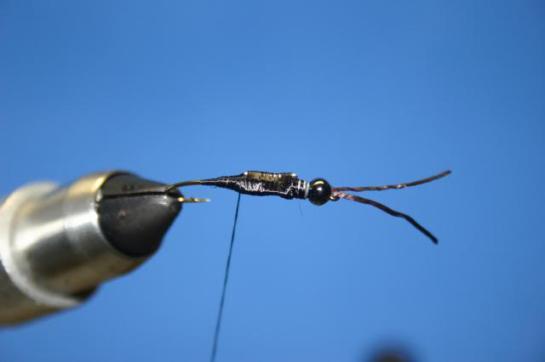
Step 5. Tie in a piece of lead length wise along either side of the hook shank. I used a larger diameter lead wire here. My goal is to make a heavy, vertically compressed body shape with a gradual taper from tail to head.
IMG_0758

IMG_0759

Step 6. Tie in two legs at the back of the fly just as you did at the eye. Notice the shape of the body from the top view above to the one below,  vertically compressed with a gradual taper from tail to head.

IMG_0760

Step 7. Tie in another piece of spanflex for the ribbing.

IMG_0761

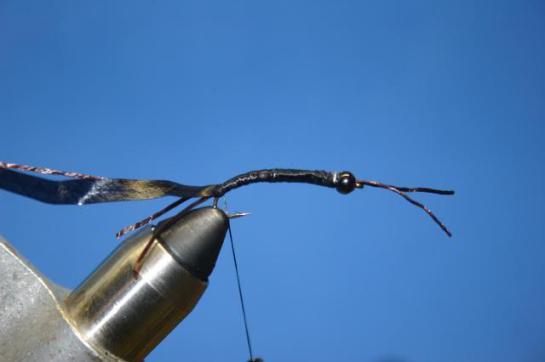
Step 8. Tie in the stretchy nymph skin for the back/casing.
IMG_0763

Step 9. Dub the body to a point a little over half way point. I like to make a little contrast between the abdomen and the thorax so I used black ice dub here and peacock ice dub in a future step.
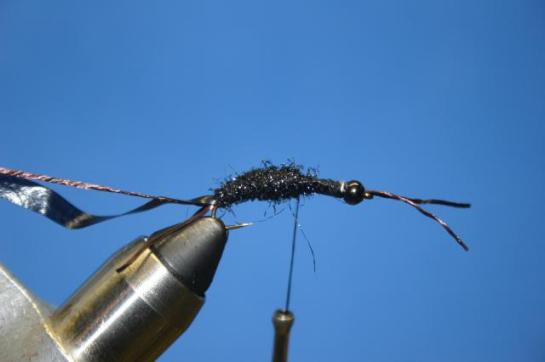
IMG_0764

Step 10. Pull the shell back up and tie it in.
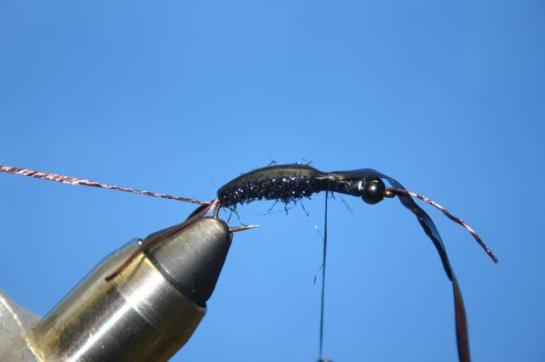
IMG_0765

Step 11. Rib the abdomen.

IMG_0766

IMG_0767

Step 12. Cut off the ribbing material and pull the casing back. Tidy up the shank to the spot right before the dubbing starts.
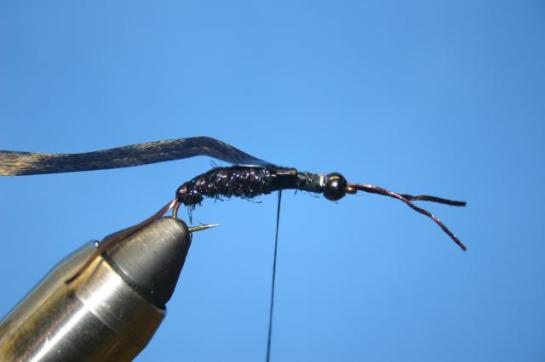
IMG_0768

Step 13. Tie in a leg on either side. Dub around the legs and a little down the hook shank.

IMG_0769

IMG_0770

Step 14. Pull the shell casing over and tie it in. then pull it back and prepare the hook shank for the next leg tie in.

IMG_0771

Step 15. Tie in another set of legs, dub, then pull shell casing forward same as you did above.

IMG_0772

IMG_0773

IMG_0774

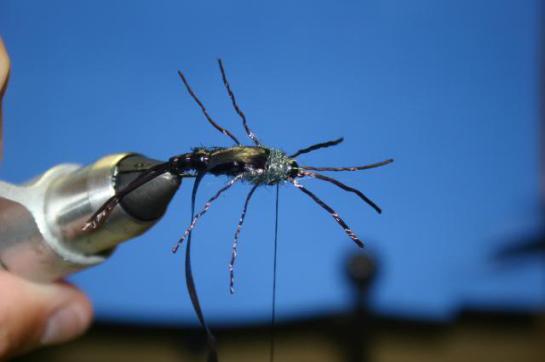
Step 16. Tie in two more legs. I tied them more forward facing. Dub between the bead and the casing. Pull casing over and tie it in between the legs and the bead.
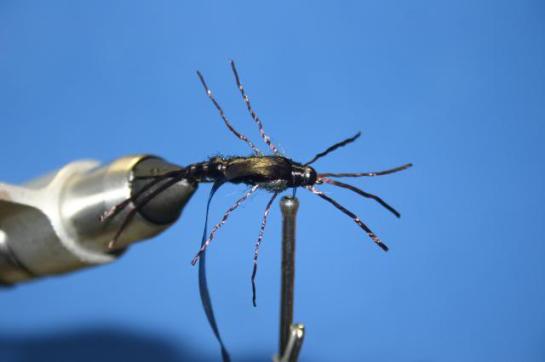
IMG_0775

IMG_0777

IMG_0778

Step 17. Whip finish and you have a completed fly.

IMG_0782

IMG_0780

Enjoy, but first some proof of concept.

IMGP8095

IMGP8108

IMGP8120

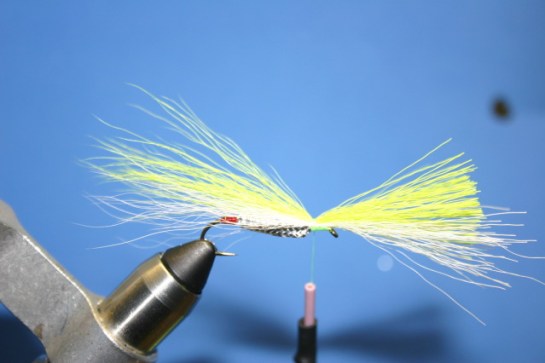
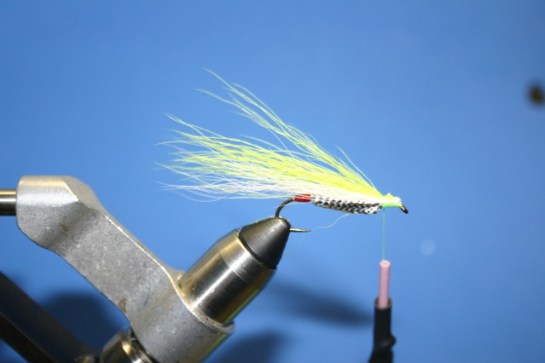
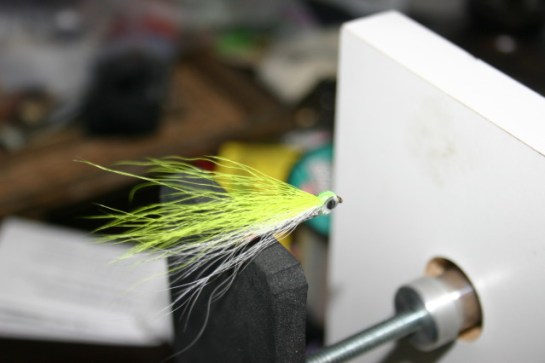
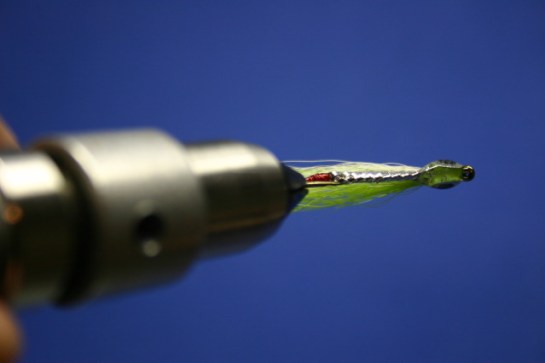
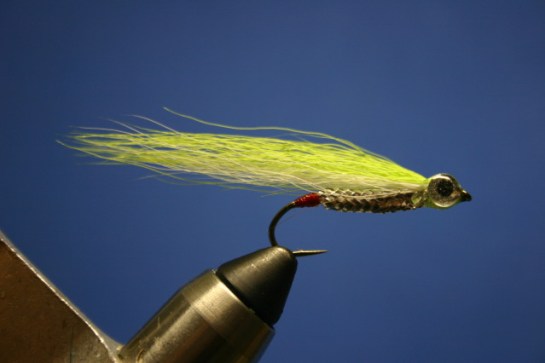
February’s FOTM is a hair wing minnow. A good choice this time of year as the spawn starts to heat up on our local ponds. It can be tied to mimic both minnows that want to eat fish eggs or recently hatched fingerlings.
Materials:
Streamer Hook
Mylar tubing
Bucktail
Stick on eyes
Epoxy
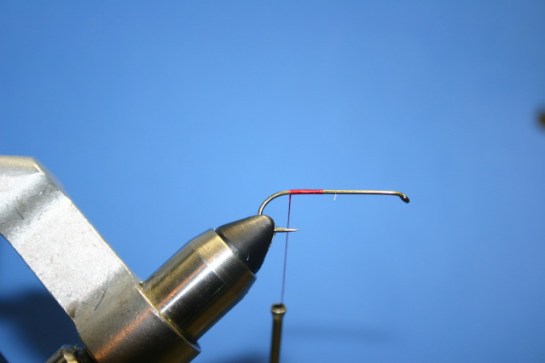
Step 1. Start thread on the hook and bring to above the barb. I like to use red thread here as a tag.
IMG_0441
Step 2. Measure a piece of mylar tubing of your choice that is about as long as the shank of the hook. Tie it in at the bend. Whip finish the red thread at the bend of the hook. If you have a small whip finisher and can’t tie a hand whip finish, just brush some super glue on an inch of thread and make a few wraps. This should hold it good enough till the next step.
IMG_0442
Step 3. Pull back the mylar tubing and start the thread on the hook shank directly behind the eye. Let the tubing go and wrap down the ends of the tubing. Wrap the tubing down the shank so that the length is equal the the diameter of your stick on eye of choice. After this, I like to pinch the tubing on either side to make a flat body. Then, coat the red thread and the body (not the chartreuse thread) with Hard as Nails. I normally do one coat, but two will give you a better finish. Make sure you let the first coat dry thoroughly.
IMG_0443
Step 4. Cut a clump of bucktail for the first color. I like to go sparse. Chartreuse over white is the best color for me, but many combinations will work. I like to even the tips of the bucktail a little before tying them in. I also choose to wait until all have been tied in to trim the butts.
IMG_0444
Step 5. Tie in the chartreuse bucktail over the white trimming the tips just as you did with the white.
IMG_0445
Step 6. Trim the butts of the bucktail on an angle and tie them down. A little extra wax on the thread here will help the thread from sliding down the butts and crowding the eye.
IMG_0446
IMG_0447
Step 7. Use a little super glue on each side to stick on your eyes.
IMG_0448
Step 8. Mix up some epoxy and let it spin on the drying wheel.
IMG_0449
Step 9. Finished Fly. If you are anything like me, the aesthetic qualities of fly tying are as important as the actual tying process. I don’t particularly care for the flared hair look, so I run many of my flies under some hot water and let the hang by the eye to air dry. This helps to get the sleek minnow shape. I’m sure this doesn’t effect the flies fishability, but it just looks better in my opinion. You can see the difference between the pic in step 7 and the finished fly pics. Enjoy.
IMG_0457
IMG_0456
IMG_0455
Some proof of concept
OLYMPUS DIGITAL CAMERA


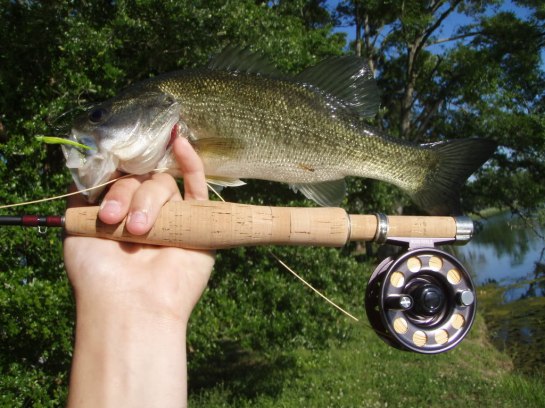
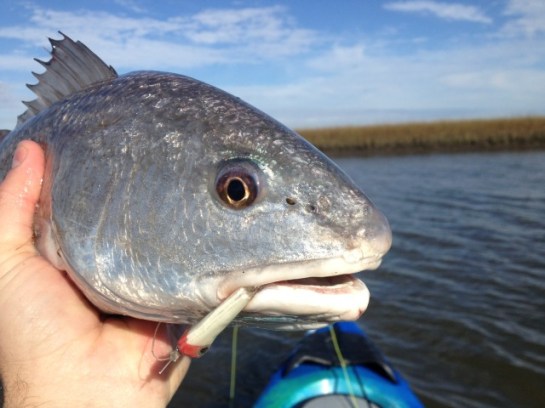
The fly of the month for December is a pattern that will catch a variety of species. I’ve seen it catch bass, redfish, speckled trout, even the overzealous sunfish. Blake use to tie up a bunch of regular crease flies, but we had problems getting hook sets on the spotted bass we would frequently fish for. So, the articulated crease fly was born. To be honest I’ve got no clue whether the articulation helps or not, but it seems to, of course that could just be a mental thing. Whatever the case may be, this fly gets vicious strikes and that is what we all live for as fishermen.

Materials: 

Hooks – Back hook is your favorite, relatively short shanked, hook for whatever species you are pursuing. The front hook will be cut off , so I normally go with a long shank eagle claw hook.

Deer hair and flash for the tail

Bead and 65 lb braid for the connection.

Marabou and foam for the body.

Step 1. Start with the rear hook. Start thread, and make a short base. Apply some superglue to keep the thread from spinning on the shank. Tie in a few pieces of flash.

OLYMPUS DIGITAL CAMERA

Step 2. Spin a clump of hair on the hook. I don’t like a lot on there, but the hollow hair aids in flotation of the back of the fly. Tie off the thread and trim the butts to your liking.

OLYMPUS DIGITAL CAMERA

OLYMPUS DIGITAL CAMERA

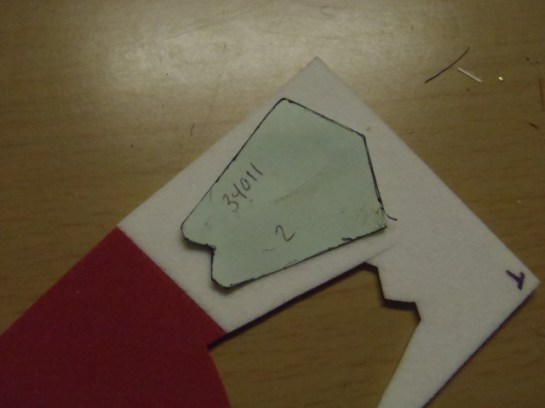
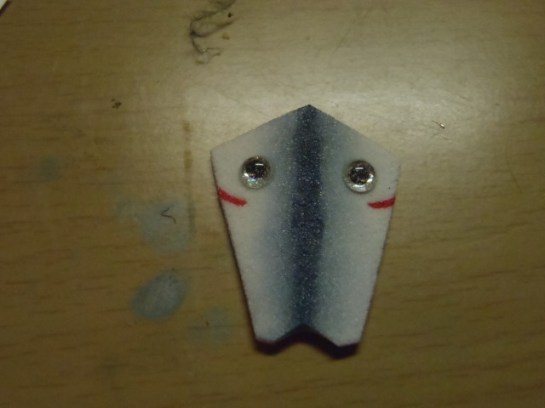
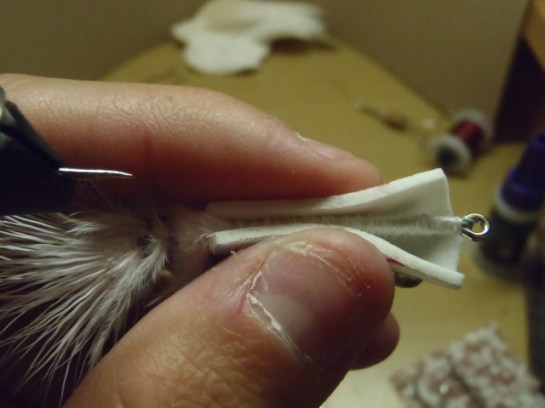
Step 3. Cut out the foam for your body. I made a template that I use to get a consistent shape. To color the body, I use sharpies and my finger to blend it. An airbrush is another option here. Sharpies are surprisingly easy to blend on the foam. I also stick on my eyes at this point using a little super glue.
OLYMPUS DIGITAL CAMERA

OLYMPUS DIGITAL CAMERA

Step 4. Put the front hook in the vise and start the thread. Use the foam cut out to measure where the foam body will end. Stop the thread at that spot.

OLYMPUS DIGITAL CAMERA

OLYMPUS DIGITAL CAMERA

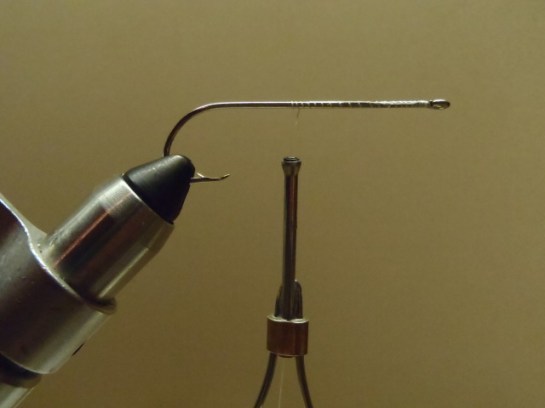
Step 5. Attach the braid to the rear hook. I like to put a loop through the eye, bring the loop around the hook, and tighten. I have also tied them with the braid just going through the eye and then tying it in. Thread the tag ends of the braid through a bead of your choice. I like red. I’m sure the bead isn’t necessary, but I like how it looks. Tie the braid down on the top of the hook starting where the foam will end and going all the way to the hook eye. Insert the ends of the braid through the hook eye and wrap them back toward the bend on the underside of the hook.

OLYMPUS DIGITAL CAMERA

OLYMPUS DIGITAL CAMERA

Step 6. Tie some marabou at the spot where the foam body will end. This is also probably not needed, but I think it adds a little movement so I put it. It also shrouds the bead. Tie down the marabou butts to the eye. This will thicken the hook shank which will give the foam a little more to stick to. Here, I wrap some lead wire around the tail to keep everything out of the way and tie off the thread.

OLYMPUS DIGITAL CAMERA

OLYMPUS DIGITAL CAMERA

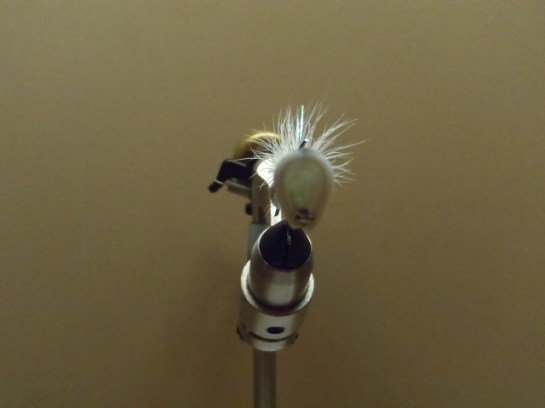
Step 7. Turn the fly upside down and run a good layer of super glue on the bottom of the hook shank. Take your colored foam body and pinch it together along the bottom of the fly making sure that it is also butted against the shank.

OLYMPUS DIGITAL CAMERA

Should end up with something like this.

OLYMPUS DIGITAL CAMERA

OLYMPUS DIGITAL CAMERA

OLYMPUS DIGITAL CAMERA

OLYMPUS DIGITAL CAMERA

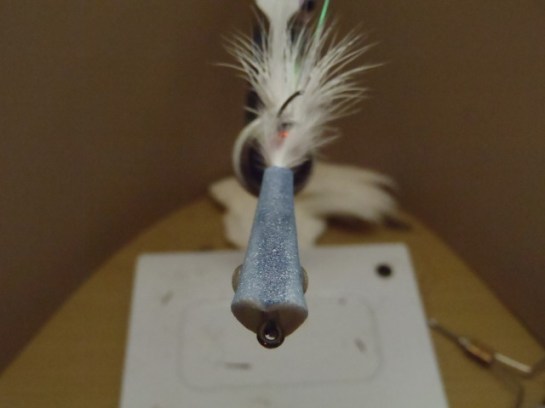
Step 8. Finish up any color that you want. I color the lips red and finish the gills on the underside where the two pieces of foam meet. Mix up some epoxy (if I only do one fly, I use 5 minute. For anything more, I use 30) and apply to the surface of the body and inside of the body. Put on a spinner to dry.

OLYMPUS DIGITAL CAMERA

Step 9. The last step is to cut off the front hook using wire cutters. Completed fly.

OLYMPUS DIGITAL CAMERA

OLYMPUS DIGITAL CAMERA

OLYMPUS DIGITAL CAMERA

Proof of concept:

IMG_0487