Archive

Warmwater

Note: I wrote this piece late last year and held onto it, foolishly thinking someone else may want to publish it. I don’t think that’s happening so now is a great time to let it loose.

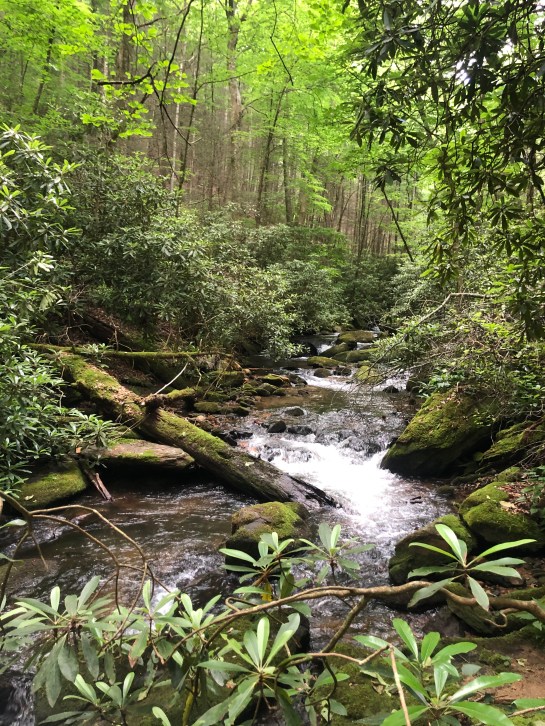
I really enjoy the time that I spend fishing upland streams, far from my home, where the water is clean, clear, and filled with life. I often seek out creeks that are off the beaten path, sometimes deep in the woods; places that give you a feeling that perhaps you’re the first person to fish here, maybe not ever, but in a very long time. Those are special places to me.
This image has an empty alt attribute; its file name is img_3974.jpg

The places I have locally are not those types of places. Sure, there are creeks that are an hour or more away that may fit the bill and illicit those same feelings, but the ones I’m referring to as local, those within a few miles or minutes of my house, are a far cry from what I would consider the ideal stream for an immersive fly fishing experience.

These are drainage ditches. Brownlines to me because that’s often what they look like. The quality of the water is probably closer to that of a sewer line than an upland stream. They are not places you would want to step in if you had an open wound and you certainly don’t want to wet your line with your mouth when tying on a new fly. Sure they are little blue lines on a map, but these streams and bayous have been altered by man, with no thought given to what lives in and around the water. Their design is one of purpose and function and not one of form. They carry water away from metropolitan areas and take it somewhere out of sight and out of mind for the majority of the population. They make the news when the rain falls too hard for too long and suddenly these streams end up in your backyard and people remember they are there. When they are tame they are forgotten places. The trash that lines their banks tells that story. These are places very few people care about and for the longest time I was one of those people.
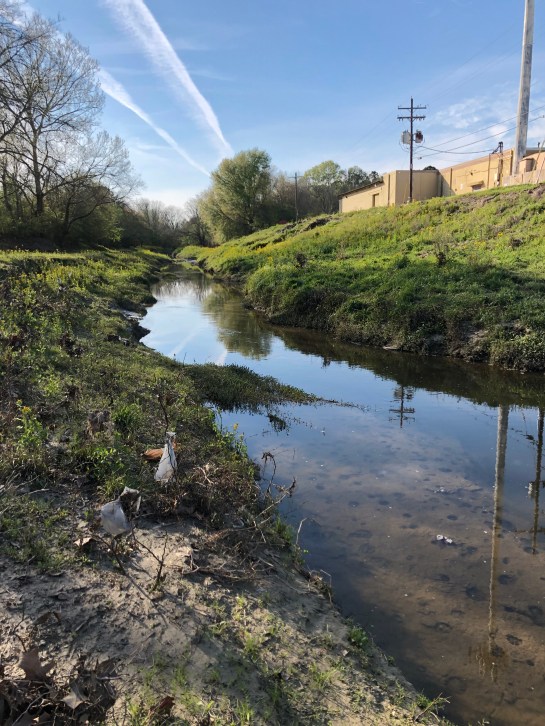
I ignored fishing these places because frankly there wasn’t much of an appeal. I had time to travel a little further and fish somewhere more “worthy of my presence”. Life has a funny way of changing things though and as my family has grown, time has gotten tighter, and over the past few years I’ve been forced to fish closer to home. Over time I’ve come to appreciate the brownlines. There is beauty in them if you’re willing to overlook the ugly on the surface. I’m sure there’s a metaphor there for people too.

I’ve discovered a handful of places around town over the past few years that have become some of my go-to spots now, mainly in the interest of time, but also because they’ve proven themselves to be productive little fisheries. These are ditches where you can walk the banks, not feel like you’re right in someone’s yard, and not sink in soupy mud. Creeks where the water actually has a decent amount of visibility to it. There aren’t many places around here like that and I continue to search for ones that stand out.

Back in August I finally made time one Friday afternoon for a ditch that I drive over and always take an extra long look as I pass.
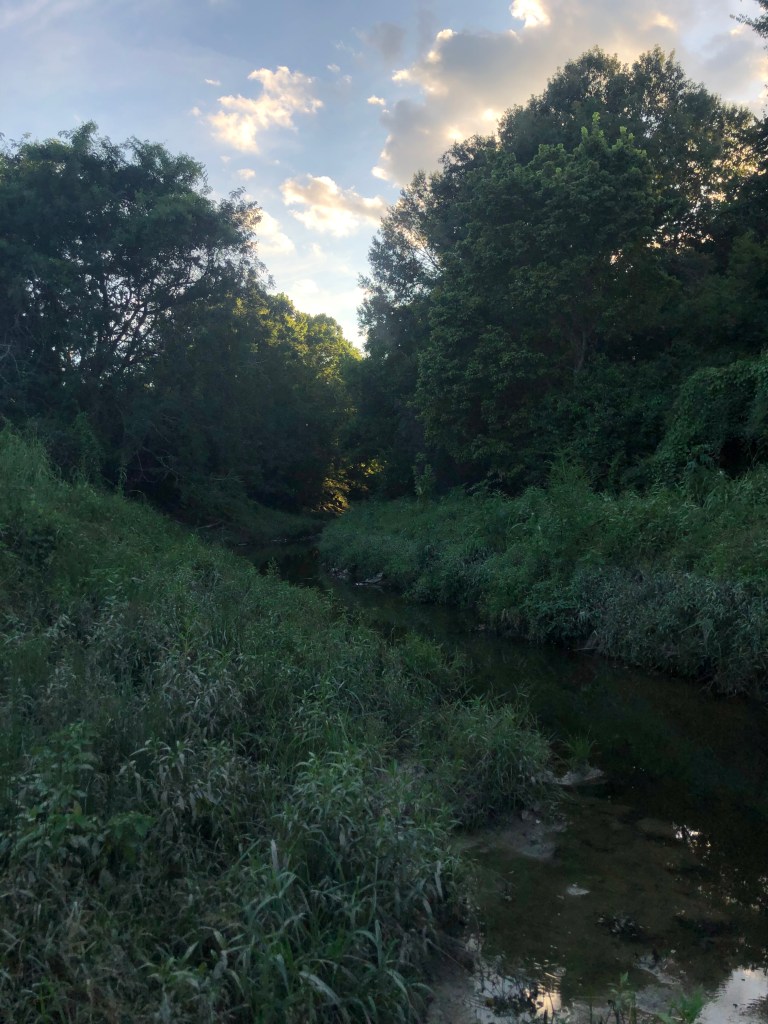
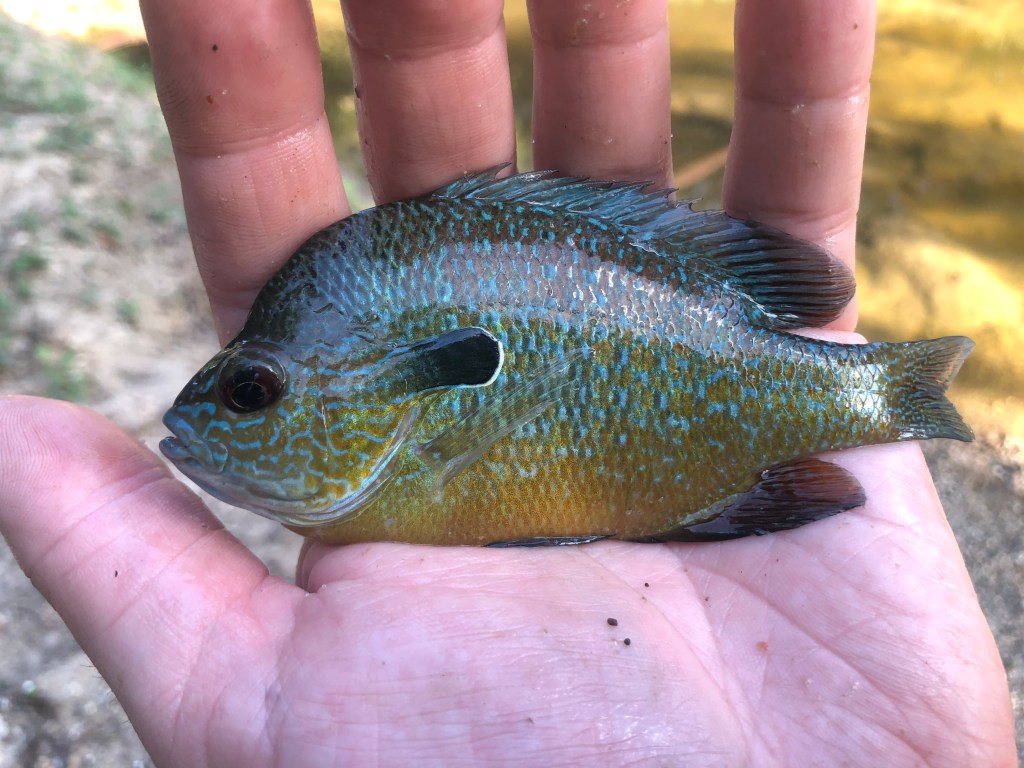
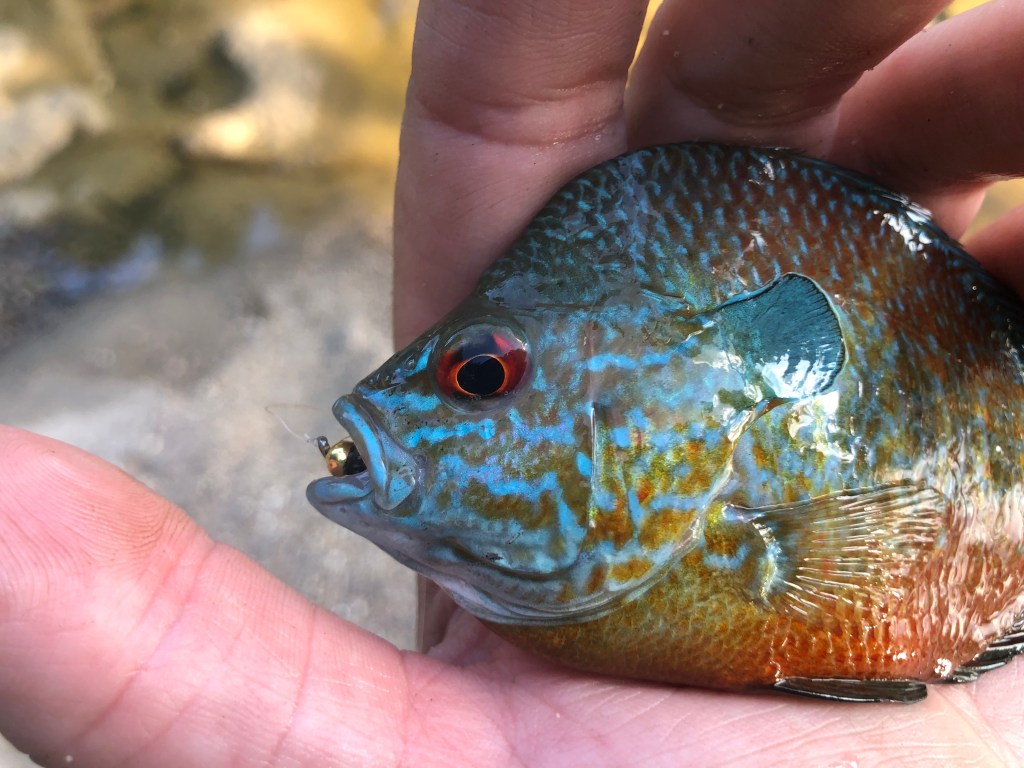
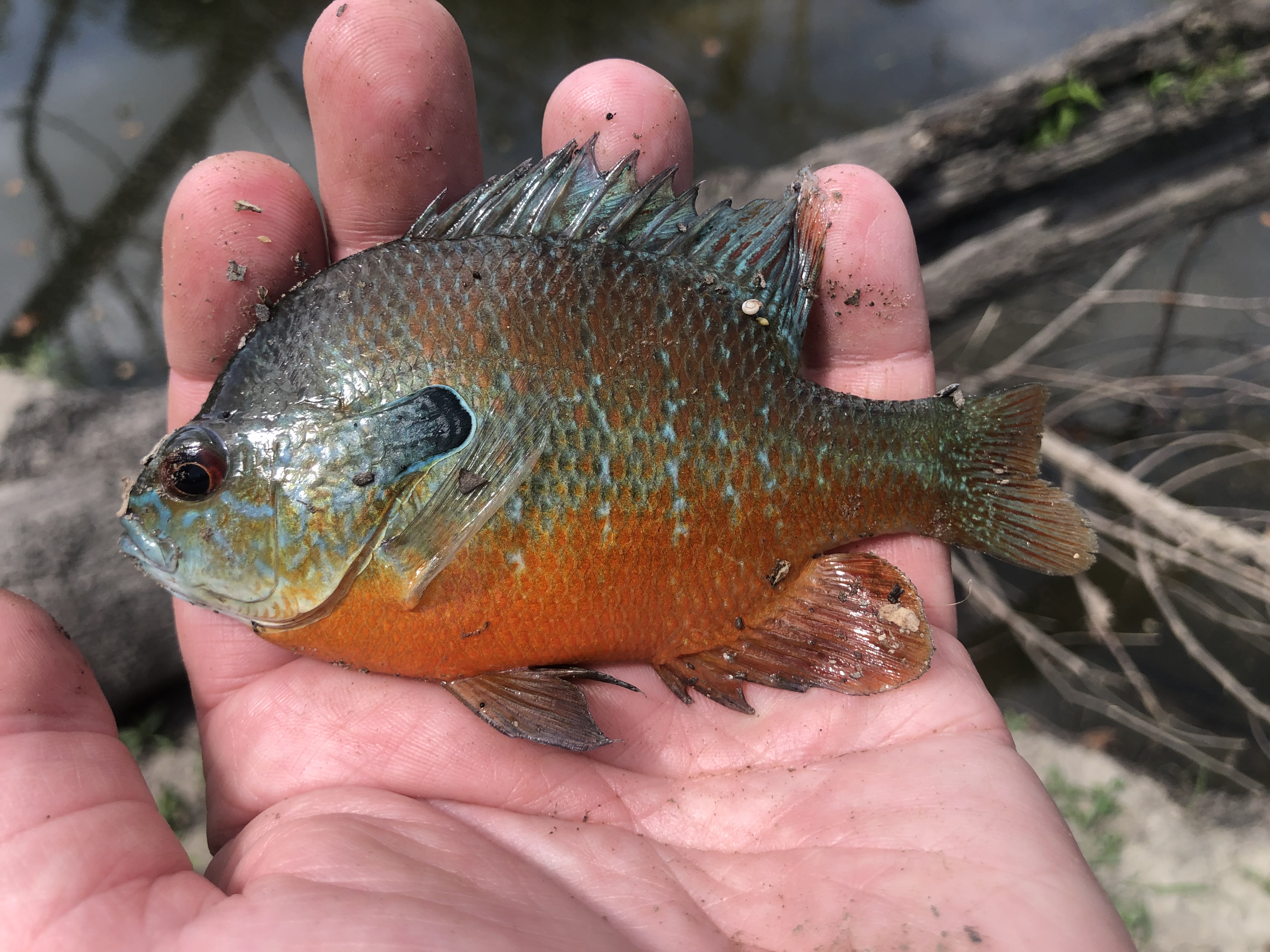
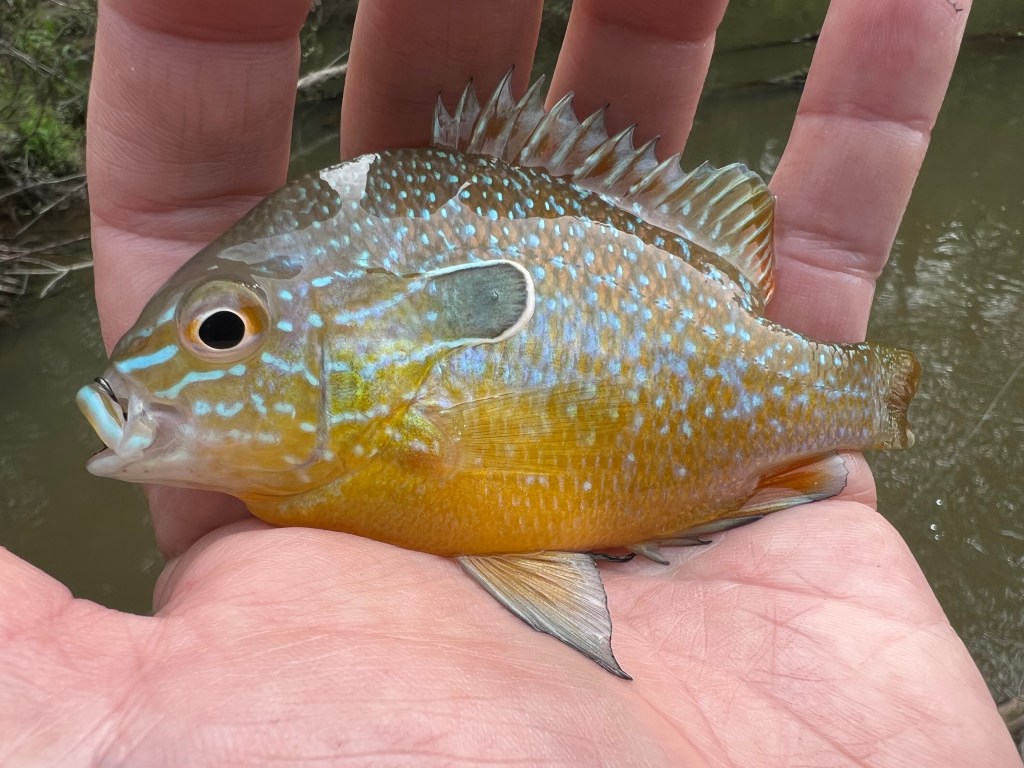
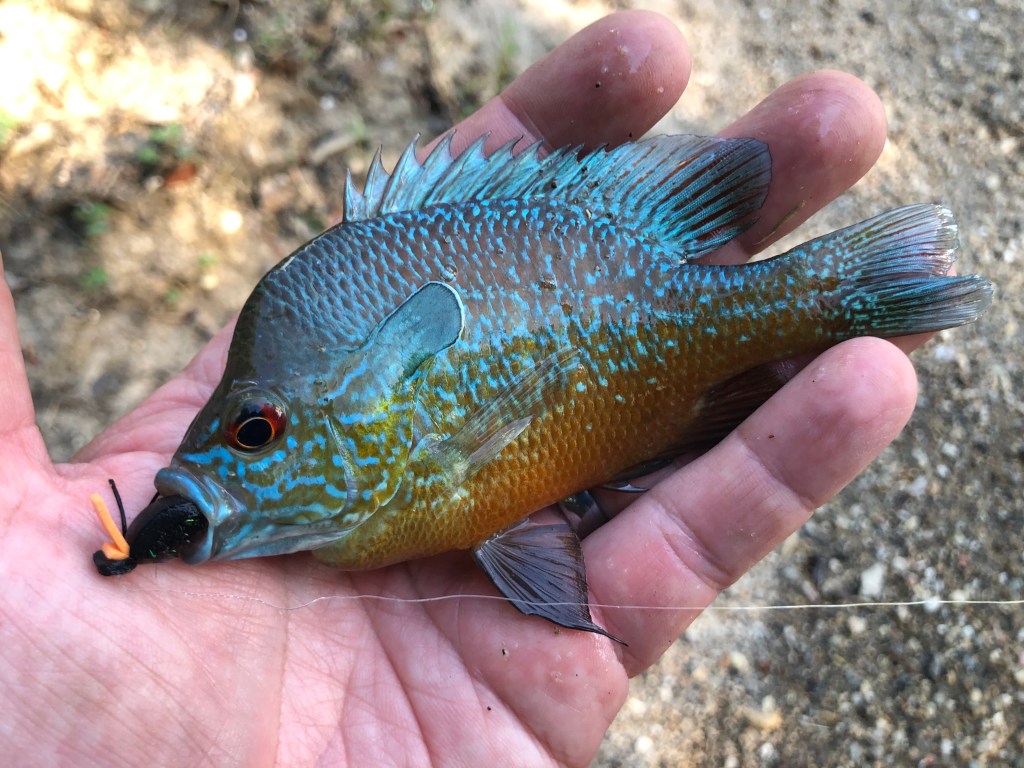
I’m glad I made the time too because it ended up being loaded with some of my favorite sunfish, longear, and they were in full spawning regalia.

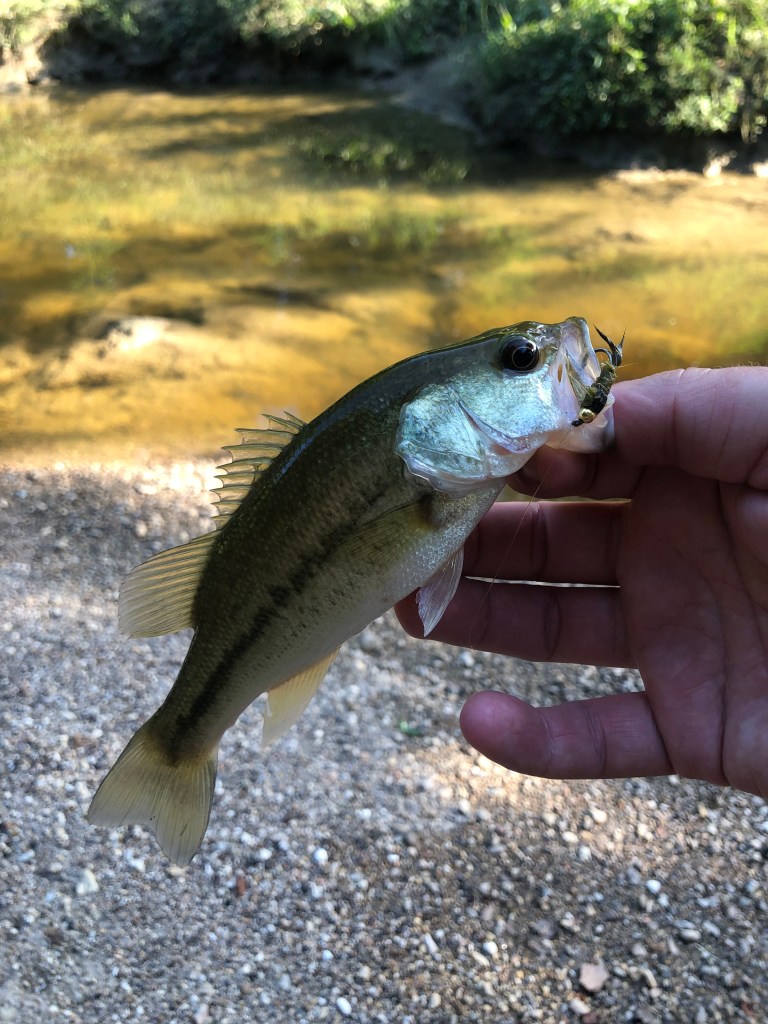
I was able to fool a couple largemouth hanging around, but passed on the chance to fight a big spotted gar on light tackle.
It was a good enough time that I made it back out there the next Friday to walk the banks in the other direction. The little largemouth were still very active, but I ran into some other usual ditch denizens as well.

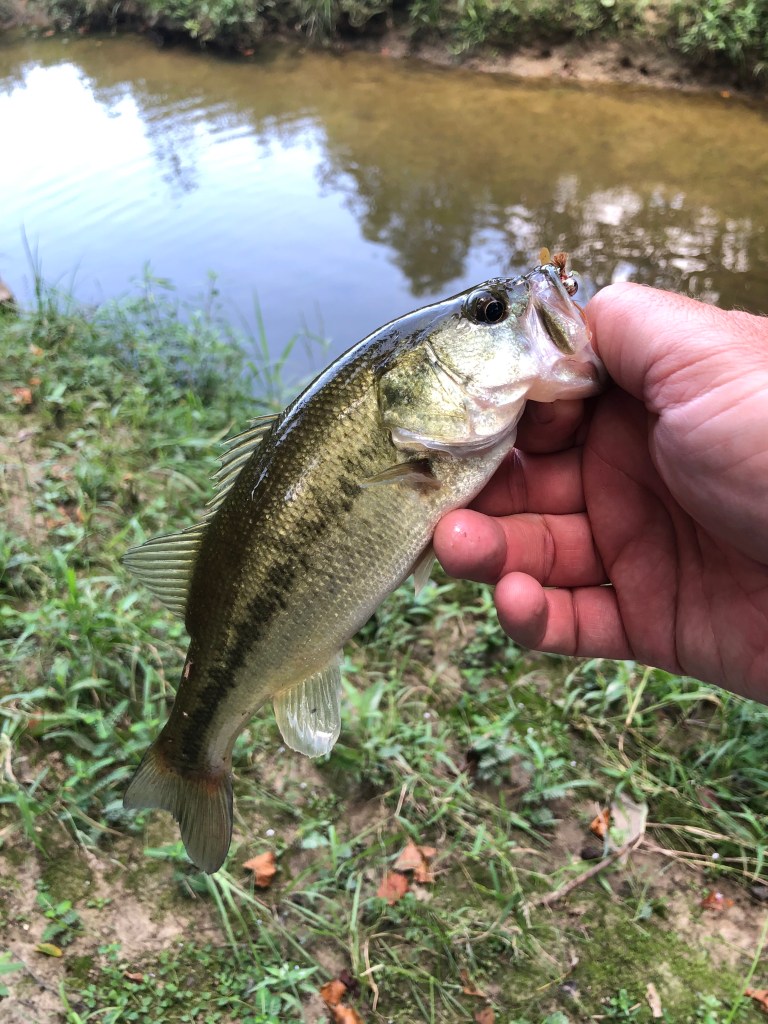
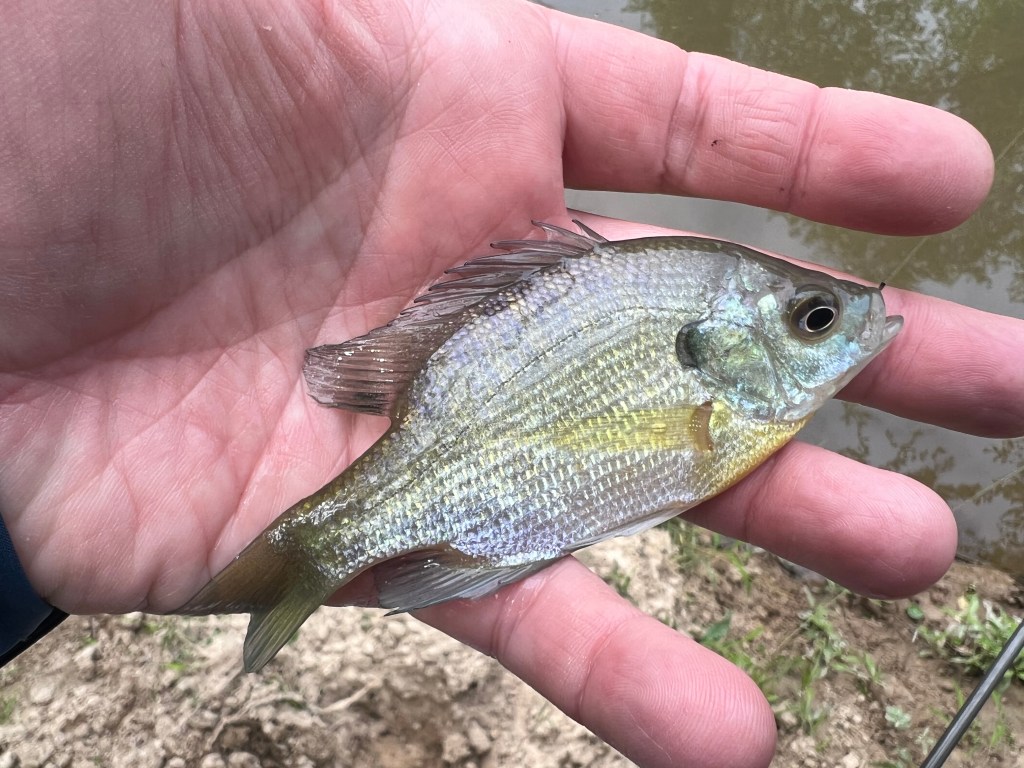
Green sunfish

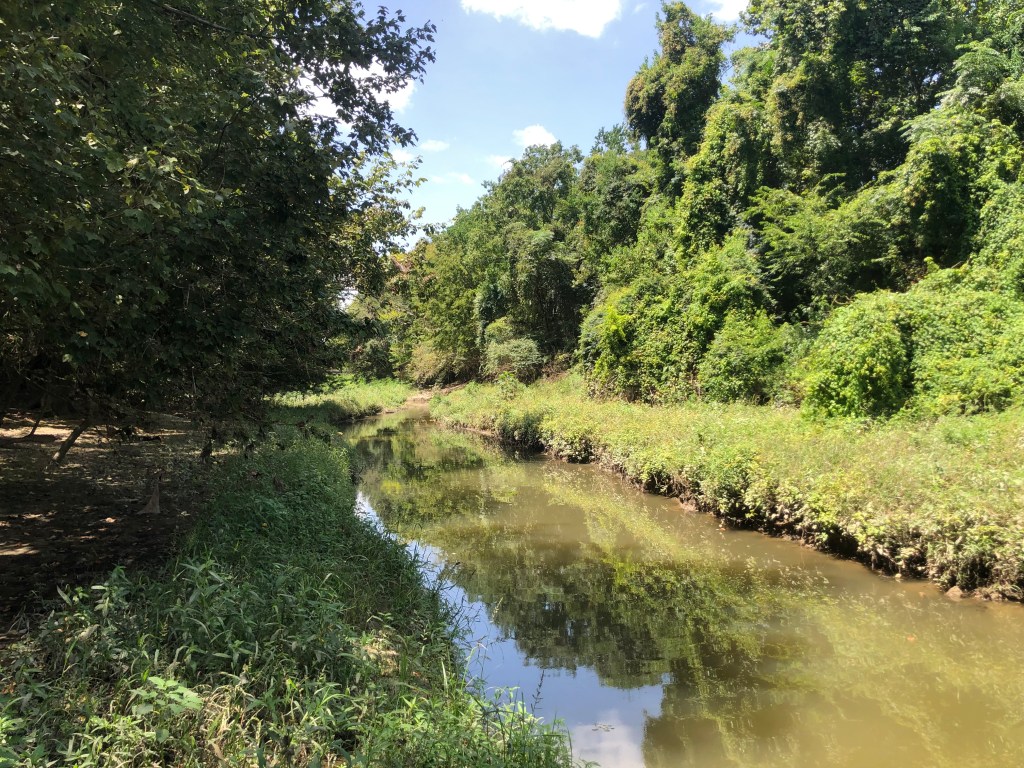
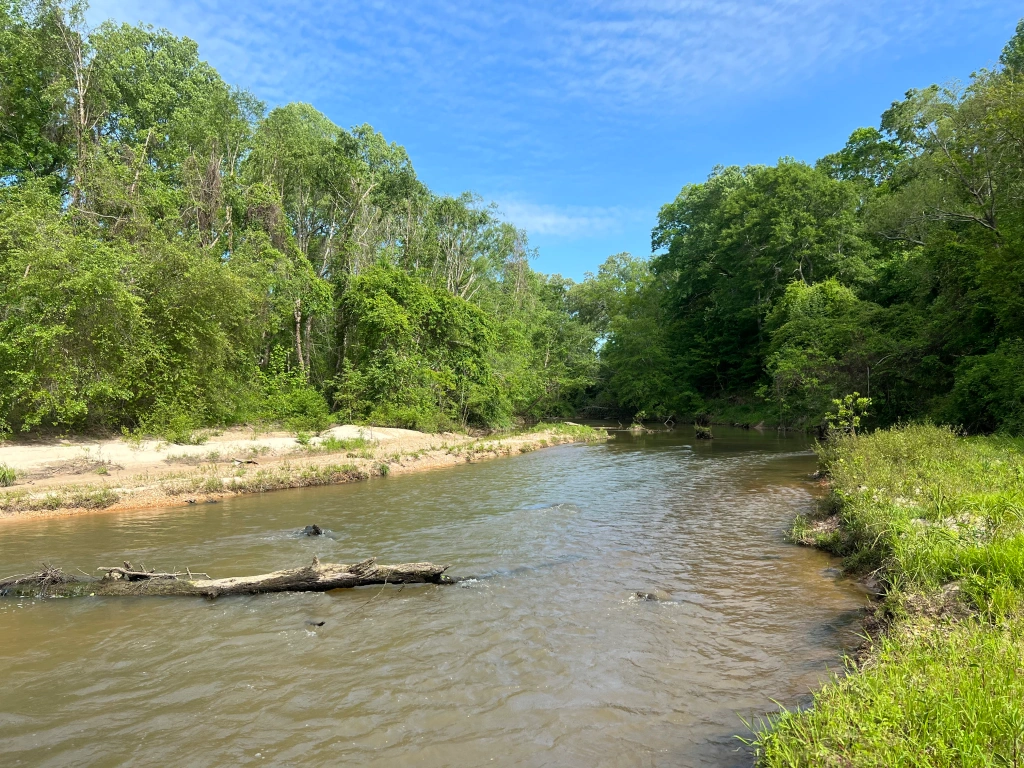
With four bridges on this ditch in less than a creek mile there’s no mistaking this for one of those upland streams I love to fish. The constant hum of traffic and the trash lined banks made that very clear. With the pictures though I do hope to convey that despite their surface appearance these ditches do have life in them and the greenspace they provide to wildlife is important in our urban/suburban environment. Someone needs to show love for these places and the fish that call them home.
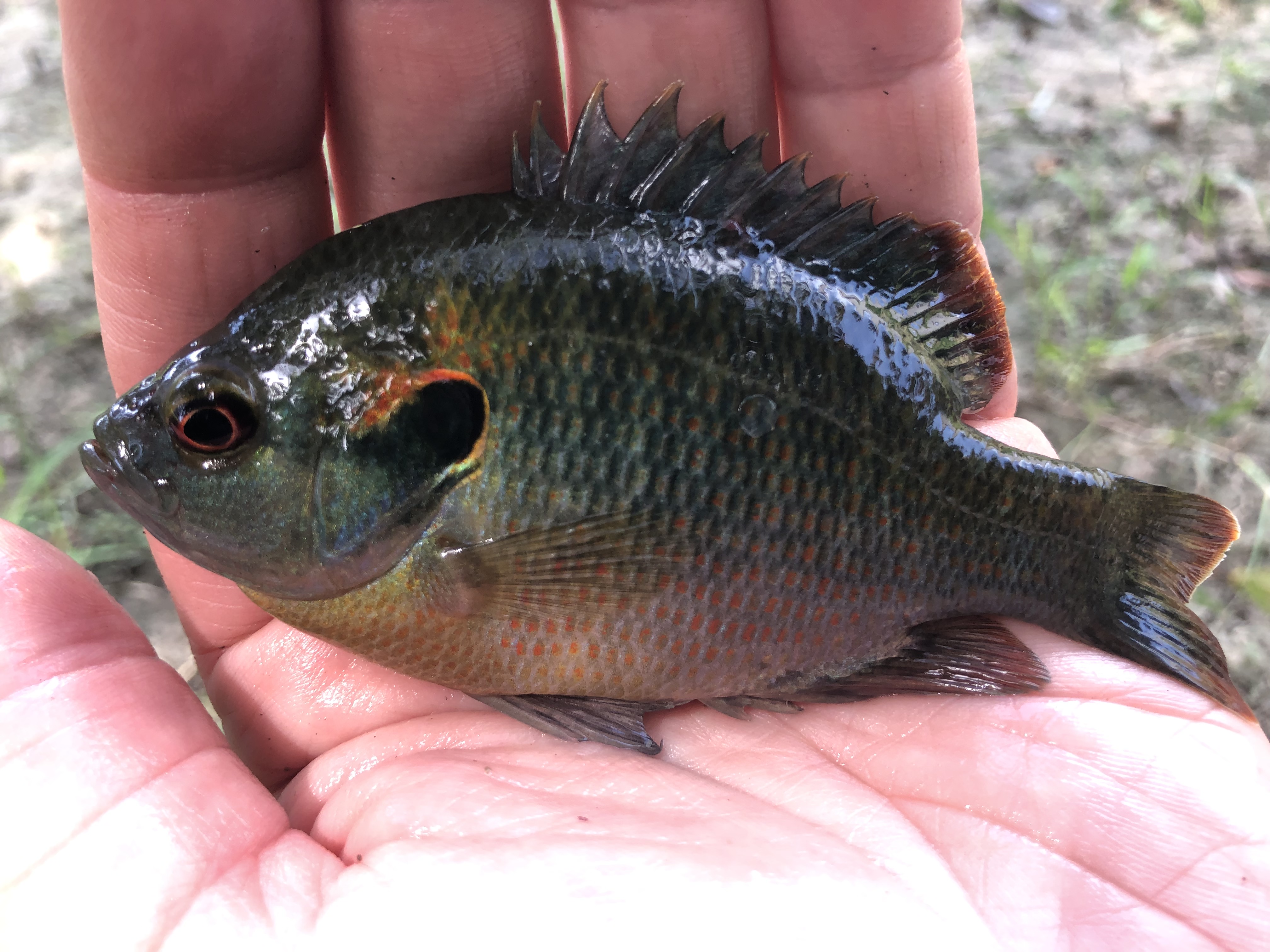
Redspotted sunfish

I ended the day with a nice little mixed bag and a new appreciation for a ditch around the corner from my house.

While walking the bank back to the truck I thought about how nice it would be if my fellow Baton Rouge residents actually cared about their waterways and the floodplains they run through. If parks were developed with sidewalks and paths that ran along the stream to provide access and recreational opportunity. It would be a resource for the public. It would also make them suddenly visible for all to see. Then maybe the litter problem would be forced into their consciousness when they realize they don’t want their greenspaces to look like a landfill, which is often the experience when you spend time on the drainage ditches that run through our city. I see the potential to turn these ditches from brownlines into bluelines, I just wish others did as well.

It happens every year. When the azaleas start blooming the desire in me to fish a creek is at it’s strongest. The creeks are calling, beckoning me to wet my legs in the cool water, and tease some poppers around fallen timber in search of spotted bass and longear sunfish. This year that flame was fanned a bit more by my friend Brian, who had just recently taken a trip to Arkansas in search of smallmouth bass. His pictures were inspiring and as soon as I had a chance to hit a local creek I did.

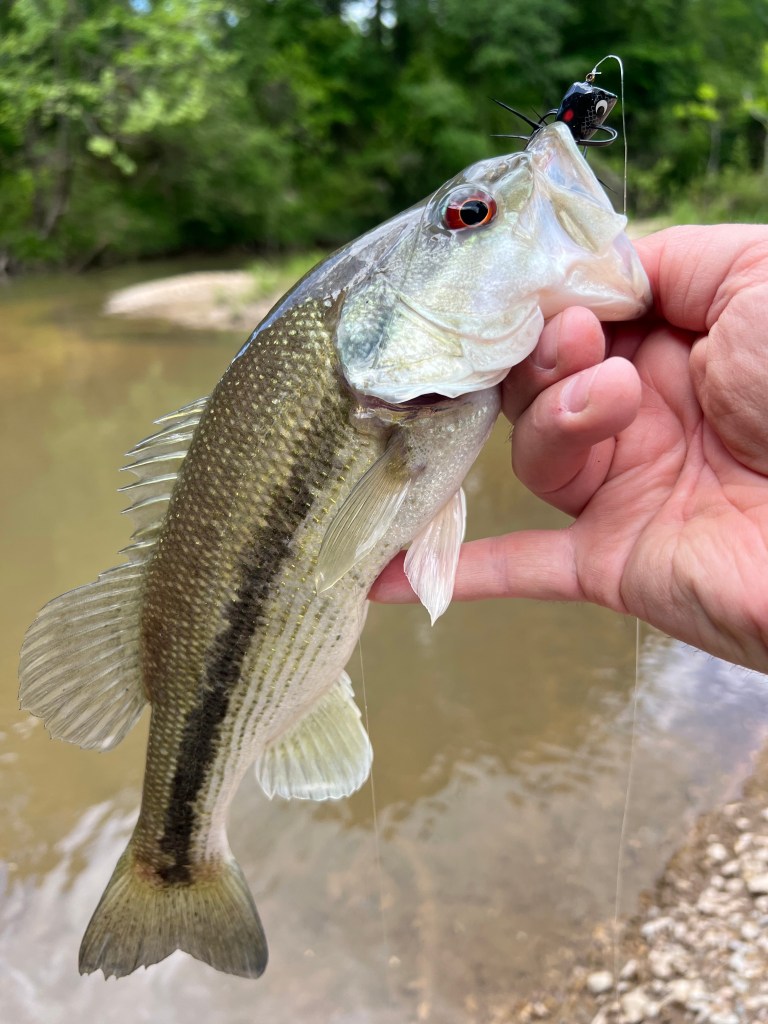
It didn’t take long for me to catch my first spotted bass of the year, that happened right under the bridge where I accessed the creek, it fell for a little black Clouser minnow. I soon switched up to a popper-dropper so I could target the bass and the sunfish at once and eventually I coaxed a little largemouth from a lazy side channel with one of Ron Braud’s beautiful stippled poppers that I had won from last year’s Red Stick Flyfishers’s Jambalaya Challenge. That same lazy side channel then produced a couple beautiful longear.

There’s been recent research to suggest that the longear sunfish complex are comprised of more than just the two species that we currently recognize; Lepomis megalotis(longear sunfish) and Lepomis peltastes(northern sunfish). It’s been proposed that there are as many as six ancient lineages of longear sunfish (that includes northern sunfish). According to the paper, the longear we catch in the Amite River watershed, like the ones above, are suggested to be Lepomis solis.

The variability in the appearance of longear sunfish across their range has been pretty obvious to the discerning fisherman for quite some time, hell, there’s even a Facebook group dedicated to this observation: Lepomis Megalotis Morphology Project. When you see specimens from totally different watersheds side by side it’s easier to note the differences. The longears I’ve caught in Bayou Sara or Thompson Creek, which both drain into the Mississippi River, certainly look different than the ones we catch in the Amite, or any other northshore river, so this research doesn’t come as much of a surprise. Call me a splitter, but this research is very welcome, I’m definitely all for it.

I continued my way through the stream catching bluegill, shiner, more longear, and eventually another spotted bass. I swear I use to catch more spotted bass in these streams when I first started fishing them, but then again that was pretty much the only species I targeted. These days I’m trying to catch everything I see, which has me doing a lot of switching of flies from poppers to nymphs to streamers to size 26 micro-nymphs. It takes away from the time my fly is in the water, but I find it pretty rewarding to catch a wider variety of fish.

On my way back to the vehicle I found another lazy side channel that was loaded up with topminnow, some looked large enough to catch with a fly, so I re-rigged and spent some time dapping for them. It’s a little tougher to do it with a 6wt than a 1wt, but I got the job done and hooked one of the bigger ones. I made it back to the bridge and tied a popper back on to work the pools that formed behind the stacked up debris that clings to the pylons underneath seemingly every bridge around here I walk under. I don’t think there is a big budget for debris cleanup on our waterways, which is probably not the best thing for flooding, but it does increase the fish habitat within a river, so I’m not really complaining. Sure enough the best bass of the day was happy to explode on my black BoogleBug and I was as happy as a river clam when it happened.

The creek was calling and I’m glad I listened, it was a great day on the water, experiencing nature. No cool agate finds on this trip, but I was pretty happy with the diversity of fish that came to hand. I always tell myself that I shouldn’t wait so long before my next creek fishing trip, but then life always finds a way to interject. Hopefully this post will inspire someone out there, the way Brian’s pictures inspired me, to hit up a local creek and spend half a day on the water just taking it all in.

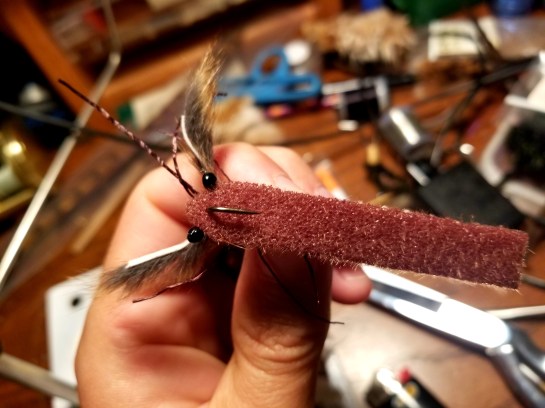
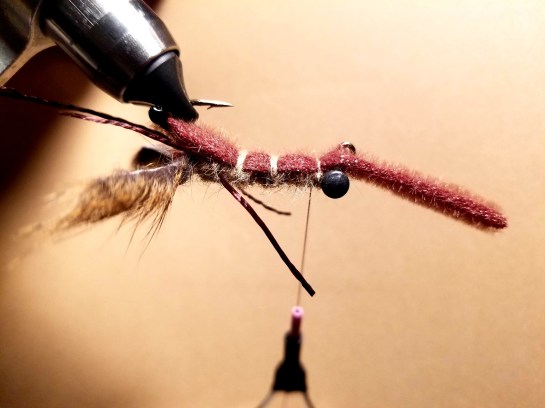
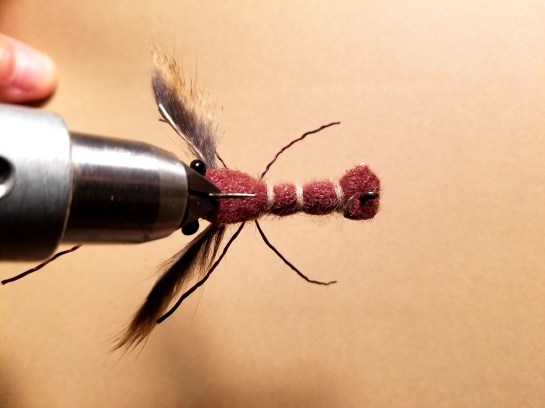
I mentioned in a previous post that I’d try to get Blake to send me a SBS of the crawfish pattern that I’ve had success with and wouldn’t you know the man came through. See his instructions below if you want to tie up a really effective crawfish fly that various species of bass and sunfish love:

This fly is a variant of the Crayfish X tied by Dron Lee. There wasn’t an SBS on his site and I liked how it looked so I tied it how I assumed it was tied. You can find more patterns by Mr. Lee here: https://flytyingnation.com/

Materials:

  • Eagle Claw 410 Jig size 2
  • Lead Dumbbell Eyes sized to match hook and sink rate
  • Spanflex
  • Sow Bug Dubbing
  • Fox Squirrel Zonkers
  • Mono Eyes
  • Furry Foam

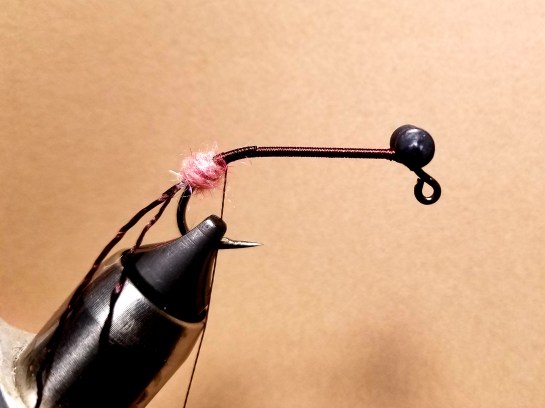
Tie dumbbell eyes in at the front of the hook right at the bend. This helps to ensure that the fly falls hook point up and will allow space to whip finish later in the process.

Tie in the antennae and wrap to a point around the bend.

Make a small ball of dubbing right behind the antennae. This is to help splay out the claws and eyes.

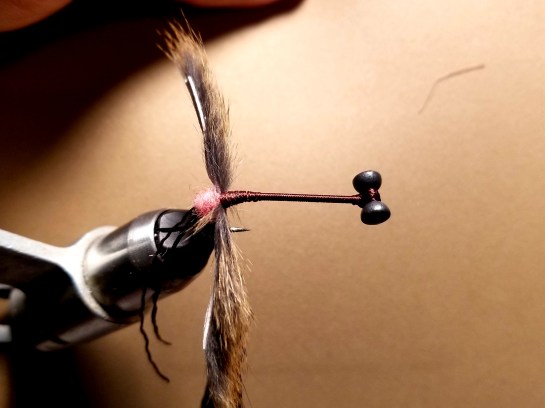
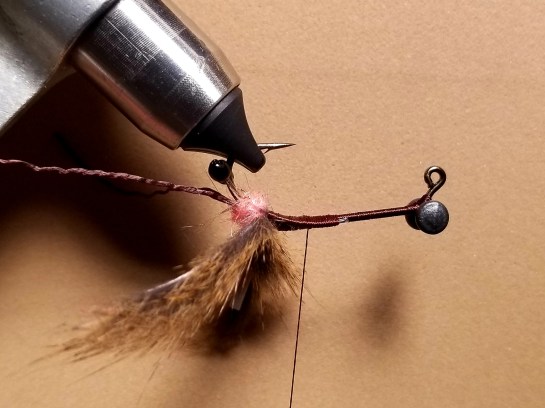
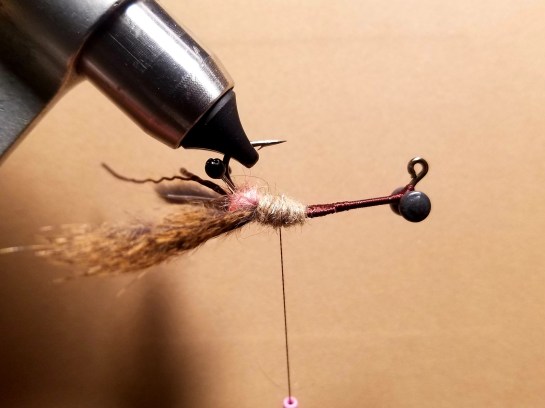
Cut two zonker strips to length. These were 1” of hide that ended up being 1.5” in total length. Wrap them all the way up to the dubbing ball.

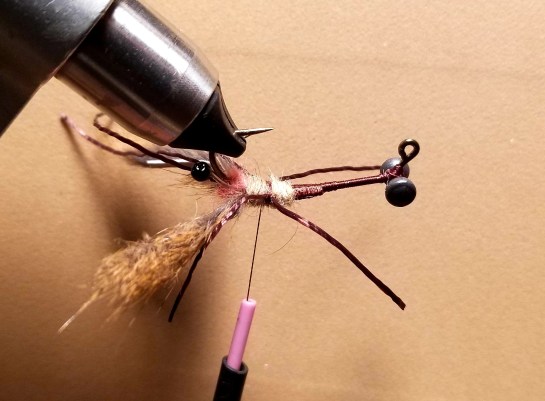
Pull each zonker strip out and hit the base with some UV resin (or super glue). Probably not a necessary step but I think it reduces fouling and also makes the claws spread out when the fly is sitting on the bottom.

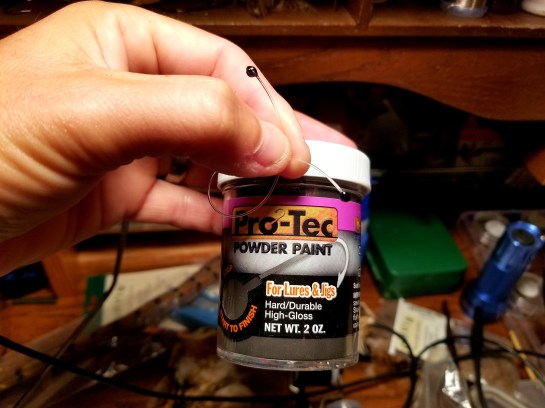
Tie in some mono eyes on either side of the hook. I like to tie them so that they lay right above the claws to further reduce fouling. I make my own by heating up some 50 pound mono and then dipping it in some powder paint. I will then run it through the lighter again to smooth out the powder if needed. The final step is to use a cauterizing tool to bend them how you want them. You don’t have to actually touch the mono with the tool. Just get it close and the mono will bend towards the heat. Takes some practice to not melt other materials but makes setting the eyes in position pretty easy.
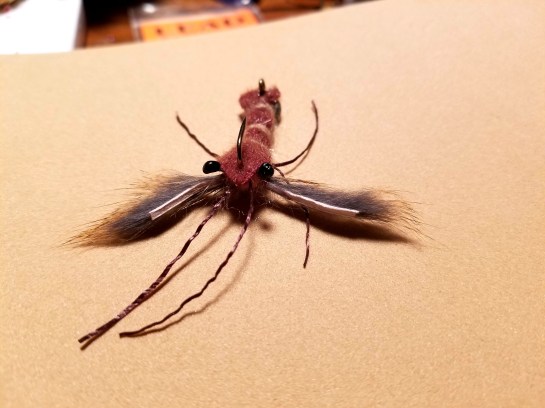
Dub the body to the hook point, tie in a leg on either side, then finish the area off by using figure 8 wraps to set the legs in a position you like. I prefer to add some dubbing before tying in the legs so that I’m not trying to build bulk in the area while having to deal with the legs. Build the bulk, tie in the legs, cover the tie-in.

Bring thread to the hook eye and dub back to the hook point.

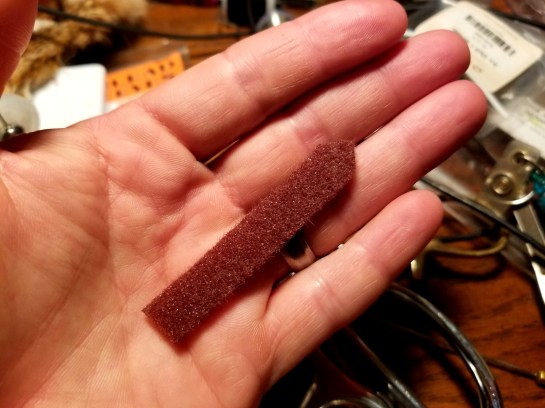
Cut a piece of furry foam that is the size of the hook gap, cut a point on one end, and put it on the hook.

Place the hook back into the vise and tie the foam in somewhere near the point. Dub the tie in point to show some segmentation in the body, then dub your way to a point in the middle between the hook eye and first body segment. Repeat the process to right behind the hook eye.

Finish dubbing the final tie-in and whip finish between the hook eye and the furry foam. Trim the foam to form the tail.

I like to brush out the bottom of the fly with a dubbing brush.

Finished Fly