Back in the beginning of March I drove up to Percy Quin State Park to attend the FFI Gulf Coast Council Sweetwater Classic. The Sweetwater Classic was an event for area fly fishermen which featured regional fly tiers, fly fishing presentations, and a couple of fishing contests. Normally early March would be a great time for such an event as things are just starting to warm up and the freshwater fishing is getting good around here, but Mother Nature decided to bring one of the last few frigid cold fronts of the year down to the Gulf Coast that very weekend. I think it scared away a potentially larger crowd and made for some difficult fishing conditions on Saturday. The front rolled through overnight on Friday which meant there were decent conditions on Friday to fish and the big bream contest was held that afternoon, so it wasn’t a complete crapshoot weather-wise. I decided to scout different rivers and accesses on the ride up before joining the group to hunt for big bream.
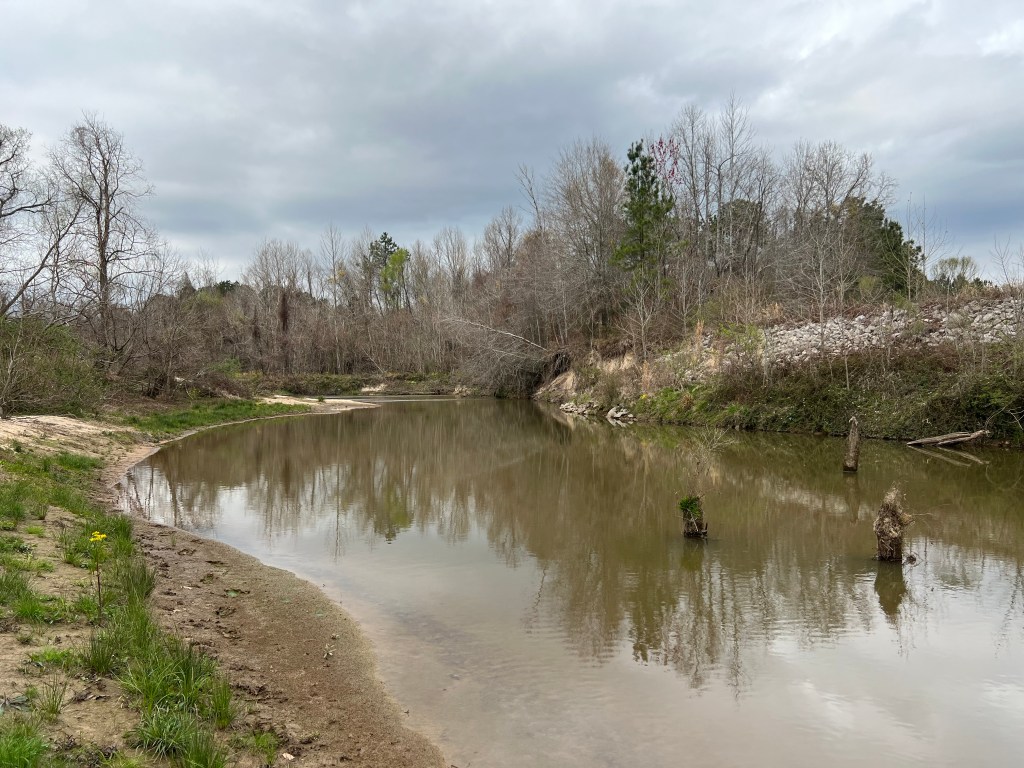
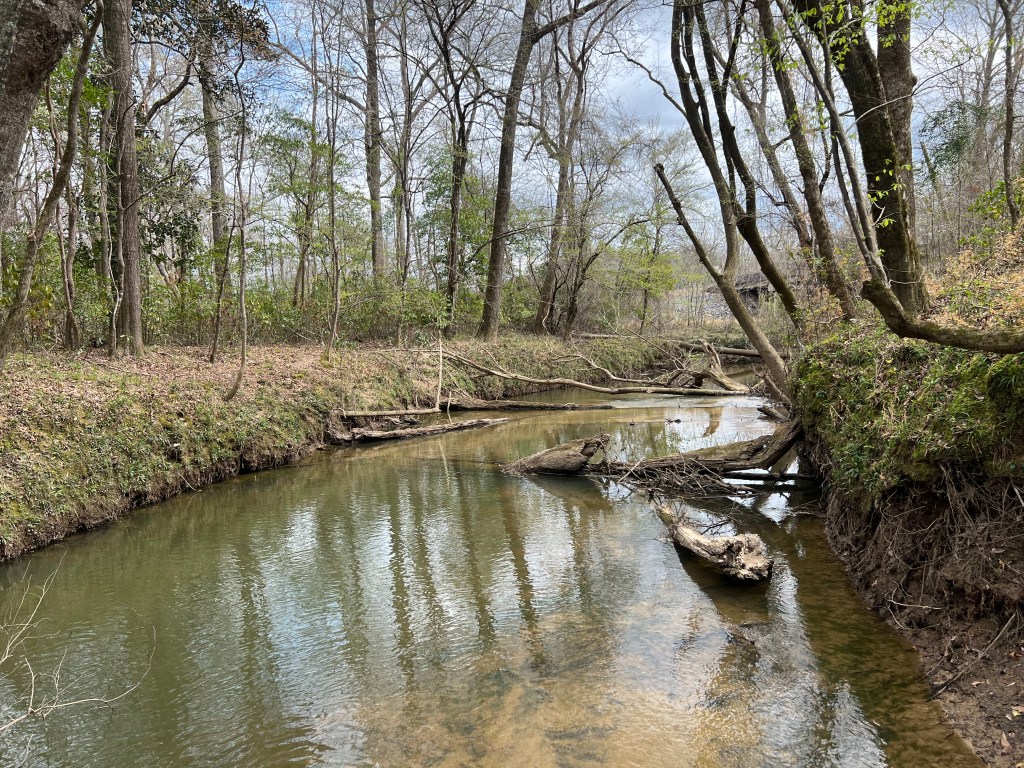
A striped shiner saved me from a skunk on the scouting trip, but I did get to see a lot of pretty water – good habitat for spotted bass, longear sunfish, and potentially shadow bass. It was probably a better place to fish a little later into Spring, the rivers usually take a little longer to warm up than the lakes, but I liked what I saw. Future trips saved for a later date, for now it was off to the Sweetwater Classic and the big bream contest which would be held that afternoon.
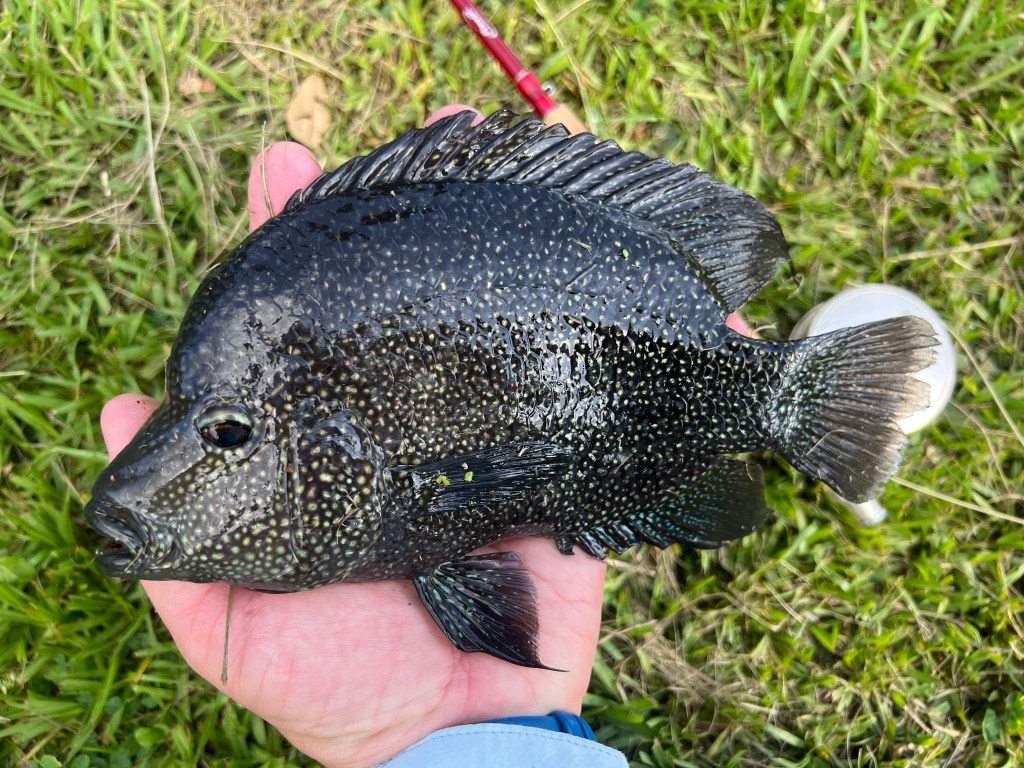
Back in June I got a wild hair to spend a morning fishing in City Park down in New Orleans. I wanted to target the non-native Rio Grande (or Lowland, apparently there may actually be two different species in the Park) cichlids that have made a home for themselves in the Park. I’ve caught a few in my life, but never really targeted them explicitly, so today was the day. I settled in on the lagoon where I’ve caught them in the past and went to work.
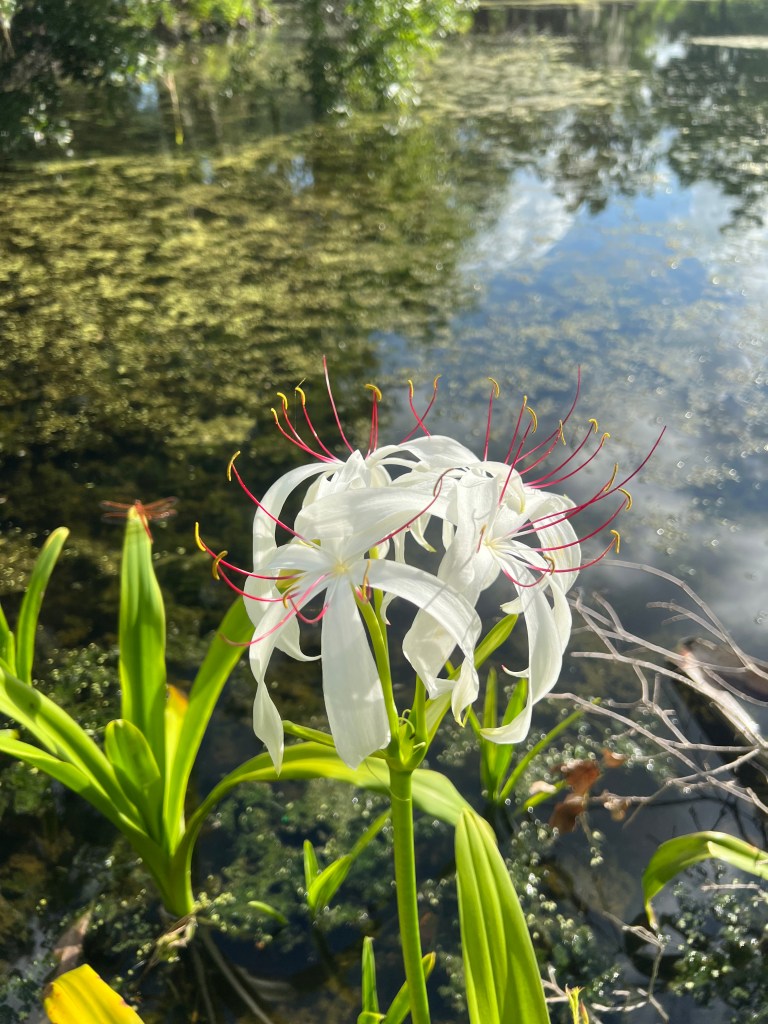
Southern Swamp Lily (Crinum americanum)
The water was super clear, as is typically the case in this lagoon, and probably a bit lower than normal due to our mild Spring drought (it didn’t rain 1000″ in South Louisiana this Spring). Temps were on the abnormally hot side for June which meant a pop-up thunderstorm could happen at any point. We had already reached our summer weather pattern here in South Louisiana. It was going to be a hot, humid sweatfest of a day.
This lagoon is pretty heavily vegetated aquatically and around the perimeter so you can really only cast in select spots. I popped into a few and eventually found one where I could see a pair of cichlids in the super shallows. They looked like they may have been preparing to spawn as they displayed some “guarding the nest” behavior. I’m not real worried about disturbing an invasive species during it’s spawn so this worked in my favor in terms of being able to sight fish them. After a few errant casts I was able to place a nymph close enough to illicit an eat. The eat was slow, but deliberate, and in short time I had my first cichlid on the day.
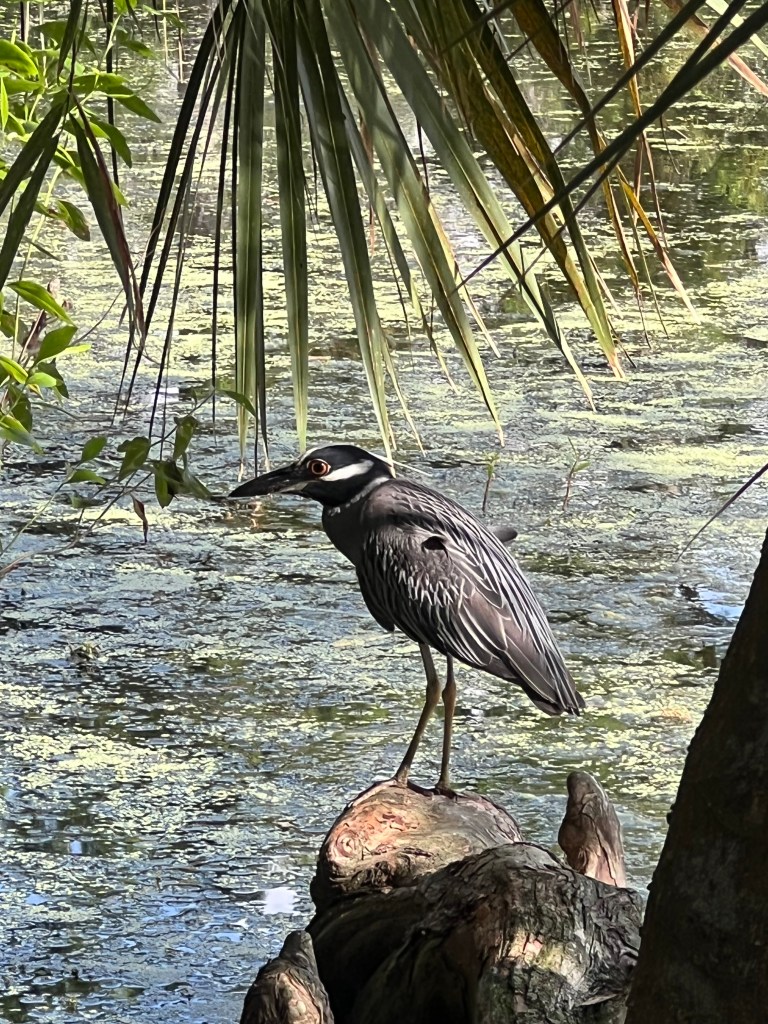
I botched an attempt at the other cichlid, a bigger one, that this fish was paired up with and after bidding my bird friend behind me adieu I moved on.
Yellow-crowned night-heron (Nyctanassa violacea)
I switched from a weighted pattern to an unweighted nymph and that slower sink rate proved to be just the ticket in this shallow vegetated part of the lagoon.
As I worked my way around the pond I missed a couple more sightfishing attempts, including a fish on a beetle pattern I was using above my Tellico nymph, before bringing another one to hand. I had him all the way to the bank, a big one, but lost him as I went to lift him above the tall vegetation along the shoreline.
I was able to redeem myself though and did catch the next couple of fish on the beetle. The topwater eat was a very slow slurp, almost like a cutthroat sucking down a dry fly, so it took a little more patience to not pull the fly right out of their mouth.
Content with the handful of Rios I caught I decided to pack it up and head to some nearby canals to continue targeting non-native species and try my luck with a more discerning freshwater fish, the common carp.
The beautiful, majestic straight-line canals of Metairie hold plenty of carp and gar for the fly angler who likes to be frustrated. They aren’t hard to find, you can see them rooting around the bottom of the canal searching for food. I have a hard time connecting with them though, it seems like you’ve got to have everything perfect in order to get an eat. By perfect I mean the fly has to be right, the distance ahead of the fish has to be far enough so that it doesn’t spook on the splash, but close enough that it can pick it up while it hoovers the bottom, and then you have to be able to set at that critical moment when they do eat, which is often fairly hard to detect. This is why I’ve only previously caught only one of these bastards. Thankfully my second came about an hour into trying for them which, I’ll admit, could have been far worse.
It was lunch time at this point and starting to really heat up so I packed it up and headed on out. I’m not that dialed in on the carp so it seems to me like only someone who is a real glutton for punishment could enjoy carp fishing. That being said the challenge of trying to fool a carp was exciting and catching Rios at City Park was a lot of fun so overall the morning was a complete success.
I recently revisited that old brownline from last year to see how the fish were doing. As Spring progresses into Summer there are still a few local species I can add to my catch list for the 2022 edition of the Red Stick Fly Fishers Jambalaya Challenge, and I was hoping to do that here.
The water in the ditch was low and clear and made for some exciting and challenging sight fishing. We’ve had drastically less rainfall this year when compared with last. We had the wettest year I’ve ever seen in Baton Rouge last year, but this Spring we’ve been dealing it’s been a mild drought. A mild drought here just means more of these ditches are fishable as the water isn’t super dirty from runoff, so in terms of my local fishing a drought is not the worst thing.
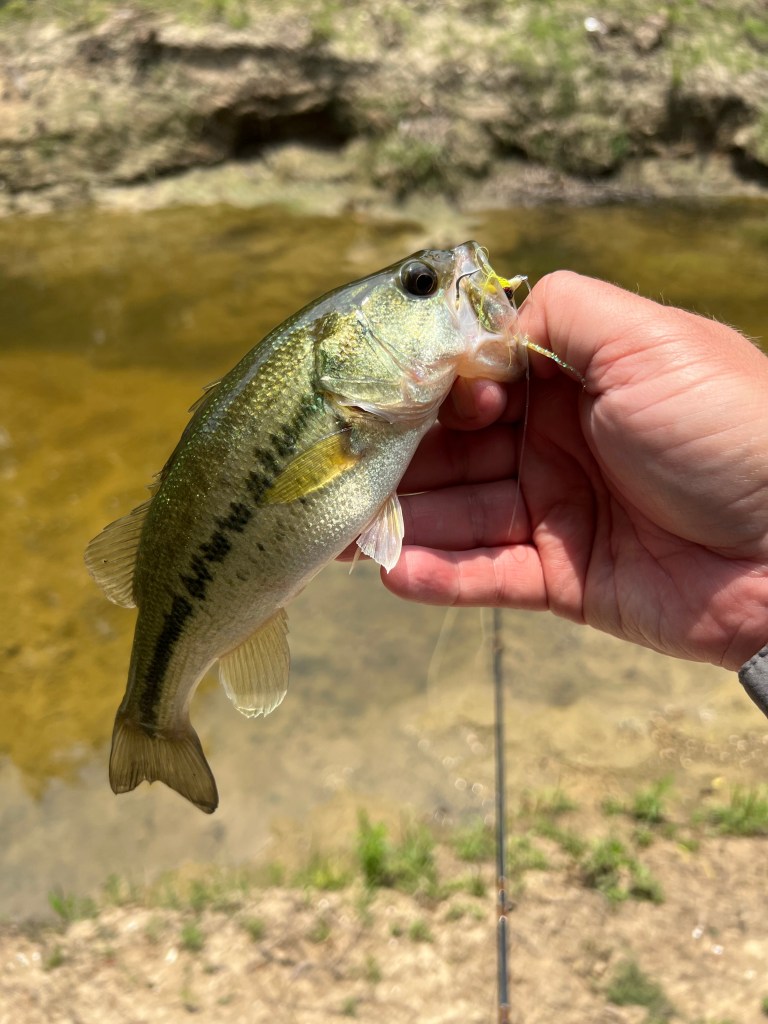
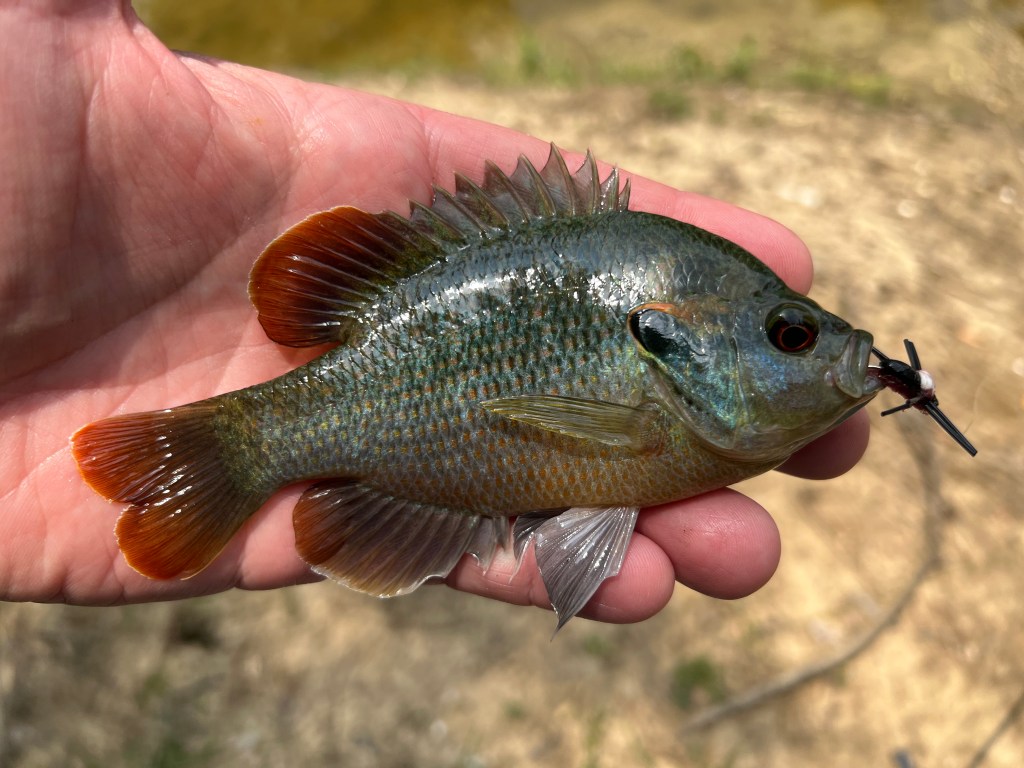
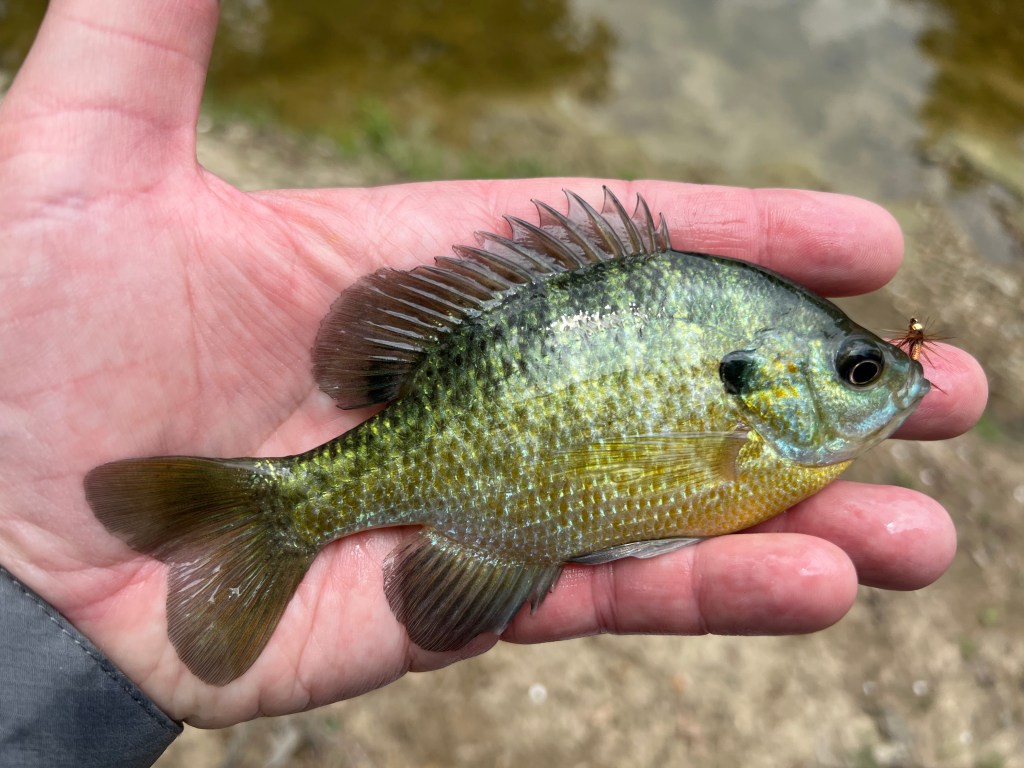
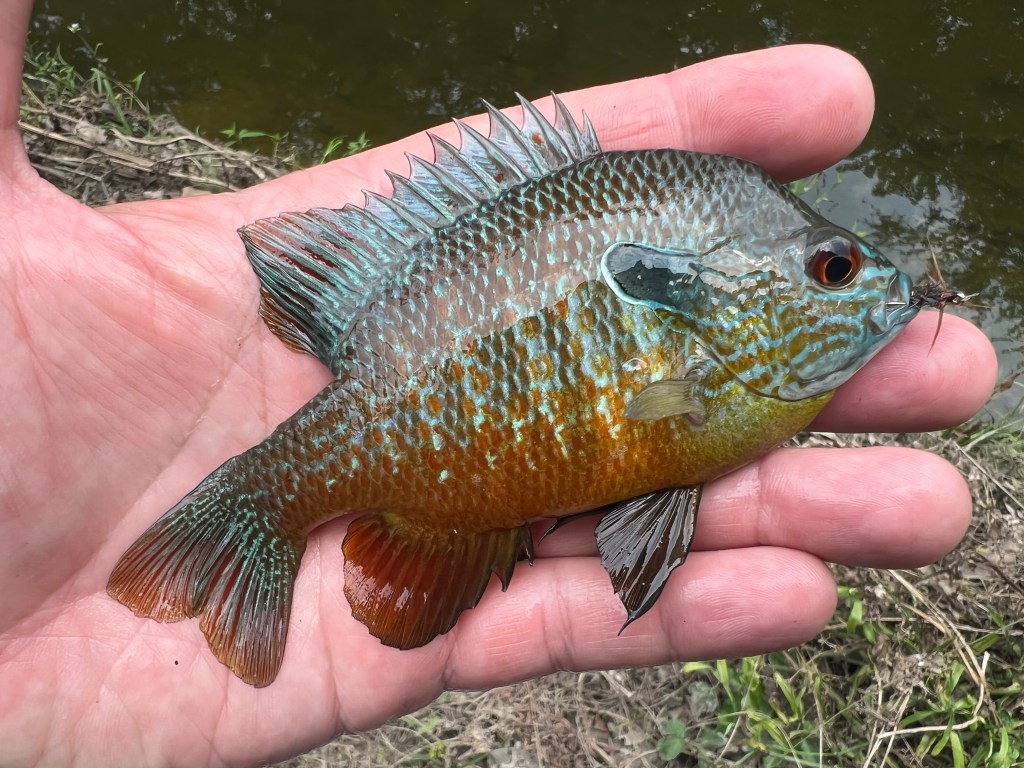
When I walked up to the first “hole” I could see the male sunfish actively protecting their beds. You could see the blues, greens, reds, and orange flanks of sunfish flash through the water as they swam in circles around their nest. These fish will do this all summer as they spawn multiple times in a year. Here in south Louisiana we have a much longer spawning season than locations to the north, so you may see male fish on their bed from March through September, depending on the species of sunfish. I’ve noticed they don’t all spawn at the time. As they are doing this the bass are not far away. They patrol the periphery and show up when they see an opportunity to prey on a weakened fish. The bass have already spawned this Spring, so they’re ready to eat. I targeted the bass first, catching a few small ones, but really today was a sunfish-fest. They are so aggressive this time of year it’s hard keeping them off the hook.
Largemouth bassRedspotted sunfishBluegill
When I call it a sunfish-fest, it was really the longear sunfish-fest. They were the stars of the show today and I love them for it. They are arguably the most attractive fish in any body of water at any time, but right now, in full spawning regalia, they really are putting on a show. Their variability, even within the same stretch of stream, is impressive. Some are more blue or turquoise while others have more reds and oranges. The size of their opercle is never consistent; on some fish they are quite large, and others they are not. The forehead too. They don’t have a massive cranium like a Rio Grande cichlid, but they can develop a case of fivehead and make for interesting looking fish. I sometimes catch longear, especially the larger ones, with long black tendril-like tips on their pelvic fins. There is just so much to look at on a longear and I think it’s cool how no two look the same.
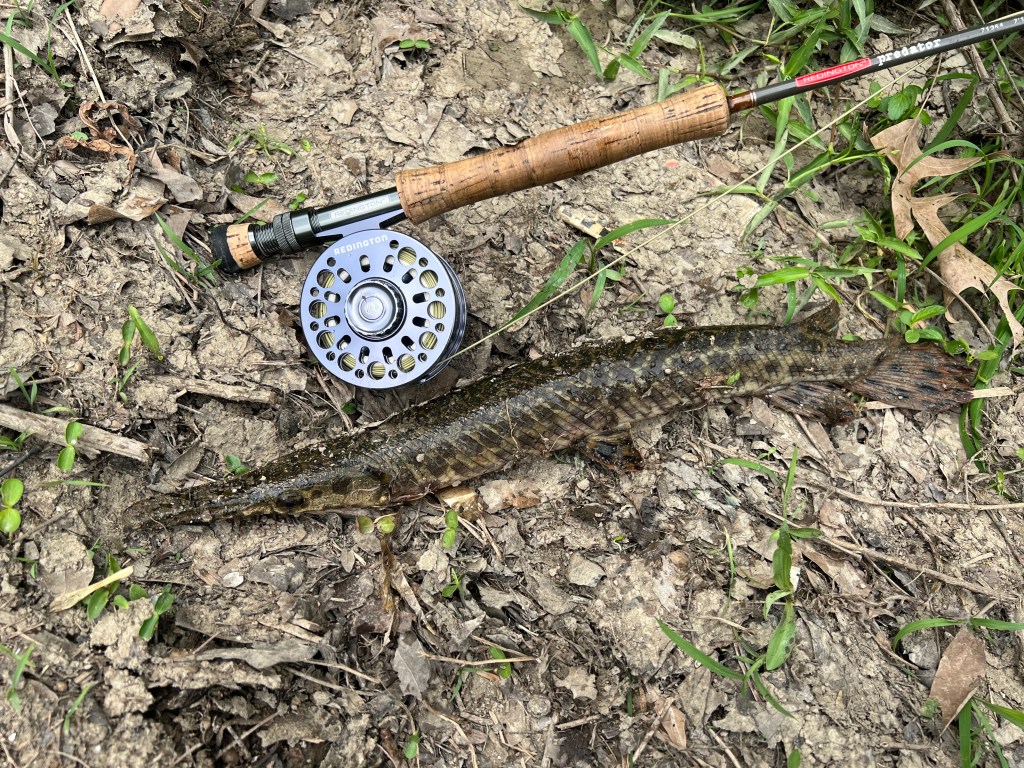
I was having a great time catching longear and seeing how different they were from fish to fish, but I had yet to catch a species I had not logged this year to up my Jambalaya challenge tally. I made it to a bit bigger “hole” where I found a few spotted gar. They looked like they were busy doing the spawning thing too and really weren’t interested in flies. Soon after I found one tucked up next to the bank I was standing on and ran a blind Clouser minnow (a poorly tied Clouser that lost his lead eyes) and had a strike and a hookup. I quickly muscled him onto the bank where the fly broke off and the fish began to flop. I took a quick pic and got him back in the water. Not ideal, but like Charlie Kelly, gar are wildcards.
















 Mountains to Marsh