Archive

Adventure

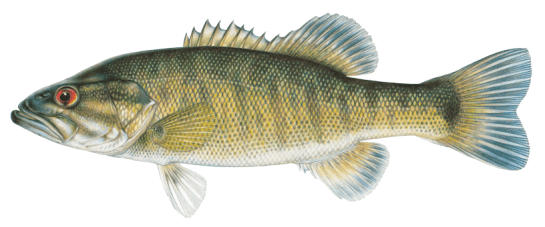
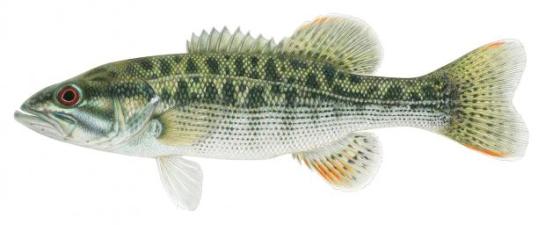
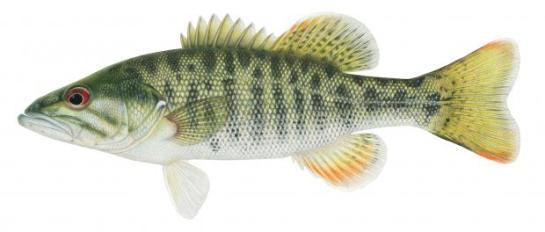
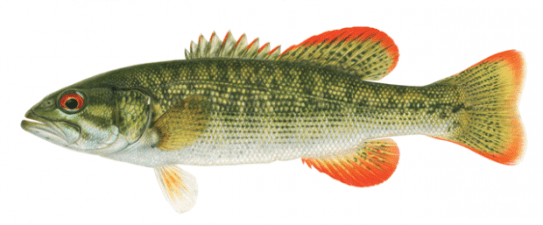
Next up for Blake and I was the Altamaha Bass, which is found above the fall line in the Ocmulgee, Oconee, and Ogeechee river basins.

Altamaha_bass

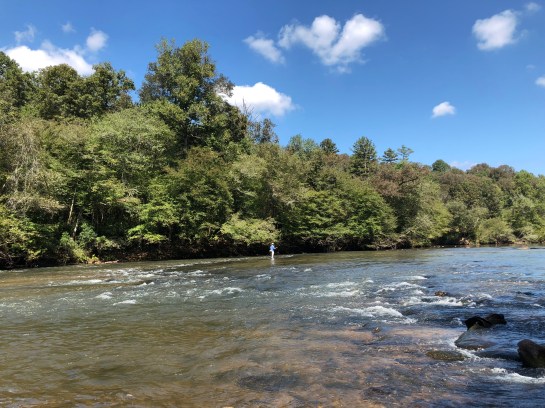
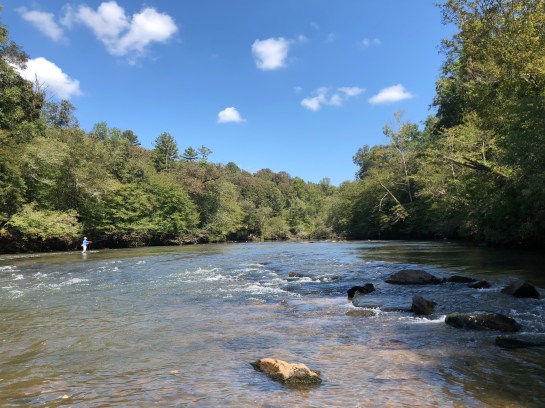
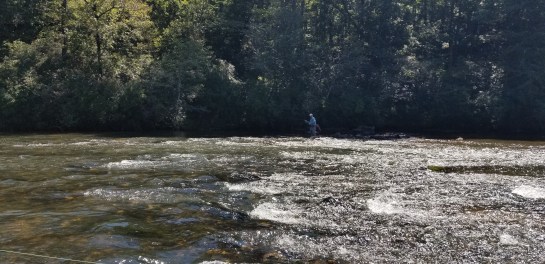
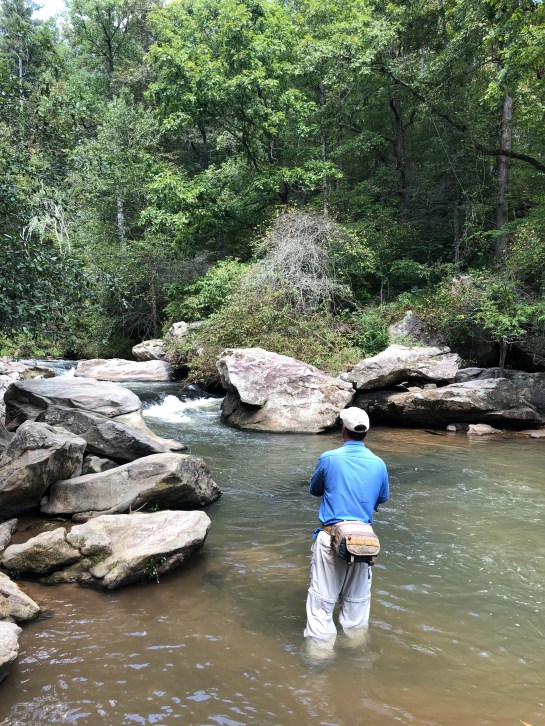
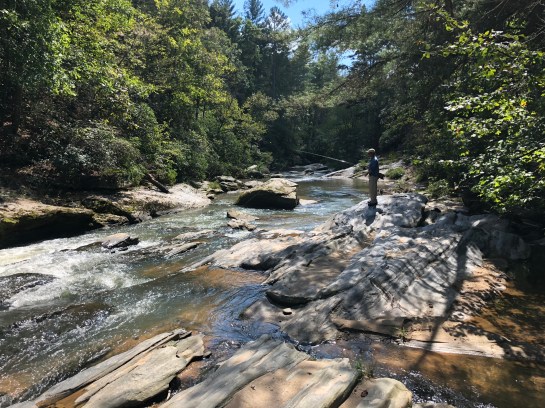
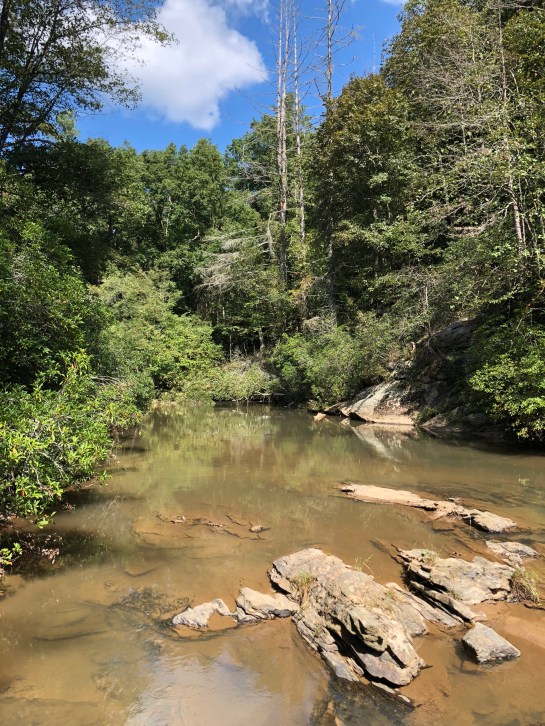
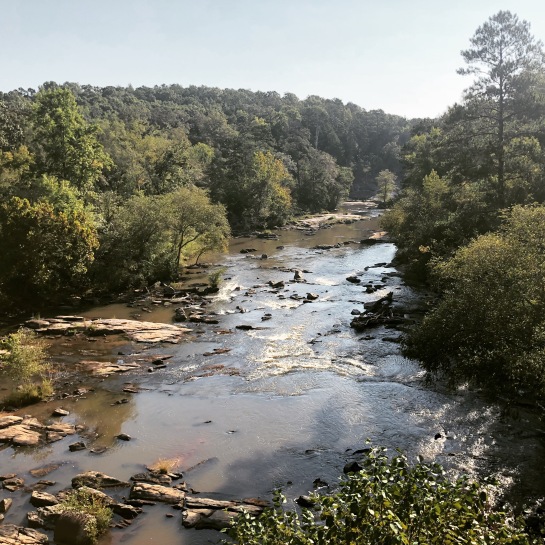
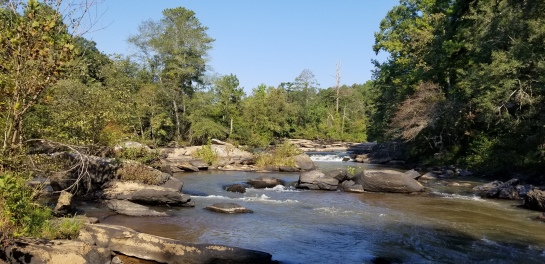
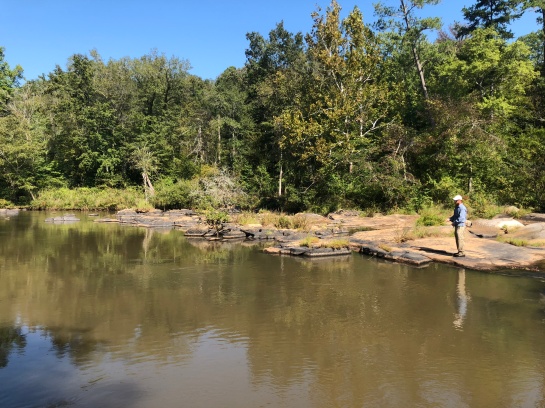
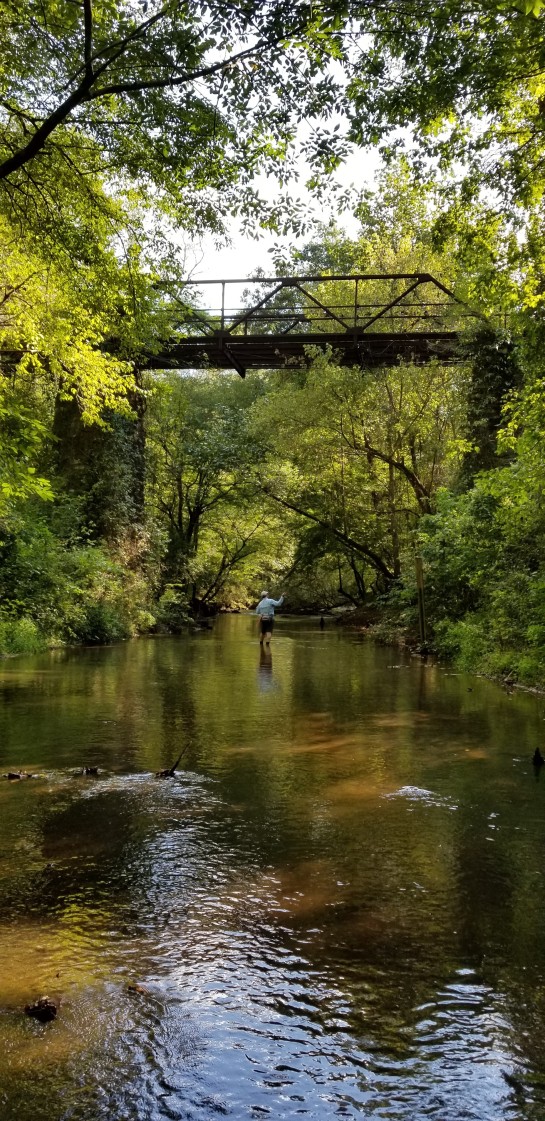
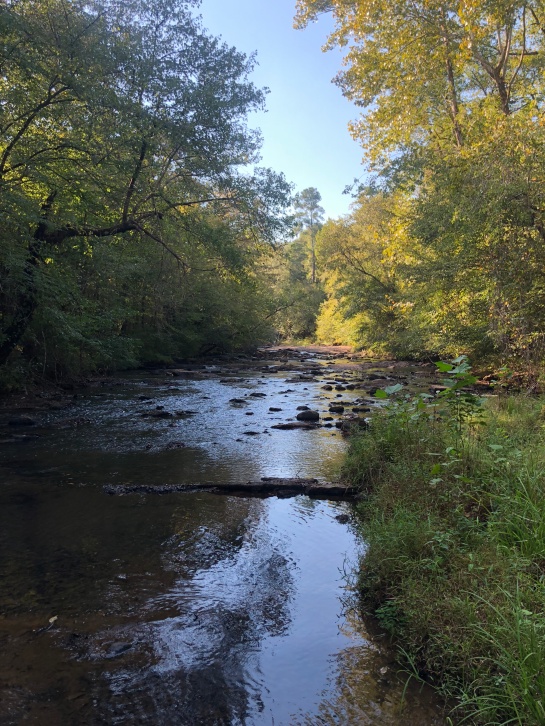
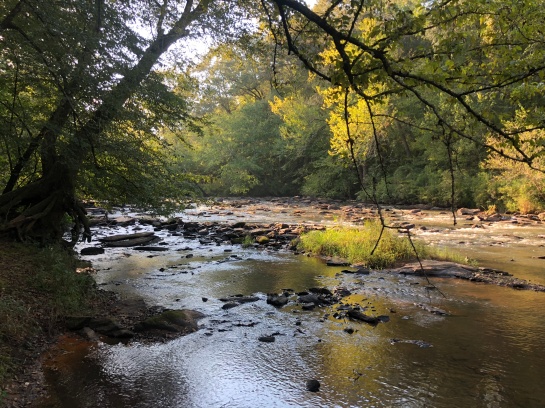
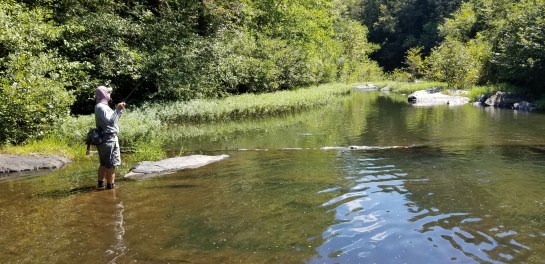
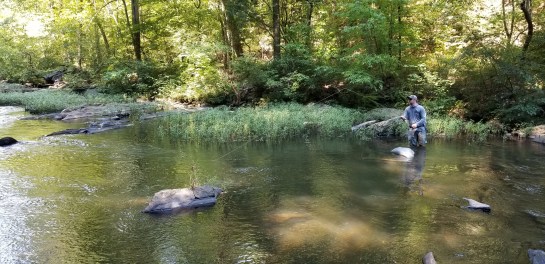
We woke up early, packed up camp, and headed to the river to hike down to where we wanted to begin to fish.  The Chattahoochee River trib we fished the day before was much smaller than the river we were about to fish and had better clarity too, but this was still fishy looking water.
IMG_7439

20180920_100032

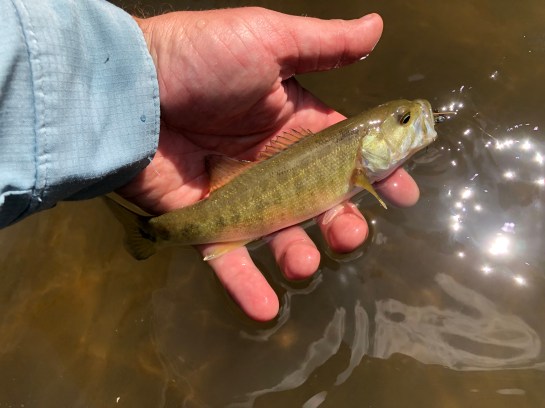
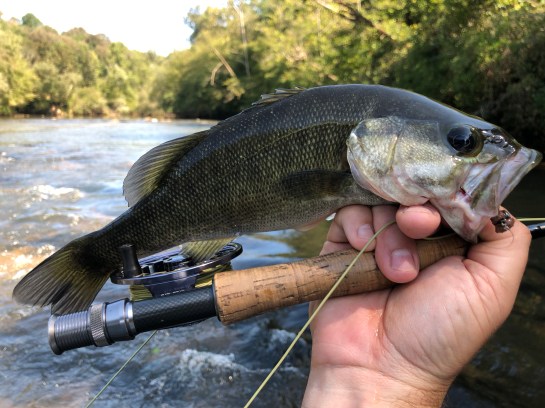
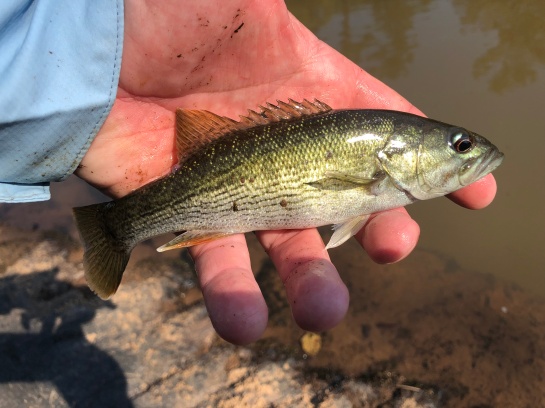
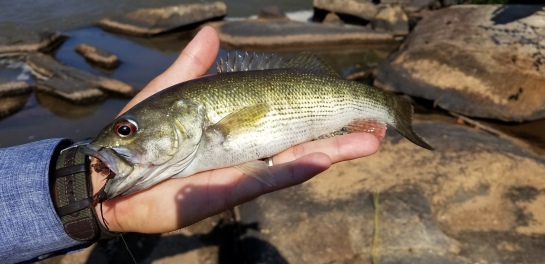
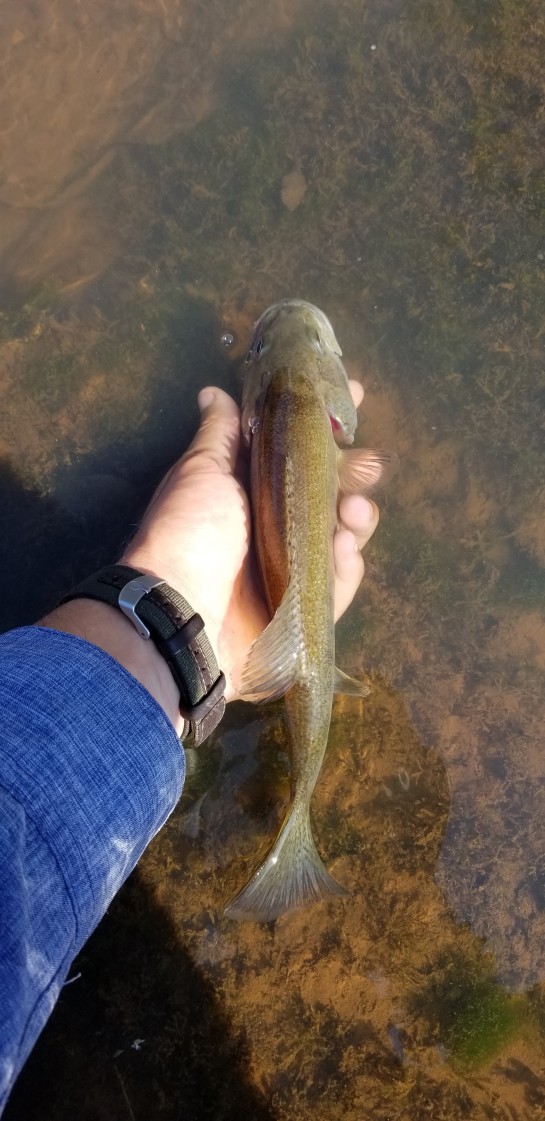
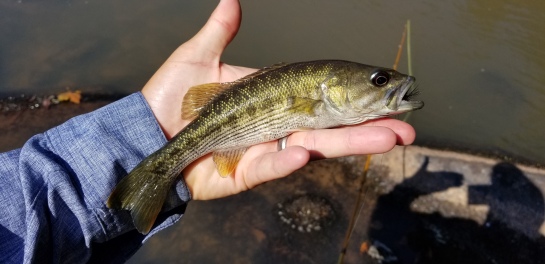
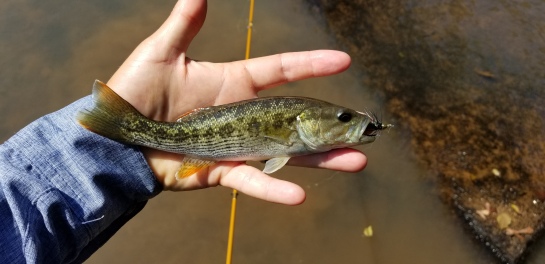
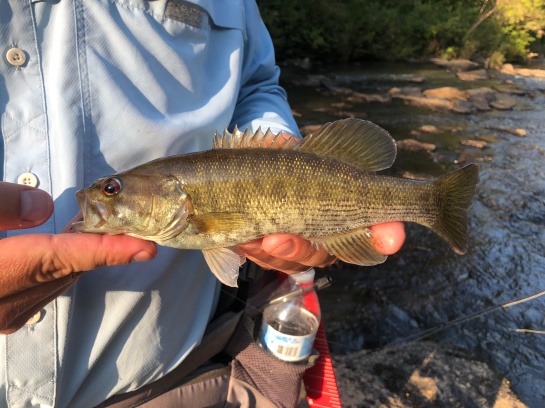
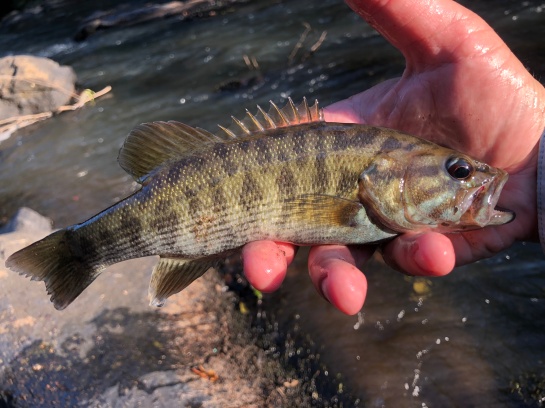
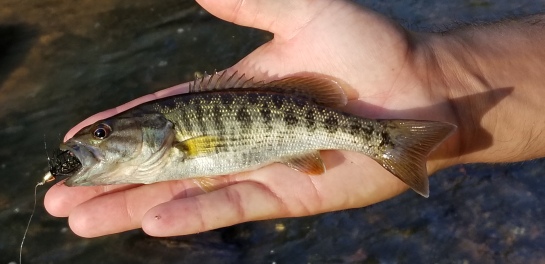
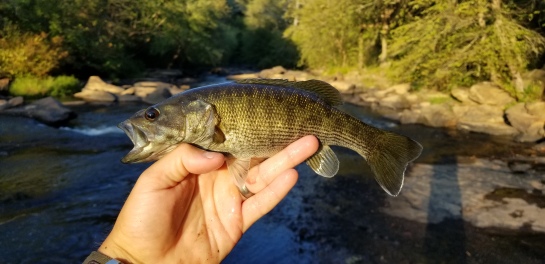
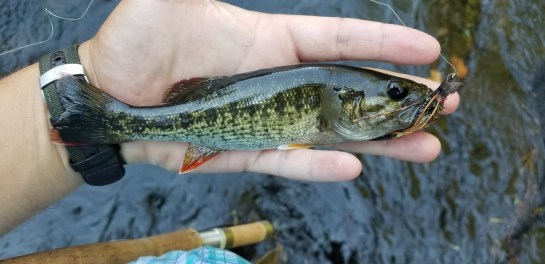
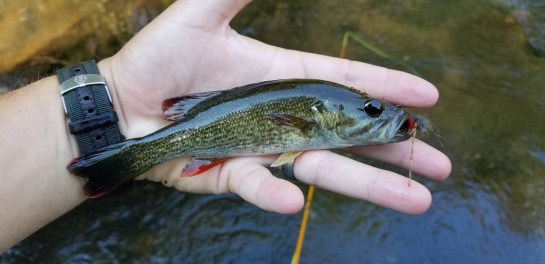
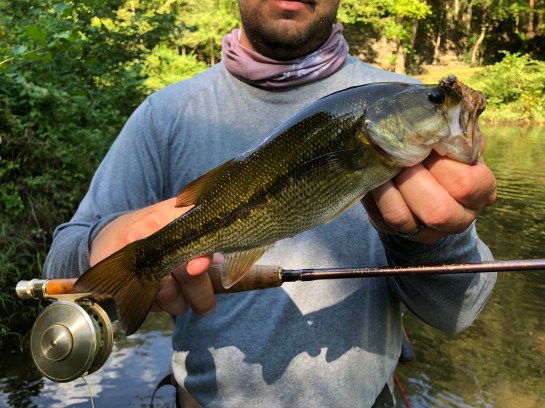
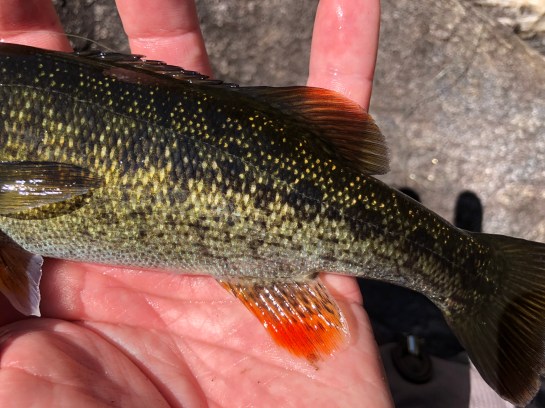
Things were pretty slow early on, Blake picked up a sunfish or two before we got into any bass.  I caught an 8″ Altamaha in some slow water under a log to start things off.  Blake followed that up with a good one that went 10″.  These fish didn’t have the bright red fins like the Chattahoochee bass, but they did have some orange color on upper and lower part of the caudal fin, and outer margins of their second dorsal, and anal fins.

IMG_7407

IMG_7410

20180920_104839

20180920_105009

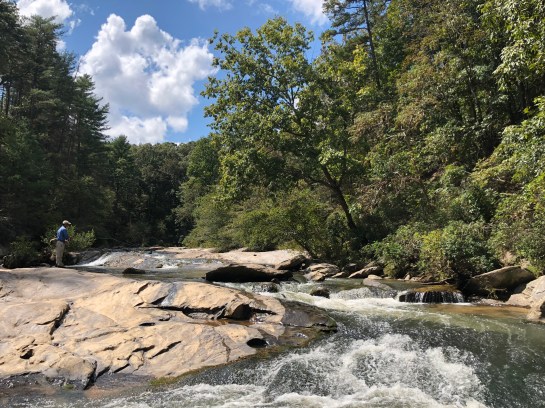
We caught a few more bass and sunfish as the morning progressed.  The action had only slightly picked up as we worked our way through the shoals.  When we got to the end of the shoals we headed out and made our way into Athens for lunch.

IMG_7417

20180920_113920

IMG_7423

IMG_7427

20180920_115310

IMG_7432

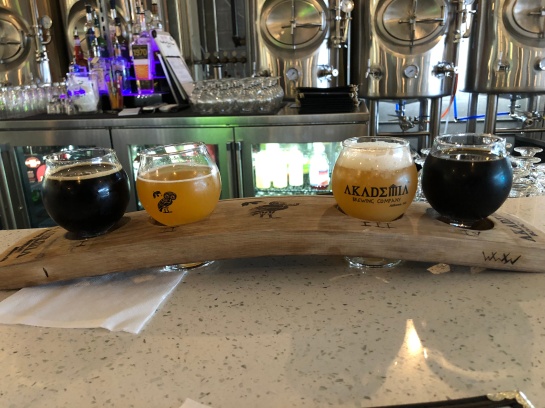
On the recommendation of my brother we stopped at Akademia brewpub for lunch, the beer and food were excellent, the bartender was top notch too.  I’d recommend it to anyone heading to Athens.

IMG_7433

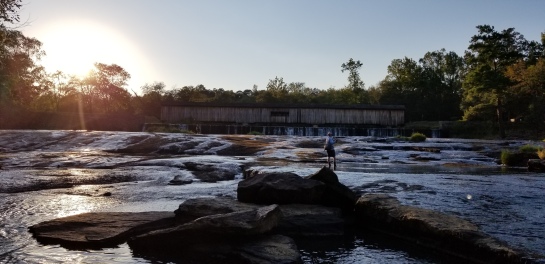
After lunch we made our way to Watson Mill Bridge State Park where we planned to camp and fish for Bartram’s bass, the last redeye we needed to complete the slam, the redeye bass found above the fall line in the Savannah river basin.

bartrams_bass

There was still some daylight after we had set up camp so we decided to try and knock out the Bartram’s that evening.

20180920_170607

IMG_7442

20180920_170309

IMG_7443

We started on a tributary creek that ran through the park, but it was slow and low and Blake only managed a chub there, so we moved on to the shoals below the mill dam.  It was a good move because we were able to catch our Bartram’s there shortly after we started fishing.

IMG_7450

IMG_7455

IMG_7463

IMG_7469

20180920_175522

IMG_7466

IMG_7468

20180920_184024

20180920_184139

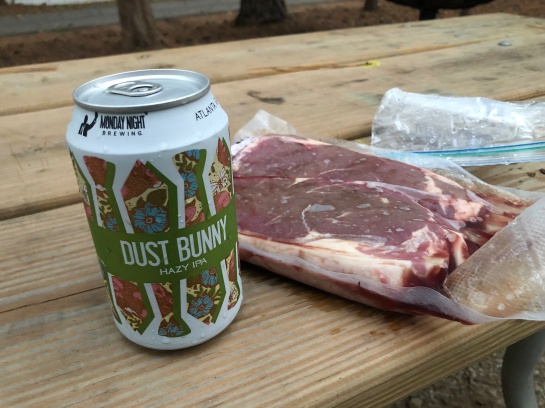
With the redeye bass slam complete we’d accomplished what we had set out to do and it was a pretty awesome feeling.  I had four of the five bass species needed to get a Georgia bass slam so tomorrow we’d set out to catch a shoal bass and knock that slam out too.  First we’d feast though, steak night tonight.

IMG_7478


After completing the Mobile Basin redeye slam back in May, Blake and I knew we wanted to make another trip later in the summer and complete the seven species redeye slam by catching our Chattahoochee, Altamaha, and Bartram’s bass in Georgia.  I’ve spent plenty of time fishing for wild trout in North Georgia, but I’ve never really sought the native basses in the state.  Last year the Georgia WRD introduced a bass slam of their own and have put in a lot of work creating a website that really provides a great starting point to planning a trip to target any or all of the ten black bass species found in the state.  Check out the nifty ArcGIS web mapping application they’ve built below:

https://arcg.is/nm5Dy

With the help of the Georgia WRD online resources and the help of a few other friends we set off early last Wednesday to camp and fish our way across the state, starting on a tributary to the Chattahoochee to target the aptly named Chattahoochee Bass.

chb

As you can tell from the Joseph Tomelleri illustration above these bass differ from other bass species because their second dorsal, caudal, and anal fins have bright orange to red coloration on the outer portions.

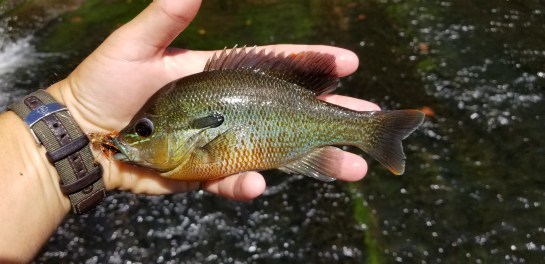
After about a 7.5 hour drive we arrived at our destination around lunch time and hiked down to where we wanted to start fishing.  It did not take long to start catching fish.  They weren’t the target species, but Blake began wearing out the redbreast sunfish (Lepomis auritus) in the first spot we tried.  I joined in on the fun with a healthy bluegill on a hopper.

20180919_135832

20180919_135637

IMG_7239

After a few bream we began working our way upstream.  We each caught a bass or two that looked like a spotted bass, or hybrids, before we got into the redeye.  One good thing about the Chattahoochee bass is their bright red fins make it hard to mistake them for anything else.

20180919_153127

IMG_7242

We eventually got into our target fish and we each caught a few around 8-9″.  After trying a hopper/dropper early I switched to a crawfish pattern Blake tied and that’s when I really started to catch them, swimming it slowly through good looking water.

IMG_7247

IMG_7248

IMG_7241.JPG

20180919_154009

IMG_7260

20180919_155224

IMG_7274

IMG_7267

IMG_7277

IMG_7273

IMG_7289

20180919_162842

My best Chattahoochee bass was a 9″ football who didn’t miss a meal.  I also managed to catch a nice 12.5″ spotted bass in a slower bend of the stream.  We may have been targeting redeyes, but I wasn’t against the bycatch, especially if I wanted to complete the Georgia bass slam too.

IMG_7278

20180919_161936

IMG_7296

IMG_7301

We packed up shortly after that.  It was after 5pm and we still needed to drive another 2.5 hours east to set up camp, closer to where we planned to fish the next morning for Altamaha bass.  It was a great start to the trip though.

I don’t get out much to fish anymore, but I found some time Sunday to do just that.  I loaded everything up late Saturday with plans to make the long drive to catch some redfish the next morning.  When I woke up and checked the weather it was evident that inshore fishing wasn’t an option.  The entire Gulf was covered in rain.  Everything inland looked alright though, at least for the time being, so I had to come up with plan B fast.  I decided to head down the road a bit and check out a lake in the Maurepas swamp that I’d heard good things about.  I had no idea how much time I’d have before rain chased me off or if I’d even have any success, but I had to get out.

IMG_6439

I arrived at the launch shortly after sunrise and was out on the water as fast as I could possibly load my boat.  I was happy to see the black water was fairly clean and the lake seemed to have a healthy amount of submerged vegetation.  I didn’t use the flex drive of the Cruise FD much today because of the grass and I couldn’t help but think on trips like this how much I missed the Kilroy.  I started out throwing a hollow body weedless topwater frog and was treated to a couple of quick hits from largemouth bass.  I connected on my second one and hoped that the trend would continue.

IMG_6436

As I worked the shoreline and nearshore grass I had a few more slashing hits on the frog that were more likely from gar than bass.  In time I came to a spot where the lake narrowed and a couple tributaries dumped in.  It was a beautiful spot with an obviously healthy swamp.  The water was visibly moving in the bayous as it drained into the lake.

IMG_6446

IMG_6448

IMG_6461Buttonbush (Cephalanthus occidentalis)

IMG_6459

I rounded a bend in the bayou and heard a tremendous toilet bowl flush that made the hair on my neck stand up with excitement.  After scanning the area I was able to pinpoint the location of the activity and made a cast with the frog beyond the spot so I could run it through the area.  On my second cast I got an eat and as soon I was hooked up the fish took to the air and I could see that I had a choupique on the line.  After a nice fight and the fish getting caught in a wad of grass I was able to boat the dinosaur.  A lot of people call these things trash fish, but you know what they say about one man’s trash?  If I’m catch and release fishing I’ll take a fight from a choupique all day long.

IMG_6452

After the battle with the choupique, and replacing my frog, I headed back toward the lake and continued fishing topwater.  The bite began to wane so I switched things up and went to the fly rod.  I began working a popper-dropper around the trees and stumps that weren’t covered up in duckweed and soon began catching fish again.  The stumpknocker were active that morning and repeatedly hit an electric blue Boogle bug that they couldn’t possibly fit in their mouth.  Every once in a while they’d see the dropper and I’d be quick enough to set the hook.

IMG_6465

IMG_6467

I continued fishing the fly rod and had a couple surprises.  The first one was a fish that I thought was going to be a big bull bluegill on hookset.  The popper slowly began to sink so I gave a little hookset and then I felt a lot more resistance than normal and the popper began going sideways.  After a nice fight with my glass 4wt double over at times I landed a bass – and a wad of grass.

IMG_6468

IMG_6473

The second was a spotted gar that came after the popper and when I set the hook on the eat my popper came out and my dropper tagged him under the chin.  Not the conventional way to catch them on the fly, but it sure was easier to handle than a rope fly.

IMG_6486

IMG_6484

IMG_6474

IMG_6475

I continued to fish the fly rod and explore the bayous that drained into the lake.  I caught a few more stumpknocker before the rain began to fall.  It was a little after noon when it began to fall hard enough that I decided enough was enough and pedaled my way back to the launch.  For being a last minute backup option the Maurepas swamp sure was a good one.  It was a beautiful place to explore and home to a good variety of hungry fish – I’m sure I’ll be back.