Archive

Tag Archives: FOTM

The fly of the month for August is the first we’ve had featuring Fish Skull products, Blake writes, “I’ve caught a few reds that had gobies in their belly, so I figured that I would give one a shot using the sculpin helmets that I bought. I ended up with the SS (Simple Sculpin) Goby.”

 Materials:

  1. Your favorite jig hook (The Mustad 34011 will also work, just bend it into a jig hook)
  2. Magnum and crosscut zonker strips
  3. Flash
  4. Thread
  5. Sculpin head

Step 1. Puncture a hole in the zonker hides using a bodkin and push the hook point through from the skin side to the hair side. Mount the hook in the vise.

IMG_1054

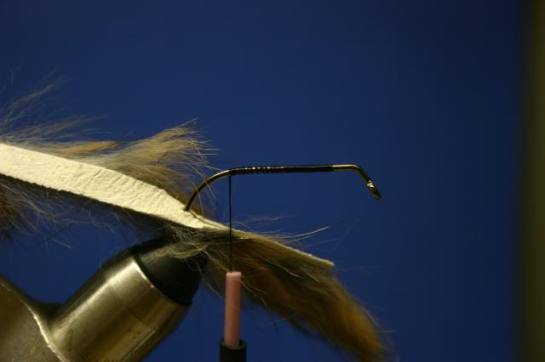
Step 2. Start thread and lay down a good base along the hook shank.
IMG_1055

Step 3. Tie in flash on either side of the shank.

IMG_1056

Step 4. Tie in the crosscut zonker skin side up with the fibers pointing away from you. This will ensure that the fibers will lay back toward the bend when palmered up the shank.

IMG_1057

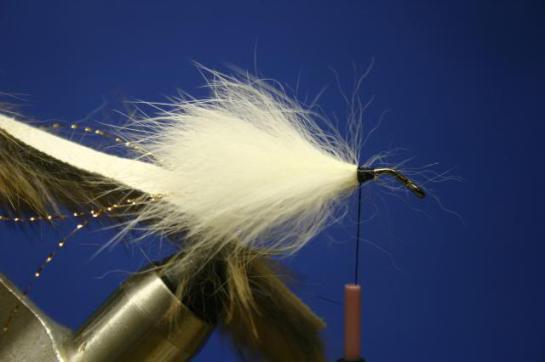
Step 5. Palmer the zonker down the shank in overlapping turns. I lay down a layer of super glue on the shank to help things stay in place. Tie in the strip leaving enough room behind the eye to fit the sculpin head. I like to slide the head on now and make sure that I have enough room.
IMG_1058

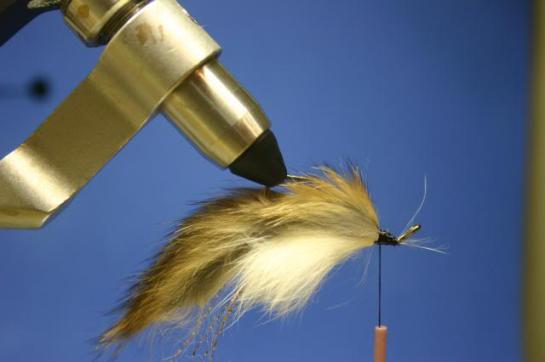
Step 6. Bring zonker strip over and tie in at the same spot.
IMG_1059

Step 7. Tie in a clump of rabbit hair on either side of the fly at the same spot that everything else is tied in. The tie-in area doesn’t need to be neat and tidy as the helmet will cover everything up. Just make sure that the tie-in area is not too bulky as to inhibit the head from fitting snug to the materials. Tie off the thread.

IMG_1060

IMG_1061

IMG_1062

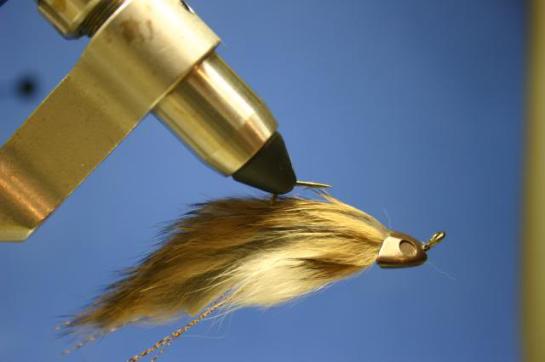
Step 8. Coat the tie in with superglue. I also like to put some superglue in the inside of the sculpin helmet. Push the helmet on to the fly making sure to butt it up nicely against all the rabbit hair.
IMG_1063

IMG_1065

Step 9. Start thread in front of the helmet and wrap a thread dam to keep the head in place.

IMG_1066

Step 10. Add a small amount of super glue in each eye socket and place the eyes in their spots. Coat the thread wraps with some SHAN and the fly is ready to go. Finished Fly

IMG_1067

IMG_1068

IMG_1069

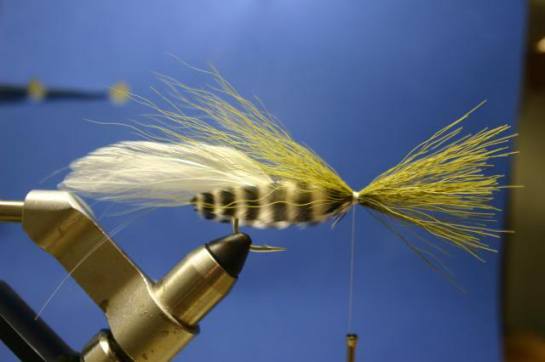
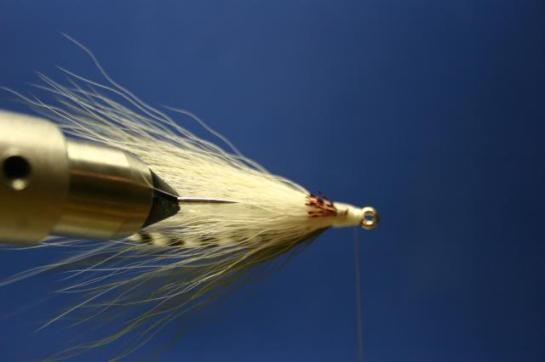
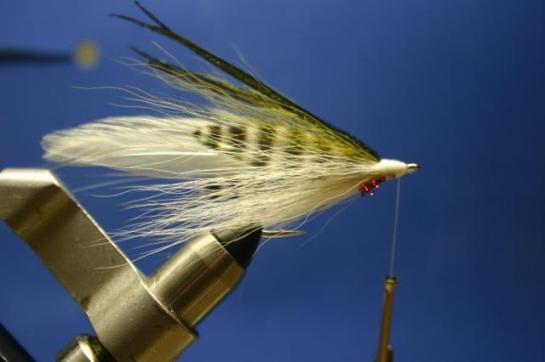
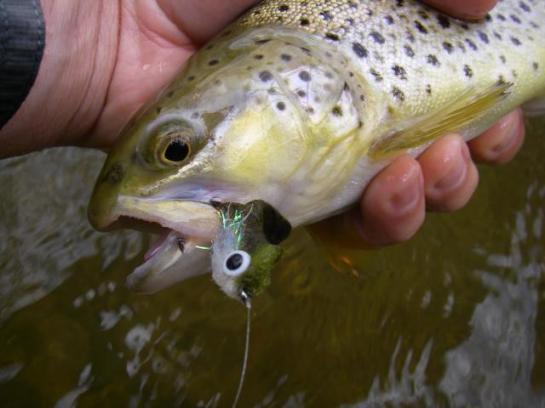
July’s fly of the month is a variation on the deceiver fly originally created by the legendary Lefty Kreh. The deceiver is a fly that works anywhere, fresh or salt, nearshore or far. This is Blake’s version of the proven pattern.
Materials:

– Your favorite thread, somewhat heavy so you can put some pressure on it. I used 3/0.

– Lead Tape

– Saddle hackle

– Flashabou

– Chenille

– Bucktail

– Peacock herl

– Krystal flash

Step 1. Clamp hook in vise and wrap the shank with lead tape. Round lead wrapped around the shank will work also. Or no lead if you want a lighter fly. Start thread and lay a base over the shank and the lead. The lead tape that I use is sticky backed and normally used to stick on hard bodied floating lures to get them to sink or suspend.

IMG_0976

IMG_0977

Step 2. Select your desired amount of hackles for the tail. I normally use two feathers, but I decided to go with four on this one and dress it a little heavier than I normally would. Tie them in and wrap down to tidy up the hook shank

IMG_0978

Step 3. Tie in flashabou, a few strands on either side. Trim it so that it is a tad longer than the hackles.

IMG_0979

Step 4. Tie in chenille and wrap up the shank making sure to leave yourself enough room to finish the head.

IMG_0980

Step 5. Tie in a grizzly hackle on either side. I should have tied them a little longer along with the tail. Fish won’t care.

IMG_0981

Step 6. Select some bucktail fibers and tie them on the top of the hook. I like to press them down with my thumb to make them spread out around the top 1/3 of the shank.

IMG_0982

Step 7. Select some other color for the belly of the fly and tie it in. This clump is normally a little bigger than the top clump. Do the same as above and press the butts to spread them around the hook shank to fill in the other 2/3.

IMG_0983

Step 8. Tie in some peacock herl on the top.

IMG_0984

Step 9. Tie in some red krystal flash on the bottom.

IMG_0985

IMG_0986

Step 10. Tidy up the head and whip finish. Apply some super glue to the head and stick on eyes.

IMG_0987

Step 11. Once the eyes are tacked on there, mix up some epoxy and coat the eyes and head. Put it on a spinner to cure.

IMG_0989

Finished fly. Mine always look a little unruly off the vise. If you run it under a little hot water and let it dry hanging from the hook eye, it should tame some of the fibers. Also, you can curve the herl like you do ribbon (ask your significant other for assistance)

Before wet/dry:

IMG_0991

After wet/dry:

IMG_0997

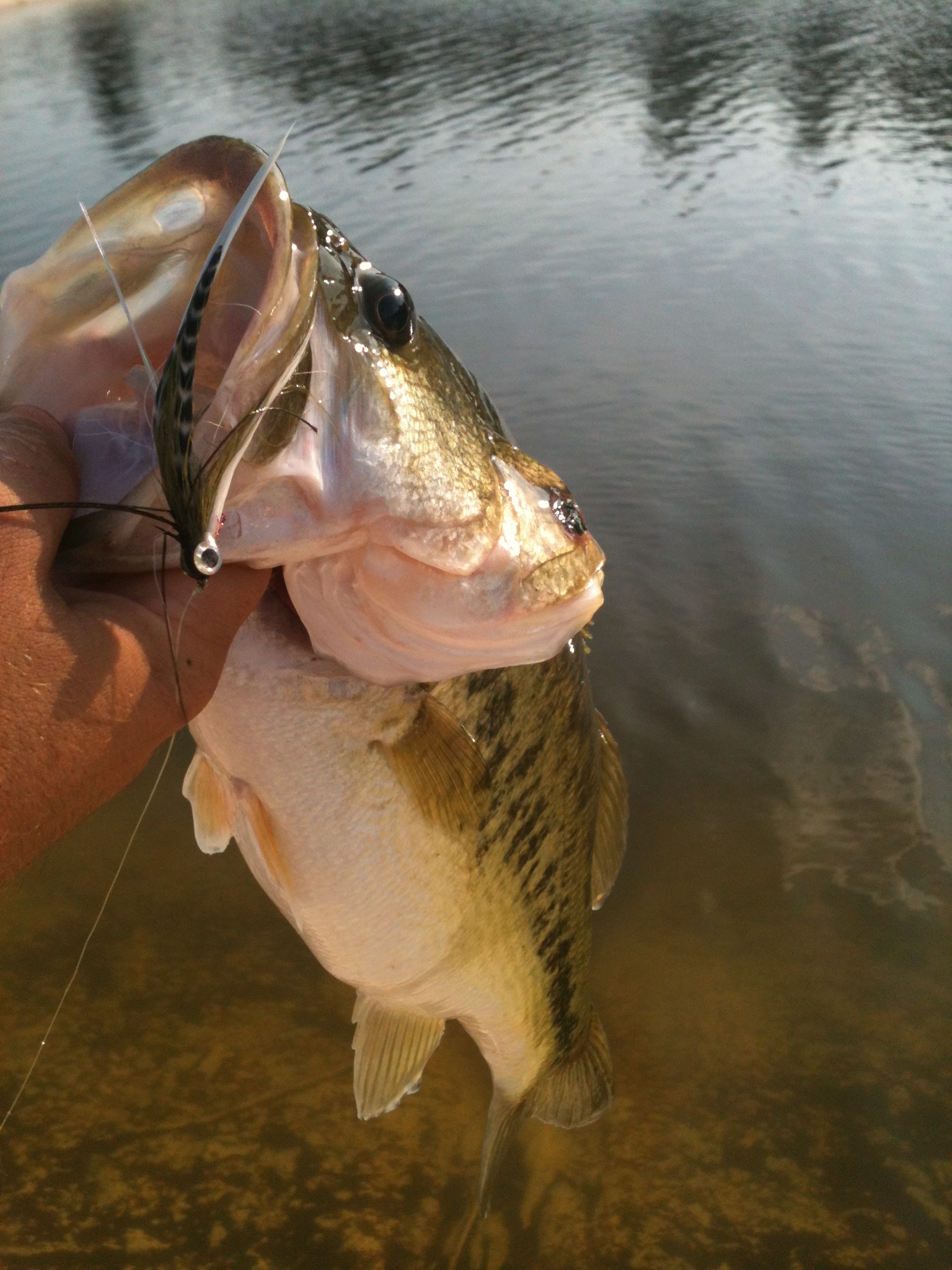
Proof of concept – freshwater:

LMB_1a

LMB_3a

Enjoy!

June’s fly of the month is one that I had some success with for trout in Georgia back in April, it should also be a killer bass and redfish fly though as it’s one of the most realistic looking flies I’ve seen in the water. Blake tied this up and provides his instructions below:

Materials:

– Flashabou

– Zonker strip

– Flash chenille

– Wool roving

– Doll eyes

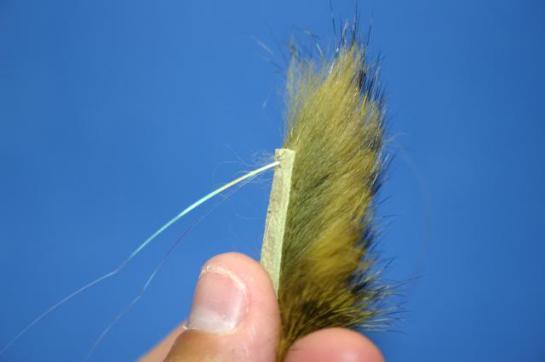
Step 1. Use your bodkin to punch a hole at the end of the zonker strip. Use your bobbin threader to pull a few pieces of flash through the hole.

IMG_0785

IMG_0786

IMG_0787

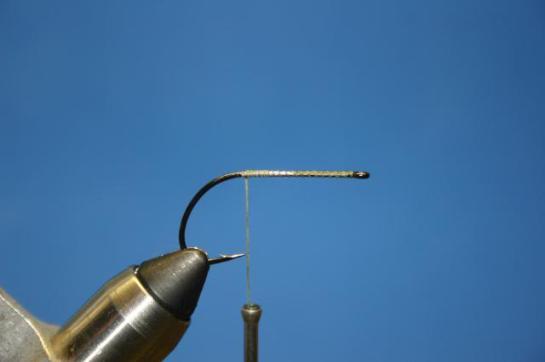
Step 2. Mount a needle in the vice and start the thread on the end with only a few wraps.

IMG_0788

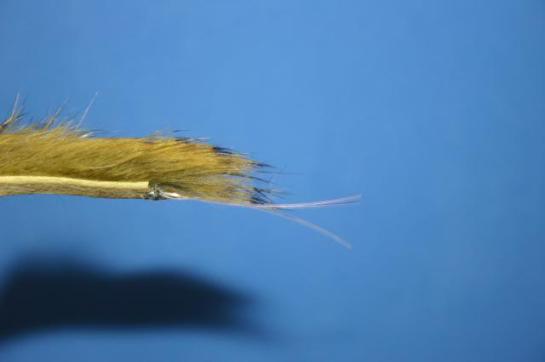
Step 3. Tie the flash together behind the zonker keeping it from falling out. I’m sure I could have just tied it in to the shank of the hook, but I just wanted a little flash at the back of the fly, so I did it this way.

IMG_0789

Step 4. Whip finish, pull the whole thing off the needle, use your choice of cement on the threads.

IMG_0790

Step 5. Mount hook in vice and lay down a thread base to the bend of the hook.

IMG_0791

Step 6. Add whatever amount of lead that you want along the hook shank and cover with thread.

IMG_0792

Step 7. Tie in zonker with a couple wraps at the start of the hook bend.

IMG_0793

Step 8. Tie in the flash chenille and palmer up the fly leaving enough room for the zonker tie in and the head.

IMG_0794

IMG_0795

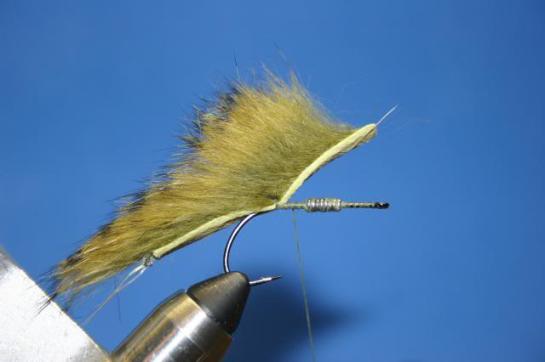
Step 9. Do your best to part the flash on the top of the hook, pull over the strip, and tie it in.

IMG_0796

Step 10. Use whatever material you like to make the head. I used some wool roving that I got from Joann fabric. It’s a lot of material. I don’t remember the cost, but since it isn’t made for fly tying, I’m sure its cheap. I skipped some steps here by accident. I tied one clump of white on the bottom, then one clump of green on the top. Pull back and make a couple wraps on the shank to secure, and then repeat behind the hook eye. I only used 2 separate tie ins, but if you use less material, you may need more. You end up with something like this.

IMG_0797

IMG_0798

Step 11. Whip finish behind the hook eye and trim the fly to the desired shape. I like to go pretty tall on the top and bottom, and pretty short on the sides.

IMG_0799

Step 12. Cut the extra plastic off the back of a doll eye and glue on. I like to use household goop. It doesn’t run, gets in the fibers well, and holds the eyes on well. A little more trimming after the eyes are on and I’m left with a finished fly.

IMG_0802

IMG_0804

Enjoy, and as always, a little proof of concept:

IMG_0720

IMGP7872

IMGP7878