Archive

Travel

Day 3 we woke up, packed up, drove by a better looking stretch of river that we didn’t fish last afternoon(the perils of having never been somewhere) and turned to head over another pass en route to our next destination and hopefully some Colorado River cutts.

CRCT_tom

Joseph R. Tomelleri

It was another scenic drive and we even got to see the tail end of a moose as he hightailed it through the woods, no doubt spooked by the rally-inspired driver of a rental Kia Sorento.

IMG_5940

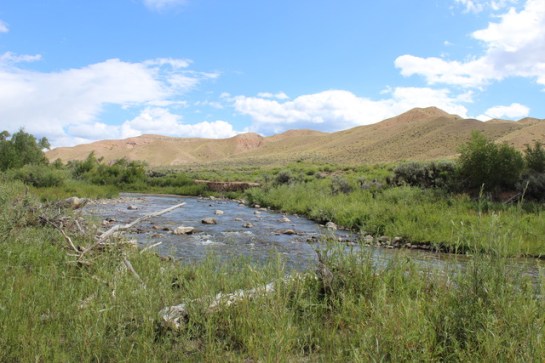
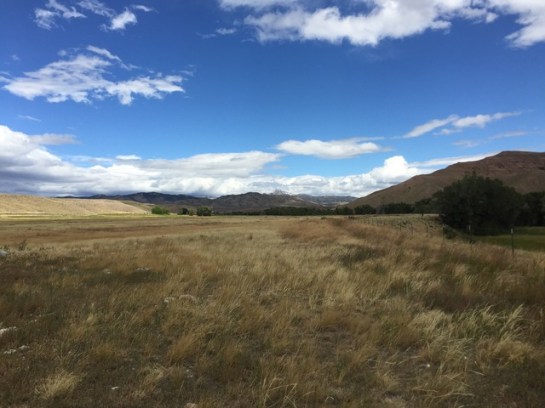
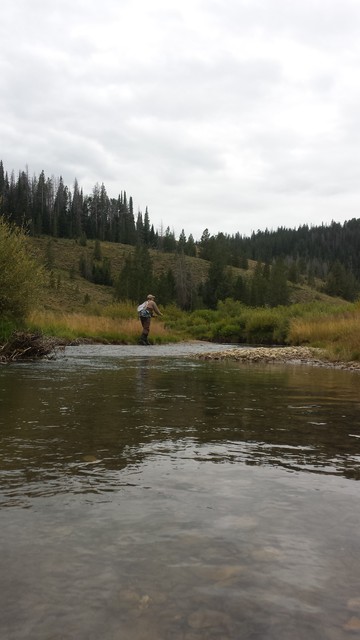
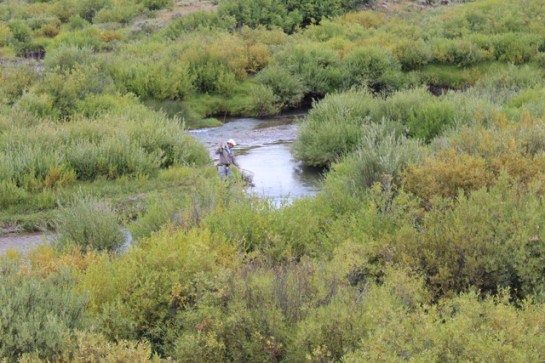
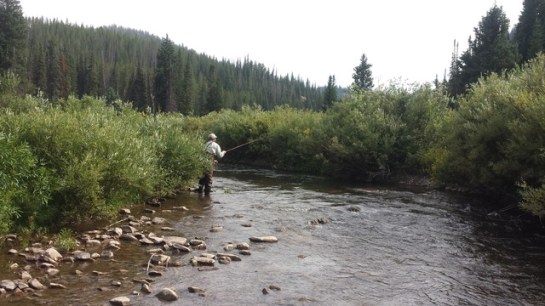
This time instead of hitting the creek high up in the watershed, we went a ways down the road until we found a fishy looking pullover lower down on national forest land.  It was hard to see much of the creek from the road as it was being shrouded by vegetation, but what we did see we liked.  Deep undercut banks and lots of bends – this stream looked to cater to our style of fishing quite nicely.

IMG_2903

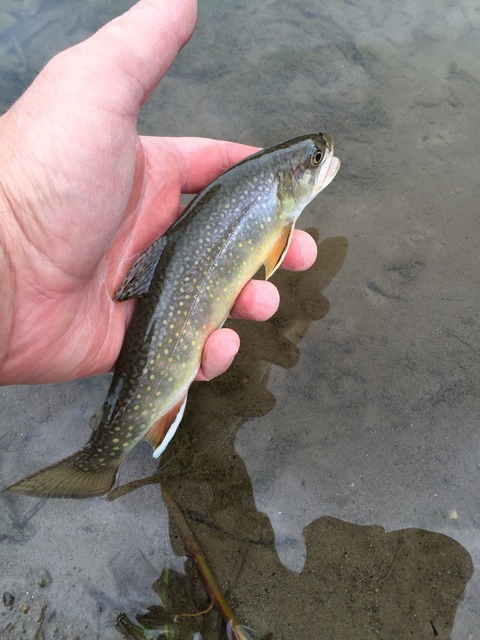
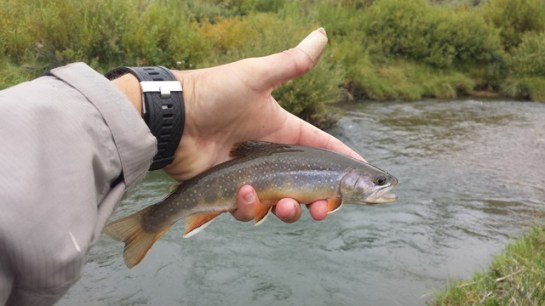
I swear, that feeling you get when you pull up on a place you’ve never fished and it just looks flat out gorgeous will never get old.  We suited up and hit the water and in short time Blake’s line was tight.  He caught a little one early to take that pressure off then followed it up with a brookie.

20150807_091417

20150807_092951

IMG_5954

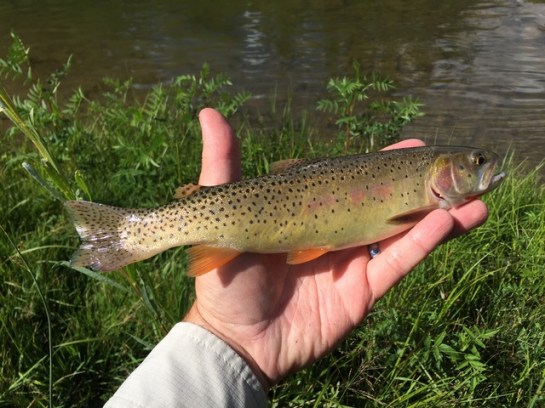
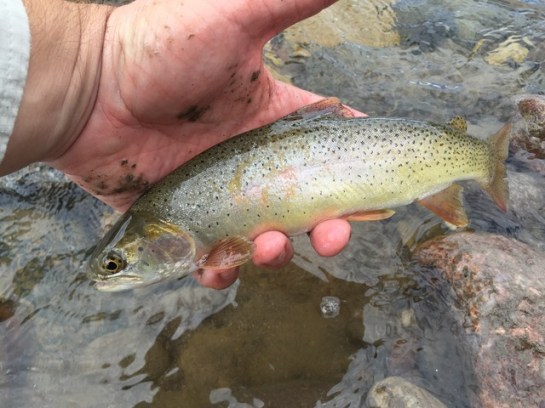
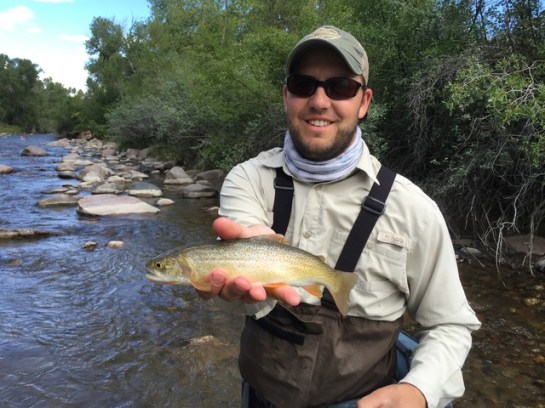
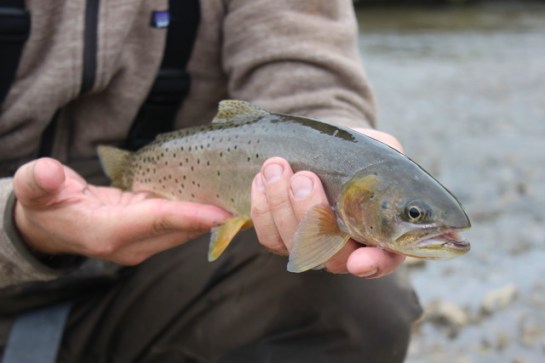
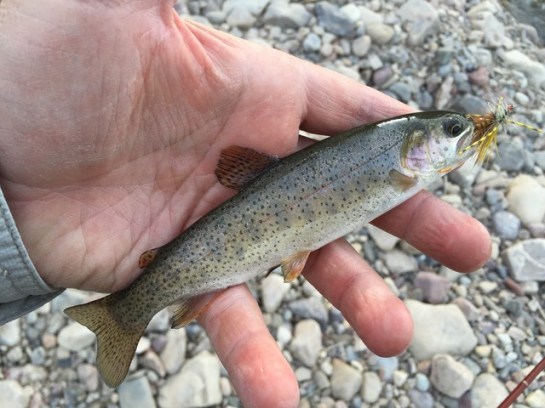
I followed suit and caught a cutthroat of my own.

20150807_091645

IMG_5944

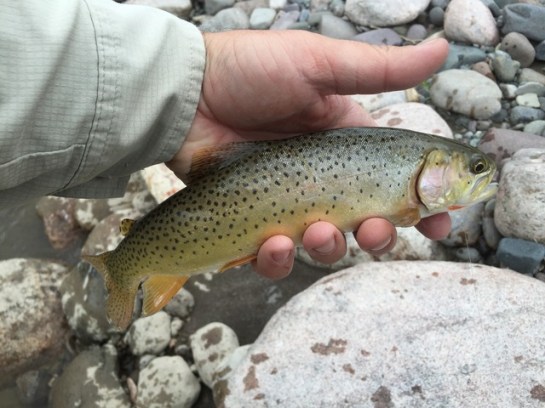
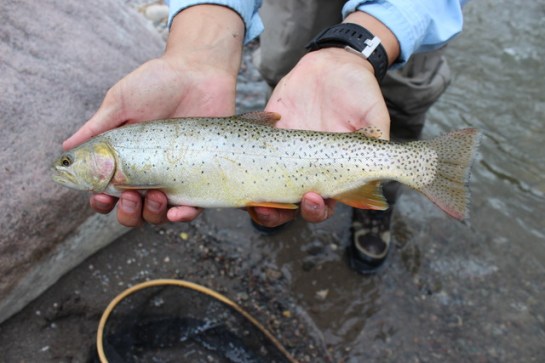
One Colorado River cutthroat down and the pressure was off for me as well.  Blake caught another small fish, only this one looked a little different, more like the Snake River variety – maybe a cut-bow?

20150807_095734

The streak of small fish ended when I tied into a good cutthroat.  It was the fish of the trip for me up to that point and was a real treat on the glass 3wt.

IMG_2909

IMG_2905

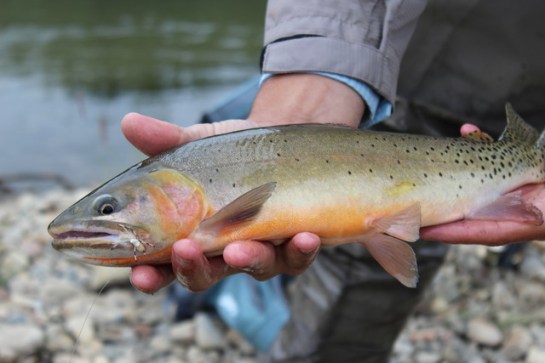
I’m not sure if I had even released my fish before I hear Blake saying he’s got one on in the next run.  I look up and see his 4wt glass rod doubled over and he is locked into a good battle trying to keep that fish from tucking back up under the cut bank.

IMG_5951

No time to celebrate my catch as I was quickly called  into action to net Blake’s beast.

IMG_2917

IMG_2912

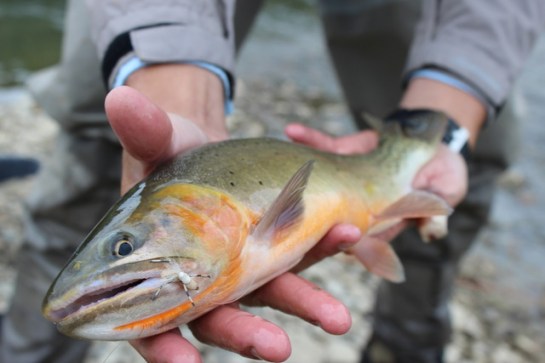
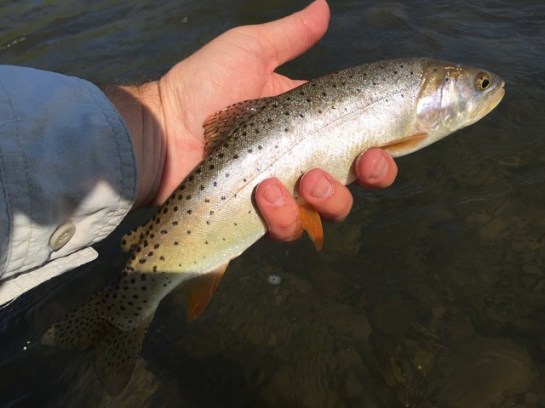
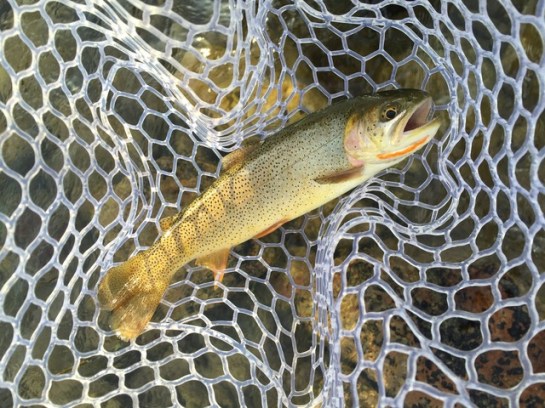
It was a beautiful fish, dark green on top and bright orange on the bottom.  You could tell this fish ruled the roost.  After back to back solid cutthroat we thought it may be about to turn on, surprisingly those were the last two cutthroat we caught out of this river.  The fishing did get hot, but not for cutthroat.  These guys took over.

20150807_105523

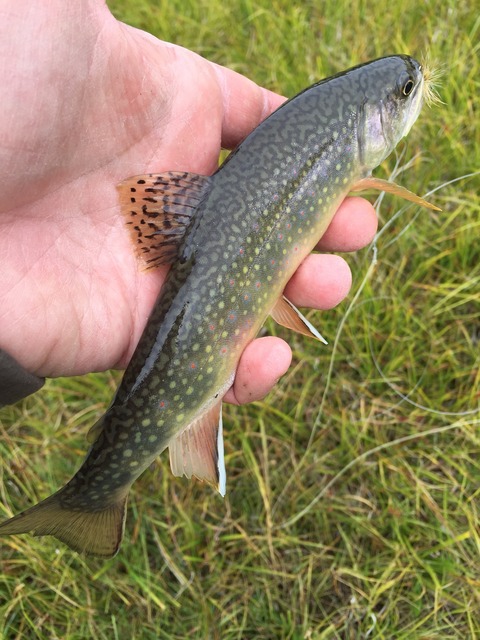
I went up to the car to get a snack and it was like someone flipped a switch.  Brookies in every hole.

IMG_2927

IMG_2934

20150807_105711

20150807_113521

IMG_5945

IMG_5957

20150807_113919

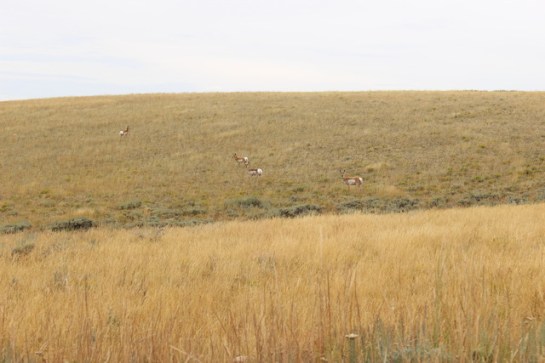
After a while we decided we had enough.  It was fun, don’t get me wrong, but that wasn’t the target species and we were starting to get hungry for lunch anyway.  Had those have been cutthroat, we may have stayed and fished all day – that’s how much we enjoyed that stream.  Nevertheless we headed into town, passing numerous large ranches on the way and a few pronghorn as well.

IMG_5959

IMG_2936

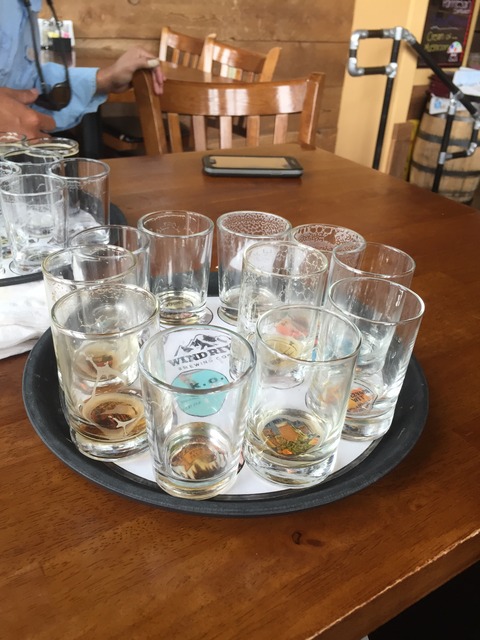
It was nice to get into town, get a new ice chest, hit the local fly shop, top off the fuel on our ride and get a proper meal in our bellies.  The local brewery was the only logical place for someone like me to eat.  I was surprised to hear 12 beers to a flight was an option.

IMG_5962

IMG_5963

Where else can you get a 12 beer flight for only $12?  You can’t beat that deal anywhere – Wind River Brewery in Pinedale made a fan out of me.  None of the beers disappointed and the burger was solid.  Sufficiently full we pressed on.  The plan was to camp and fish the Green that afternoon, but the clientele and windy weather at the campground we wanted to stay at convinced us to move on.  We decided we had enough time for the scenic route to Dubois and hit the road.

DSC_0669

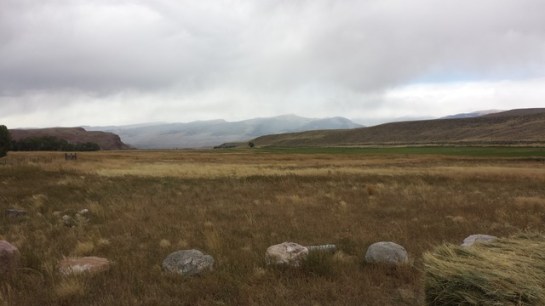
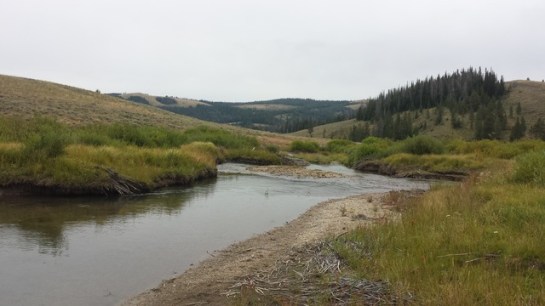
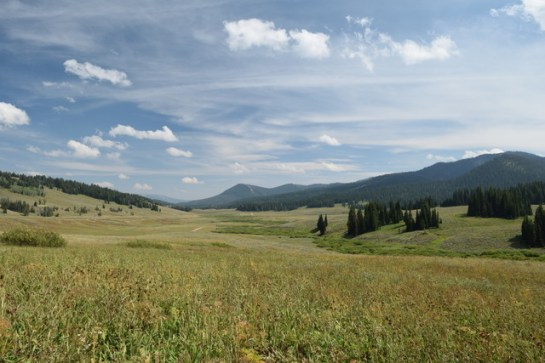
Near the top of the pass we crossed over a creek in a meadow that was unlike any other we’d seen.  It was slow, with sandbars and a dark tannin stain on the water.  You could see that a considerable amount of cattle used it’s waters.  We considered moving on, but after watching the water from the bridge and seeing a fairly large trout on the prowl, we decided to stop and give it a go.  We wouldn’t have much time if we wanted to set up camp before dark.

IMG_2940

IMG_5968

At a big pool, Blake and I split up, I took the left bank and he took the right.  Working our way from the back of the pool to the head.  It didn’t take long to figure out that I chose poorly.  Blake had a solid fish come up and sip his dry.  Kudos to Blake for not getting over anxious and pulling the fly from his mouth.  He played it cool and was rewarded.

IMG_5971

IMG_5969

IMG_5975

It was a beautiful cutthroat, dark, like the water.  My efforts to match Blake’s fish were futile.  The stream quickly changed character, added some boulders, became pocket water and we were running short on time.  All I could muster was a pair of brookies.

IMG_5976

IMG_5977

IMG_5978

It was a great stop, wish we could have stayed longer, but we had to get going.  It didn’t take long to make it to the National Forest boundary and find our way back to asphalt.

IMG_5979

IMG_2942

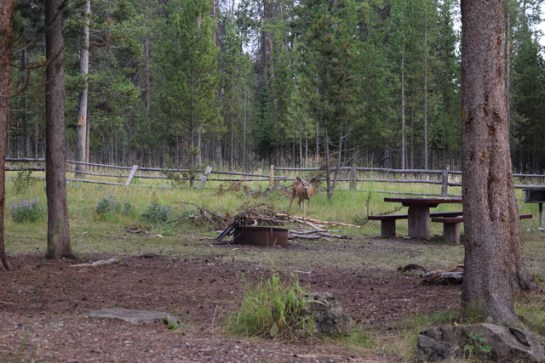
We headed up the highway to the nearest campground and was surprised to finally see some other campers.  I guess that’s what happens when you camp off a major highway – on the weekend.  Still we were able to find a suitable campsite and manage to get set up before dark.  As was the case yesterday, another local was there to greet us upon arrival.

IMG_2947

IMG_5980

We had 3 out of 4 cutthroat species needed to land the slam.  Tomorrow we would wake up and make our way down the road to fish for the Yellowstone cutthroat and hopefully complete our quest for the cutt slam.

After a cold night in the hammock, we got up early that morning, packed our stuff and headed on to our next stop.  I’m not sure what the actual temp was that night, but it felt like upper 30’s/low 40’s and I was under-dressed for it – it was the coldest night of the trip for me.  Lesson learned and the rest of the nights I was fairly comfortable in the hammock.  Using a fleece blanket as an insulating layer under the back was a life saver – the 35 degree mummy bag just wasn’t enough.

Our next stop was on a bit bigger water that we hoped would also hold bigger Bonneville cutthroat trout.

DSC_0628

It did not take long for me to upgrade my best Bonnie as one slurped a dry right next to the bank.

IMG_5896

IMG_5897

Unfortunately that was the biggest on the day for me and one of few – not that I didn’t have opportunities, just that most of my fish either came unbuttoned or I pulled the fly right out of there mouth.  A much slower hookset was needed on these fish and I guess I was just too excited when I saw the slow eat.

IMG_5898

20150806_104551

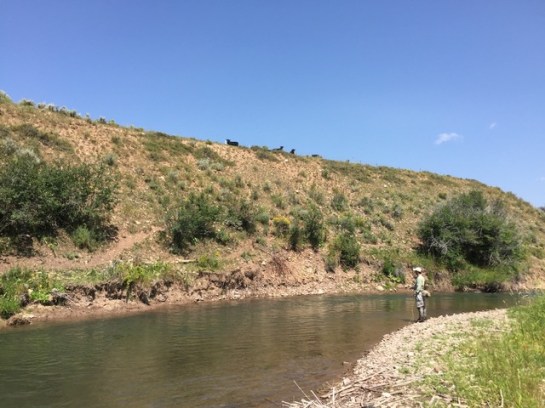
Blake fared much better and even had a local cheering section on top the hill.

IMG_5900

IMG_2871

IMG_2876

He took big fish honors on the day and it was great to both upgrade our Bonneville cutthroat.  Size doesn’t matter for the slam, but I had hoped we would each catch an above average version of each species.

20150806_125326

IMG_5917

20150806_123847

Satisfied, we called it quits after lunch and decided to make our way to our next stop where we hoped to catch our second cutthroat species, which is a mouthful to say, the Snake River Finespotted Cutthroat Trout.

OncorhynchusClarkiiSnakeRiverH650

Joseph R. Tomelleri

The first road we traveled to get to the Snake River Cutts was dicey at best and had us questioning our better judgement in at least one spot, but we made it through and onto a road that was better maintained and more frequented as it took us through the Tri-Basin Divide.

DSC_0635

DSC_0647

IMG_2898

DSC_0658

IMG_2892

Arriving safely at our destination definitely called for a cold beer and unfortunately when going to restock the ice chest I was a little overzealous, used a bit too much force with a few too many beers and we had our first tragedy of the trip.

IMG_5923

If we could make it through the night we would be able to get another ice chest the next afternoon.  You live and learn I guess.

We hit the river a bit high up in the watershed with the idea of knocking out the requirement, and the pressure of just catching one, with perhaps a smaller, more eager fish.  It worked for me, but not so much for Blake.

IMG_5920

IMG_5927

A celebratory beer before they got too hot and we kept on further down the road.

IMG_5919

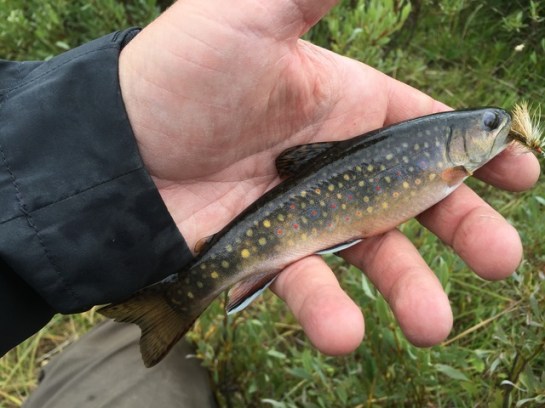
We stopped at a run that looked too good to pass up and Blake was able to quickly hook up on a decent fish.  Of course his first Snake River cutthroat would best mine, this theme continued throughout the trip – he had a knack for holding his mouth right.
20150806_1810240

We continued to fish our way to where we planned to camp that night and in doing so picked up a few more small cutts.

20150806_191434

IMG_5926

20150806_190507

IMG_5934

IMG_5931

20150806_171204

IMG_5930

We called it a day before it got too dark on us and headed to the campground.  Once at the campsite we were greeted by one of the locals who graciously allowed us to set up in an adjacent site.  Day two was another success as we were on track to get the slam by catching two different species in two days.  We did hope to be able to upgrade our Snake River Cutthroat before the trip was over though.  In the morning we planned to head over the pass and fish a Green River trib. for Colorado River Cutts.  If we stayed on track we would have an opportunity to catch more Snake River Cutts on the last day of the trip, hopefully bigger ones too.

DSC_0662

IMG_5937

IMG_5939

Edit Page

The salmonids are in family Salmonidae, which has 10-11 genera that is divided into 3 subfamilies; Coregoninae(whitefish), Thymallinae(grayling), and Salmoninae(char/trout/salmon). Living in the Southeast you have access to a very limited amount of salmonids and I’ve caught the 3 that occur in Georgia.  The brook trout is the only native trout species in Georgia and it is actually a char. 

Updated, December 2025: I made my first trip out West in September of 2012 to Colorado and caught several “greenback” cutthroat trout in Rocky Mountain National Park – or what were considered greenback trout at the time.  Made another trip out West in August of 2013 to Teton and Yellowstone National Parks where I picked up another cutthroat species and mountain whitefish.  In August of 2015 I was able to complete the Wyoming Cutt Slam, picking up Wyoming’s four native cutthroat species (they do have a fifth, the Westslope, that is not required for the slam).  In July of 2017 I completed the Utah cutthroat slam, which didn’t necessarily add any new species to the list, but I was able to add Bonneville cutthroat outside of the Bear River drainage and Bear River cutthroat, which some consider genetically distinct. In June of 2021 I made it out to Arizona and New Mexico to catch Apache and Gila trout in their native range. In August of 2022 I made it up to northern Idaho and caught several Westslope cutthroat in their native range. In July of 2023 I made a northern New Mexico/southern Colorado trip and caught lots of Rio Grande cutthroat in their native range.  Finally, in August of 2025 I made it out to the Olympic peninsula of Washington and caught coastal rainbow trout in their native range, coastal cutthroat, southern Dolly Varden, as well as the genetically distinct Lake Crescent cutthroat trout.

Dr. Robert Behnke is the man when it comes to salmonid knowledge. Pick up his book if you want to learn more about this particular family, “Trout and Salmon of North America”. Another great resource is Gary Marston’s Native Trout Fly Fishing blog, he has a Trout and Salmon species page with pictures and information of all those that he has caught (which may be all that are found in the U.S.). Gary’s trip reports are a good read as well, he has had some epic road trips to catch trout in their native range.

Trout found in the Southeastern United States

Salvelinus fontinalis – Brook trout

IMGP5747

Brook trout are the first native trout species I ever encountered as they do live in Georgia.

Salmo trutta – Brown trout

IMGP5730

Brown trout are not native to North America.

Oncorhynchus mykiss – Rainbow trout

IMGP5637

The first trout species I ever caught, happy to say that I have now caught them in their native range too!

Western Native Trout

Oncorhynchus apache –  Apache trout

Oncorhynchus gilae –  Gila trout

Cutthroat Trout

Western native trout range map source: Coyote Gulch blog

Oncorhynchus clarkii clarkii – Coastal cutthroat trout

According to Wikipedia, the coastal cutthroat trout occurs in four distinct forms. A semi-anadromous or sea-run form is the most well known. Freshwater forms occur in both large and small rivers and streams and lake environments – pictured above is the stream resident freshwater form.  The historic native range of the coastal cutthroat trout extends south from the southern coastline of the Kenai Peninsula in Alaska to the Eel River basin in Northern California.

Oncorhynchus clarkii clarkii crescentii – Coastal cutthroat trout – Lake Crescent form

Oncorhynchus clarki stomias – Greenback cutthroat trout

IMGP7693

At the time this fish was considered a greenback, but it’s more likely that it isn’t after genetic research determined that the true greenback was limited to only one stream, outside of it’s native range, in Colorado.  Work has been done to re-establish populations throughout it’s native range and hopefully I’ll have the opportunity to fish for a true greenback cutt.  Their historic range is pretty much in the state of Colorado on the Front Range, with some watersheds slipping into Wyoming. They are found in the headwaters streams of the South Platte and Arkansas River drainages.

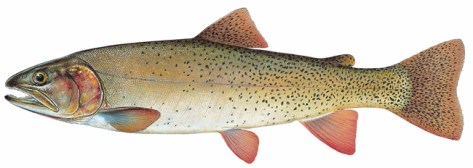
Oncorhynchus clarki pleuriticus – Colorado River cutthroat trout

IMG_2922

Their historic range is headwaters streams in the Green and Colorado Rivers, as far south as the San Juan River, west of the Continental Divide.  They are currently limited to a few small headwater streams of the Green and upper Colorado rivers in Colorado, Utah, and Wyoming, including the Escalante River drainage in southern Utah.

Oncorhynchus clarkii virginalis – Rio Grande cutthroat trout

This image has an empty alt attribute; its file name is img_8375.jpg

Their historic range is headwater streams in the Pecos and Rio Grande watersheds in Colorado and New Mexico.

This image has an empty alt attribute; its file name is riogrande_cutt.png

Oncorhynchus clarkii utah – Bonneville cutthroat trout

IMG_2871

Their historic range is pretty much in the state of Utah, with some watersheds slipping into Wyoming, Idaho, and Nevada.

Oncorhynchus clarkii utah – Bonneville cutthroat trout – Bear River strain

IMG_2727

They are found in the headwaters streams of the Bear River.  No range map was given from NatureServe or the USGS for the Bear River cutthroat trout, but they are native to the Bear River and it’s tributaries, including Bear Lake.

Oncorhynchus clarkii bouvieri – Yellowstone cutthroat trout

IMG_5982

Their historic range is the Yellowstone River drainage in Montana and Wyoming and the Snake River drainage in Wyoming and Idaho.  Their current range overlaps with that of the Finespot in the Snake River drainage above Shoshone Falls.

Oncorhynchus clarkii behnkei – Finespotted Snake River cutthroat trout

IMG_6017

Their historic range overlaps the Yellowstone cutt in the states of Wyoming and Idaho. They are found in the headwaters streams of the Snake River, particularly the South Fork.

Oncorhynchus clarkii lewisi – Westslope cutthroat trout

This image has an empty alt attribute; its file name is img_4158.jpg

According to Wikipedia, Westslope cutthroat trout are native in northern Idaho’s and British Columbia’s upper Columbia River system and northern tributaries of the Snake River. East of the Continental Divide in Alberta and Montana, Westslope cutthroat trout are native to the upper Missouri, Milk and North Saskatchewan rivers. In Montana, the historic range extended east to the mouth of the Judith River and south into the Madison, Gallatin and Jefferson river systems. Isolated populations of Westslope cutthroat trout exist in upper tributaries of the John Day River in the Strawberry Mountains of Oregon and Columbia River tributaries along the eastern side of the Cascade Range in Washington. Isolated populations exist in the Fraser River basin in British Columbia.

This image has an empty alt attribute; its file name is westslope.png

Other Native Salmonids

Salvelinus malma – Southern Dolly Varden

According to Gary Marston, the Southern subspecies of Dolly Varden are native to coastal watersheds from the Susitna River, Alaska south to the Quinault River, Washington.

Prosopium williamsoni – Mountain whitefish

IMG_3009

Thymallus arcticus – Arctic grayling

IMG_3039