Archive

Fly Tying

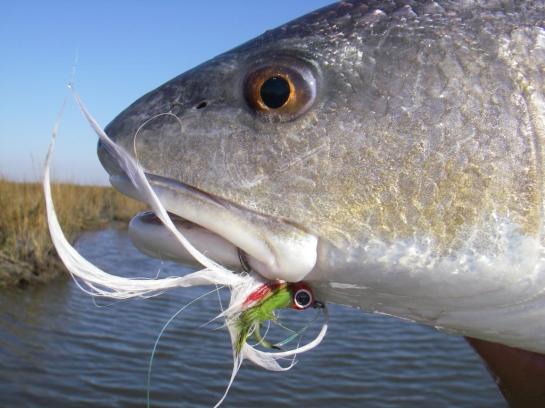
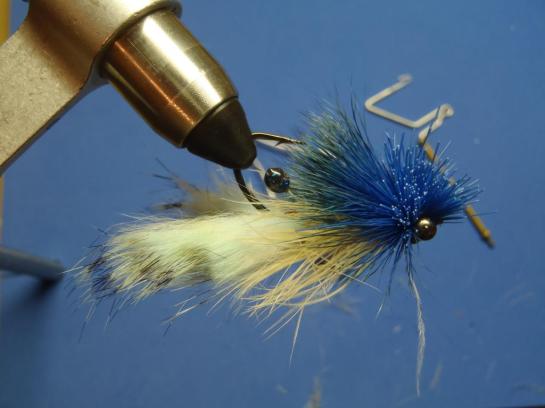
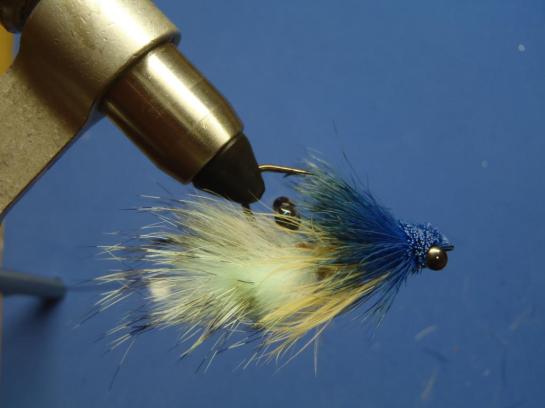
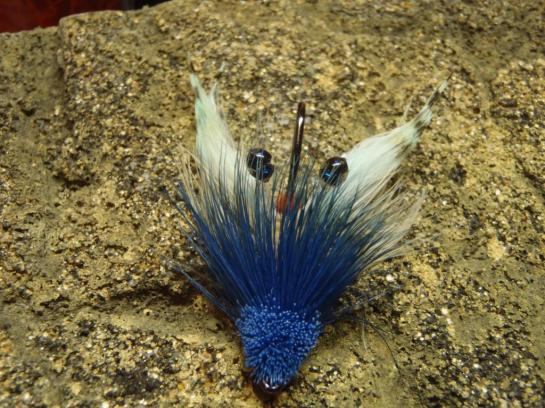
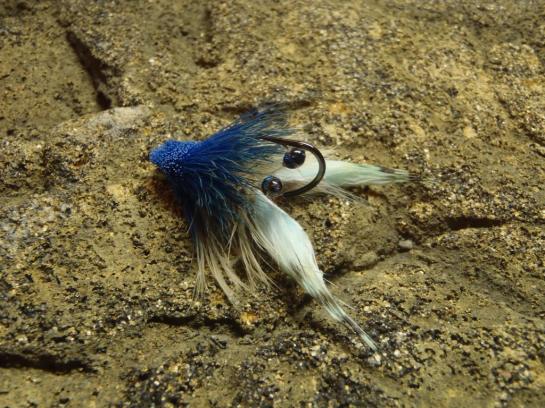
November’s fly of the month is the fly I used last time out with success, though I have to admit, I think anything would have worked that weekend before Thanksgiving, fishing was insane. It wasn’t the fly I started out with on the day, that was another of Blake’s creations. I was having problems sticking fish with that first fly, you can see that in the video I just put up. I switched to the jack hammer minnow and proceeded to slay them though. It held up very well too, I didn’t have to tie on another fly the rest of the day. The sink rate on it is not too fast and not too slow, which is just right for those cruising reds. It’s got pretty good action underwater as well. So check it out, give it a shot, let us know what you think.

Materials:

– Hook as seen in the picture below

– Lead wire

– Bucktail

– Flash

– Saddle Hackle

– Marabou

– Zonker strip

– Peacock Herl

– Stick on eyes

– Epoxy

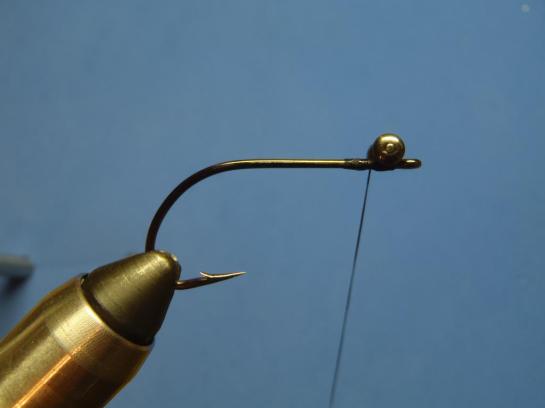
1. Insert hook in vise and wrap on a layer of lead. I like to use .015 lead wire so that I don’t build up the shank a whole lot. I also leave some open shank behind the eye and before the bend to tie in materials.

PB270216

PB270217

2. Start thread behind the eye and wrap around the lead to secure it to the shank. In order to keep the thread from going between the lead wraps, I will start behind the eye of the hook with touching wraps till I get to the front of the lead. From here, I will bring the thread all the way to the back of the lead and make a few wraps behind the lead before bringing my thread back to the front of the lead. This way I have a thread on either side of the shank (running parallel to the hook shank) that will keep my thread from sinking in between the lead wraps. Then cover the lead with thread and coat with super glue for added durability.

PB270220

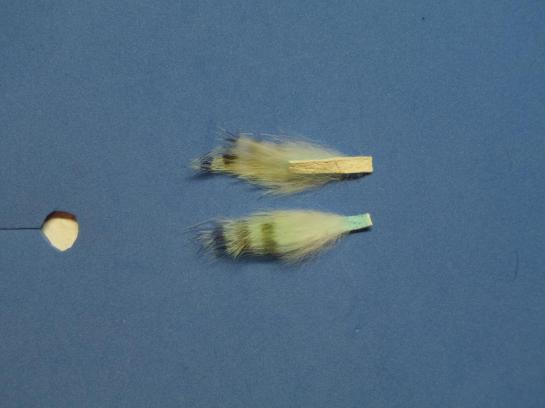
3. Tie in a small clump of buck tail. This will fill in the area of the shank that we left behind the lead and before the bend. Since its not a big tie in area, add a little super glue to make sure everything is locked in.

PB270224

4. Tie in a few strands of flash, your choice. I used chartreuse flashabou.
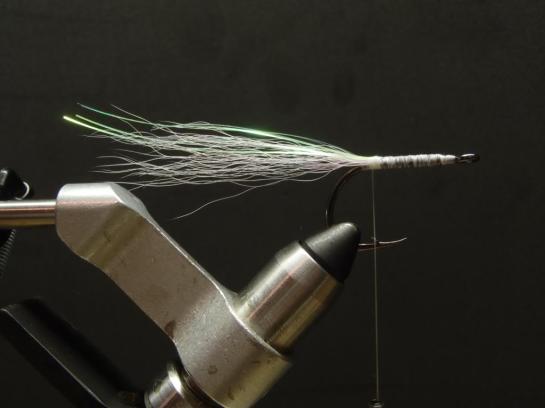
PB270228

5.  Select two matching saddle hackles and tie one on either side of the buck tail and flash. I like for them to extend past the buck tail. I normally want the flash to be the longest, but I under estimated the length of the flash.
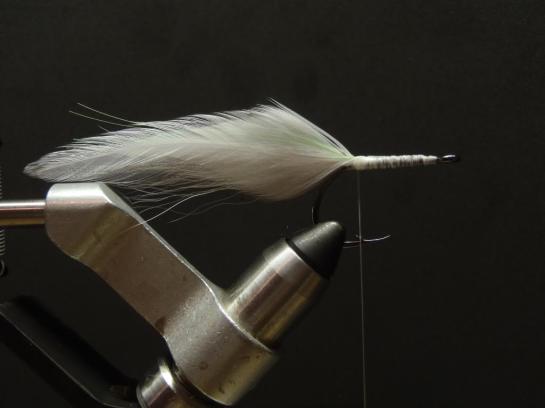
PB270229

6. Put some marabou in a loop, spin it, and palmer it around the shank. I like for the marabou to extend a little less than half the length of the hackle.
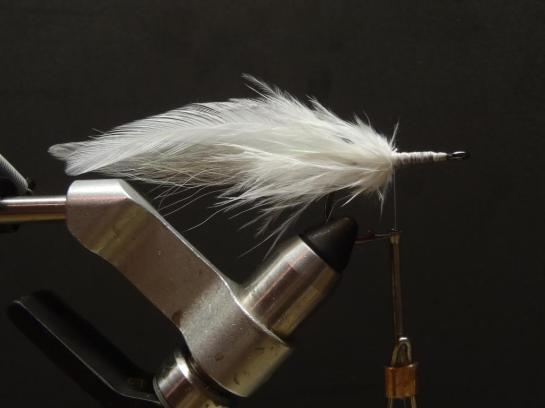
PB270230

7. Put your choice of zonker in a loop, spin it, and palmer on to the shank. You can also tie in the zonker strip in and make a couple of wraps. I prefer the loop because I think the leather takes up too much space. Stop palmering the zonker with enough room to fit your eyes.
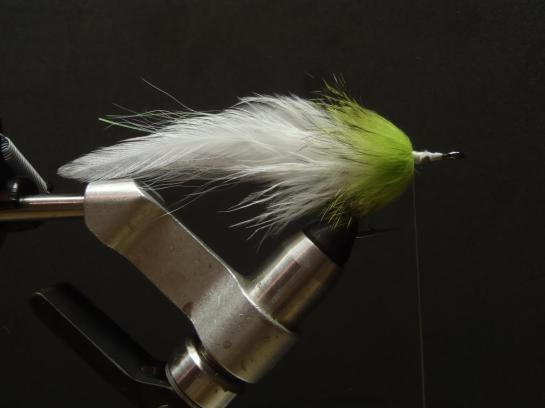
PB270232

8. Tie in a few pieces of peacock herl on the top. I normally tie more than I want because some will inevitably break after a fish or two.

PB270233

PB270236

9. Tie in some red marabou for a throat. I will also use feather fibers for this as they are a little stronger. Either will work fine.
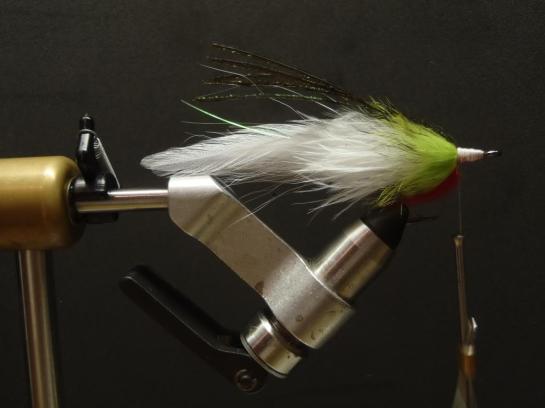
PB270234

PB270235

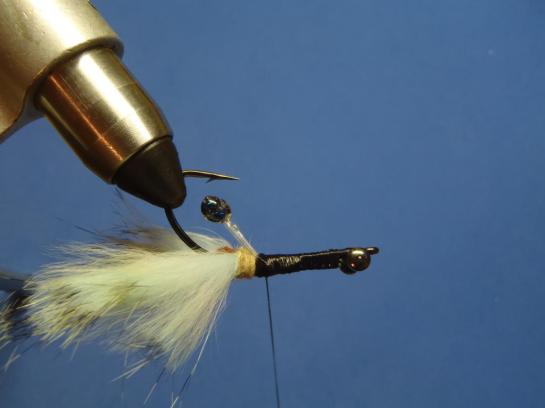
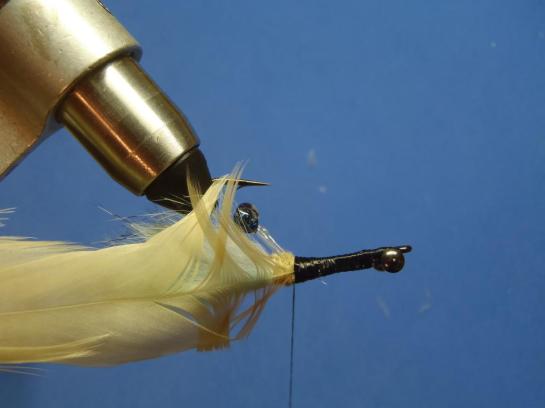
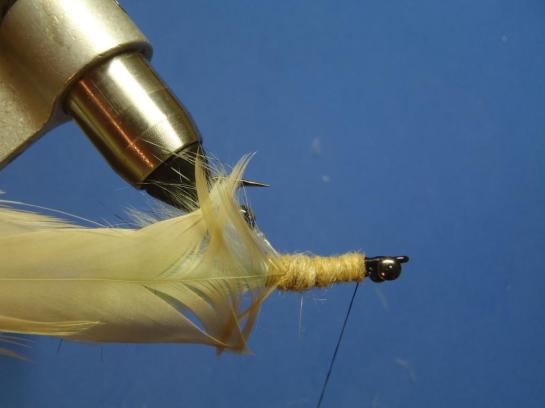
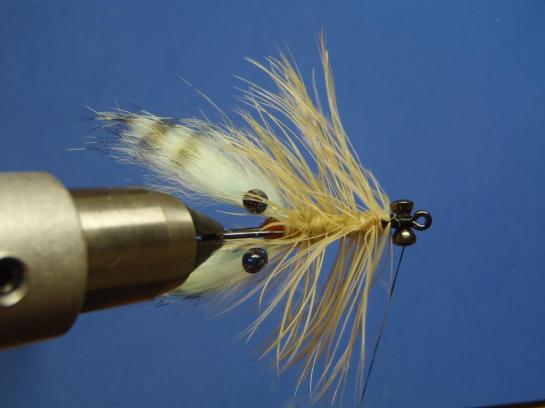
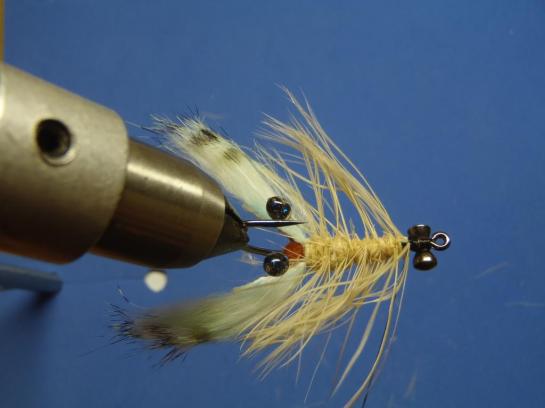
10. Tie off thread. Add your eyes of choice. I like to life like eyes but any (or none) will do just fine. I colored the thread behind the eyes black because I thought it looked better. I normally put down a layer of super glue to hold the eyes securely in place for the epoxy.

PB270239

11. Layer with a coat of 5 minute epoxy (use 30 minute if you are doing these in batches. I can normally do two with 5 minute before it starts to set too much). Put in a dryer if you got one and let it spin till the epoxy sets.

PB270240

12. Finished fly. If I would have took my time a little more and let the epoxy settle before I put it on, that would have gotten rid of a lot of the bubbles in the head. That’s what I think anyway. But I don’t think the fish will care. Fly pushes a lot of water and has a big profile.

PB270242

PB270243

PB270245

PB270248

PB270246

Proof of Concept
IMGP7819

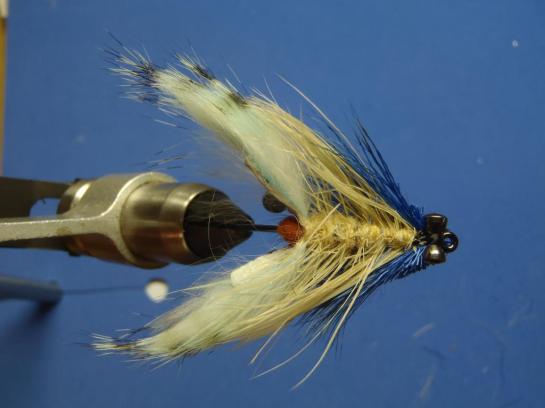
For October’s fly of the month, Blake revisited the crab slider that he and I use a lot down here in Louisiana for redfish. His original tie can be found here: http://www.laflyfish.com/cgi-bin/bforum/viewtopic.php?id=1929. I like the addition of the claws on this new version, though to me it makes the fly look like more of a crawfish. Either way it imitates a crustacean and that is all that matters to a redfish.

Materials:

Dumbbell Eyes

Lead Wire

Thread – Heavy enough to flair hair

Small chenille

Rabbit zonker

Crab eyes

Dubbing

Schlappen

Mono rib

Deer hair

1. Start thread and tie in your choice of eyes. I like dumbbell eyes. Cover everything with a coat of superglue.

PA290168

2. In order to make sure that this fly turns over in the water, I will tie in two layers of lead wire on top of the hook. Normally the deer hair wing and dumbbell eyes on opposing sides of the hook are enough to turn the fly over, but I add the lead just to make sure. I like to coat everything with a thin superglue to keep all that lead on one side of the hook.

PA290170

PA290171

3. Strip a small amount of material from the core of the chenille and wrap around the shank to make a small ball. This will help splay out the zonker strips. Tie off.

PA290172

4. Cut two small sections of zonker about an inch long and cut the hair from the tie-in area on both pieces. I normally start with the strips a little longer and cut them to the right proportions after the fly is done. Tie one zonker on either side of the hook. Wrap them up tight to the ball of chenille so that they splay out to either side. I like to touch the part of the zonker hide right at the tie-in to about half of the strip with some superglue to stiffen it. I think this increases the amount that the claws stick out to the side.

PA290173

PA290174

5. Wrap a little dubbing behind the claws and then tie in your eyes. The eyes that I used are just glass beads glued on some mono then dipped in 5 minute epoxy. Then they are spun on a dryer until the epoxy is cured. Dub the eyes once they are tied in using figure 8 wraps.

PA290175

PA290176

6. Tie in your choice of rib material and a pretty webby feather.

PA290177

7. Dub the rest of the shank to right behind the dumbbell eyes.

PA290178

8. Palmer the feather; tie in. Then counter wrap with your rib; tie in.

PA290179

9. I like to trim the feather fibers on the top and bottom of the hook.

PA290180

PA290181

10. Take a dubbing brush and scrub the body to get some of the dubbing fibers teased out. This also helps to get the feather fibers to lie back towards the bend of the hook.

PA290182

11. Bring thread behind the dumbbell eyes and flair a decent clump of deer hair with the tips extending to the crab eyes. I normally like the hair a bit longer than it is on this fly, but I doubt it is that important. Whip finish thread between the dumbbell eyes and the hook eye.

PA290183

12. Trim the deer hair butts to your desired shape. I try to go a little flat on the top and wide on the sides

PA290185

PA290184

13. Finished Fly

PA290190

PA290188

Materials:
– Dry fly hook
– 2mm craft foam
– peacock herl
– peacock krystal flash
For September’s fly of the month, Blake is walking us through a fly he ties called the veetle. Not a hard tie, but very effective. It was one that worked up in Rocky Mountain National Park, but should be deadly on local ponds too.
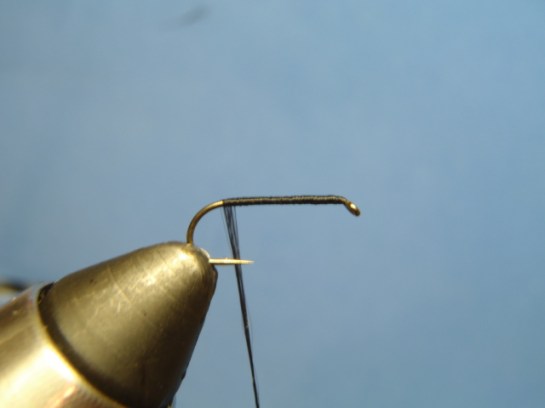
Step 1. Start thread at the hook eye. Wrap to the bend. This is where we will tie in the foam
OLYMPUS DIGITAL CAMERA
Step 2. Cut a strip of black craft foam. Trim to a point and tie in along the shank of the hook. I like to stretch the foam where I am going to tie it in so that it isn’t too thick on the shank.
OLYMPUS DIGITAL CAMERA
Step 3. Tie in a few strands of ostrich herl and bring thread forward a little behind the eye.
OLYMPUS DIGITAL CAMERA
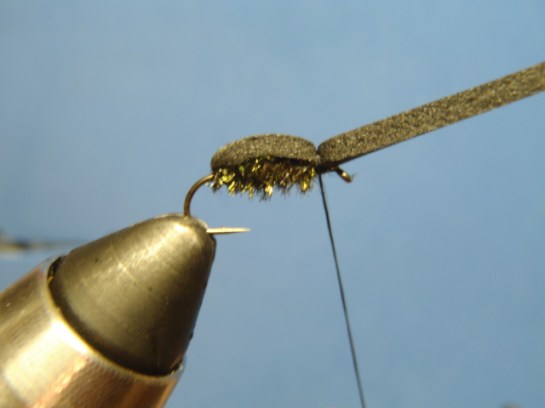
Step 4. I put a layer of super glue on the shank and wrap the herl forward. Tie it down and cut off the extra. If you want to reinforce the herl, leave a tag end of thread on the shank when you put on your base layer and use that to overwrap the herl.
OLYMPUS DIGITAL CAMERA
Step 5. Put some super glue on the underside of the foam and pull it over the top of the herl. Tie it in behind the eye.
OLYMPUS DIGITAL CAMERA
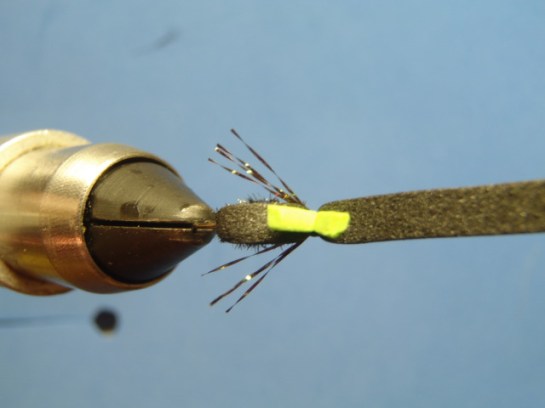
Step 6. Tie in 4 strands of krystal flash on one side of the hook. Then bring it between the foam and the hook eye to the other side of the hook. Tie it in on the other side.
OLYMPUS DIGITAL CAMERA
Step 7. Tie in an indicator to make the fly easier to see. Part off the thread.
OLYMPUS DIGITAL CAMERA
Step 8. Trim the legs to just behind the back end of the fly.
OLYMPUS DIGITAL CAMERA
Step 9. Trim the foam extending over the eye and cut off the corners so that it is somewhat round. Also, trim the indicator to a length of your liking. Finished fly. Worked on greenback cutthroat, I would imagine that it would work on bluegill also.
OLYMPUS DIGITAL CAMERA