Coldwater
VBF Stone
June’s fly of the month is another of Blake’s ties that managed to fool fish at the cabin – the VBF(very big fish) Stone. I had been relaying any intel I could gather from the creek throughout the Spring to Blake and after hearing about Jim’s run in with a VBF of his own and viewing Dan’s stonefly nymph video, Blake set out to tie something similar that might work to catch these trout. It has enough weight in it to eliminate the need for extra shot and is more natural looking than a pickle, which should hopefully fool those wise, old trout who know better.
Materials
- Streamer hook, 4x long
- Bead – gold to fit the hook and black one size larger
- Goose biots
- Dubbing
- Vinyl ribbing
- Shell back
- Thread – I use smaller thread than I normally would just to reduce bulk under the beads
1. Slide beads on the hook, gold bead on normal, and black bead reversed with the concave side facing forward. Start thread behind the hook eye.
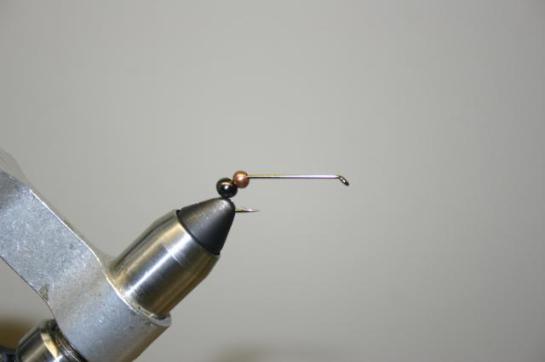
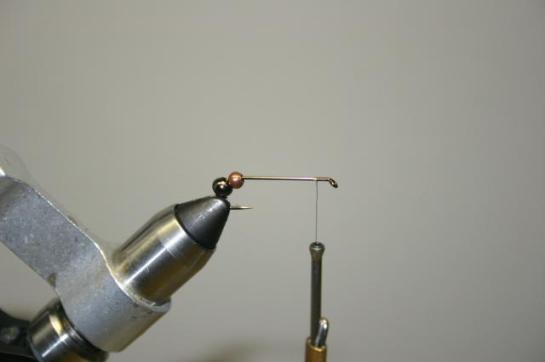
2. Tie in two biots extending over the hook eye. Be careful to not wrap so much thread that you can’t get the bead butted up against the eye. Trim butts, whip finish, add some super glue to the thread then push the bead up.

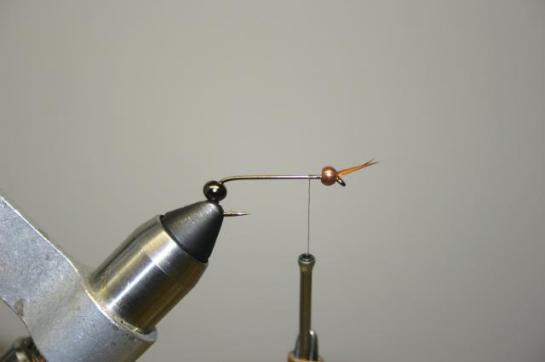
3. Start thread behind the first bead and tie in a biot on either side. I like my legs to be about half the shank length. I like to use enough thread so that the bead is snug when I slide it up the shank. Whip finish, super glue, the slide up the bead.


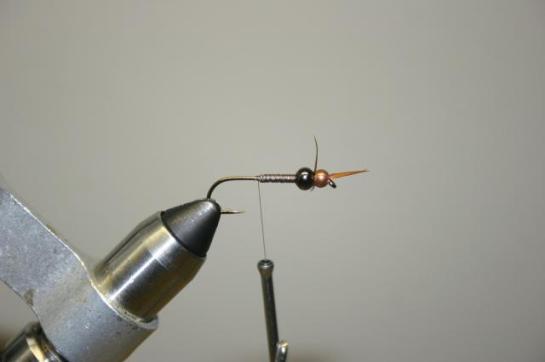
4. Wrap lead on the shank. Start thread behind the lead and wrap the lead with a layer of thread.

5. Wrap a small ball of dubbing right before the hook bend. This will help to splay out the tails.

6. Tie in two biots at the bend.
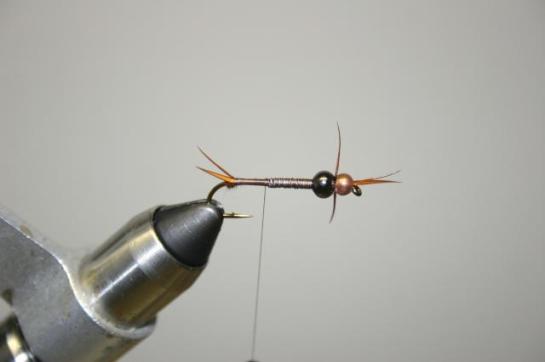
7. Tie in ribbing material at the far side of the shank

8. Dub the body

9. Palmer the rib and tie off in the space behind the bead.
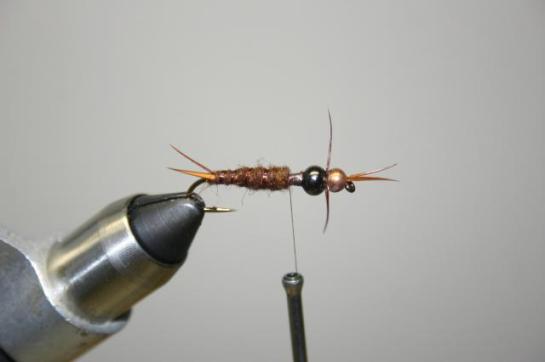
10. Tie in shell back material.

11. Biot on either side.
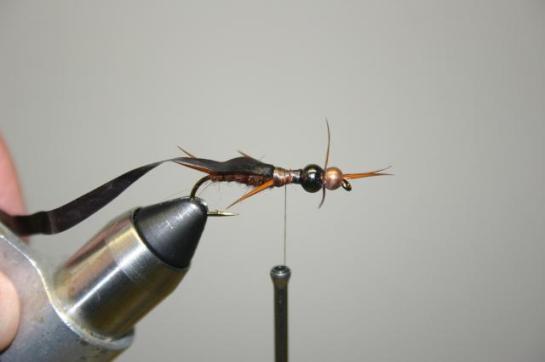
12. Dub leaving a small space behind the bead to tie in the next set of legs. Bring shell back over and tie it in.

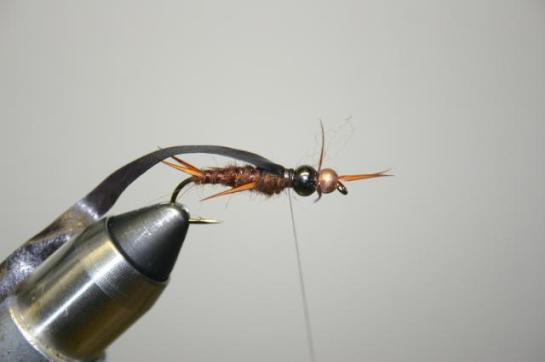
13. Tie in next pair of legs then dub the body up to the bead. Whip finish behind the black bead.


14. Start the thread between the front legs and the gold bead. Add some dubbing here to make those front legs angle towards the back of the fly.
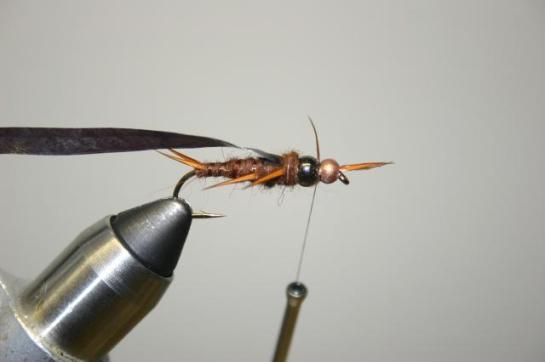

15. Bring shell back over the bead and tie in right behind the gold bead. Cut the extra shell back and whip finish.
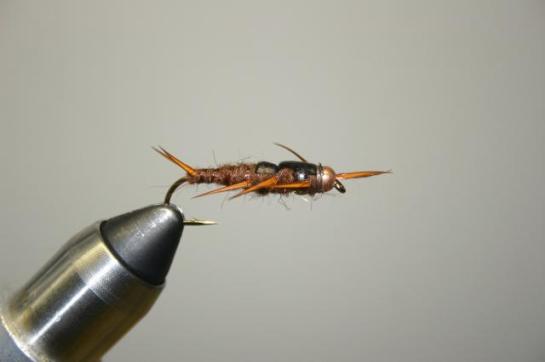

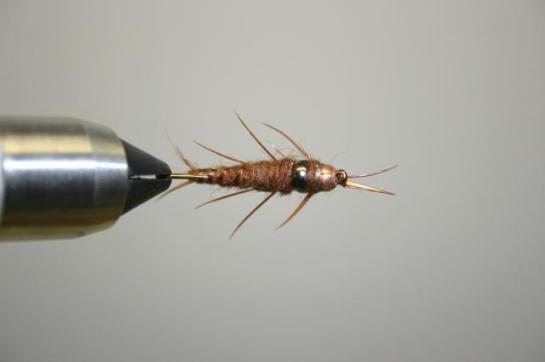
I like to give the shell back a coating of SHAN to make it shiny. Finished Fly. Enjoy

This eager trout took the VBF stone not more than 30 minutes after I caught it on a dry.

BH Featherduster Nymph SBS
We’re a little late with May’s fly of the month, but it’s by design. We’re continuing to feature flies that have worked for us on the trout at the cabin, though prior to this month they were all from last year’s trip. I’m fairly certain they will work for trout elsewhere and probably other fish too. The first one will be a beadheaded version of the featherduster nymph which was first tied by Wally Eagle out in West Yellowstone. As you’ve probably guessed the original pattern was tied from a feather duster. The sizes that were effective in North Georgia were 14 and 16, but this one is tied in a size 12 for purposes of picture clarity.
Materials:
- 2x long nymph hook(I prefer 2x long hooks when using a bead and regular hooks without a bead)
- Bead to fit hook
- Lead wire
- Gold wire
- Ostrich herl
- Pheasant tail
- Thread
1. Put bead on hook and slide to the eye.

2. Wrap lead onto the shank and butt it up against the bead. I put enough lead on there to take up the space where my thorax will be.

3. Cover lead with thread and create a smooth underbody.

4. Tie in a wire rib on the far side of the hook. I tie it in on the far side so that the first half wrap goes under the hook.

5. Tie in two peacock herls at the bend and bring thread to the area at the start of the thorax. Twist herls together and palmer. I try not to make this very dense.


6. Measure some pheasant tail fibers for length and tie them in at the thorax. I like my tails to be roughly half the length of the hook shank.

7. Use the wire rib to tie down the pheasant tail.

8. Tie in a few more pheasant tail fibers with the tips pointing over the eye. These will be the legs, so they should also be roughly half the length of the hook shank. The butt ends of the fibers will become the wing casing.

9. Tie in a few more herls, twist together, and palmer. You could twist these with the thread to reinforce the herl if you want. I like to make the thorax area a little more dense than the abdomen.


10. Separate the pheasant tips, pull the butts over to form the wing case, and tie them in dividing the tips.

11. Cut off the butts and whip finish.


Finished fly, enjoy!

This kype jawed rainbow fell for the beadhead featherduster nymph.
