Archive

Exploring

Note: I wrote this piece late last year and held onto it, foolishly thinking someone else may want to publish it. I don’t think that’s happening so now is a great time to let it loose.

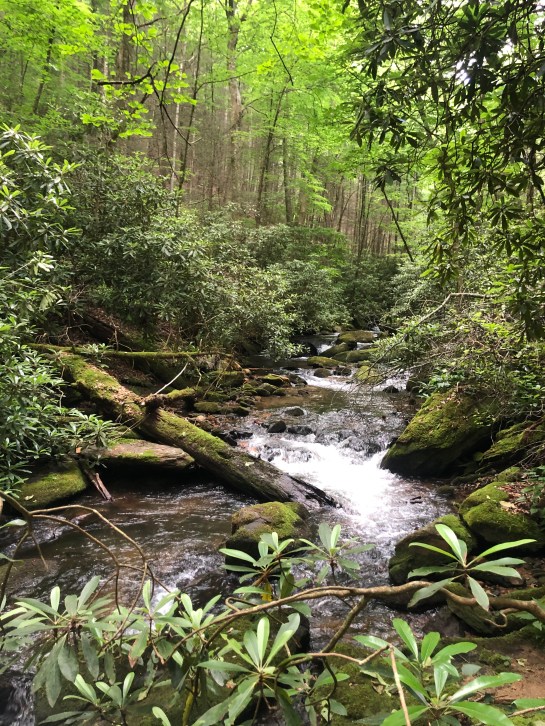
I really enjoy the time that I spend fishing upland streams, far from my home, where the water is clean, clear, and filled with life. I often seek out creeks that are off the beaten path, sometimes deep in the woods; places that give you a feeling that perhaps you’re the first person to fish here, maybe not ever, but in a very long time. Those are special places to me.
This image has an empty alt attribute; its file name is img_3974.jpg

The places I have locally are not those types of places. Sure, there are creeks that are an hour or more away that may fit the bill and illicit those same feelings, but the ones I’m referring to as local, those within a few miles or minutes of my house, are a far cry from what I would consider the ideal stream for an immersive fly fishing experience.

These are drainage ditches. Brownlines to me because that’s often what they look like. The quality of the water is probably closer to that of a sewer line than an upland stream. They are not places you would want to step in if you had an open wound and you certainly don’t want to wet your line with your mouth when tying on a new fly. Sure they are little blue lines on a map, but these streams and bayous have been altered by man, with no thought given to what lives in and around the water. Their design is one of purpose and function and not one of form. They carry water away from metropolitan areas and take it somewhere out of sight and out of mind for the majority of the population. They make the news when the rain falls too hard for too long and suddenly these streams end up in your backyard and people remember they are there. When they are tame they are forgotten places. The trash that lines their banks tells that story. These are places very few people care about and for the longest time I was one of those people.
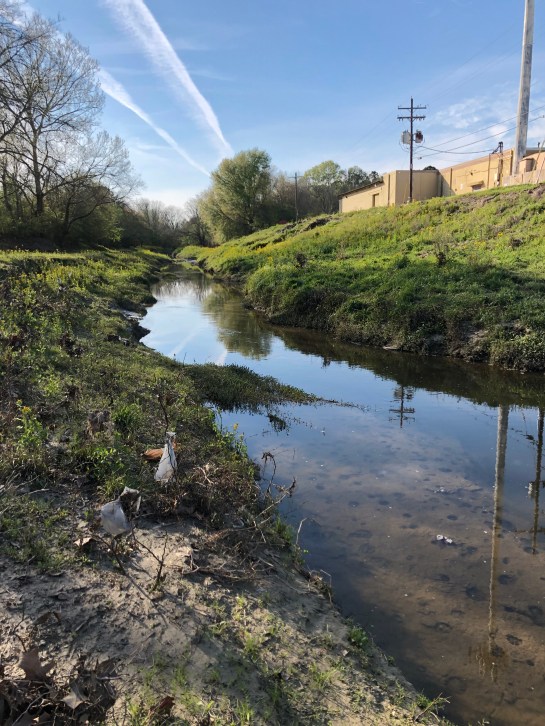
I ignored fishing these places because frankly there wasn’t much of an appeal. I had time to travel a little further and fish somewhere more “worthy of my presence”. Life has a funny way of changing things though and as my family has grown, time has gotten tighter, and over the past few years I’ve been forced to fish closer to home. Over time I’ve come to appreciate the brownlines. There is beauty in them if you’re willing to overlook the ugly on the surface. I’m sure there’s a metaphor there for people too.

I’ve discovered a handful of places around town over the past few years that have become some of my go-to spots now, mainly in the interest of time, but also because they’ve proven themselves to be productive little fisheries. These are ditches where you can walk the banks, not feel like you’re right in someone’s yard, and not sink in soupy mud. Creeks where the water actually has a decent amount of visibility to it. There aren’t many places around here like that and I continue to search for ones that stand out.

Back in August I finally made time one Friday afternoon for a ditch that I drive over and always take an extra long look as I pass.
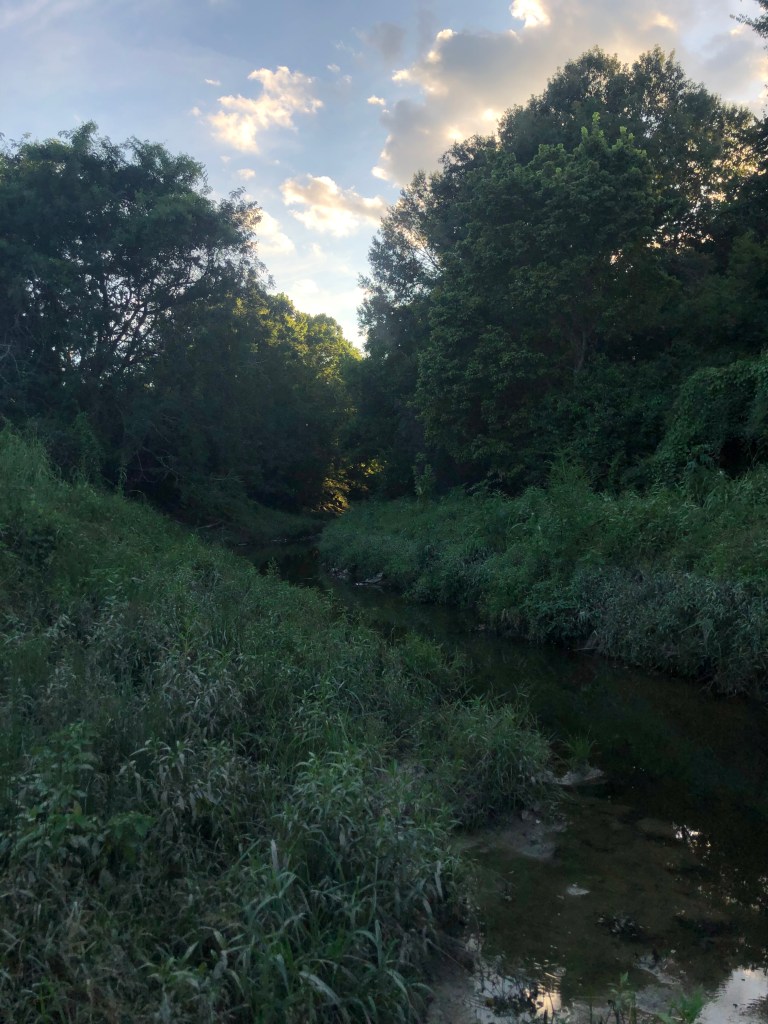
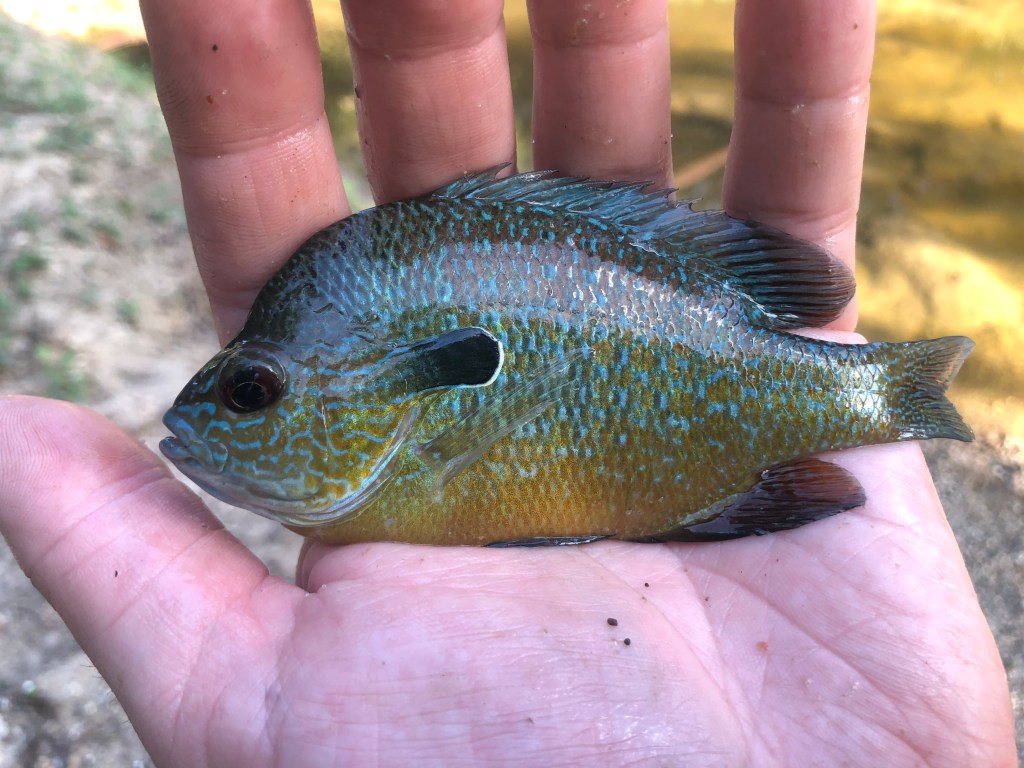
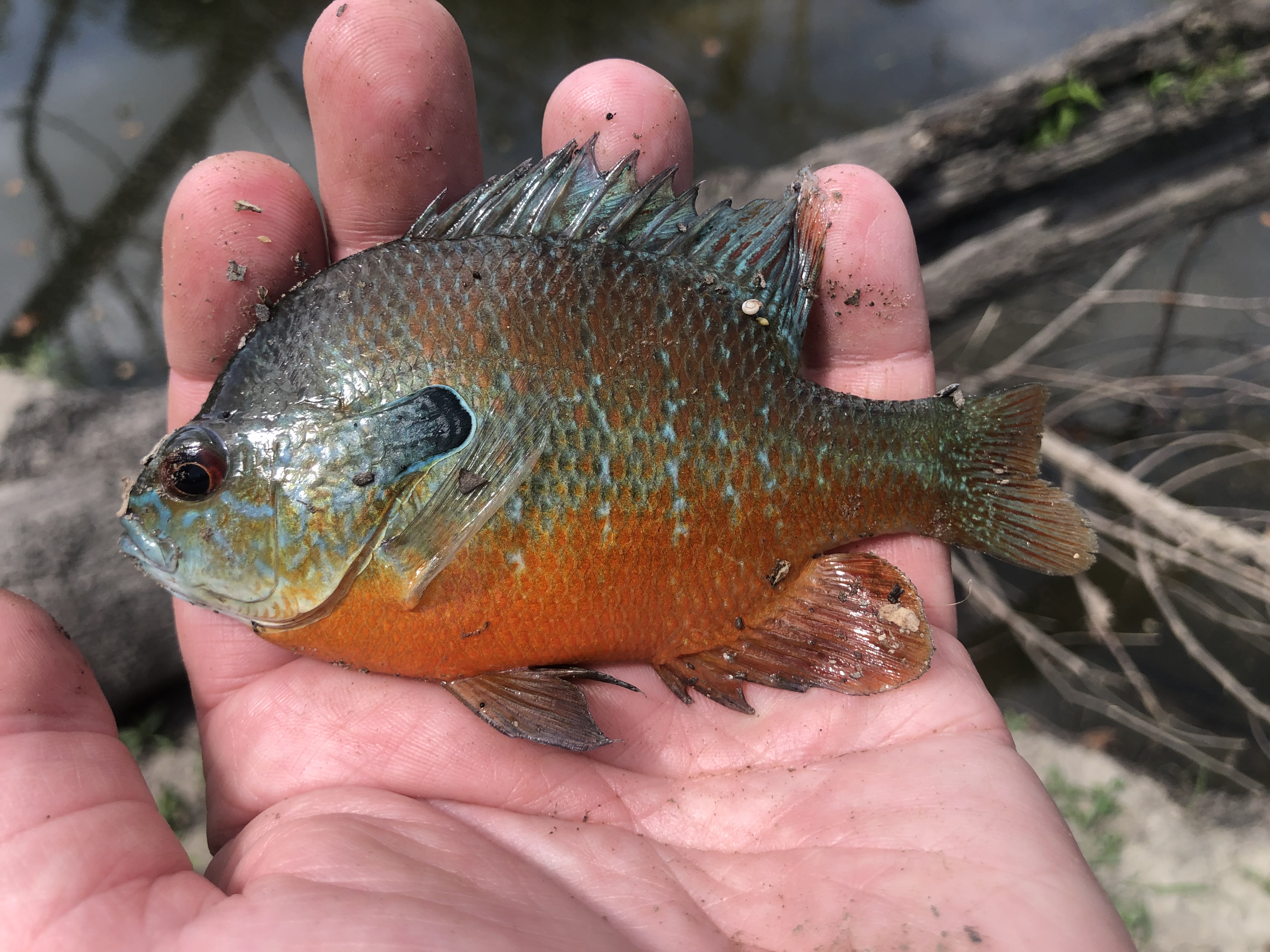
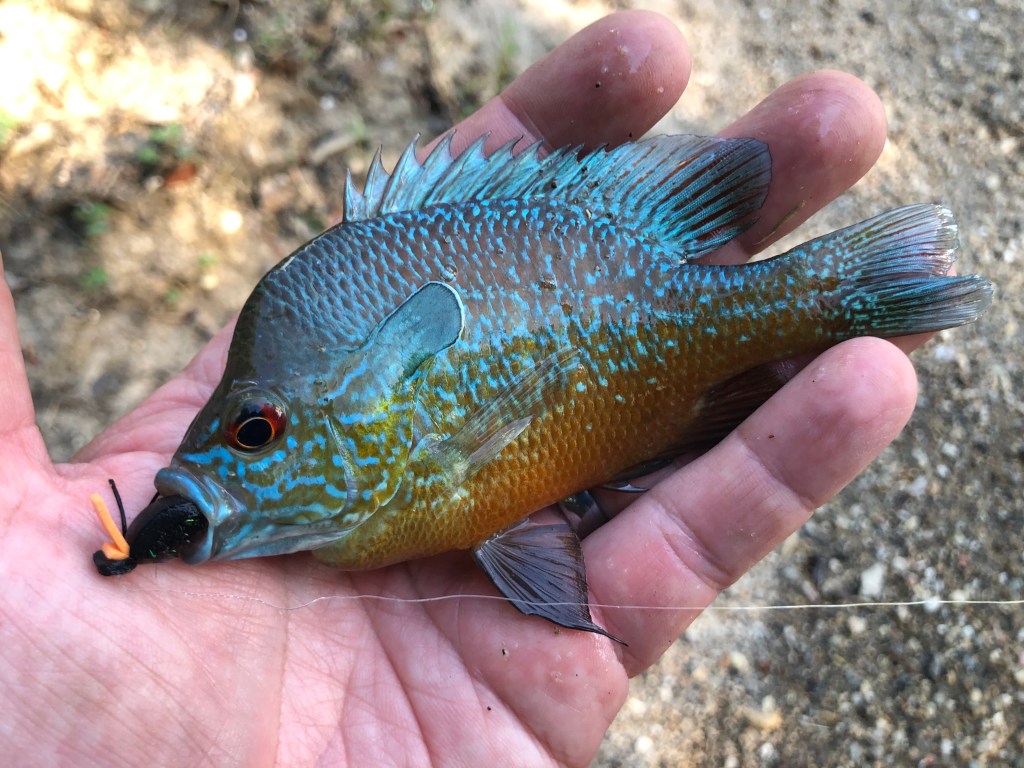
I’m glad I made the time too because it ended up being loaded with some of my favorite sunfish, longear, and they were in full spawning regalia.

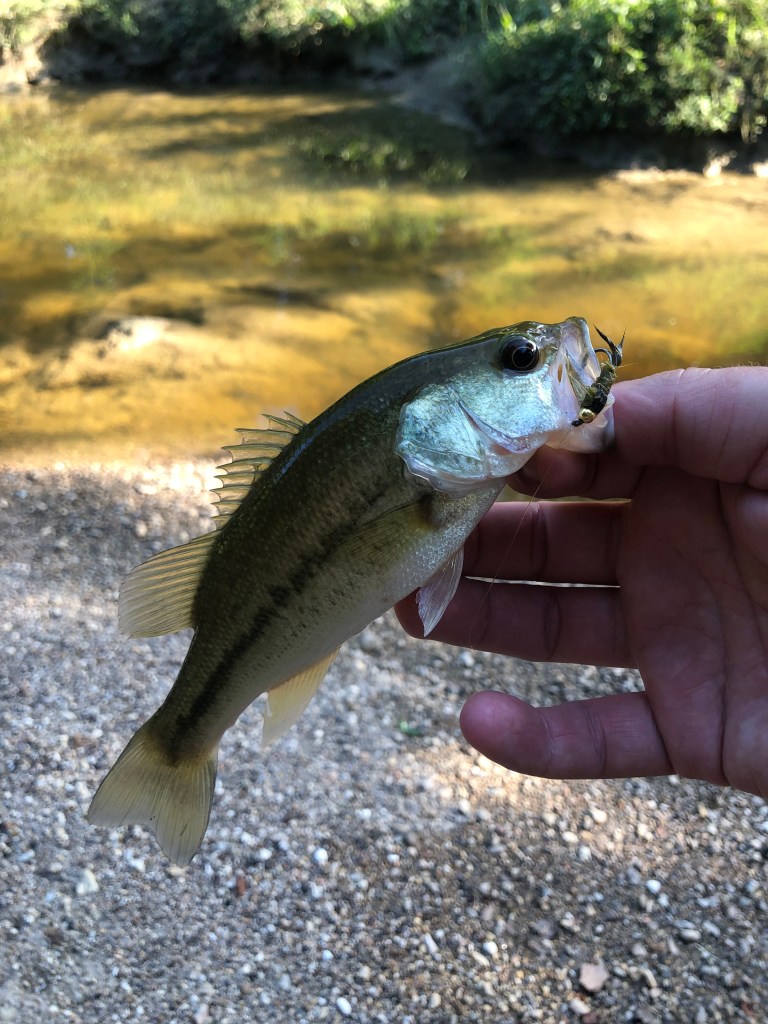
I was able to fool a couple largemouth hanging around, but passed on the chance to fight a big spotted gar on light tackle.
It was a good enough time that I made it back out there the next Friday to walk the banks in the other direction. The little largemouth were still very active, but I ran into some other usual ditch denizens as well.

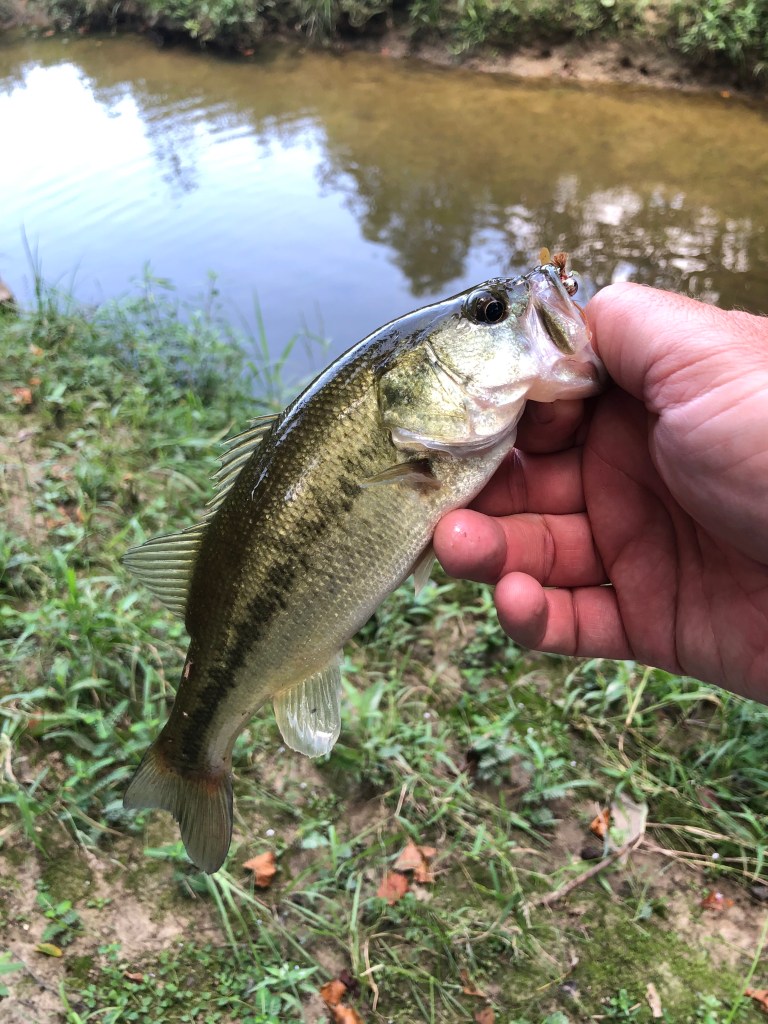
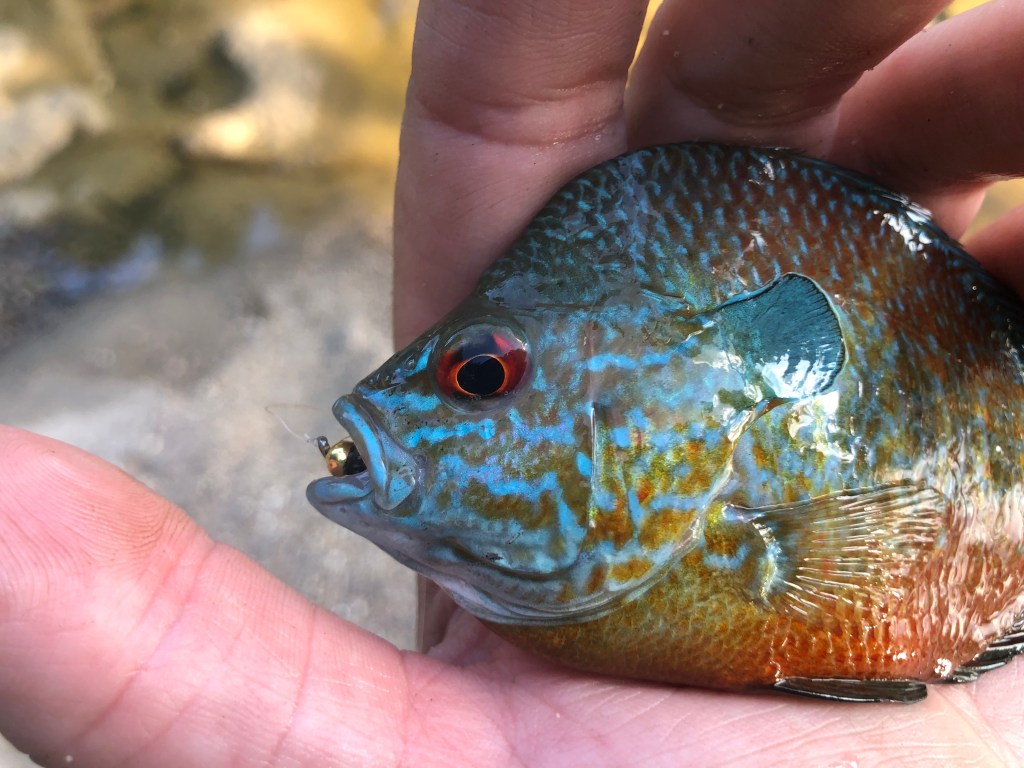
Green sunfish

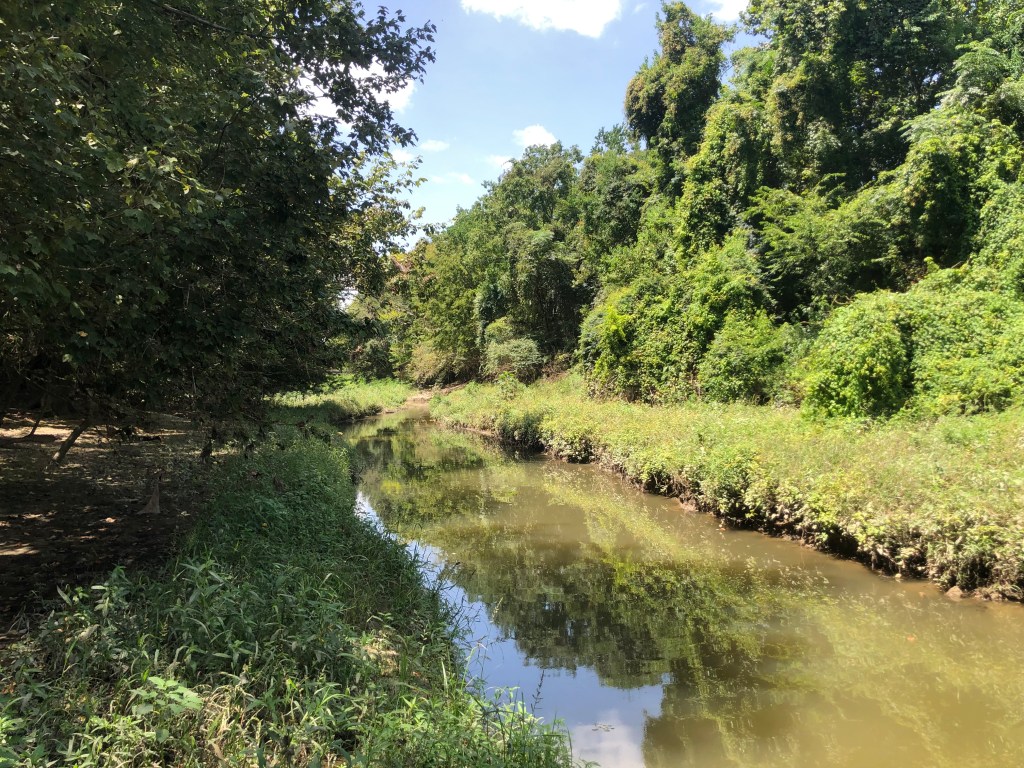
With four bridges on this ditch in less than a creek mile there’s no mistaking this for one of those upland streams I love to fish. The constant hum of traffic and the trash lined banks made that very clear. With the pictures though I do hope to convey that despite their surface appearance these ditches do have life in them and the greenspace they provide to wildlife is important in our urban/suburban environment. Someone needs to show love for these places and the fish that call them home.
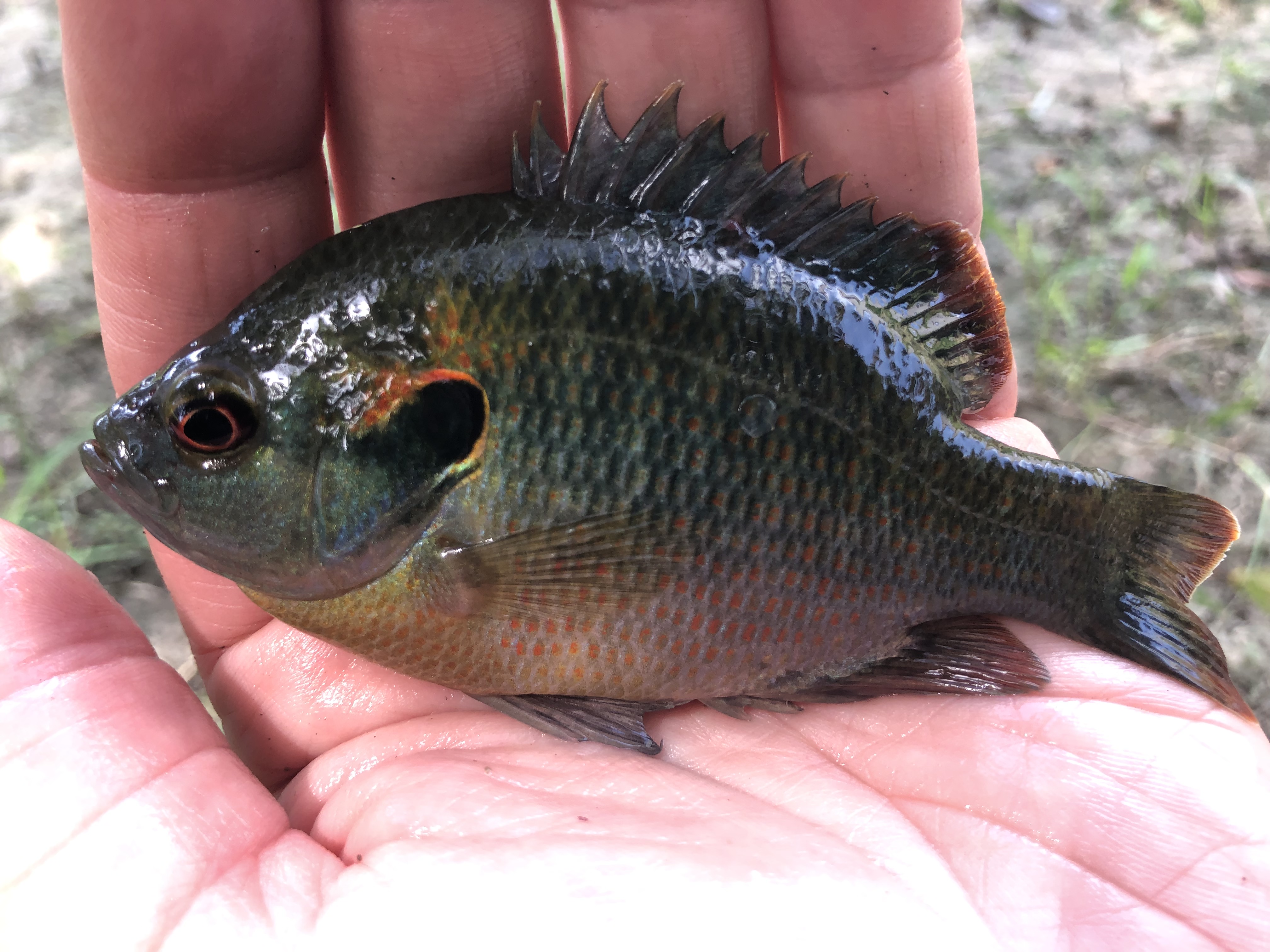
Redspotted sunfish

I ended the day with a nice little mixed bag and a new appreciation for a ditch around the corner from my house.

While walking the bank back to the truck I thought about how nice it would be if my fellow Baton Rouge residents actually cared about their waterways and the floodplains they run through. If parks were developed with sidewalks and paths that ran along the stream to provide access and recreational opportunity. It would be a resource for the public. It would also make them suddenly visible for all to see. Then maybe the litter problem would be forced into their consciousness when they realize they don’t want their greenspaces to look like a landfill, which is often the experience when you spend time on the drainage ditches that run through our city. I see the potential to turn these ditches from brownlines into bluelines, I just wish others did as well.

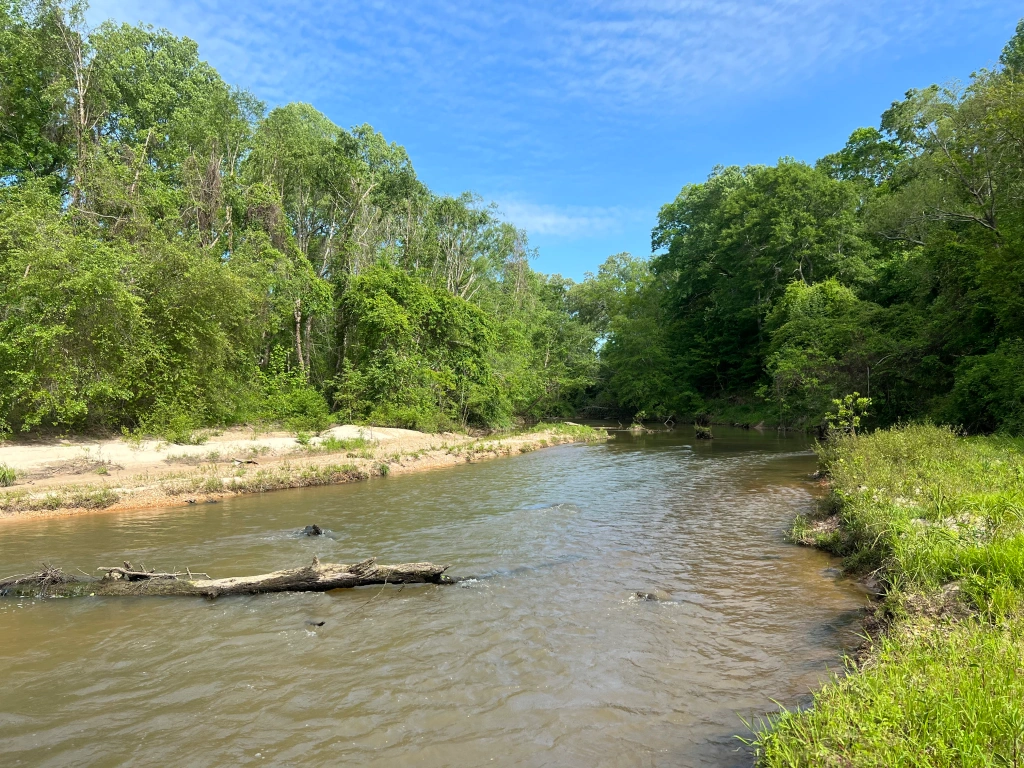
It happens every year. When the azaleas start blooming the desire in me to fish a creek is at it’s strongest. The creeks are calling, beckoning me to wet my legs in the cool water, and tease some poppers around fallen timber in search of spotted bass and longear sunfish. This year that flame was fanned a bit more by my friend Brian, who had just recently taken a trip to Arkansas in search of smallmouth bass. His pictures were inspiring and as soon as I had a chance to hit a local creek I did.

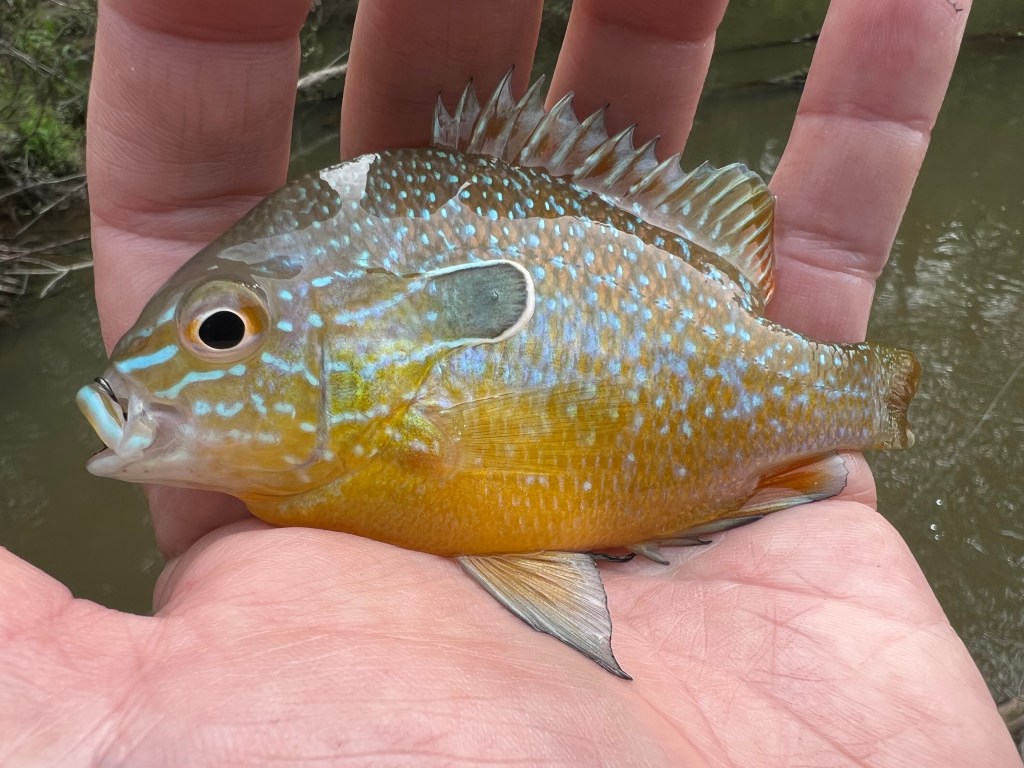
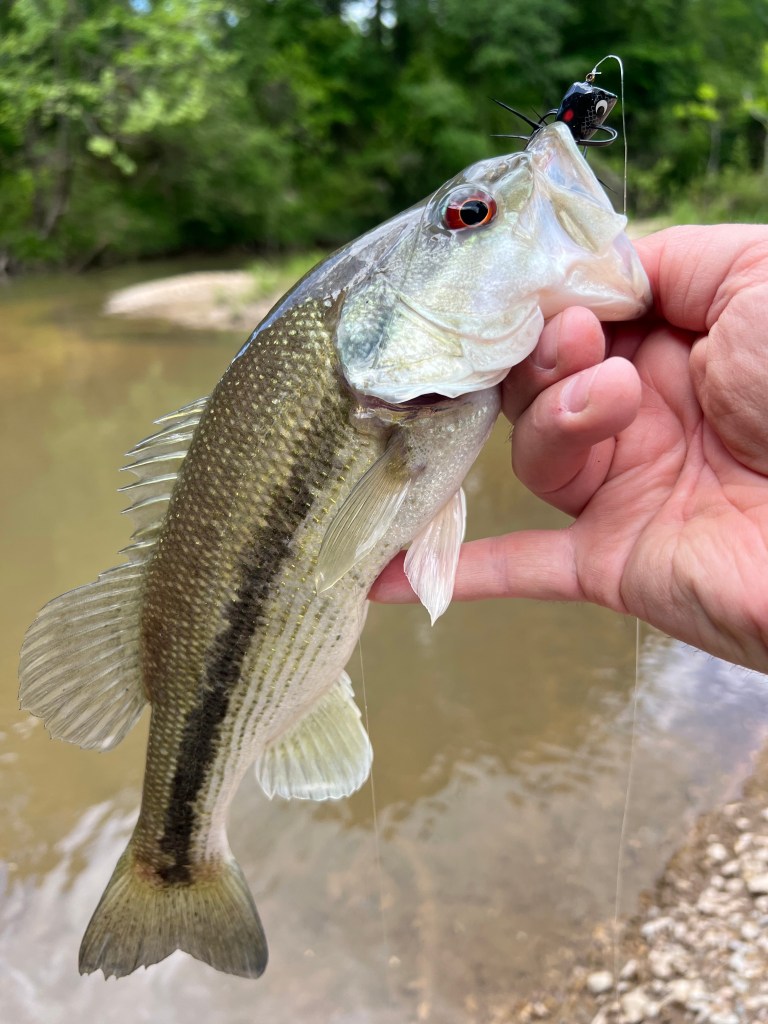
It didn’t take long for me to catch my first spotted bass of the year, that happened right under the bridge where I accessed the creek, it fell for a little black Clouser minnow. I soon switched up to a popper-dropper so I could target the bass and the sunfish at once and eventually I coaxed a little largemouth from a lazy side channel with one of Ron Braud’s beautiful stippled poppers that I had won from last year’s Red Stick Flyfishers’s Jambalaya Challenge. That same lazy side channel then produced a couple beautiful longear.

There’s been recent research to suggest that the longear sunfish complex are comprised of more than just the two species that we currently recognize; Lepomis megalotis(longear sunfish) and Lepomis peltastes(northern sunfish). It’s been proposed that there are as many as six ancient lineages of longear sunfish (that includes northern sunfish). According to the paper, the longear we catch in the Amite River watershed, like the ones above, are suggested to be Lepomis solis.

The variability in the appearance of longear sunfish across their range has been pretty obvious to the discerning fisherman for quite some time, hell, there’s even a Facebook group dedicated to this observation: Lepomis Megalotis Morphology Project. When you see specimens from totally different watersheds side by side it’s easier to note the differences. The longears I’ve caught in Bayou Sara or Thompson Creek, which both drain into the Mississippi River, certainly look different than the ones we catch in the Amite, or any other northshore river, so this research doesn’t come as much of a surprise. Call me a splitter, but this research is very welcome, I’m definitely all for it.

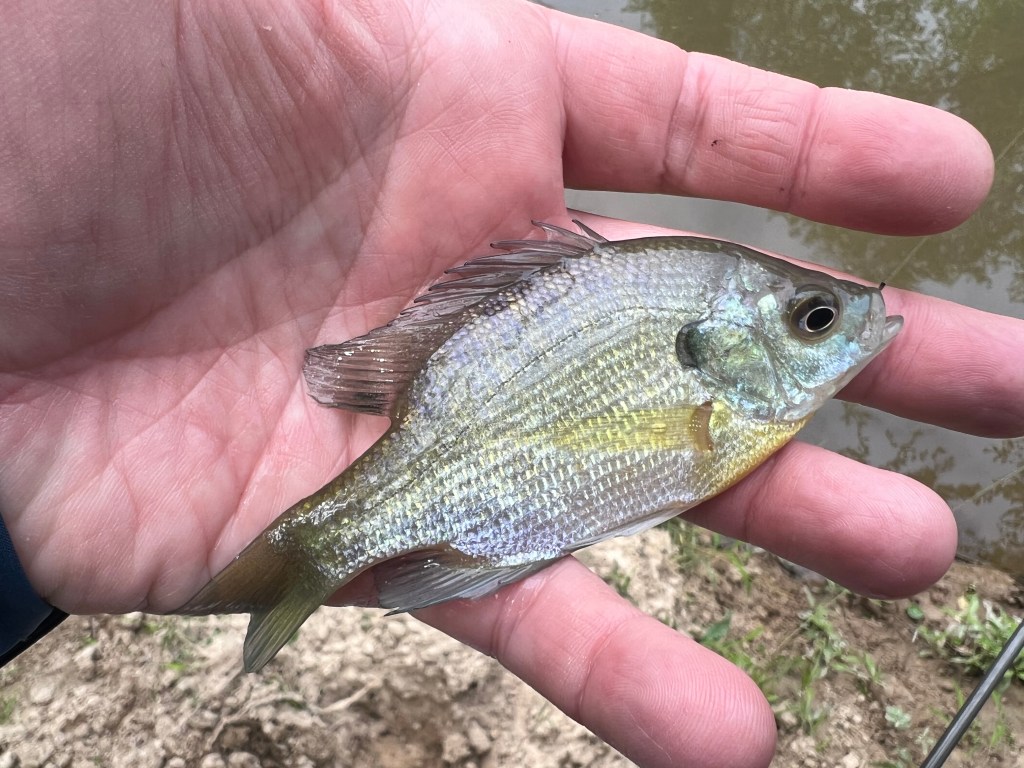
I continued my way through the stream catching bluegill, shiner, more longear, and eventually another spotted bass. I swear I use to catch more spotted bass in these streams when I first started fishing them, but then again that was pretty much the only species I targeted. These days I’m trying to catch everything I see, which has me doing a lot of switching of flies from poppers to nymphs to streamers to size 26 micro-nymphs. It takes away from the time my fly is in the water, but I find it pretty rewarding to catch a wider variety of fish.

On my way back to the vehicle I found another lazy side channel that was loaded up with topminnow, some looked large enough to catch with a fly, so I re-rigged and spent some time dapping for them. It’s a little tougher to do it with a 6wt than a 1wt, but I got the job done and hooked one of the bigger ones. I made it back to the bridge and tied a popper back on to work the pools that formed behind the stacked up debris that clings to the pylons underneath seemingly every bridge around here I walk under. I don’t think there is a big budget for debris cleanup on our waterways, which is probably not the best thing for flooding, but it does increase the fish habitat within a river, so I’m not really complaining. Sure enough the best bass of the day was happy to explode on my black BoogleBug and I was as happy as a river clam when it happened.

The creek was calling and I’m glad I listened, it was a great day on the water, experiencing nature. No cool agate finds on this trip, but I was pretty happy with the diversity of fish that came to hand. I always tell myself that I shouldn’t wait so long before my next creek fishing trip, but then life always finds a way to interject. Hopefully this post will inspire someone out there, the way Brian’s pictures inspired me, to hit up a local creek and spend half a day on the water just taking it all in.

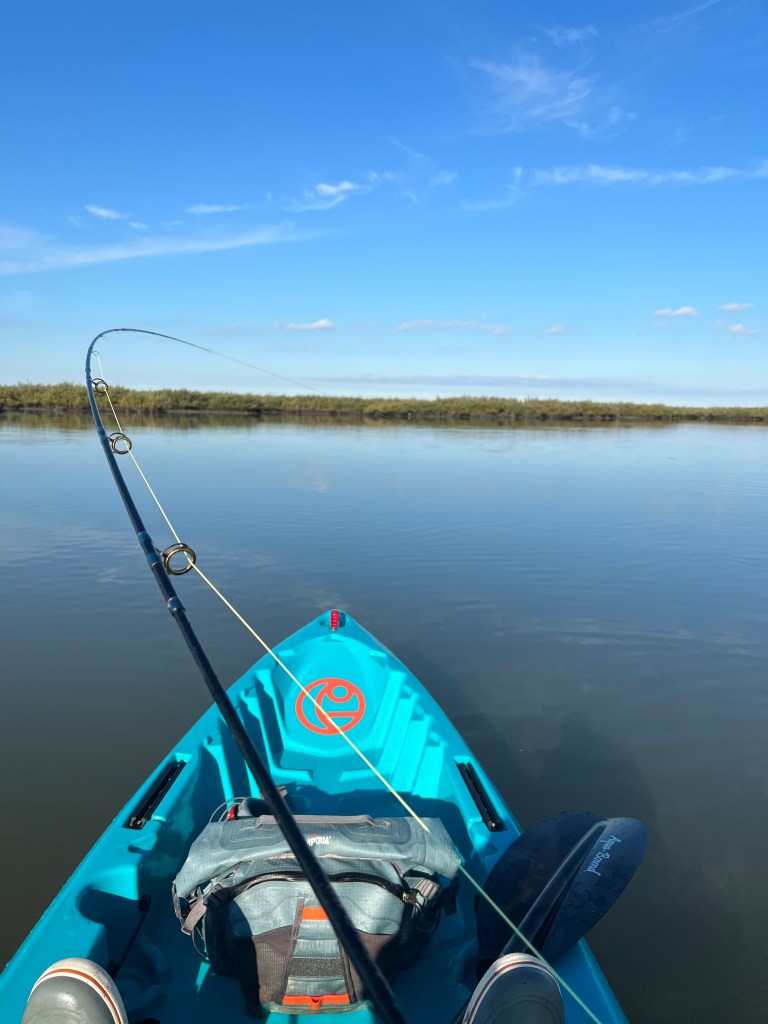
I had another opportunity to take the new kayak out to the marsh one day last month and man did I hit it right!

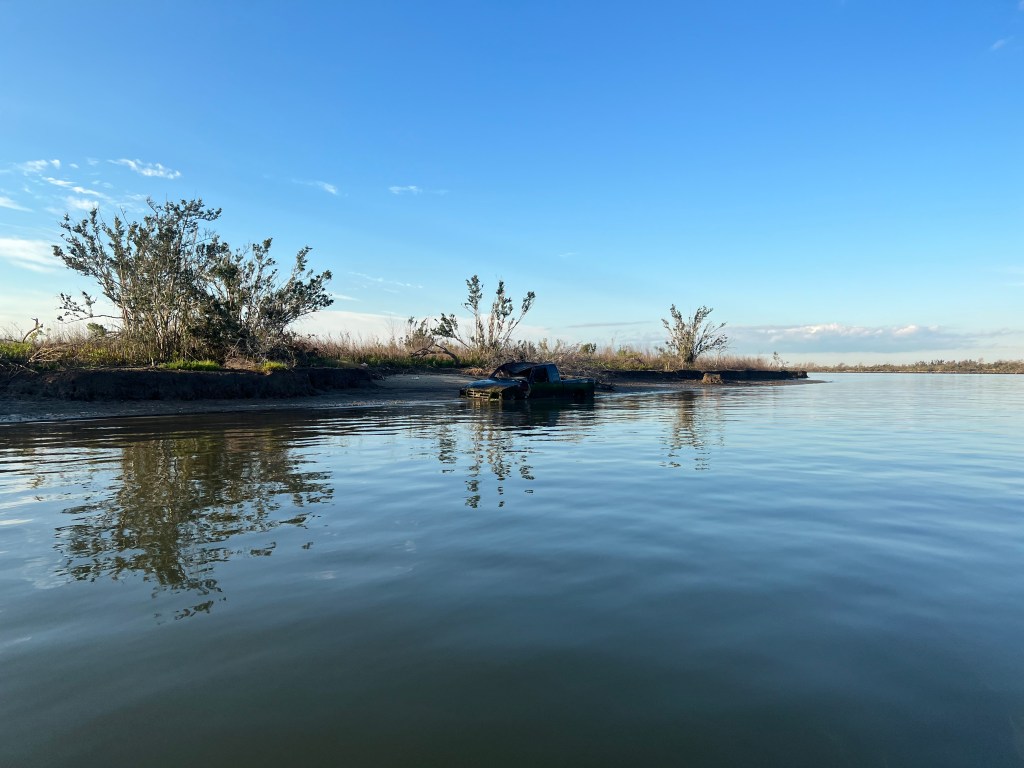
The last two trips in the kayak I’ve failed to wake up early enough to make it down there before sunrise, which is not a big deal to someone who sightfishes as much as I do, but it prevented me from making a longer paddle at the beginning of the day last time and I was determined not to do it again this time. It at least gave me an opportunity to see this stranded Ford Ranger, across the canal from the nearest place a vehicle should be, in the daylight. Thanks Ida.

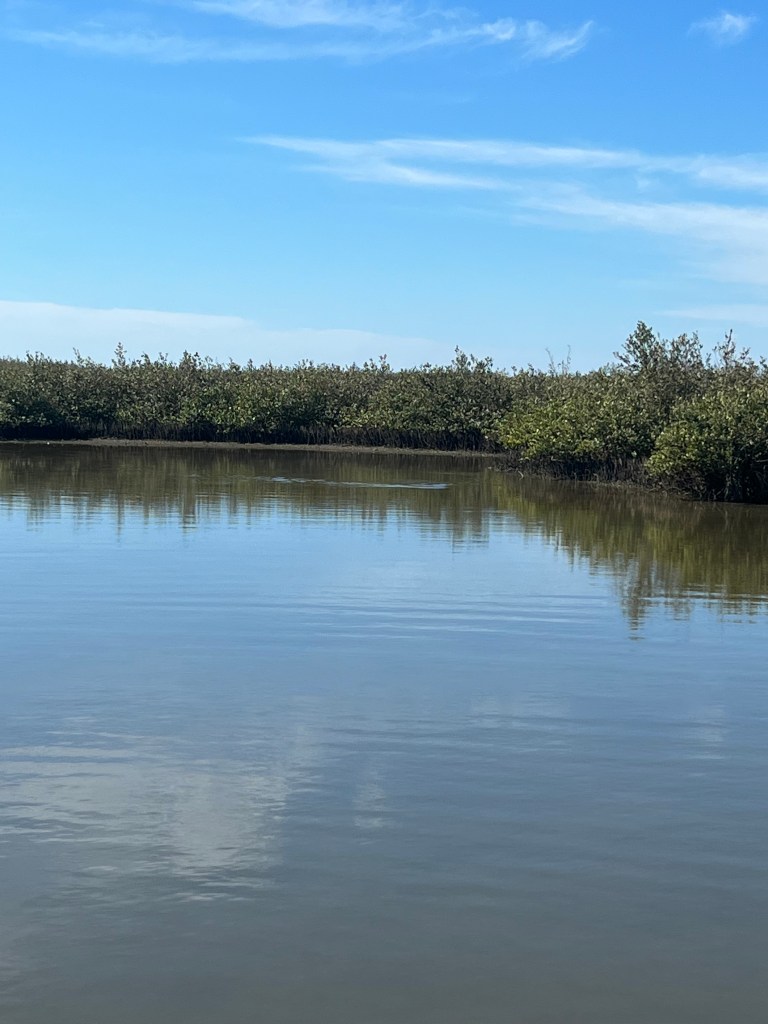
It was near-perfect conditions though and I couldn’t have been happier about it. Apparently the fish were just as thrilled as very shortly after I got to the first flat I wanted to fish I started seeing activity.

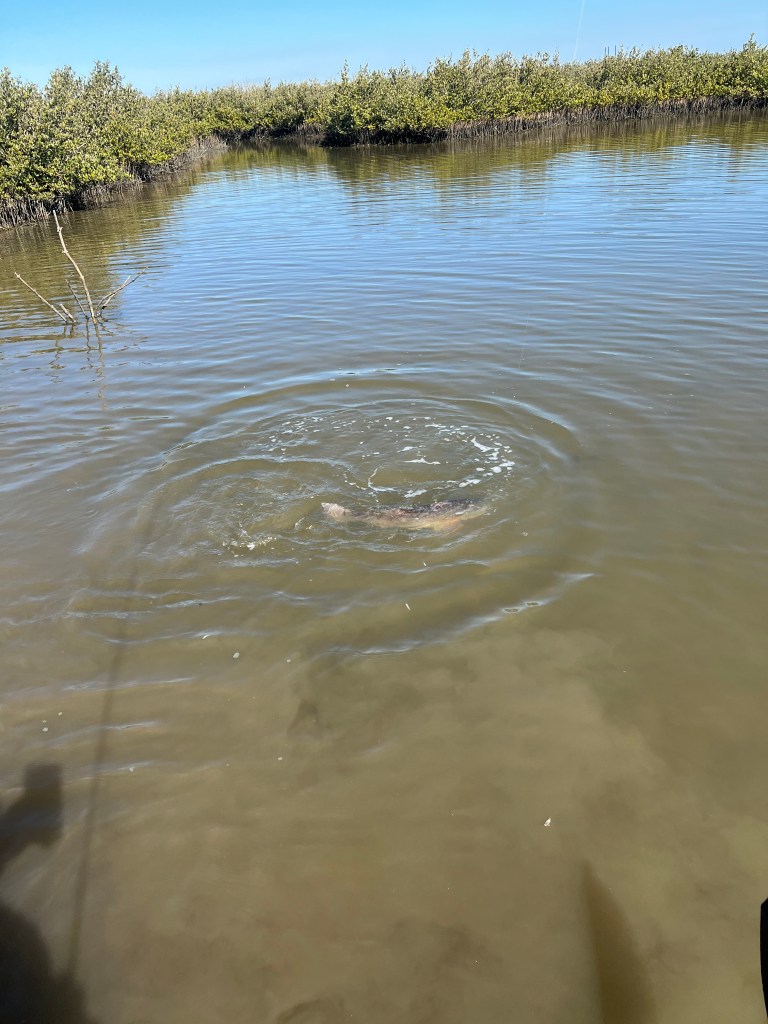
After seeing a couple of bigger than average redfish and blowing shots at them the thought began to creep into my mind about my previous trip and how awful I was at making the most of my chances then, somehow I shook that mindset though and was able to connect on the next opportunity. I spotted a big black drum feeding on bottom and what I thought was another black drum with it. I made a cast toward the big drum and he began to track the fly, but the other fish beat him to it and I set the hook. It was a big fish and very soon I could tell it wasn’t a black drum.

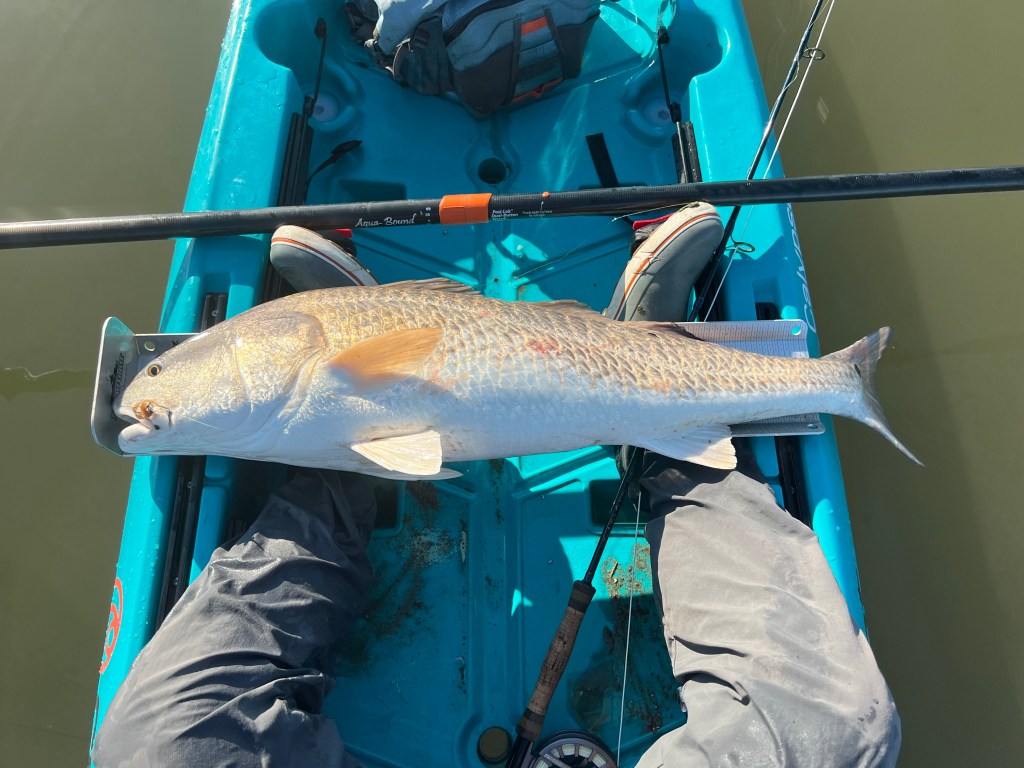
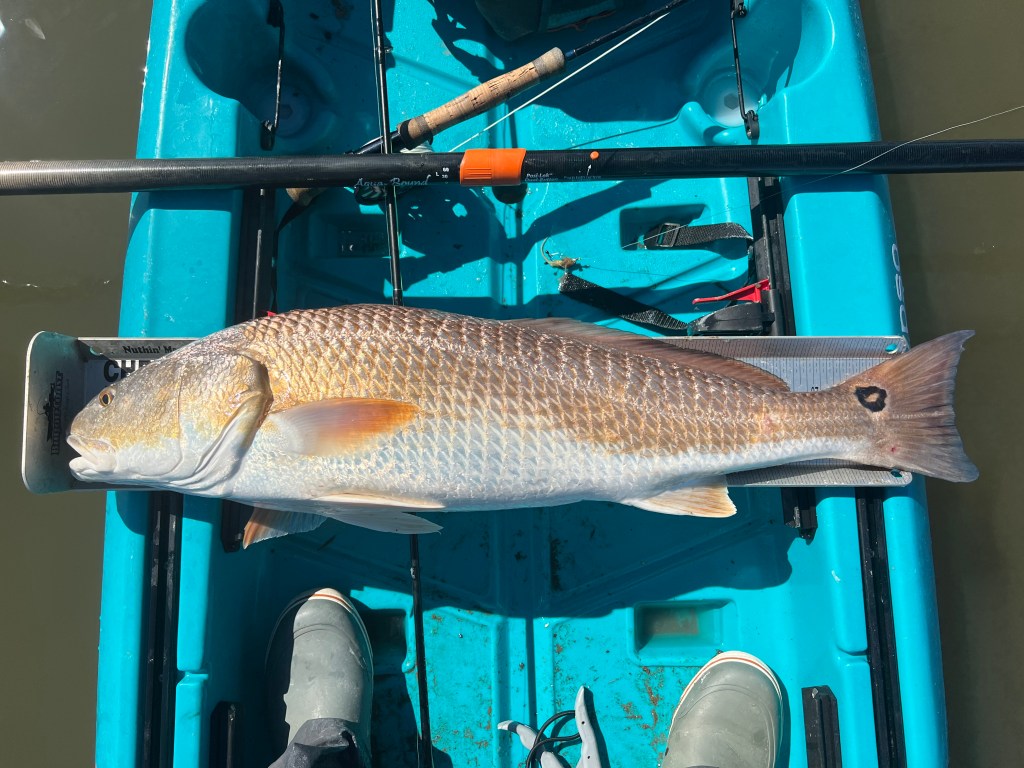
This red gave me some good runs and put up a solid fight on the 8wt. I was after a redfish over 30″ for the Massey’s CPR tourney and it had been a while since I eclipsed that mark on the fly from the kayak, but this one was at least 5″ past my 30.5″ board, so goal accomplished for the day.

I didn’t have my 45″ ruler on board because for some reason the 321 ruler wasn’t stated in the rules as an approved measuring device this year for the yearlong Massey’s CPR tourney, so I quit carrying it around. This fish had to be submitted as 30.5″, which tied a previous submission by another participant, so it’ll only be good enough for 2nd place redfish on the fly in that tourney, despite it clearly being longer. I play by the rules and sometimes those rules are pretty dumb. Still I like the Massey’s CPR tourney because I can participate on almost every trip I take in the kayak, there’s a fly rod category, and I don’t have to keep the fish. It’s the only kayak tourney I continually participate in. I’m over the conventional meathaul kayak tourneys. I won one once, I’m happy with that. Sorry for the aside, back to the fishing.

I made the decision to head back to the main canal and fish the flats there on out to the bay, thinking I’d keep seeing big fish out there. The fish weren’t there though, they were on the shallow flats in the marsh. It wasn’t until I made it back into a marsh cut that I started seeing fish again. After that it was on.

One of my favorite catches on the day wasn’t the biggest fish, but the situation was pretty awesome. I got to a pond that was super shallow. Shallow to the point where I commented to myself that no self-respecting redfish would be caught dead in that pond and wouldn’t you know there was one way in the back happily cruising with his back out of the water. There is no shallow that’s too shallow apparently. There was only one way into this pond and I was at the opening so I just waited for him to swim into casting range. I even captured video of him with my phone before I put it down and made a cast to him. I put a fly out in front of him, twitched it a couple times, and he pounced on it, much to my delight! It’s nice when you don’t screw it up!

After catching those two redfish, which were both around 28″, I spotted a little shark crusing around the shallow flats of the marsh. I made a few casts his way, but could never get him to eat. I popped back out into the bay and then made my way to another marsh cut back into the marsh. After traversing that cut I made it to a big flat at an intersection of waterbodies where I could see black drum were actively feeding. They were so focused on whatever it was they were rooting around for on the bottom that I could get real close before casting and it didn’t take long to hook up with one.

I then hooked another.

These weren’t the biggest drum I’ve ever seen, but black drum over 30″ are pretty heavy fish and fun to fight on the fly rod. My 8wt was definitely doubled over as I fought to bring these guys within arm’s reach of the boat. My net was far too small to handle them so the fish grips had to work.

Just up the bank from the black drum I spotted a good redfish working the shallow bank. It gave me a good opportunity at one more redfish over 30″ and I was lucky enough to make my shot count.

It was a pretty fish with bullseye spot on his tail and a great way to end the day. I couldn’t believe the luck I had on the day and the fact that almost every fish I came across was a big fish. There’s something to be said about mild late winter days in the South Louisiana marsh – the big fish just seem to come out this time of year!

This was one of those days that make you remember why you put in all the hard work trying to fly fish from a kayak for bull redfish. It’s not easy. Nothing about the process is easy. It’s a lot of work. It’s downright difficult. It would be much easier to use a boat. It would be much easier to throw conventional tackle. It would be much easier if I could spend an endless amount of time on the water and know exactly where these fish are at all times. When it all comes together like it did on this day it makes it all worth it. This doesn’t happen nearly often enough, but when it does happen I’ve learned to cherish it.