Archive

Camping

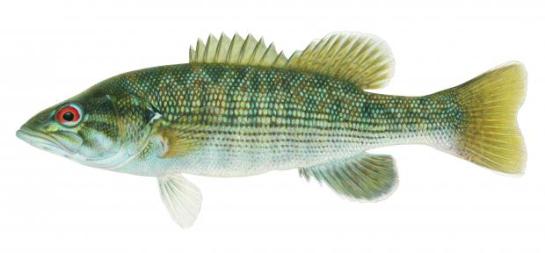
Blake and I completed the Mobile Basin redeye bass slam a couple weekends back, catching the 4 native redeye bass of Alabama – the Tallapoosa, Coosa, Warrior, and Cahaba.  It was an awesome road trip through the state where we fished and camped on all sides of Birmingham.  The trip was every bit as fun as the cutthroat slam trip we took in Utah last fall.  A bit of backstory for anyone interested:

Earlier this year my buddy Matt published a book about fly fishing for redeye bass.  It was a good read about a fish that a lot of people down south overlook – the redeye bass.   The book brought back memories of the fishing I did when I lived in Northern Alabama for a year after college.  Admittedly though I never caught many redeye bass as I lived in the Tennessee River watershed.  Fishing dominated my life then and has been a passion of mine ever since.  The book profiled the redeye bass and the work that’s being done to define the species into seven further distinctions.  A redeye bass trip was moved higher up the idea list for me after reading the book, but then in March, it was moved to the top as Matt and a few other folks got together and came up with the idea for a redeye slam, and y’all know I just love a slam trip.  So after details of the Redeye Bass Slam 2018 were released I went ahead and began planning to complete the 4 species Mobile Basin redeye slam in Alabama and then finish the full 7 species redeye slam with a trip to Georgia at a later date.

Of course any time I’m planning a fishing trip I ask Blake if he wants in and usually it doesn’t take a whole lot of convincing to get him aboard.  After that it’s just picking a date to go and then we hope for the best.  We settled on early May to at least complete the Alabama portion of the slam as we’d be hammock camping and anyone from the south knows the further you get into summer the more unbearable it is to be outside, let alone try to sleep.


One thing that the redeye book lacks is any kind of range map of where you may find the fish, so embedded above is a map I created of the watersheds where redeye bass live in Alabama.  One thing to note is that redeye bass aren’t found below the Fall Line so don’t waste too much time on water below an imaginary line that runs from Tuscaloosa – Montgomery – Columbus.  I included the range of the Chattahoochee bass as well since it slips into the state.  I don’t know that they are found in any streams in Alabama.  We will target Chattahoochee bass in Georgia later this summer.  In order to try and catch the 4 different Mobile Basin redeye species in a 4-day trip we set out before dawn on Thursday and drove 6.5 hours to where we’d fish that afternoon for our first redeye species, the Tallapoosa bass.

Tallapoosa_bass

IMG_5256

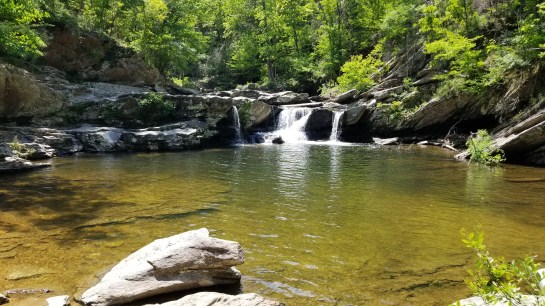
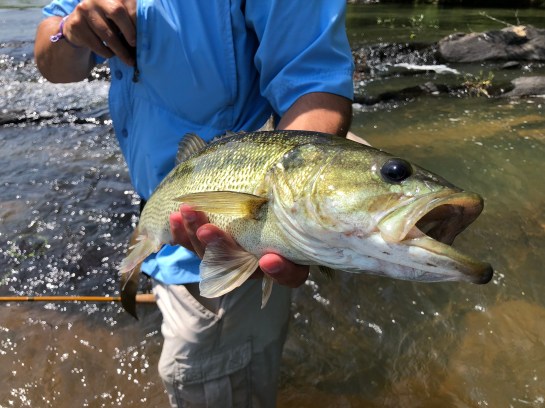
We fished a tributary to the Tallapoosa River that was loaded with shoals and grass with lots of shallow and deep water throughout – great river bass habitat.  We’re small water guys and even though this was a tributary it initially felt like big water.  Neither of us has ever fished shoals like this, so it was a new experience for both of us.  The water really didn’t feel that big once we started fishing and it didn’t take long to get into fish.  In fact the first set of shoals we fished were the most productive.  Blake got on the board first with a decent Alabama bass.

IMG_5252

IMG_5254

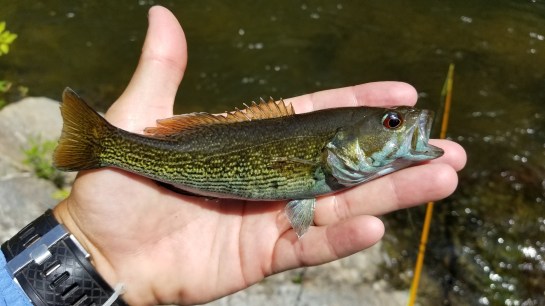
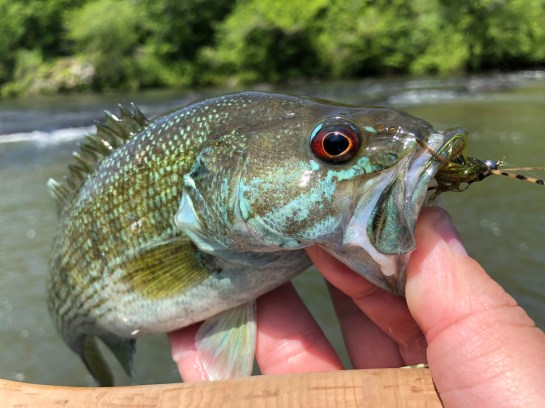
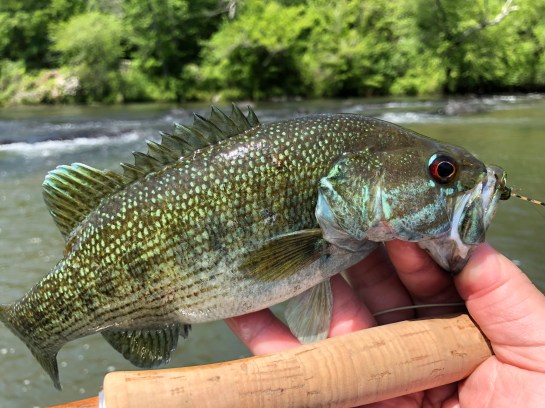
Soon after I caught my first Tallapoosa bass, who took a buggy olive stonefly imitation I was hanging off the back of a hopper pattern.

IMG_5257

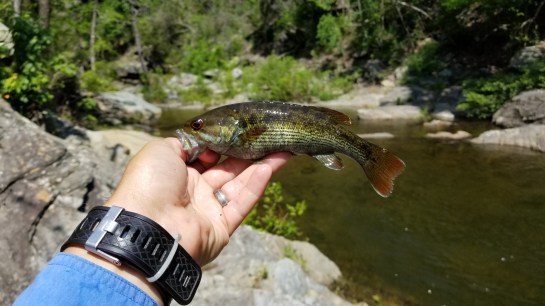
I followed that up with another Tallapoosa bass, this one though was loaded with iridescent blues, it was a beautiful specimen, no doubt the prettiest fish of the day for me.

IMG_5263

IMG_5262

Blake soon caught a Tallapoosa bass of his own and the pressure of getting that first fish of the slam was off for both of us.

20180503_131857

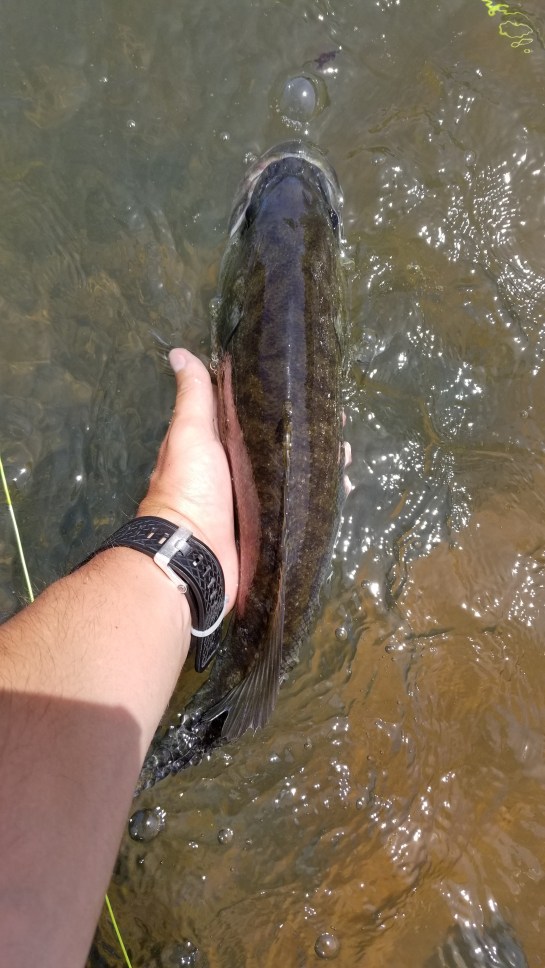
After that it didn’t take long for Blake to upgrade his Alabama bass.  His dropper rig was hammered in some slower water toward the bank where a tree provided the perfect cover.  The big Alabama bass would be the largest fish of the trip that was caught and if you’ve been following the blog the past few years that’s just par for the course for “Big Fish Blake”.

IMG_5283

IMG_5280

20180503_140224

The action slowed down after the big fish, Blake and I did manage to pull out a few more redeye before the day was done, including one by Blake that pushed the 12″ mark.  At least that’s what we estimated it to be, we measured it against the rod, but truth be told I’m not sure we ever went back and measured the rod.  Either way, it was a fine fish.

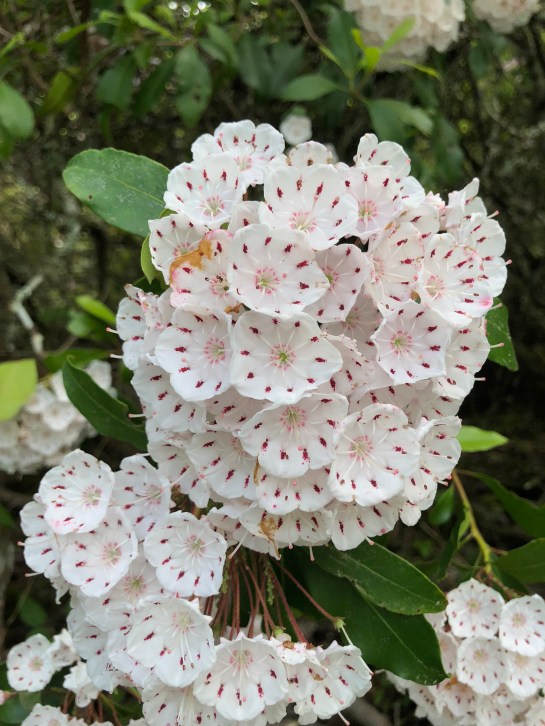
IMG_5285Mountain laurel (Kalmia latifolia)

IMG_5286

20180503_144622

20180503_144633

IMG_5289

20180503_161450

After things went flat we got off the water and hit the road toward our first campsite.  We had an hour drive ahead of us to the Talladega National Forest where we’d camp in the shadow of the tallest point in Alabama, Cheaha Mountain.  Ribeye and beers that we bought at Filet & Vine in Montgomery were calling to us from the Orion cooler in the back of my truck.  We were in such a rush to get fishing that afternoon that we neglected to make or pick up lunch, so hunger was almost an afterthought at this point.

IMG_5296

20180503_202157

I’m happy to report we were able to successfully set up camp and get a fire going before dark and before long we were tearing into some seriously good steaks.  Big thanks to Josh Rhodes who met us at the campsite with more beers, butter, and for helping collect wood for the fire.  Day 1 was a success and we had another big day planned for Day 2 where we had the Coosa bass in our sights and then a trip up to the Bankhead National Forest to camp.

It took a while to go to sleep the night before, thanks to the noisy neighbors, but once I fell asleep I was out.  It was the only night we would be sleeping above 10,000 ft and I feared it would be the coldest night of the trip, but it wasn’t, it was actually quite mild and I was very comfortable.  I needed a good night’s sleep too as we prepared to hike in about three miles to the lake we wanted to fish.  This time we would be targeting arctic grayling, another new species to us.

Arctic_grayling_JosephRTomelleri_copyright

We planned to fish Marjorie Lake, a lake that according to Utah DWR was last stocked in 1952 with grayling, so the population has been naturally sustaining itself ever since.  I don’t think grayling were ever native so Utah, so I’d say that was as close as we were going to come to a natural population – at least on this trip.  Here’s more from Utah DWR about fishing for grayling in the Uintas:

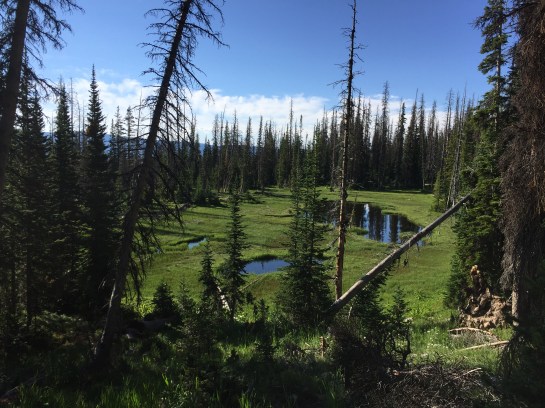
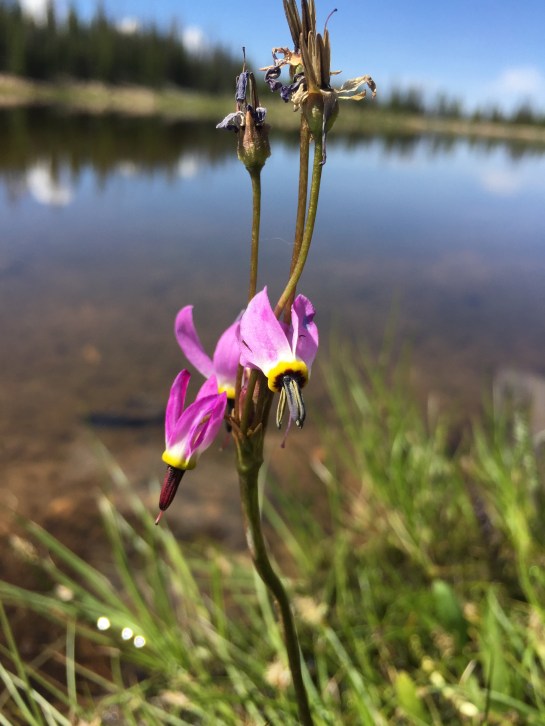
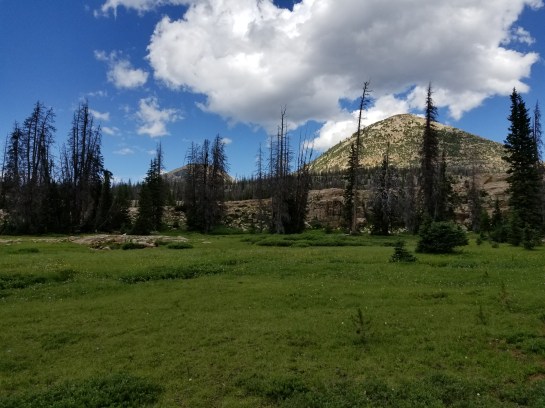
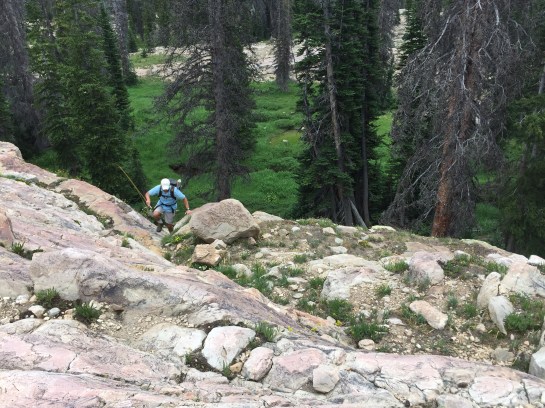
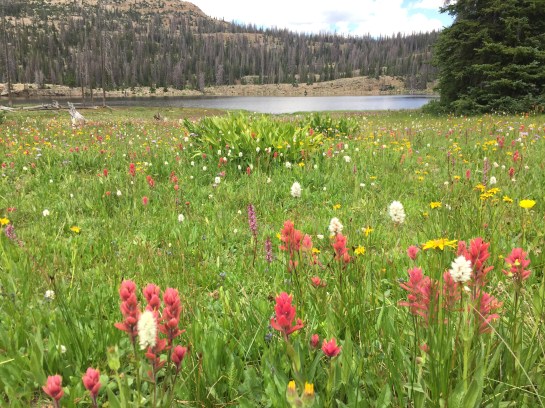
The hike in from the Crystal Lake trailhead was relatively flat, there is one mountain you have to skirt around, but the grade is not killer.  The hike takes you past several ponds, open meadows full of wildflowers, a few creeks, and it has great views of some of the nearby mountain peaks, like Mt. Watson for one.

IMG_2985

IMG_2986

IMG_2990

About two miles in we ran into some local wildlife, a herd of cattle.  It’s kind of amazing to see them at such a high elevation.  They had a bull with them who was keeping watch, thankfully he wasn’t aggressive and we were able to navigate around them.

IMG_2991

IMG_2992

IMG_2993

IMG_2995

I had some time to think during the hike and I was a little nervous that when we’d arrive at the lake we’d find that it was just like the lakes we fished yesterday and action was going to very minimal – I didn’t know what to expect having never been there.  The good thing was that there are several other nearby lakes so we had options should one not work out.

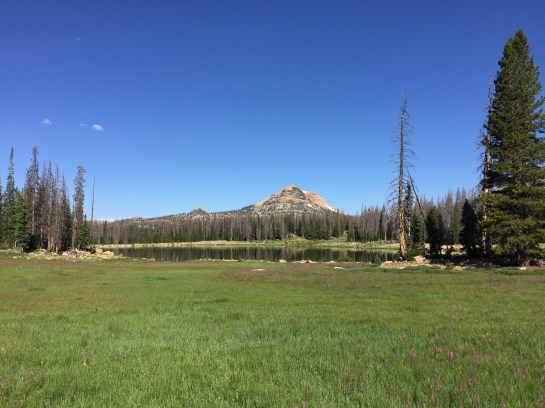
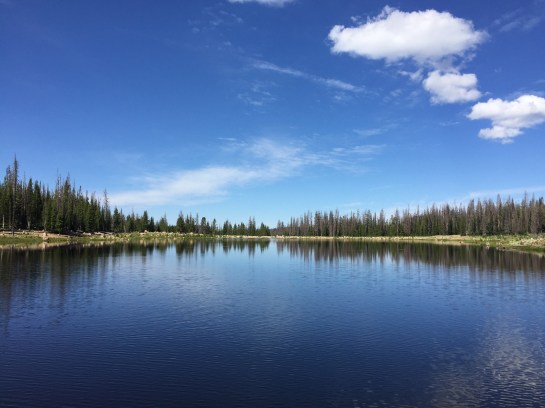
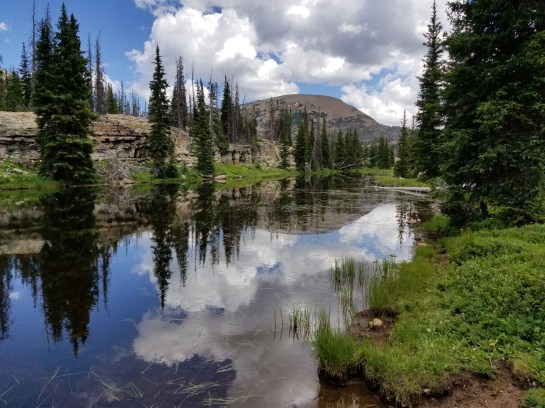
The lake was so beautiful at first sight that any kind of mild apprehension I had of how the day would go vanished, because even if the fishing sucked, at least the scenery didn’t.

IMG_3001

IMG_2999

When we got alongside the lake we noticed several rising fish just at the edge of our casting distance.  There wasn’t any discernible bug coming off the water so I tied on a Griffith’s gnat and hoped for the best.

IMG_3003

IMG_3008

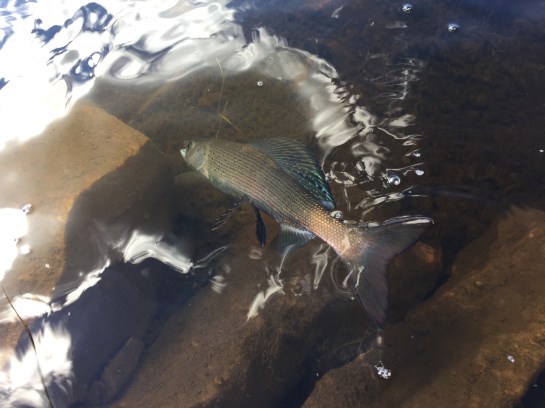
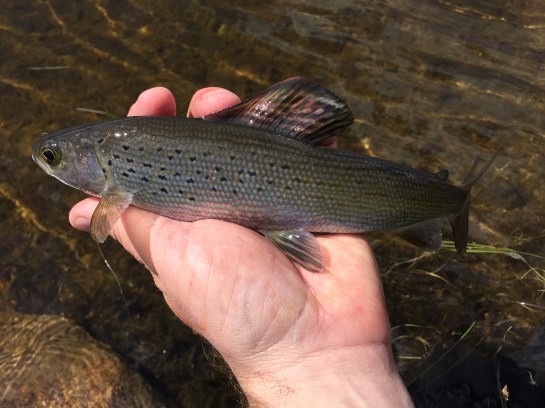
After a few misses I was finally able to get one on the line.  They have very quick takes and you really have to be ready to lift the rod when they eat.  I also suspect we were around a lot of small fish and they were just a bit harder to hook.  Catching them was just a matter of casting to a rise ring and waiting for the eat.  If you could get it in the ring shortly after you saw one then chances were good it was still in the area and would find your fly.  Thankfully the fishing here would not suck!

We started making our way around the lake, looking for bigger fish.  Fish were rising all around the lake so it wasn’t like we were leaving fish to find fish.

IMG_3014

IMG_3015

I didn’t have to go too far to find the big fish on the day.  I made it to a point that was surrounded by deeper water and cast to a rise out in the deeper water and was rewarded with a good eat from a solid fish.  With the water being a bit deeper any fish with size put a bend in the glass rod and this one was giving me some solid runs.

IMG_3020

IMG_3026

IMG_3030

I don’t know what his size was, I just know he was the biggest on the day, and he was bigger than I anticipated we’d run into.  I caught a few more fish off that point before I caught back up to Blake.

IMG_3042

IMG_3043

IMG_3044

When I did catch up to Blake he was catching some nice fish from some old tree trunks sticking up out of the water.  Someone came up here and sawed them off years ago and now they made for great casting platforms.

20170730_110502

20170730_111128

IMG_3051

IMG_3050

20170730_105444

20170730_105526

20170730_113405

After catching several grayling we decided to make a move to another nearby lake that I read had a population of cutthroat in it.

IMG_3059

20170730_12120620170730_121754

IMG_3063

I had read some good reports from Long Pond so we decided to check it out.  The name is pretty self explanatory, it’s a long pond that is part of the outflow to Long Lake.  There were not nearly as many fish rising here, but we managed to catch a few.

20170730_122109

IMG_3065

They just weren’t cutthroat, they were brookies.  It was still a pretty place to fish though.

IMG_3064

IMG_3071

20170730_130353

20170730_125141

20170730_124700

As we were fishing Long Pond the clouds began to grow, thunder started to roll, and our once bluebird day turned into one that looked pretty ominous.  Rain started to fall and that even turned into hail at one point so we decided that we should probably hike out.  We caught our grayling, we were currently only catching brookies, and we still had a slam to complete so it was time to move on.

IMG_3077

20170730_132738

IMG_3082

IMG_3079

IMG_3087

Thankfully, we got back to the trailhead without getting soaked.  The rain was fairly light and patchy, but the clouds were still dark and foreboding, so we drove on down the mountain to go find the last campsite we’d need on our trip.  We were on the home stretch, just needed to catch a Bonneville cutthroat to finish out the slam.

IMG_3097

With it being Sunday afternoon finding a campsite was a breeze and after setting up our hammocks we headed to a Weber River trib right off the highway to try and complete the slam.  It looked fantastic from the road and I think we both thought finishing the slam today wouldn’t be much of a problem.

IMG_3090

IMG_3091

I should have known that if the only fish to attack my fly in a good pool was some kind of shiner that we’d be in for a tough afternoon.

20170730_175613(0)

20170730_182355

We covered a lot of ground, fished a lot of good looking water, there just wasn’t many fish.  I have no idea why they weren’t there, the water was a bit on the warm side, that might of had something to do with it.  Blake was finally able to catch one small cutthroat and with that he had completed his slam!  The pressure was off now for him so it was now up to me to catch one.

IMG_3092

20170730_174447

IMG_3095

I never caught one though.  It was a bummer, but we still had tomorrow.  It would be our last day to fish, so I had to complete the slam then.  We headed back to the campsite, got a fire going (with wood someone had graciously left behind), ate dinner, then called it an early night.  This time there weren’t any neighbors around to keep us up.

IMG_3096

We woke up the next day, packed up the hammocks, and headed to another Logan River trib to fish for a few hours that morning before heading south.  This was a stream I wanted to fish after looking at it via aerial imagery.  It looked like it had a lot of beaver activity on Google Earth and looked too fishy to pass up.  We hit the trail and hiked a mile or us up before we started fishing.  It was nice to have camped so close to where we planned to fish because it’s an awesome feeling to park and be the first ones at a trailhead.

20170728_083154

Once we started fishing it did not take long for me to get on board that morning and I was able to pull a nice cutthroat from the tail of a good run.

20170728_091439

IMG_2790

IMG_2786

The stream was a small one in a beautiful sagebrush prairie valley.  The first section we fished didn’t have much beaver activity at all, it was faster, with riffles and runs, much like a smaller Logan River.  It did not fish as well as the other trib we fished the day before, which was albeit harder to fish with a much denser canopy.

IMG_2792

20170728_093841

Blake wasn’t able to pull any browns out of the main stem of the Logan, but was able to connect with a good one here.  Gotta keep pace in the diversity game.

20170728_094214

20170728_094241(0)

I only managed one more cutthroat out of this stream in our short time fishing here.  Normally, I’d be disappointed in a day like that on a river at home, but I really didn’t even notice.  The scenery was beautiful, the weather was nice, life was good.

IMG_2793

IMG_2794

20170728_094932

Life was good up until we got to the section I had been drooling over while on the computer back home and there was a guy already there fishing it.  I guess he hiked past us and we didn’t notice him.  I know we weren’t deep in a wilderness area, we weren’t far from a city, and this is probably a pretty popular stream, but he couldn’t have given us a bit more room to fish?  We hiked around until he was out of sight (no trees around so this was quite a distance), gave him plenty of water to keep him busy – that section had lots of braided channels and beaver ponds.  Basically we left him sufficient water so that he wouldn’t catch back up to us.

We dropped in on another beaver complex further up and started fishing.  It was slow going, we didn’t see much fish activity and weren’t getting any bites.  We were moving fairly quickly, leapfrogging each other and before we were even out of that beaver complex here comes that guy passing us on the trail again.  My mind was blown.  At this point I was ready to just leave, but out of spite we again went around him giving him lots of room.

IMG_2795

We didn’t fish much longer before we hit the trail and hiked out.  Right before we got to the vehicle we stopped to fish a bit of fishy looking water right next to the trailhead.  We knew that guy couldn’t high hole us here because he actually passed us while we were walking out on the trail.  Maybe we southerners move too slow?

Just as in the trib yesterday Blake was able to end the morning on a high note and pulled a decent sized cutty out from under some brush.  I actually looked back at him and thought he was foul hooked on the brush, but he was actually hooked up trying to keep the fish from breaking him off.

IMG_3747

IMG_3750

It was a good feeling to end with that fish.  The Logan Canyon area treated us very well, it is a tremendous fishery and one we probably would not have fished were it not for the Cutt Slam.  I could come back and just spend the week in the Canyon and have an incredible time fishing a lot of different water, such a cool place.

It was time for us to get moving though to our next destination, so got in the car and followed the Logan on up to the head of the canyon.  Just over the pass we could see the brilliantly blue Bear Lake and the town of Garden City.  I had read that when in Garden City one must stop for a raspberry shake so we did and it was fantastic.

IMG_2806

This town is serious about it’s shakes and there were at least a half dozen within sight of the Quick N Tasty that we stopped at – quite the competition.  After the shakes we headed south to Evanston where we were able to restock on a few supplies and fuel up at a local brewery, Suds Brothers.  No trip is complete until I stop at a local brewery for a flight of beers.  Suds Brothers is no Wind River Brewing Co, but it was still a mighty fine way to have lunch.

IMG_2809

After lunch we kept going south, on our way to the north slope of the Uintas and away from modern day amenities for the next couple of days.  It was all dirt roads from here.

20170728_151427

IMG_2812

20170728_153636

20170728_155157

Our next target species was the Colorado River Cutthroat.

crct

Joseph R. Tomelleri

The Colorado River cutthroat are native, in Utah, to streams that flow into the Green and Colorado Rivers.  On the north slope of the Uintas those are going to be east of the Elizabeth Ridge.  Bear River cutthroat reside west of the Elizabeth Ridge in streams that flow into the Bear River.

Our destination was a popular trailhead near the Hewinta Guard Station for a trail that led deep into the wilderness of the High Uintas.  Just as at our last stream we wouldn’t be hiking deep into the wilderness, just a mile or so before we began to fish.

20170728_161230

20170728_161312

One cool thing about this part of the Uintas is the number of old tie hack cabins.  We saw a few while on the trail and several more as we drove on the North Slope Rd.  Lots of old railroad history in this part of the country.

We left the trail and headed down to the creek at a section where it ran through a big meadow.  I’m a sucker for high alpine meadow streams and could tell this one was going to be fun.

IMG_2822

IMG_2823

It was a small, shallow stream with lots of pocket water and at each bend it’s runs ran into slightly deeper undercut banks.  We were on fish as soon as our flies touched the water.  What the cutthroat lacked in size here, they made up for in numbers.  We caught so many fish in this creek, it was almost unbelievable.

20170728_163953

IMG_2827

IMG_2828

20170728_162503

IMG_2838

20170728_163635

20170728_180714

IMG_2831

IMG_2832

20170728_182339(0)

IMG_2841

IMG_2879

IMG_2873

20170728_164321

IMG_2861

IMG_2845

IMG_2881

IMG_2842

20170728_181623

My best cutthroat from the stream wasn’t any bigger than the others, but it was a bit more colorful.  These fish get bigger and a lot more colorful in those high alpine lakes, especially down on Boulder Mountain.  We really didn’t have time to head down to southern Utah for this trip, maybe something to think about for a future trip.

IMG_2852

IMG_2859

Fishing really just doesn’t get much easier than it was here which makes me think how great a place this would be to take a kid.  Once we fished through the meadow section the stream started to go into a forest and take on some elevation.  It was here that we headed back to the trail and made our way back to the trailhead, passing more tie hack cabins and an old abandoned truck.

IMG_2891

20170728_185003

IMG_2885

The drive east on the North Slope Rd. was a fairly bumpy, fairly slow ride.  The weather had threatened to rain on us while we were fishing, but we were able to avoid it.  While in the car though we saw rain at a distance, but also were treated with the rare double rainbow and we were left to question just what did it all mean?

IMG_2895

IMG_2898

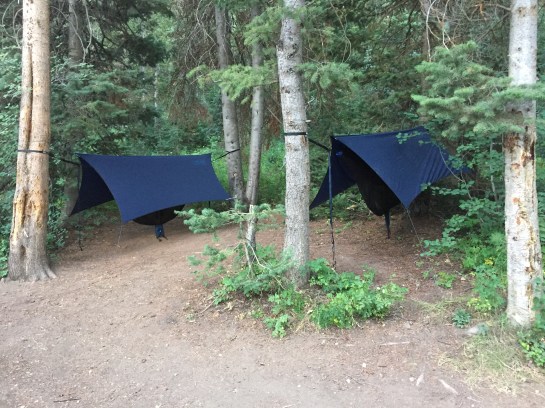
We set up our next campsite at Little Lake Lyman, which was a nice, quiet lakeside campground that had plenty of rising fish and resident bald eagle.  Pretty satisfied with the day we didn’t even wet a line.  A cold beer by the fire was good enough for me.  We’d get after the Colorado River cutthroat again in the morning, hoping to catch some bigger versions of the ones we had caught today.

IMG_3763

IMG_2902

20170728_201711

20170728_205209

IMG_2903