One of these days I’ll get up to Arkansas to fish for smallmouth.
One of these days I’ll get up to Arkansas to fish for smallmouth.
My next trip out in the kayak would be on a spring fed creek that holds the newest member of the black bass family, the Choctaw bass.
The put-in I chose to use for access had a spring right next to the launch, amazing how clear the water was in the pool where it was bubbling in. The creek was a beauty too. From afar it really didn’t look all that different from a slow bayou in Louisiana, with all the cypress and gum trees. The water clarity though, was much better than anything you’ll find in Louisiana, thanks to the numerous springs that fed the creek. There was also a large amount of submerged vegetation too, this was a very healthy environment, full of life, and it looked bassy as hell.
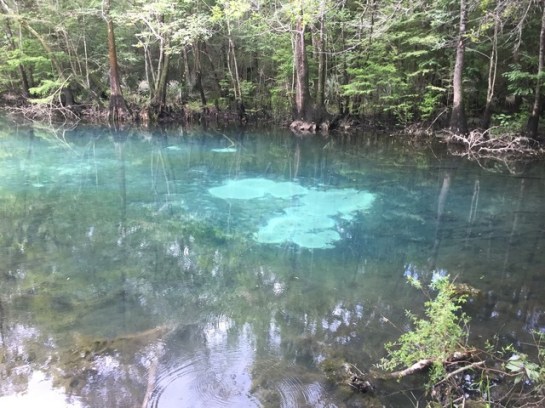
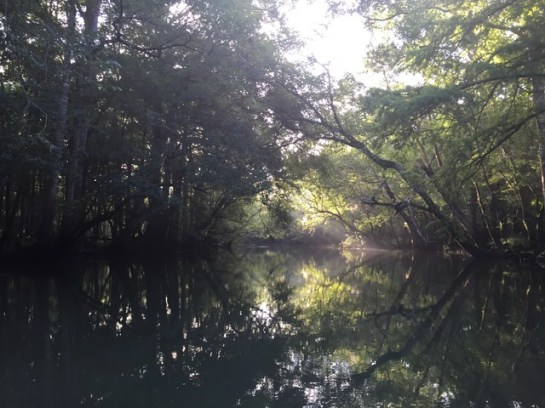


I paddled up about a mile and floated and fished back from there. It didn’t take long to land a few fish on the fly rod. The stumpknocker were plentiful as were the redbreasted sunfish.
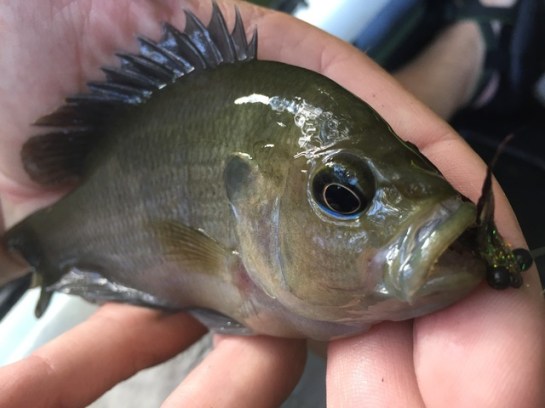


I put the fly rod down and started tossing a soft plastic around the stumps and lilies, that’s when I landed my first chain pickeral on the day.
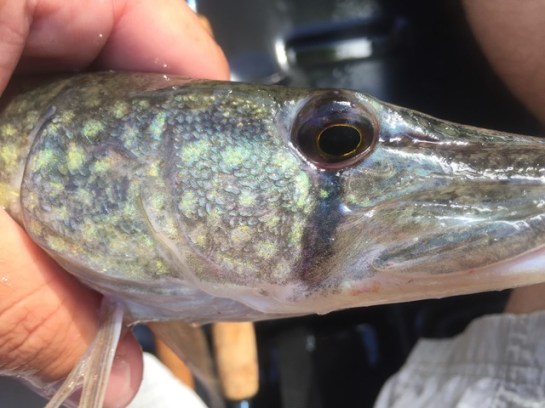

He wasn’t too big, but he was fun. I’d soon find out that this creek was loaded with them and that soft plastics were a bad choice for what the locals called jackfish. I was broken off shortly after catching my first one, then broken off again moments later. I decided that was enough of that and tied on a buzzbait. A wise man once said “any fat kid can catch a fish on a buzzbait” or something like that, so I decided it was time to exercise my inner fat kid.

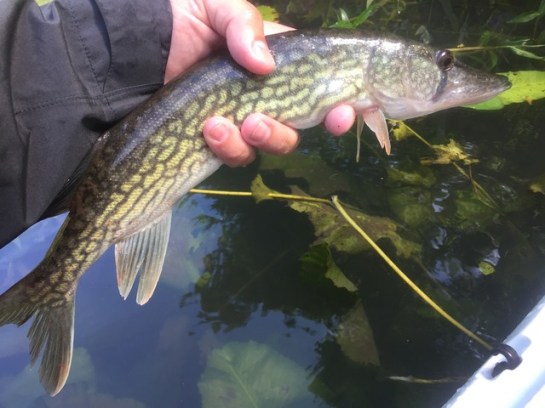

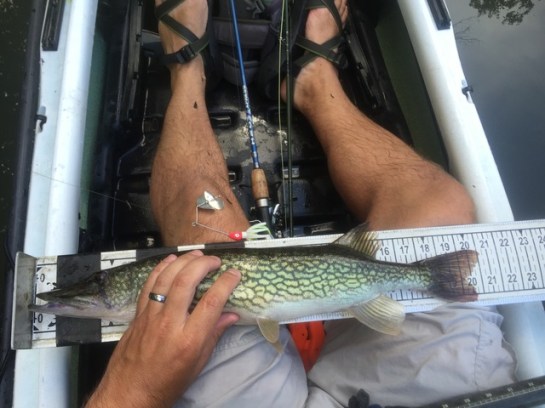
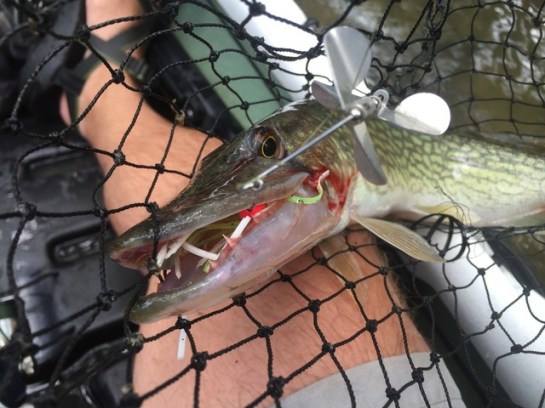
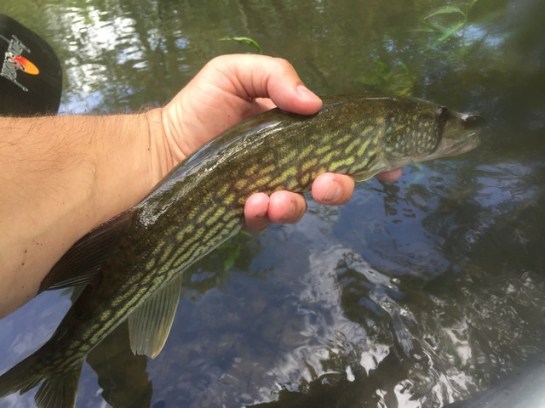
I was having a blast catching pickeral on the buzzbait. They would absolutely hammer it, sometimes launching themselves out of the water like rockets! Most were small, but a couple went over 20″. I missed one choupique that I would have liked to have back. He nailed the buzzbait, not sure how I didn’t get a hook in him, he was every bit of 30″ though.
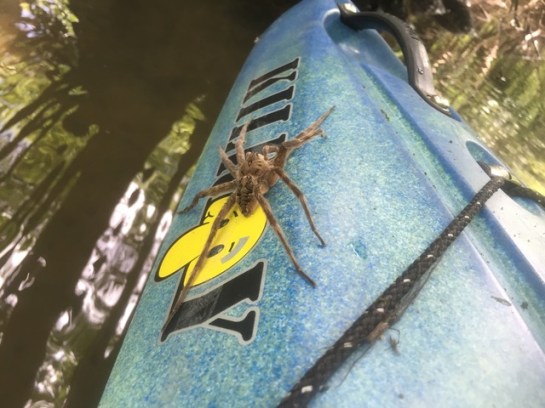
The fishing was going great, everything was visual, so I was enjoying myself, but the bass were eluding me to this point. I was finally able to change that around a group of submerged cypress, catching a healthy 14.5″ Choctaw. After the release of the Choctaw I noticed that the mother of all spiders was on my bow. I guess he hopped on from one of the nearby cypress trees. We’ve got fishing spiders in Louisiana, but I’m not sure we’ve got them that big.
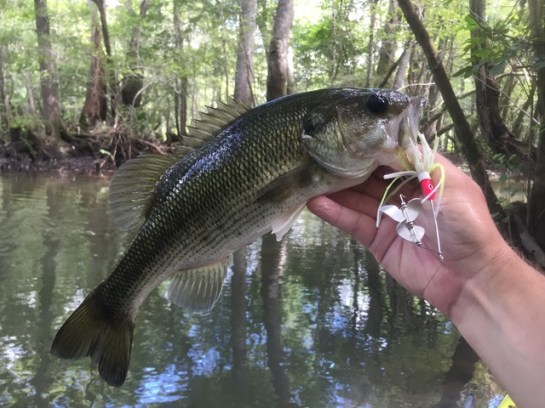
I continued throwing the buzzbait and picked up a few more pickeral, mostly in the slack water, either around cypress trees or lilies. Just before takeout I was able to pick up a couple chunky little largemouth too.
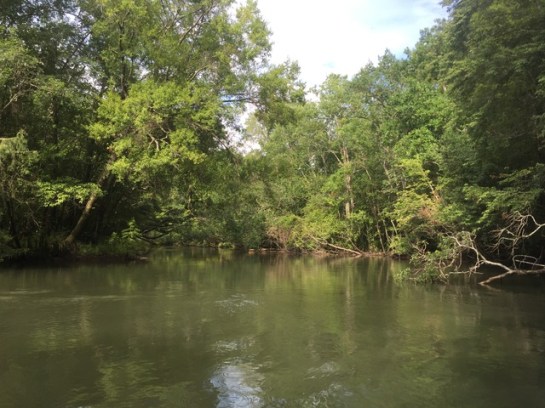

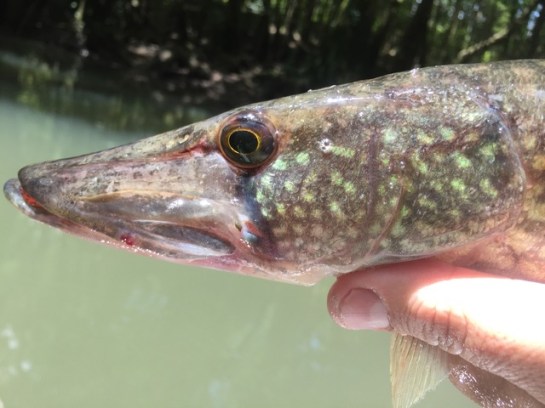
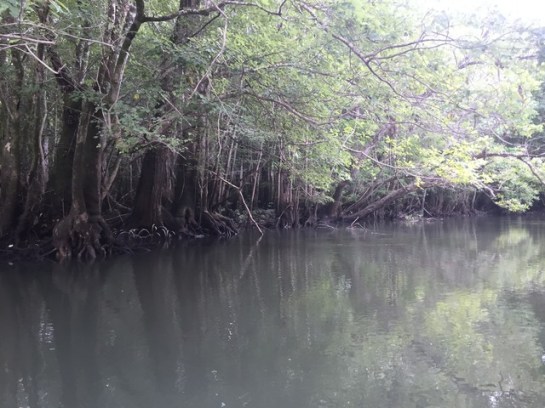
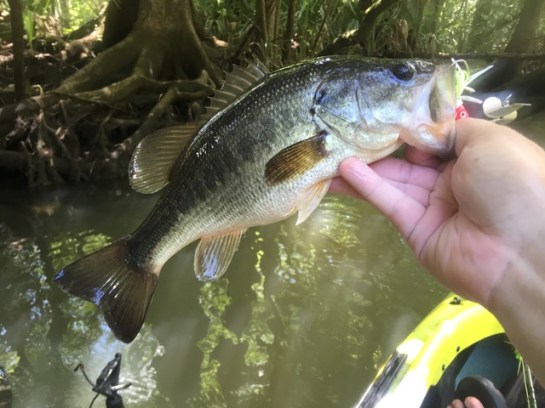

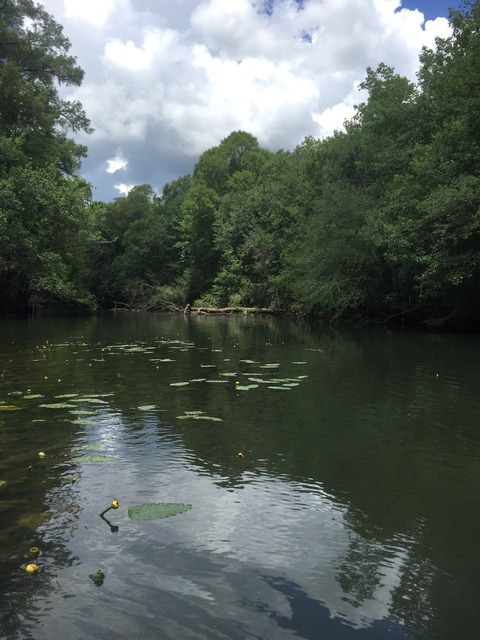
The mission was accomplished, I was able to land a Choctaw bass, on a beautiful stretch of river. The real story though was catching a dozen or so chain pickeral, or southern pike as I’ve decided to start calling them. What they lack in size they make up for in fight – what a fun fish. I might have to check out some other spring creeks next time I’m on the panhandle, such amazing fisheries.

On April 1st the Utah Division of Wildlife Resources and Utah Trout Unlimited unveiled their state’s version of the Cutt Slam program made popular by the Wyoming Game & Fish Dept. for the state of Wyoming, with the launch of www.utahcutthroatslam.org.
Here’s a brief description of the program from the site and a video:
“The Utah Cutthroat Slam is a way to have an angling adventure and support our native trout legacy. For jut $20, you can register to embark on the challenge. Money raised will be used to help fund native cutthroat trout conservation projects across the state. Can you catch and release each of the four Utah cutthroat trout subspecies in their native waters?”
Cutthroat trout are beautiful, live in pristine environments and are the only trout native to Utah and much of the Rocky Mountain region. Help Trout Unlimited and the Utah Division of Wildlife Resources protect this natural treasure.”
It is very similar to Wyoming’s cutt slam in that you just need to catch the four native cutthroat species of the state in their native waters, document it, and submit that documentation to them. Utah goes a step further and requires you to register first and asks for $20, which is totally worth it, as $19 of that $20 go toward conservation projects. It’s really a win-win for everyone.
To get your cutt slam started in the right direction, a map of the watershed areas where you can find each cutthroat species has been provided (embedded below) along with the attached note:
“This map shows general watershed areas where native cutthroat trout occur across Utah. Each shaded area represents the range one of the cutthroat subspecies, which you can determine by color. Use this map as a general guideline to find where cutthroat might be found. This is fishing; there are no guarantees. More research regarding access and specific fishery regulations should be done.”
I really enjoyed participating in the Wyoming cutt slam last year. It was fun doing the research and even more fun putting that research to work and catching each cutthroat species in the span of five days. I’ll definitely be throwing the Utah cutthroat slam on the short term bucket list, what great motivation to get back out West and toss dry flies to hungry trout.

