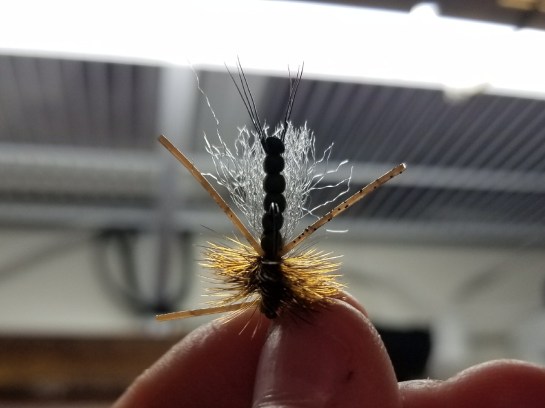
We are in full blown Utah Cutt Slam trip prep down here and Blake has been busy at the vise. We’ve been hearing that the green drakes have been coming off up there in Utah and it’s our hope that they will continue to be hatching by the time we can get up there later this month. He’s put together a little SBS of a fly we hope to have some success on when we get up that way – Yeager’s Neversink Green Drake – tied by Blake Leblanc.
Materials – in order or application:
Thread of your choice – I used 70 denier
2mm foam
#12 Orvis tactical barbless dry fly hook
Moose body hair
EP fibers
Rubber legs
Dry fly hackle
Start thread on a needle with a few wraps, just enough to hold it on there. Leave tag end long.
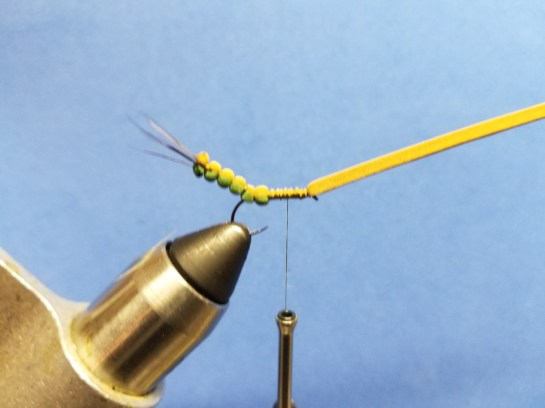
Cut two foam strips. This is 2mm thick foam. I cut them about 2mm wide as well. Tie one on the top and another on the bottom. Colors should match what you are trying to match. Here, I was going for green drake-ish. It could probably pass for a decent hopper or stonefly with a few modifications.
Tie in a few strands of moose body hair(or whatever tail material you like) on either side. Leave the butt ends long so you can catch them on the shank in the next step.
Bring the thread between the foam strips and advance it a little ways down the pin shank trapping the moose hairs in there. Then pull the foam back and start your segments.
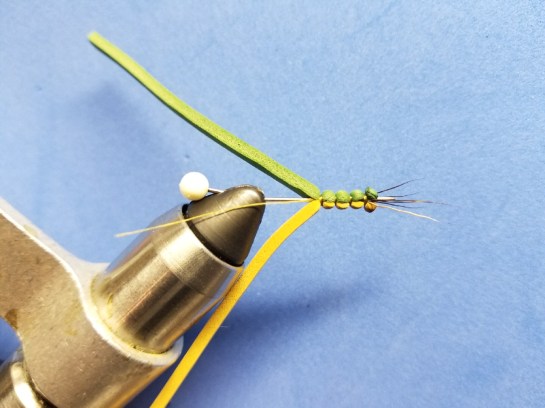
Cut the moose hairs(leave the thread tag end) and continue with the segments. Whip finish the thread on the last segment. Hit it with some glue.
Pinch the tail and slide it off the needle. Pull the thread tag to tighten any loose thread that is in the body.
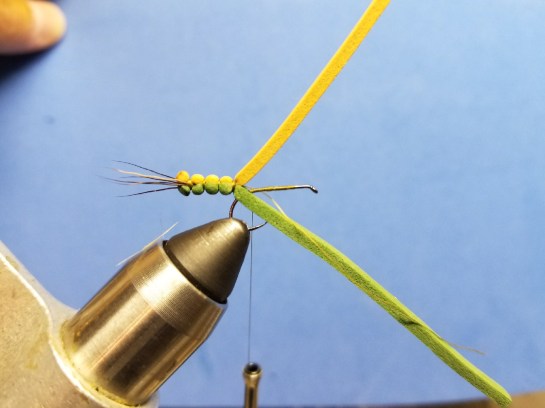
Choose a hook you like and pierce the foam near the last body segment.
Start the thread near the eye of the hook and bring it back to the hook bend. I slide the body up to the thread location to make sure I like how it sits. When you’re happy, tie down both foam strips making another segment. Make sure the thread tag is still there.
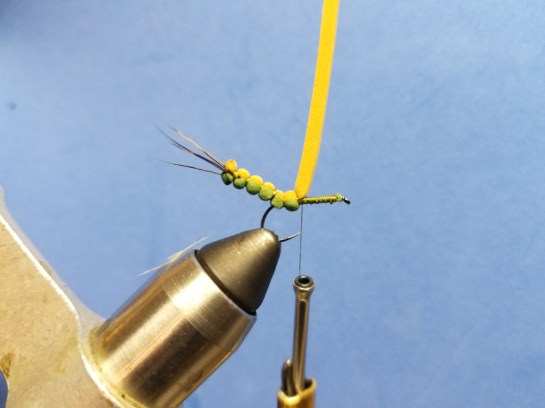
Pull one of the foam strips back and wrap the thread down the shank making sure to tie your tail thread tag in tight. Make another segment, then tie down the bottom foam strip to the eye. I find it easier and neater to do one stip, then the other.
Tie the top foam strip down to right behind the eye.
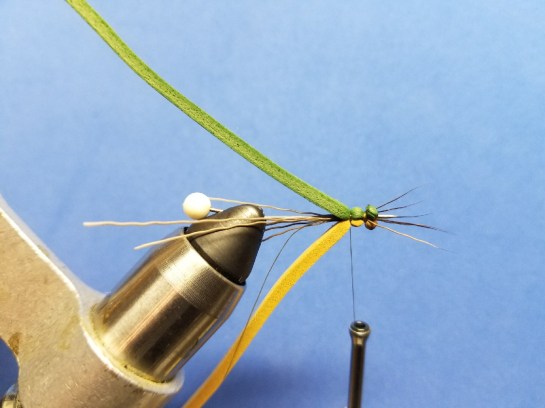
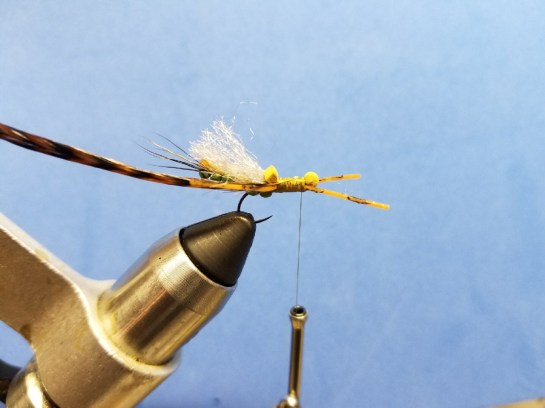
Tie in your wing material. I used EP fibers here. They float like a cork when treated with floatant. I leave them long and trim later.
Pull the foam back making a little round head behind the eye.
Tie in your choice of legs on either side. Trim to desired length.
Cut foam leaving a little.
Cut wing about as long as abdomen.
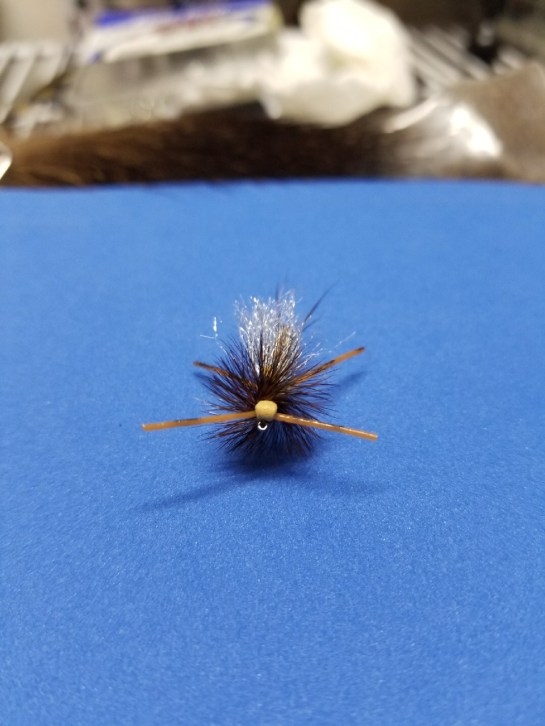
Tie in dry fly hackle.
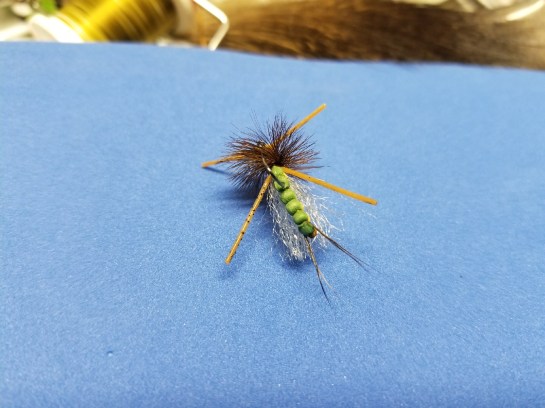
Palmer to the head. Tie in the hackle and whip finish. I whipped around the eye of the hook, but you can tie off between the hackle and head. Whatever floats your drake….
Hit it with a little glue and you have yourself a really buggy, buoyant, attractor fly that is sure to catch some cutthroat.
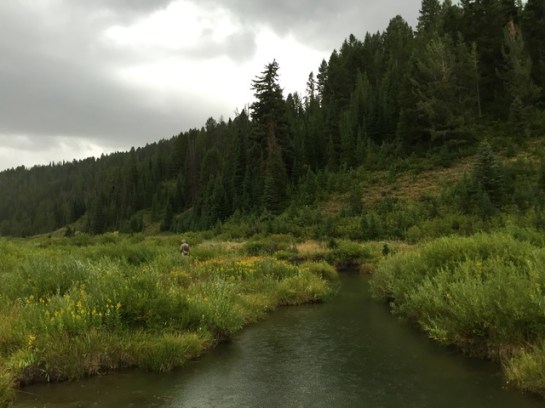
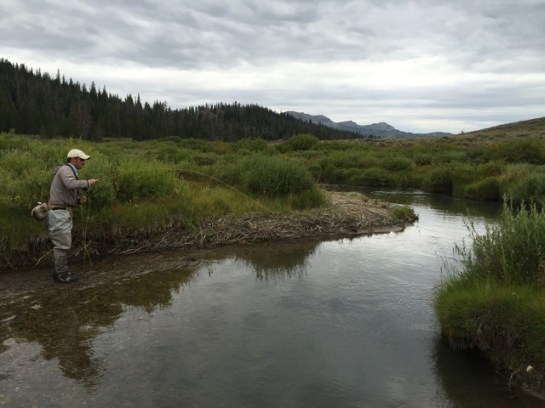
Just got back in town from an awesome fishing/camping trip Blake and I took out to Wyoming. Going through the pictures now and will hopefully write a few words about the trip soon. I’ll post a few teaser pics up now and if you look hard enough you’ll find a few more scattered throughout the site.
The salmonids are in family Salmonidae, which has 10-11 genera that is divided into 3 subfamilies; Coregoninae(whitefish), Thymallinae(grayling), and Salmoninae(char/trout/salmon). Living in the Southeast you have access to a very limited amount of salmonids and I’ve caught the 3 that occur in Georgia. The brook trout is the only native trout species in Georgia and it is actually a char.
Updated, December 2025: I made my first trip out West in September of 2012 to Colorado and caught several “greenback” cutthroat trout in Rocky Mountain National Park – or what were considered greenback trout at the time. Made another trip out West in August of 2013 to Teton and Yellowstone National Parks where I picked up another cutthroat species and mountain whitefish. In August of 2015 I was able to complete the Wyoming Cutt Slam, picking up Wyoming’s four native cutthroat species (they do have a fifth, the Westslope, that is not required for the slam). In July of 2017 I completed the Utah cutthroat slam, which didn’t necessarily add any new species to the list, but I was able to add Bonneville cutthroat outside of the Bear River drainage and Bear River cutthroat, which some consider genetically distinct. In June of 2021 I made it out to Arizona and New Mexico to catch Apache and Gila trout in their native range. In August of 2022 I made it up to northern Idaho and caught several Westslope cutthroat in their native range. In July of 2023 I made a northern New Mexico/southern Colorado trip and caught lots of Rio Grande cutthroat in their native range. Finally, in August of 2025 I made it out to the Olympic peninsula of Washington and caught coastal rainbow trout in their native range, coastal cutthroat, southern Dolly Varden, as well as the genetically distinct Lake Crescent cutthroat trout.
Dr. Robert Behnke is the man when it comes to salmonid knowledge. Pick up his book if you want to learn more about this particular family, “Trout and Salmon of North America”. Another great resource is Gary Marston’s Native Trout Fly Fishing blog, he has a Trout and Salmon species page with pictures and information of all those that he has caught (which may be all that are found in the U.S.). Gary’s trip reports are a good read as well, he has had some epic road trips to catch trout in their native range.
Trout found in the Southeastern United States
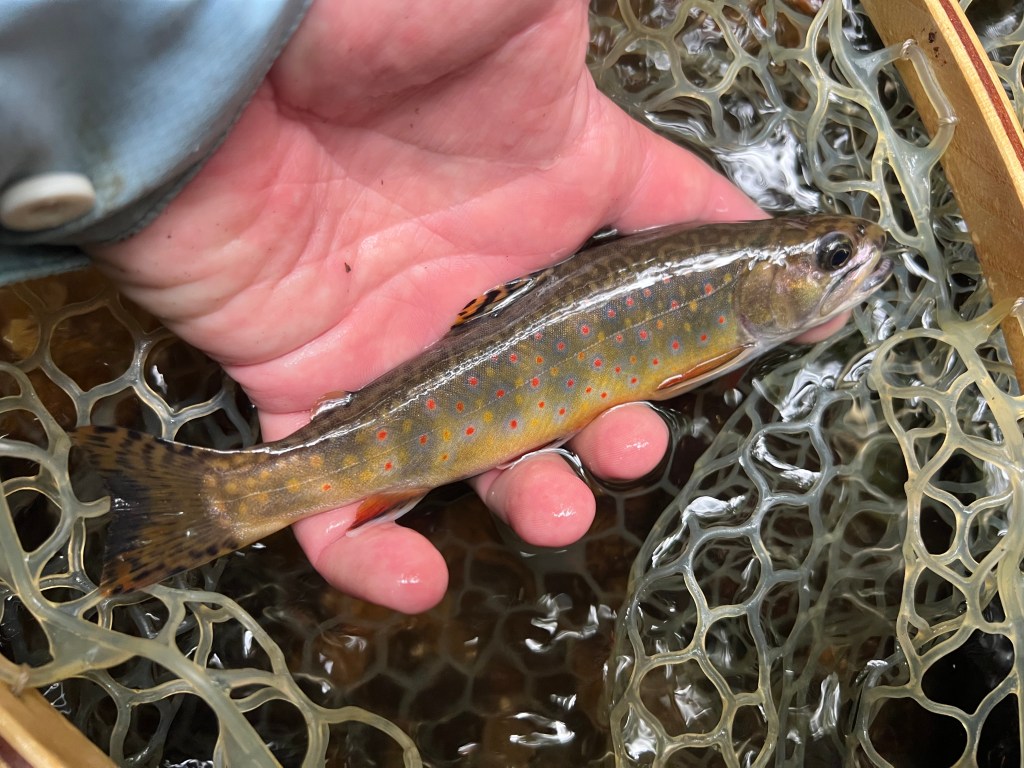
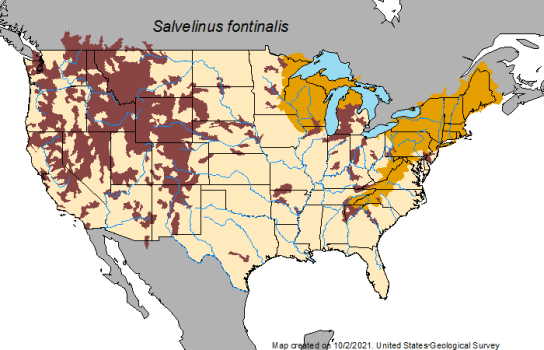
Salvelinus fontinalis – Brook trout
Brook trout are the first native trout species I ever encountered as they do live in Georgia.
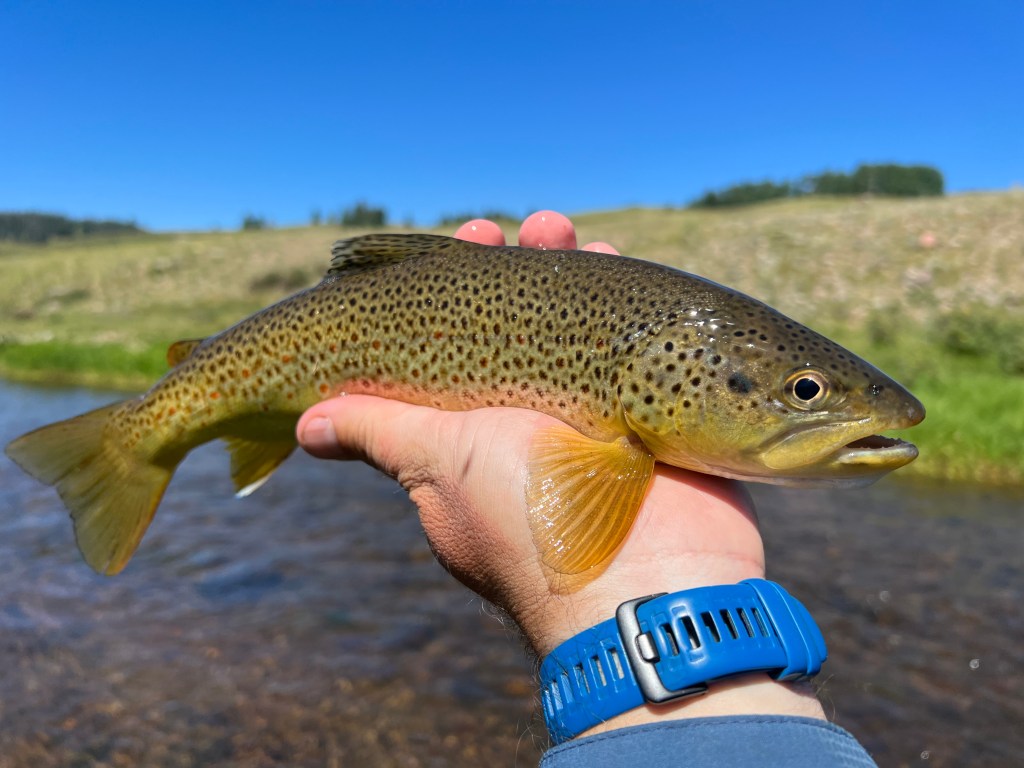
Salmo trutta – Brown trout
Brown trout are not native to North America.
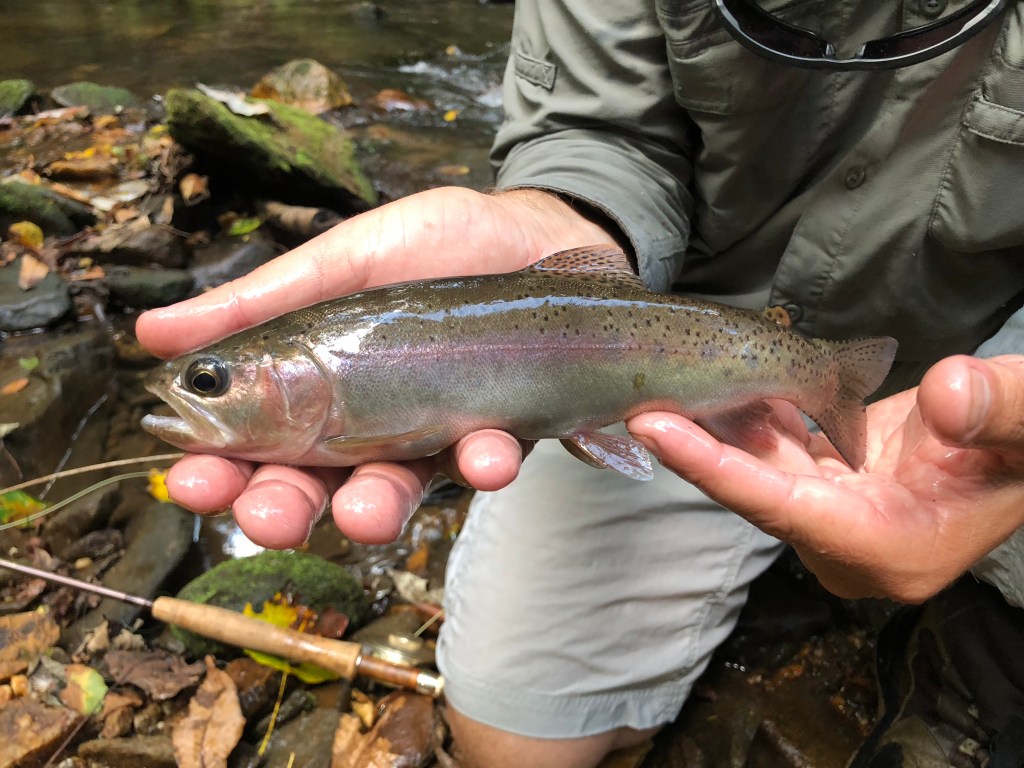
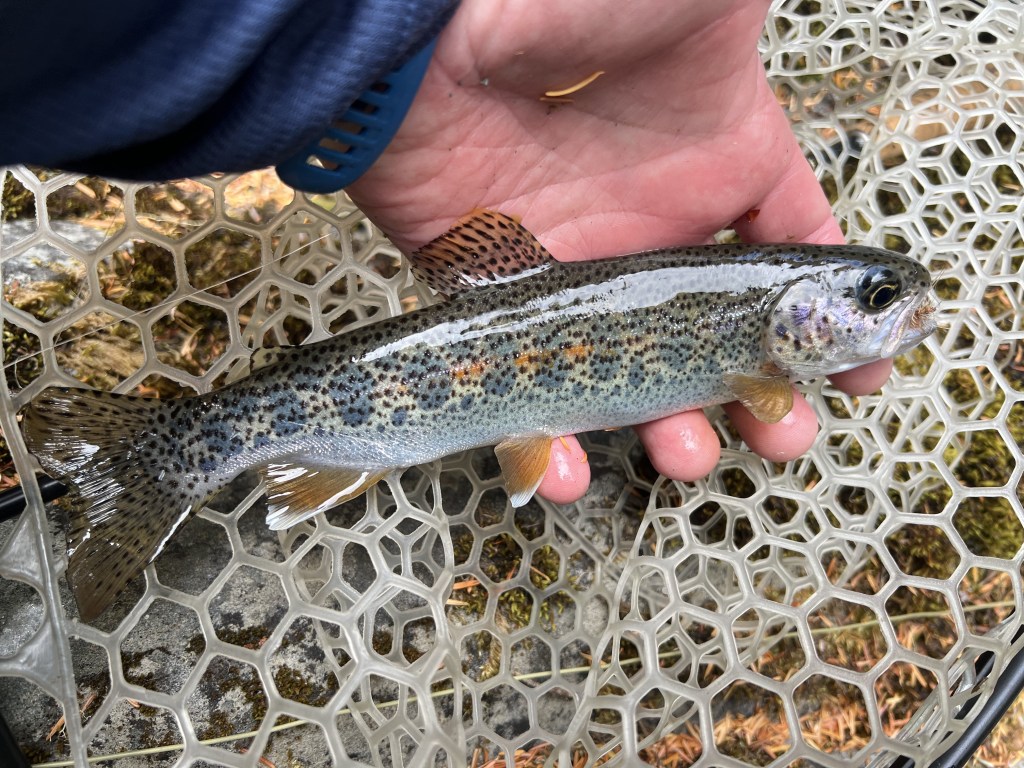
Oncorhynchus mykiss – Rainbow trout
The first trout species I ever caught was a rainbow trout, happy to say that I have now caught them in their native range with a coastal rainbow as well!
According to Wikipedia, the coastal cutthroat trout occurs in four distinct forms. A semi-anadromous or sea-run form is the most well known. Freshwater forms occur in both large and small rivers and streams and lake environments – pictured above is the stream resident freshwater form. The historic native range of the coastal cutthroat trout extends south from the southern coastline of the Kenai Peninsula in Alaska to the Eel River basin in Northern California.
Oncorhynchus clarkii crescentii – Coastal cutthroat trout – Lake Crescent form
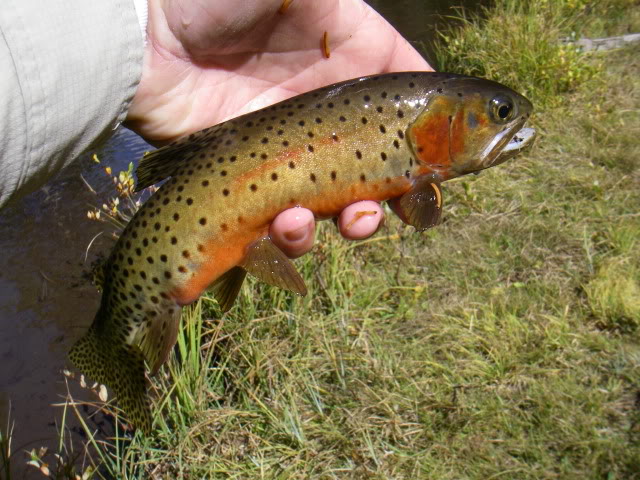
At the time this fish was considered a greenback, but it’s more likely that it isn’t after genetic research determined that the true greenback was limited to only one stream, outside of it’s native range, in Colorado. Work has been done to re-establish populations throughout it’s native range and hopefully I’ll have the opportunity to fish for a true greenback cutt. Their historic range is pretty much in the state of Colorado on the Front Range, with some watersheds slipping into Wyoming. They are found in the headwaters streams of the South Platte and Arkansas River drainages.
Oncorhynchus virginalis ssp. – Colorado River River cutthroat trout – Green River watershed
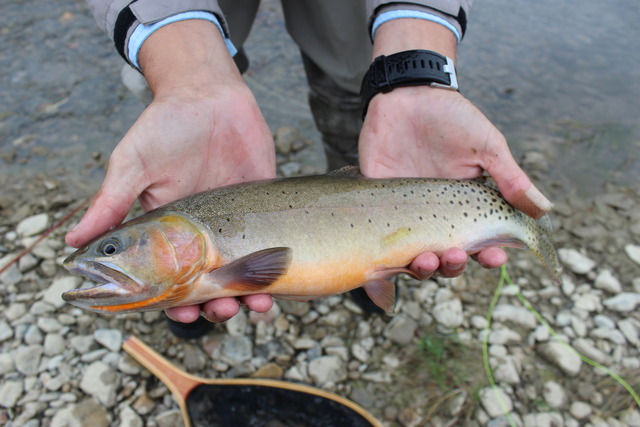
The Colorado River cutthroat’s historic range is headwaters streams in the Green and Colorado Rivers, as far south as the San Juan River, west of the Continental Divide. They are currently limited to a few small headwater streams of the Green and upper Colorado rivers in Colorado, Utah, and Wyoming, including the Escalante River drainage in southern Utah.
Oncorhynchus virginalis virginalis – Rio Grande cutthroat trout
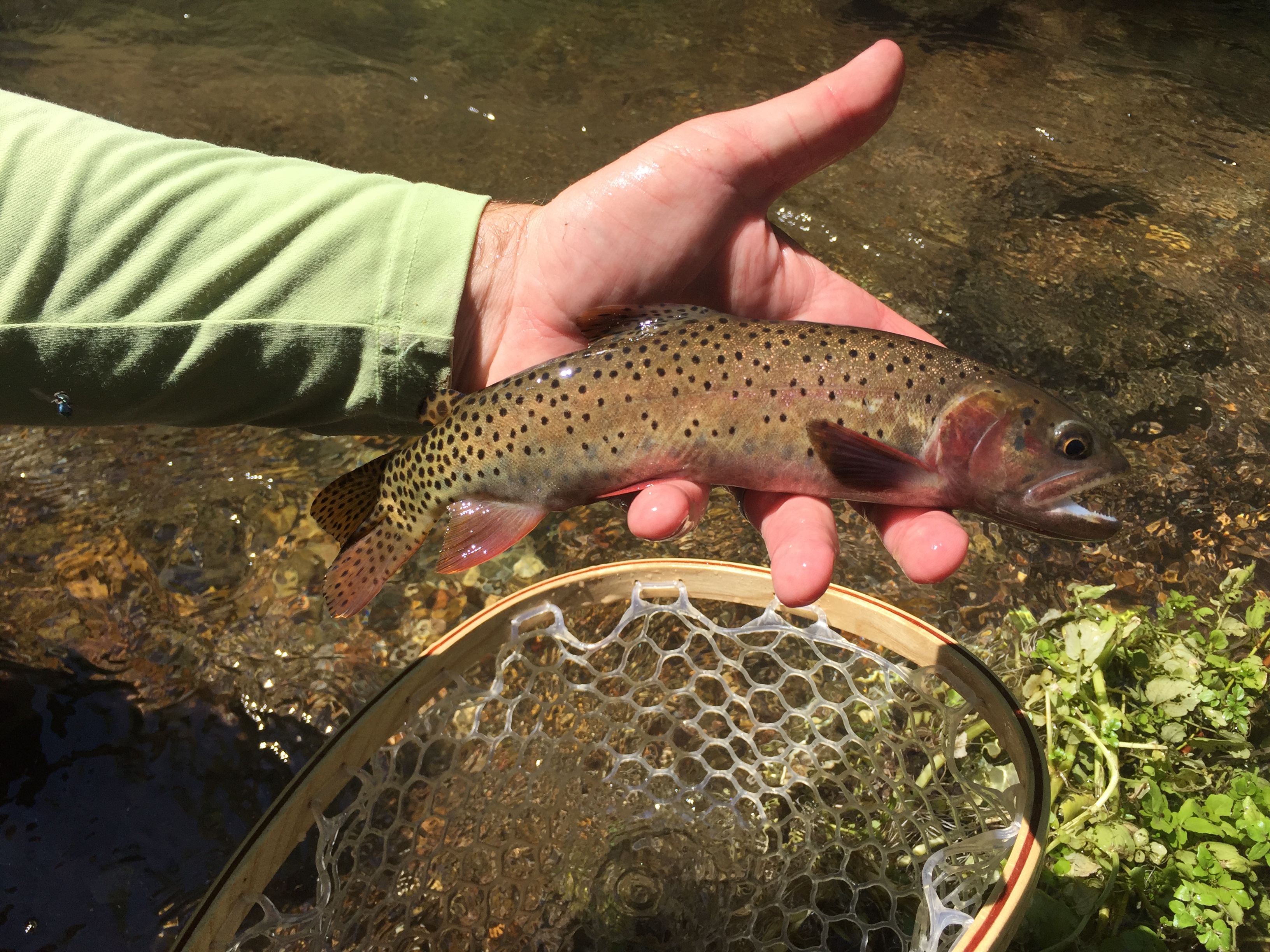
Their historic range is headwater streams in the Pecos and Rio Grande watersheds in Colorado and New Mexico.
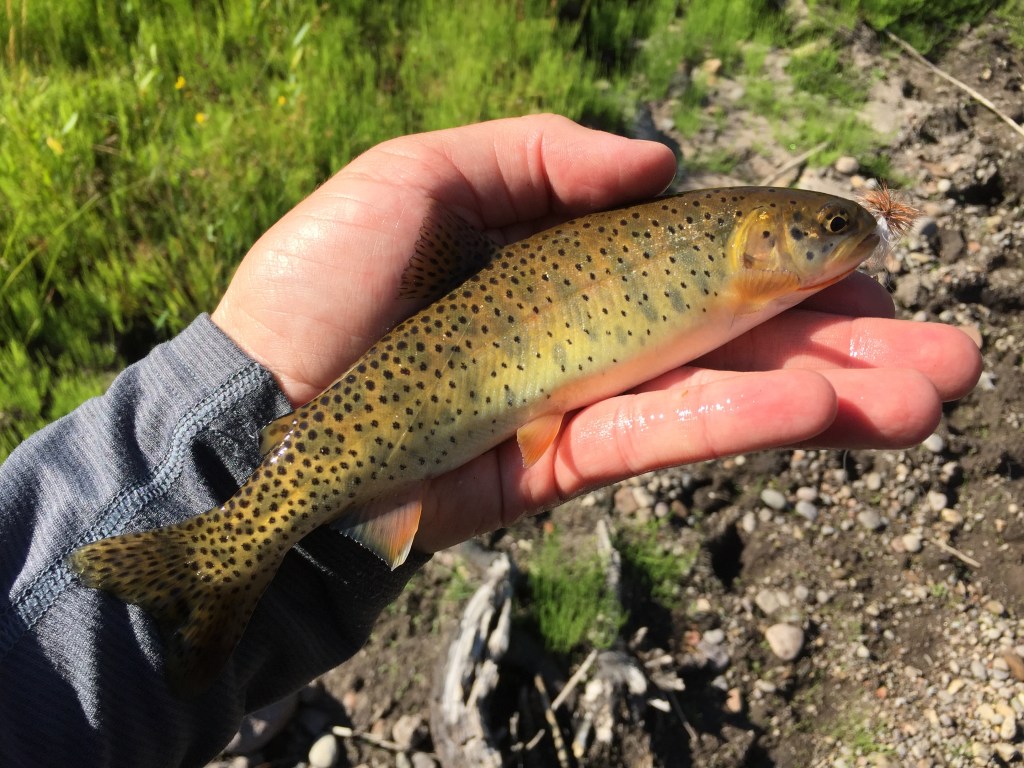
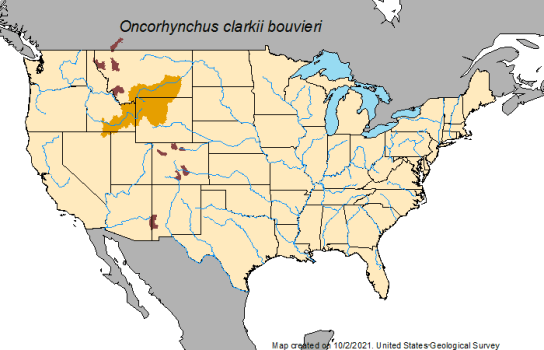
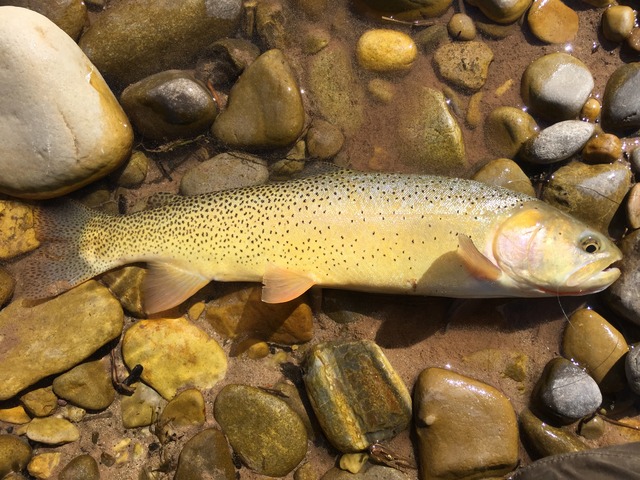
Their historic range is pretty much in the state of Utah, with some watersheds slipping into Wyoming, Idaho, and Nevada.
Oncorhynchus virginalis ssp. – Bear River cutthroat trout
They are found in the headwaters streams of the Bear River. No range map was given from NatureServe or the USGS for the Bear River cutthroat trout, but they are native to the Bear River and it’s tributaries, including Bear Lake. Originally thought to be closer in relation to Bonneville cutthroat, now it is believed that their closest relative is the Yellowstone cutthroat.
Their historic range is the Yellowstone River drainage in Montana and Wyoming and the Snake River drainage in Wyoming and Idaho. Their current range overlaps with that of the Finespot in the Snake River drainage above Shoshone Falls.
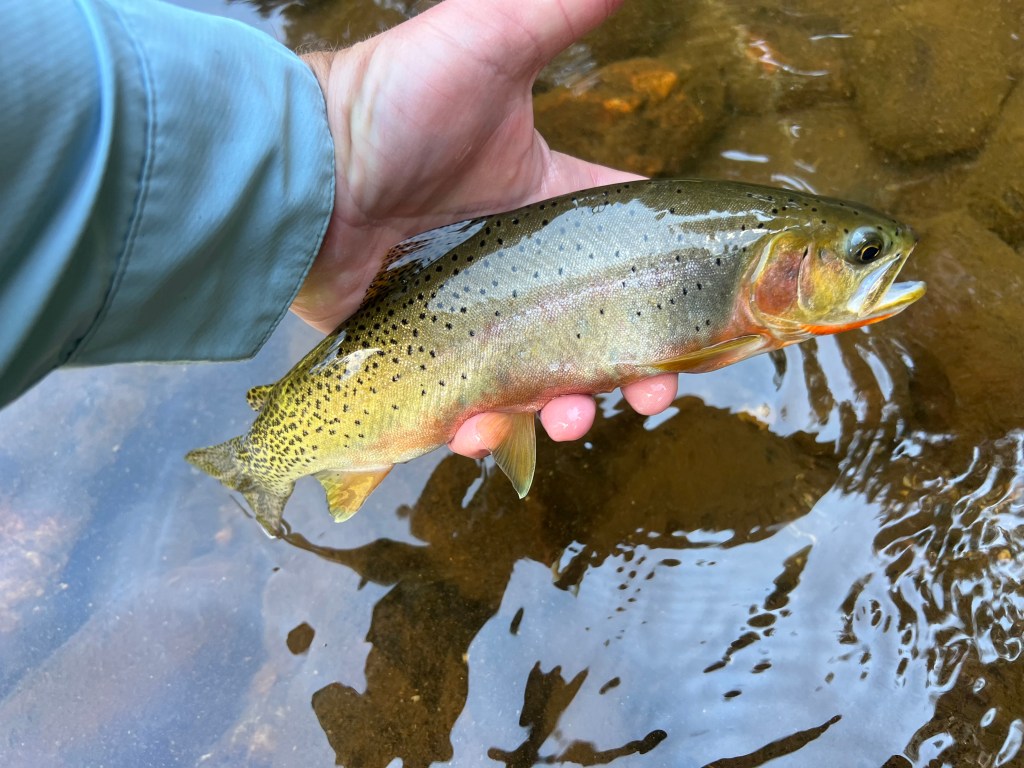
Oncorhynchus virginalis behnkei – Snake River finespotted cutthroat trout
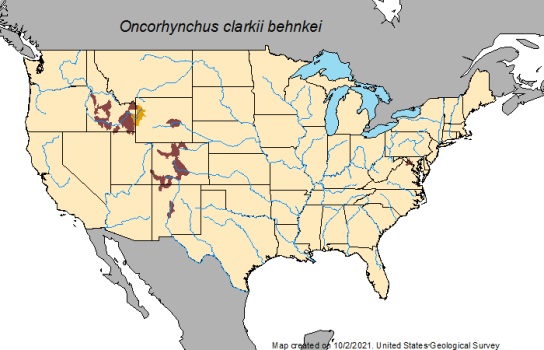
Their historic range overlaps the Yellowstone cutt in the states of Wyoming and Idaho. They are found in the headwaters streams of the Snake River, particularly the South Fork.
Oncorhynchus lewisi ssp. – Westslope cutthroat trout – St. Joe River watershed
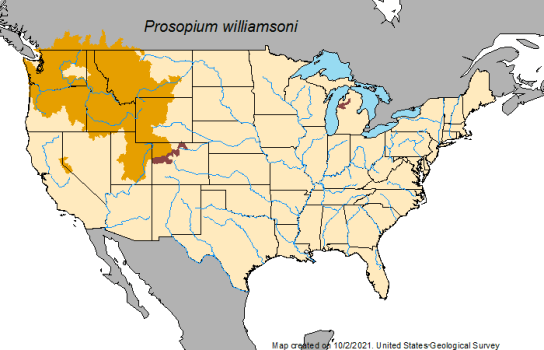
According to Wikipedia, Westslope cutthroat trout are native in northern Idaho’s and British Columbia’s upper Columbia River system and northern tributaries of the Snake River. East of the Continental Divide in Alberta and Montana, Westslope cutthroat trout are native to the upper Missouri, Milk and North Saskatchewan rivers. In Montana, the historic range extended east to the mouth of the Judith River and south into the Madison, Gallatin and Jefferson river systems. Isolated populations of Westslope cutthroat trout exist in upper tributaries of the John Day River in the Strawberry Mountains of Oregon and Columbia River tributaries along the eastern side of the Cascade Range in Washington. Isolated populations exist in the Fraser River basin in British Columbia.
Other Native Salmonids
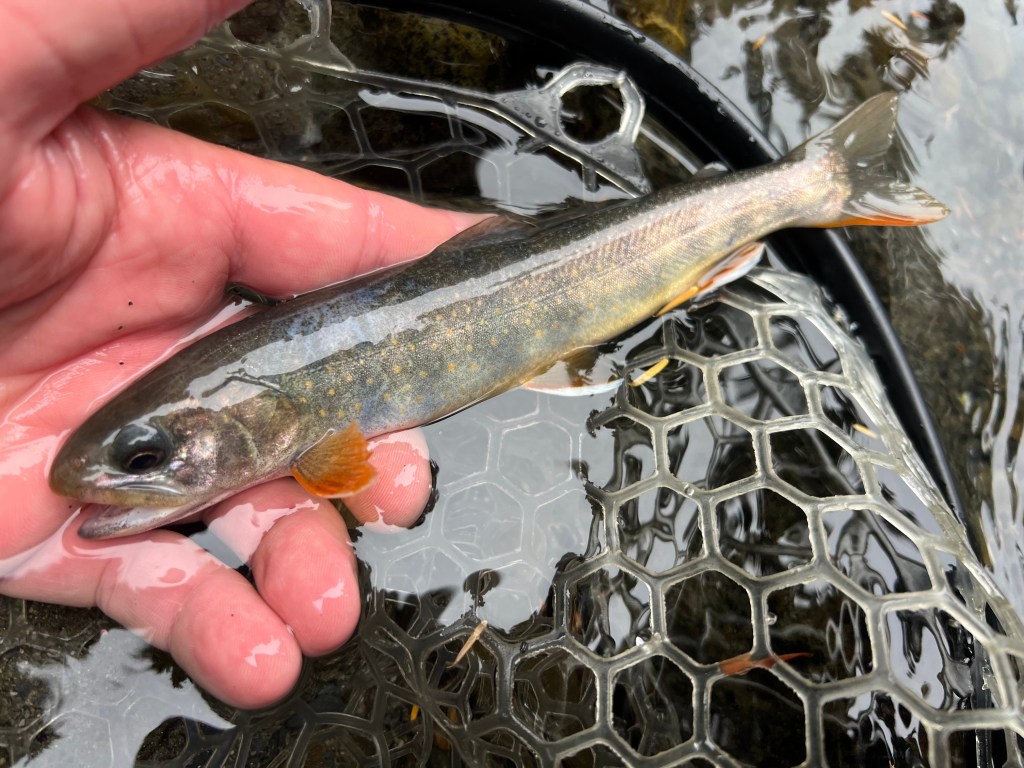
Salvelinus malma lordi – Southern Dolly Varden
According to Gary Marston, the Southern subspecies of Dolly Varden are native to coastal watersheds from the Susitna River, Alaska south to the Quinault River, Washington.