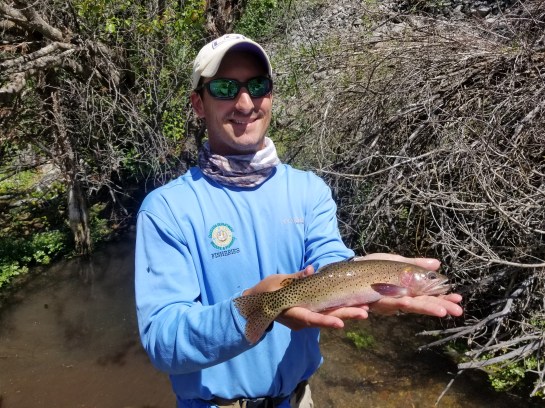
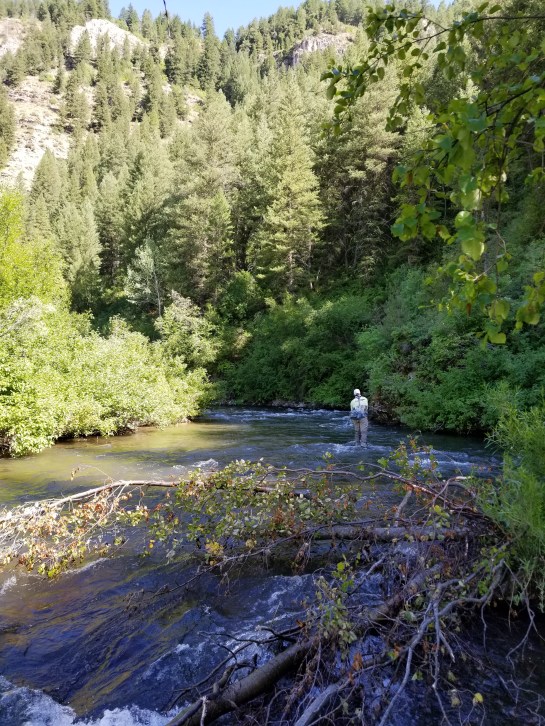
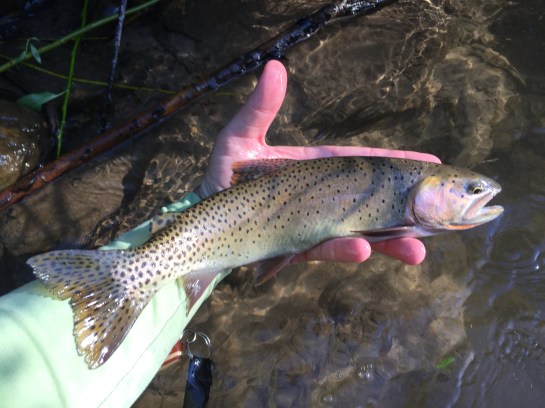
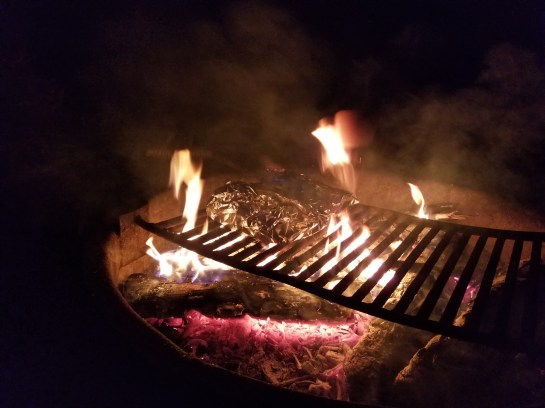
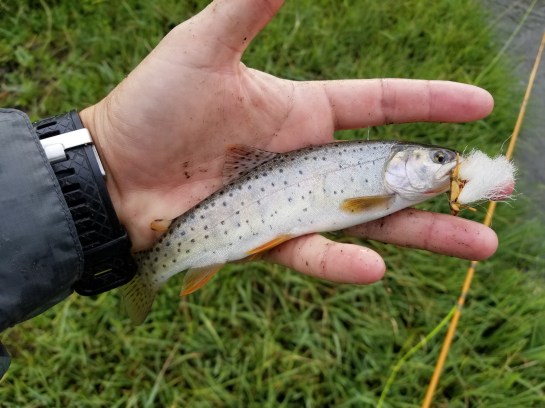
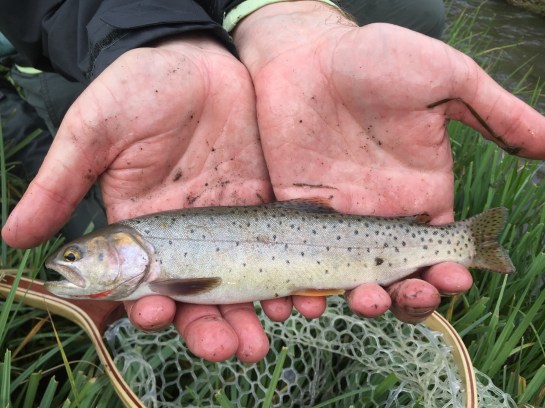
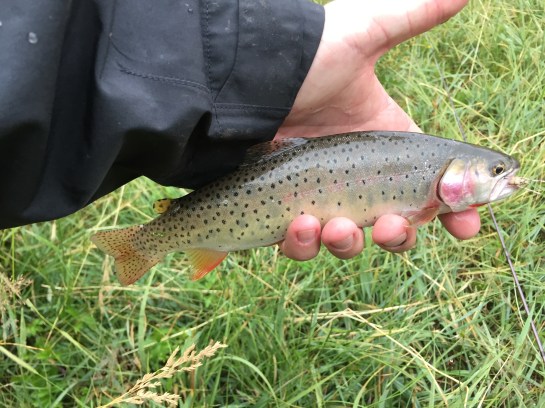
Blake and I just recently got back from a week in Utah, chasing the four native cutthroat of that state.  Flights for the trip were booked seven months ago so it’s safe to say that the trip has been on my mind in some capacity throughout all of 2017.  Admittedly though, having an infant certainly cut down on the amount of space that the trip, or any fishing trip for that matter, has occupied in my brain.  Want to think about fishing less – keep having kids – it totally works!

Fishing in Colorado in 2012 was enough to convince me that I needed to take more trout trips out west.  Having an interest in native fish and more specifically native trout meant that the Wyoming cutt slam was on a very short bucket list after Colorado.  After the success we had fishing in Wyoming in 2015 I knew I wanted to do something similar for the next trip.  I’m always thinking about the next trip, logging things I read in books or on the web for future use.  I gravitate toward the slam style programs.  They provide great outlines for planning a western trout trip.  If you want to catch four different species in their native ranges you typically have to travel to four different watersheds.  It’s a great way to fish a lot of different water and see a lot of sights that you can’t see back home.  Driving to the destinations at times is as much fun as fishing.

I looked at California’s Heritage Trout Challenge, but that seemed impossible to achieve in a week and I wasn’t looking for a two or even three part trip just yet.  Nevada has a Native Fish Slam that seemed a little more plausible, but I was a little hesitant about some of the remoteness of the destinations we would need to go to find those native fish.  At some point I want to make it to New Mexico to chase Rio Grande cutthroat and Gila trout and Arizona for Apache trout, but those are likely separate trips, otherwise that would be a lot of driving for one week.  Then in April of last year, my planning suddenly shifted to Utah as they debuted their own cutt slam program with a really fantastic website – www.utahcutthroatslam.org.  After looking into it further it just made sense for the Utah cutt slam to be our next trip.  Salt Lake City is an easy destination to fly to with relatively inexpensive flights and as a bonus you can catch all four cutthroat species within a three hour drive from the city.

To achieve the Utah cutt slam you’ll need to catch the four native cutthroat trout of the state – the Bonneville, the Bear River, the Colorado River, and the Yellowstone.  Here’s where they live:

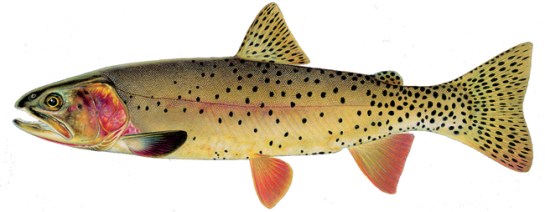
Since the Yellowstone cutthroat required the longest drive, was in the most out-of-the-way destination, and lived in some of the least impressive looking water I decided we should try and knock that one out first.

OncorhynchusClarkiiYellowstoneH650

Joseph R. Tomelleri

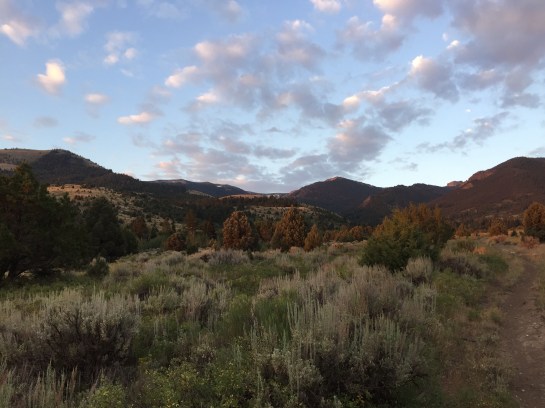
We got the earliest flight we could into Salt Lake City from New Orleans and after a few stops for supplies we set off for the Raft River Mountains, in the NW part of the state.

20170726_173148

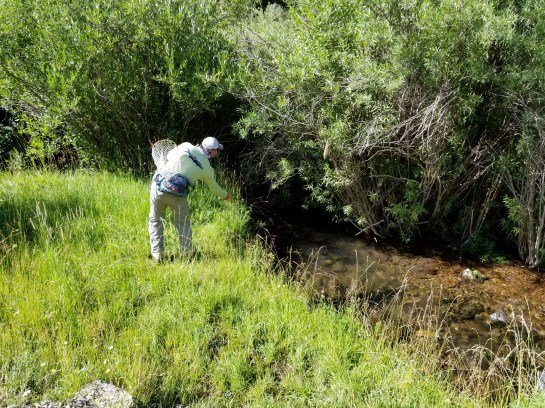
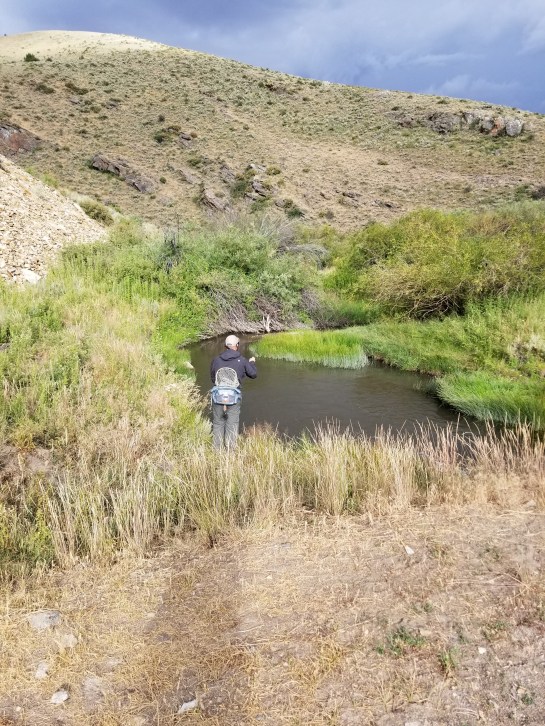
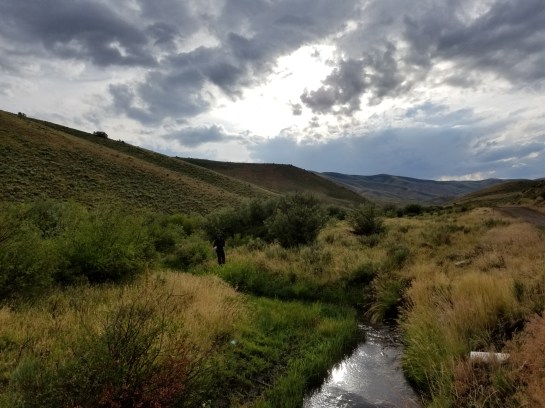
Miles of interstate were followed by miles of dirt roads, but we finally arrived that evening at our first creek.  It was a small one and it was heavily used by cattle.  The cattle and the creek shared the same narrow valley and there was only so much space for the both of them.  The Yellowstone cutthroat were supposed to be there too, but it was obvious there wasn’t a very large population in the creek, so we went to work and started covering ground.

20170726_184600

20170726_190508

Thankfully the cattle weren’t around at the time, but the cow shit was still there and avoiding it was impossible.  I noticed how covered my boots were when walking back to the car.  After fishing a few prime runs with nary a bite I was a little nervous.  It didn’t make me feel any better when the skies opened up, so I took off my dry and started fishing a nymph.  All we had to do was catch one right?

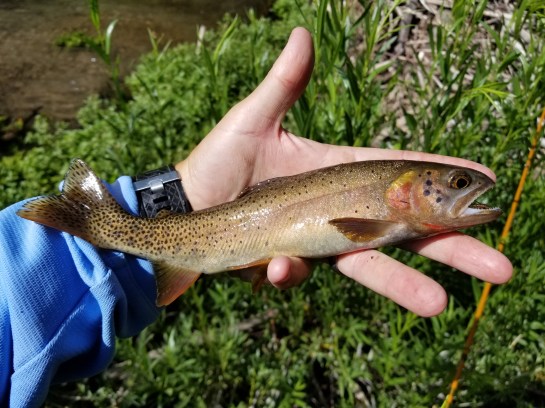
The heavy rain didn’t last long and as we moved up the stream things started to look better.  Blake caught a trout to get things rolling.

20170726_192220

IMG_2633

I followed up with one of my own and all was right in the world again.

IMG_2631

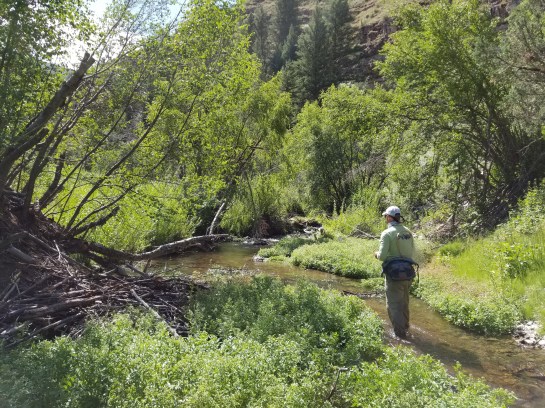
More fish were caught and once you got past all the cow shit the stream wasn’t really that bad of a place to fish.  The treeless mountains at the head of the valley made for a pretty cool backdrop too.

IMG_2635

IMG_2640

IMG_2639

IMG_2651

20170726_194108

The size of the fish picked up as we went upstream, we never found any studs, but we found our target species and to catch the first of the four cutthroat species we needed on our first day in Utah was a pretty good feeling.

IMG_2650

IMG_2654

IMG_2661

We only spent a couple hours on that stream before we figured it was late enough and we still needed to find a place to sleep and set up camp.

IMG_2665

Much like Wyoming we’d be hammock camping each night in National Forest campgrounds (I like a real toilet).  Unfortunately the nearest campground was still over an hour away, so we’d be navigating to and setting up camp in the dark.  Thankfully I had printed out directions to get from place to place because there is not much cell coverage in rural Utah.  We did well finding the roads we needed to turn on and dodging jackrabbits in the dark, but we were pretty confused when we pulled into someone’s driveway at 10:00 at night and three dogs surrounded the car barking up a storm, then we realized we made a wrong turn somewhere.  We backtracked to the main road and righted the ship pretty quick, but that could have made for an interesting conversation should anyone have stepped out from that trailer.

The next day we’d wake up and head east, over to the Logan Canyon where we hoped to catch our second cutthroat species, the Bear River.

My parents are in the process of selling their home in Alpharetta and when they do finally hand over the keys to the new owners there will definitely be a mix of emotions for the family.  Alpharetta was home to me for nearly half my life and home for them for nearly 30 years, so for them not to have a residence there will be a pretty strange thing.  The bright side of their departure from suburban Atlanta is that they have a new home on Lake Rosemound, here in Louisiana, just an hour north of Baton Rouge, so we’ll have the chance to see and be with them a lot more often as they split time between St. Francisville and the cabin in Suches and we are excited about that.

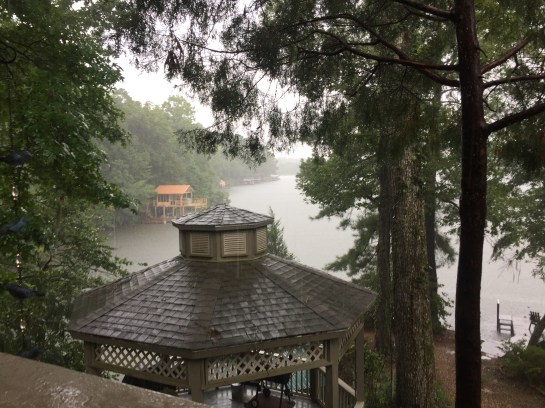
They’ve had the house at Lake Rosemound for almost a year now and we’ve made a few trips up that way, but never for more than a day or two.  It’s rare to find an entire weekend free it seems, but we were able to do just that this past weekend.  We loaded the car up Friday morning and headed north on Hwy 61 after work only to be greeted by a nice thunderstorm upon arrival.

IMG_2539

Amanda took advantage of us being stuck inside to whip up a fantastic shrimp creole for dinner, which I can attest paired really nicely with a Ghost.

IMG_2540

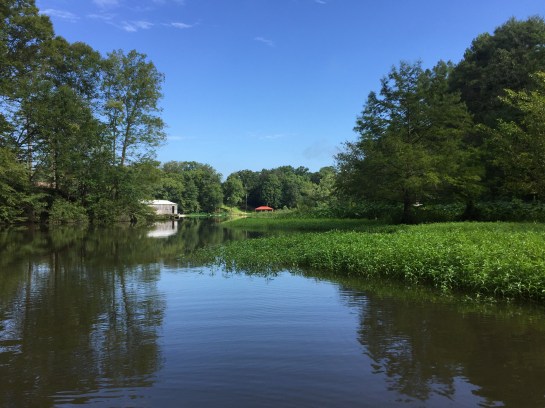
The next morning I was able to take out the new Kilroy DT we bought for Rosemound and see how she performs as a solo boat.  With dreams of big bass in my head I tied on a black buzzbait and began working it around the docks and other structure.  It seemed like a good morning for topwater as it was a little cloudy and not even the faintest ripple on the water from the wind.  I found out early on that the bluegill were going to be fairly aggressive today.

IMG_2541

After a while I wasn’t feeling the love on the black buzzbait so I switched colors and downsized and went with an oldie but a goodie, still a buzzbait, the Wolka double buzzer.  Terry Wolka, who use to frequent the Riverbassin forum, made custom lures and sent them out for guys to try.  I’ve managed to hold on to mine after all these years and have caught a number of fish on it.  It’s still in pretty good shape and is a testament to the quality craftsmanship that went into this lure.

IMG_2542

IMG_2543

I’m not going to say that it was like a light switched on, but things certainly were better after the lure change.  I think it also helped that I moved into a shallower, grassier part of the lake, especially given my lure choice.

IMG_2544

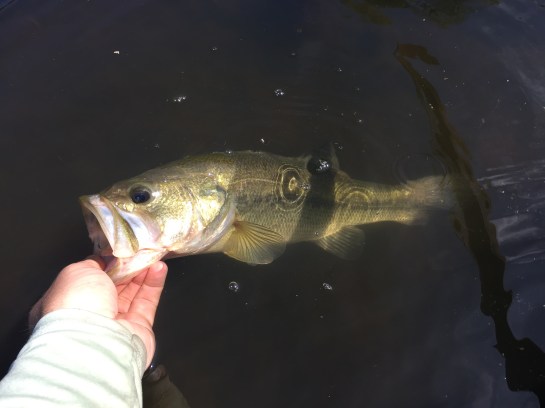
The clouds gave way to a bluebird sky and I probably shouldn’t have still been throwing topwater, but I’m pretty stubborn when it comes to lures and I just wanted to catch them on top so I stuck with it and am happy I did.  I really didn’t leave myself much of an option though as my gear was pretty minimalist on the day.  If I wasn’t going to catch them on top, I wasn’t catching them at all.

IMG_2545

IMG_2546

For about an hour the fishing was great, which was what I needed, because this was just short pre-lunch fishing trip anyway.

IMG_2548

IMG_2550

IMG_2552

IMG_2558

That last one was the biggest on the day.  I’ve got no clue on the size as I didn’t pack a scale or a board.  It was great to finally dedicate some time to bass fishing the lake and I was pretty happy to have some relative success.  I know there are much bigger bass in the lake and I look forward to the challenge of trying to fool one.

We spent the rest of the day with a lakeside lunch at Satterfield’s in New Roads and then a Lake Rosemound beach trip with the kiddos.  The eggplant nelson appetizer at Satterfield’s is pretty damn good and this is coming from someone who’s not that big into eggplant.  I would recommend stopping there to eat if you’re ever in the area.

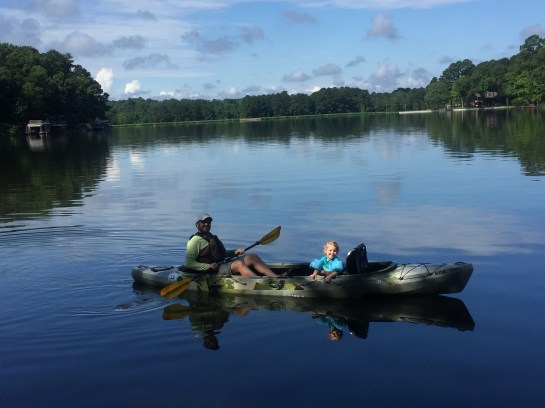
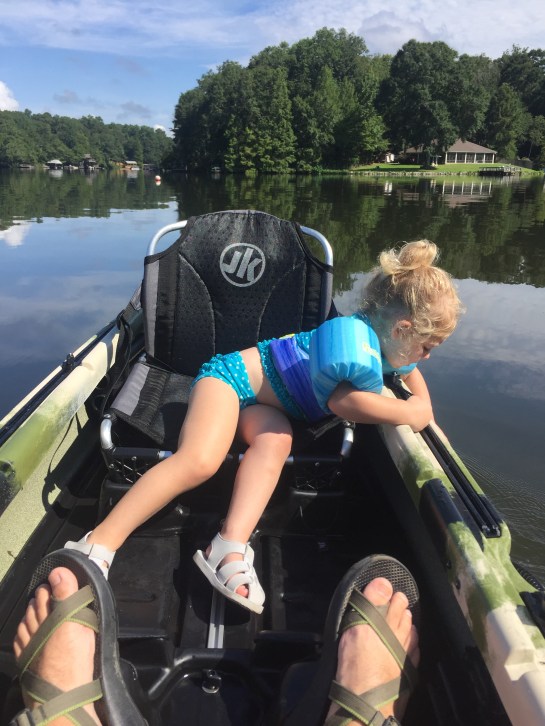
The next morning I took Marin for a paddle in the DT.  It was super easy to shift the seat trays from a solo position to a configuration where I could have her facing me, which was perfect for a toddler, but probably not something I’d do with someone who could actually help paddle.

IMG_2579

IMG_2577

IMG_2574

The DT paddled very well, even with a kid leaning out of the boat putting her hand in the water the whole time.  As with the 12′ Kilroy the DT holds the distinction of being one of the few kayaks out there that is both fast and stable.  I’m thrilled to have this boat at Rosemound and can see it getting a lot of use as my kids grow up.

At Marin’s request we hit the beach again before we headed on back down to Baton Rouge.  We really enjoyed our weekend up at Rosemound.  I look forward to spending more time up that way, learning the lake, and of course spending time with the family.

We are in full blown Utah Cutt Slam trip prep down here and Blake has been busy at the vise.  We’ve been hearing that the green drakes have been coming off up there in Utah and it’s our hope that they will continue to be hatching by the time we can get up there later this month.  He’s put together a little SBS of a fly we hope to have some success on when we get up that way – Yeager’s Neversink Green Drake – tied by Blake Leblanc.

Materials – in order or application:

  • Thread of your choice – I used 70 denier
  • 2mm foam
  • #12 Orvis tactical barbless dry fly hook
  • Moose body hair
  • EP fibers
  • Rubber legs
  • Dry fly hackle

Start thread on a needle with a few wraps, just enough to hold it on there.  Leave tag end long.

IMG_2532

Cut two foam strips.  This is 2mm thick foam.  I cut them about 2mm wide as well.   Tie one on the top and another on the bottom.  Colors should match what you are trying to match.  Here, I was going for green drake-ish.  It could probably pass for a decent hopper or stonefly with a few modifications.

IMG_2531

Tie in a few strands of moose body hair(or whatever tail material you like) on either side.  Leave the butt ends long so you can catch them on the shank in the next step.

IMG_2530

Bring the thread between the foam strips and advance it a little ways down the pin shank trapping the moose hairs in there.  Then pull the foam back and start your segments.

IMG_2529

Cut the moose hairs(leave the thread tag end) and continue with the segments.  Whip finish the thread on the last segment.  Hit it with some glue.

IMG_2528

Pinch the tail and slide it off the needle.  Pull the thread tag to tighten any loose thread that is in the body.

IMG_2527

IMG_2526

Choose a hook you like and pierce the foam near the last body segment.

IMG_2525

Start the thread near the eye of the hook and bring it back to the hook bend.  I slide the body up to the thread location to make sure I like how it sits.  When you’re happy, tie down both foam strips making another segment.  Make sure the thread tag is still there.

IMG_2524

Pull one of the foam strips back and wrap the thread down the shank making sure to tie your tail thread tag in tight.  Make another segment, then tie down the bottom foam strip to the eye.  I find it easier and neater to do one stip, then the other.

IMG_2523

Tie the top foam strip down to right behind the eye.

IMG_2522

Tie in your wing material.  I used EP fibers here.  They float like a cork when treated with floatant.  I leave them long and trim later.

IMG_2521

Pull the foam back making a little round head behind the eye.

IMG_2520

Tie in your choice of legs on either side.  Trim to desired length.

IMG_2519

Cut foam leaving a little.

IMG_2518

Cut wing about as long as abdomen.

IMG_2517

Tie in dry fly hackle.

IMG_2516

Palmer to the head.  Tie in the hackle and whip finish.  I whipped around the eye of the hook, but you can tie off between the hackle and head.  Whatever floats your drake….

IMG_2515

Hit it with a little glue and you have yourself a really buggy, buoyant, attractor fly  that is sure to catch some cutthroat.

IMG_2514

IMG_2513

IMG_2512

IMG_2511

IMG_2510