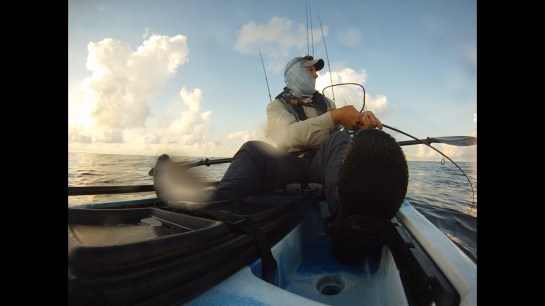
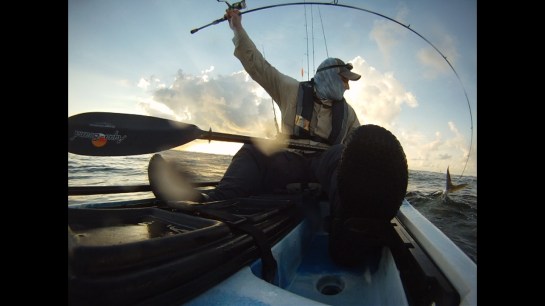
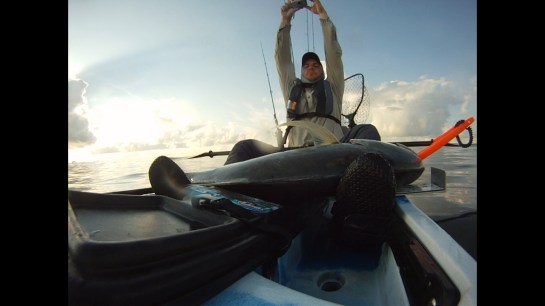
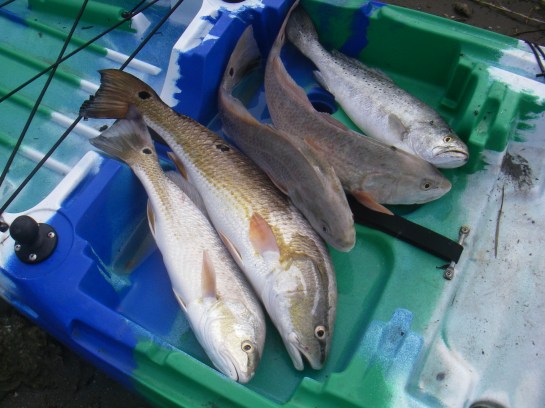
(I hope this song is stuck in your head the rest of the day too)
The weather on Sunday was just as nice as it was Saturday so I decided to scout another new area. This area was a “best of both worlds”, it had open water and interior marsh. I decided to stick to the open water in the morning while the tide was high and see if I couldn’t get into some nice trout or bull reds then as the tide began to fall I could sightfish the marsh.

The water clarity was excellent here, I really felt I had a good shot at catching a bull red on the fly, I just needed one to give himself away. The water was relatively deep so I was looking for a floater or a tailer. Eventually I began to see big reds, but they were always popping up right under the boat, so I couldn’t really get a good cast off to any of them. Soon I came upon a big school of mullet that was getting attacked by predator fish underneath. I worked a topwater through the mullet, but got nary a bite. Then I threw a paddletail in the school and got a hook up almost immediately – it was a trout. I had found a school of 10-14″ trout working finger mullet. I picked up a few trout from this school and even caught a few small ones on the fly rod, but was interrupted by some recreational boaters checking crab traps, sigh. The school scattered and the bite slowed so I moved on. I decided it was about time to eat lunch and parked the Cuda 12 next to a little island. I was in a little bay and had a bayou behind me that had current moving through it from the bay. While I was eating I noticed the baitfish were pretty skittish. One cast toward them produced another trout.

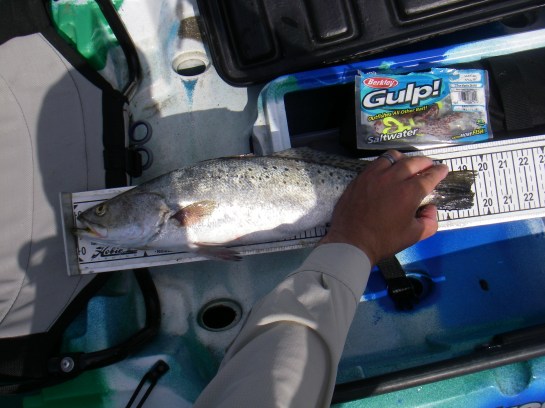
I proceeded to catch 10-14″ trout one right after another while sitting in that spot, it was a blast! I ended up keeping fifteen trout that were 13″ or above and tagged and released anything that was below. I had 20 tags on my boat and used them all! I could have easily kept my limit of trout in that one spot, something I don’t think I’ve ever been able to do.

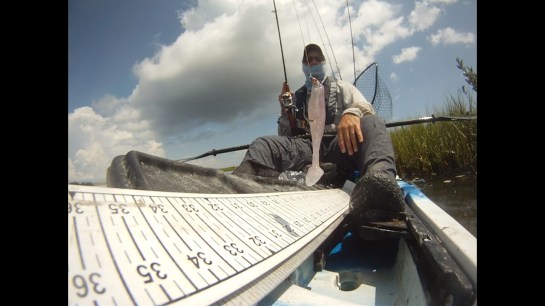
All those trout were caught on natural colored soft plastics that were tight lined, like the ‘Opening Night’ TTF Killer Flats Minnow above. The trout were so thick that I’d imagine any soft plastic tight lined would have worked just as well, but I went with a natural color because of the excellent water clarity and sunny skies. If you ever have a question about what color soft plastic to start with on the day, see the graph from TTF below.
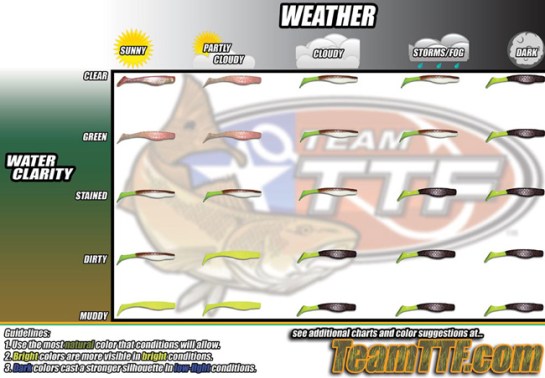
This is something I picked up from my buddy Brendan and I’ve found it to be pretty useful. I will say that when you’re sightfishing redfish it usually doesn’t matter what color you use. As long as you make an accurate cast you will generally catch that redfish. They are so aggressive they don’t have time to consider color. Sometimes, though, they are spooky, like in the video I posted the other day. I find they are spookiest when the water is low and clear. You’ll probably want to use something natural in that situation, like the graph suggests. On the flip side, they’re not spooky in muddy water, but they also can’t see shit so use a dark soft plastic. Seems like common sense, but I know a lot of folks new to artificial baits don’t yet grasp the concept.
The trout bite at that spot did eventually slow down and I decided it was time to move into the marsh. I went through one bayou where the water was moving so fast I had to stop and fish it just to see if anything was holding down there. Sure enough there were trout. One drift through the bayou produced a really solid strike. It was a really nice trout that I could tell was hooked deep. I fought him through a few runs and then the line went limp. What a heartbreak! I guess the line got cut on his teeth. Oh well, I cut my losses and headed into the marsh. The interior marsh ended up being not as productive as the marsh that was closest to open water, but redfish were certainly around.
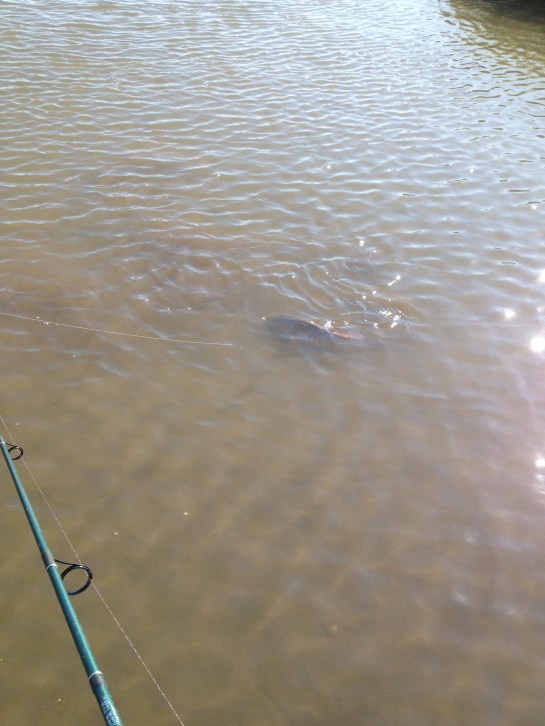
I kept redfish the day before, so I really wasn’t too interested in keeping any more(I hate cleaning fish), but I could have had another easy limit on reds. Catching limits on two species was definitely a first for me, Sunday ended up being one the most productive days I’ve had in the kayak. I didn’t catch the big fly rod trout I was looking for, but I had an awesome two days of fishing. I was worn out too. I had done a lot of paddling scouting new areas and it was totally worth it. Pushing it to the limit to catch limits.