Archive

Saltwater

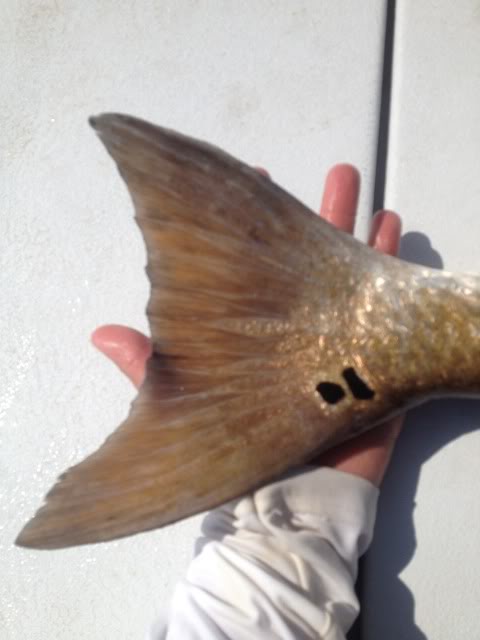
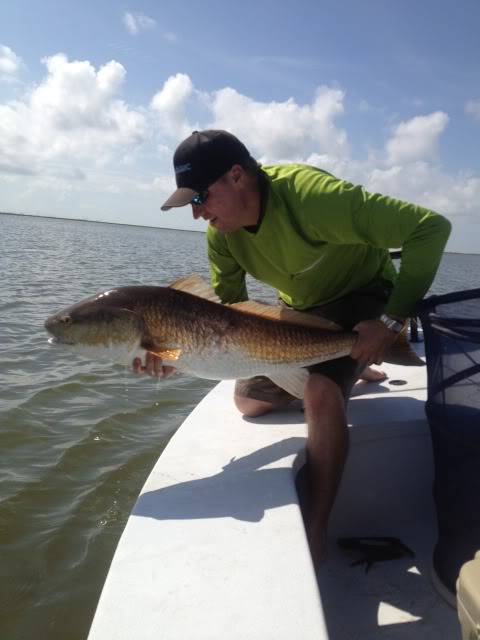
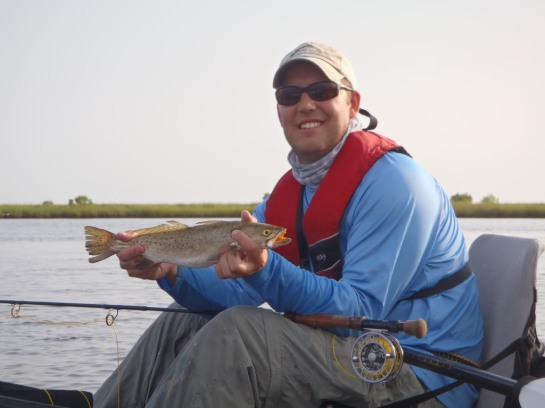
I found out yesterday that this 16″ speck, caught July 4th, just won me a TFO BVK fly rod.
OLYMPUS DIGITAL CAMERA

I entered the fish in the Fly East division of CCA’s STAR tournament, which runs throughout the summer. The fly division rules require you catch one speck on the fly (14″ minimum) and have it weighed at a registered weigh station. No, the fish didn’t win the division, it actually got 3rd (which I found surprising because it only weighed 1.37 lbs). It won me a fly rod because this fish was my ticket into a bonus drawing that is held in both the fly and kayak divisions for all non-winners of the fly and kayak divisions. The winner of the drawing gets a TFO rod, a BVK for the combined fly divisions, and a Saltwater Series baitcaster for the kayak divisions. According to an email I got yesterday afternoon my name was the one that was drawn!

This is a tournament I sign up for every year, but never really fish for because I’m not really a speckled trout fisherman. I sign up because it’s like an insurance policy in case I catch a tagged red. That day, Blake and I just happened upon a school of specks that day in the marsh while we were heading out for redfish.

We almost didn’t even weigh the fish in. I knew it was smaller than the fish that was in the lead, so I would only be weighing it in for a shot at the raffle. Compound that with the fact that there wasn’t a registered weigh station on the way home and it being July 4th meant nobody would be open to weigh it in anyway, we pretty much had made the decision not to weigh it. I made a few phone calls to places slightly out of the way, just to check and sure enough someone answered at Eschete’s in Houma. The guy lived next door and had no problem walking over to the shop to weigh my fish. So a big thanks goes out to him for being receptive. Also a big thanks to Blake because he was driving that day.

You can check out the CCA leaderboard here: http://www.ccastar.com/current-leaderboard

Got a last minute call from a friend looking for a partner to make a run in his new boat that he built, maybe scout some areas out for this upcoming winter. Sought the approval from the wife and got it without too much apprehension. I think she was ready for me to be out of the house after spending some quality time together riding out Isaac.

We headed down to the coast, not really knowing what was going to be open or what to expect fishing-wise. I often hear people praising the fishing just before and just after landfall, suggesting that it is one of the best times of the year to go. We really just hoped to have some good clarity so we’d be able to sight fish for reds.

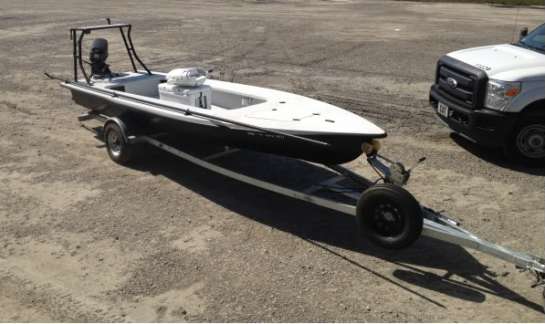
Little’s boat is pretty badass, amazing to think he designed and built it himself, out of his garage. He has a thread of the build on microskiff.com – http://www.microskiff.com/cgi-bin/yabb2/YaBB.pl?num=1345433649

skiff_1

skiff_3

Luck would have it that the ramp at the place we intended to launch was open, though we were one of only a handful of trucks in a parking lot that would normally be packed any other Labor Day. We launched/fished an area that saw a significant surge as the storm rolled through. Folks had been real busy cleaning up their homes/businesses, debris lined the road and utility crews were a common sight. I’m not gonna lie, I felt a bit guilty that we would be going fishing, but I’d imagine the money we spent launching and at the gas station on the way down was welcome.

Fishing was pretty good, all things considered. Clarity in spots was decent, other spots not too good, no where was excellent, but we were still able to see some reds and boat a few as well.

IMG_0163

IMG_0144

IMG_0145

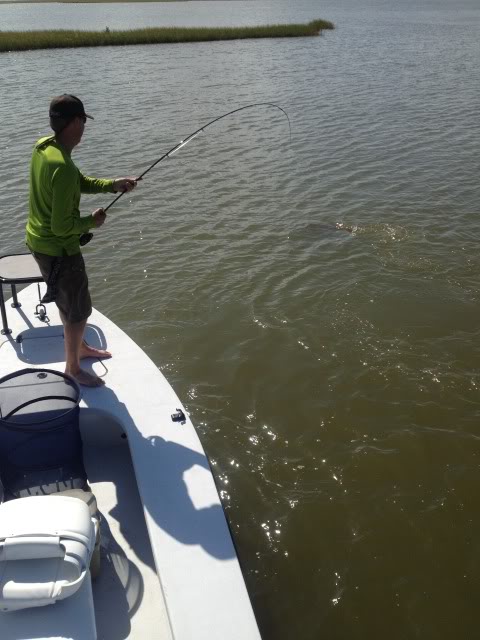
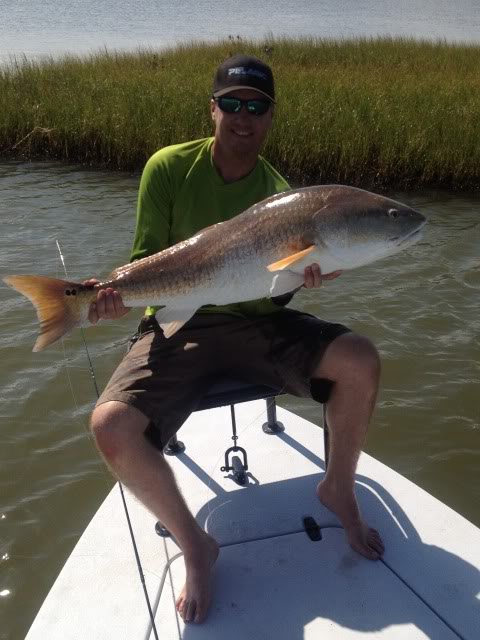
It didn’t take long for Little to connect with a bull. It proved to be his personal best, the biggest on the day, and biggest for the boat thus far at 28lbs. Usually we don’t see bulls in the marsh until late Fall, maybe Isaac helped speed up that migration. Maybe it was luck, he did have a 10 on his tail(my lucky number).

IMG_0151

IMG_0157

IMG_0159

IMG_0162

IMG_0160

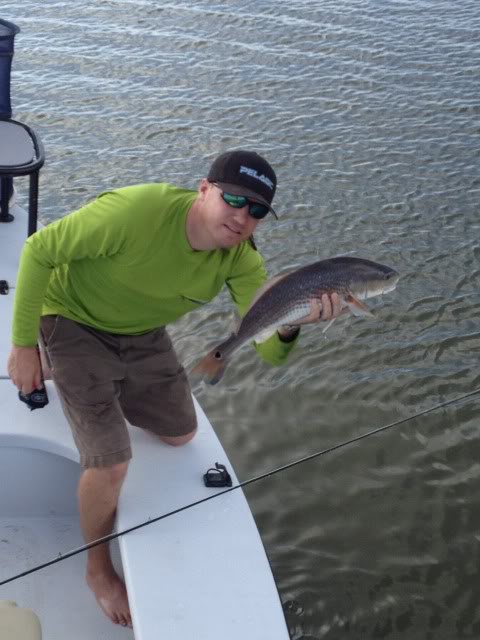
Props to Little for hooking up with the big red. I’d like to think it was my excellent poling skills, but I’m sure the bottom of his new boat would say otherwise. My biggest on the day was probably around 10lbs, not a true bull, but not a slouch either. Something that surprised me today was how much harder redfish fight when they have some deeper/open water to run. Maybe it’s the oxygen, but reds the same size in the marsh usually give up a lot sooner than they were on Monday.

Had a great time fishing with Little, his new boat is awesome, perfect for chasing bulls in Louisiana. Hopefully I’ll get the invite again this winter when we hit prime time.

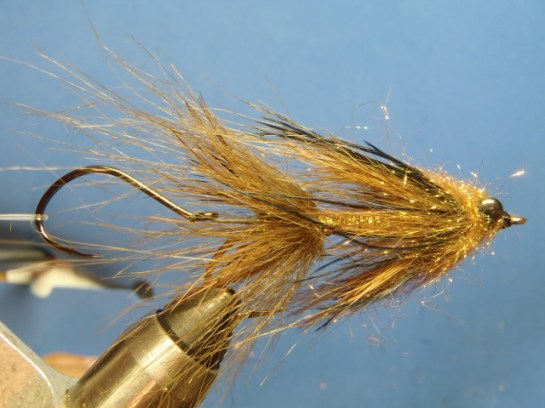
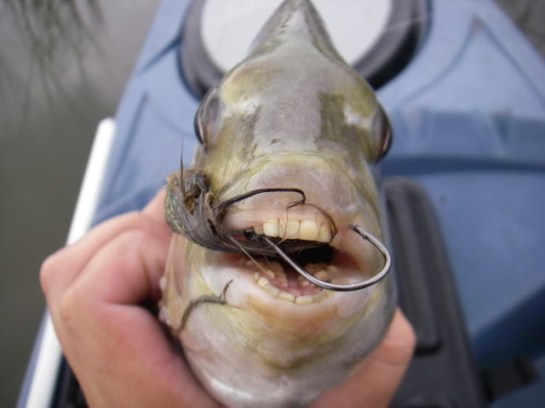
For August’s fly of the month, Blake shows us how to tie up the intruder pattern that I caught a few fish on last time out in the marsh. Supposedly, having an articulating point lessens the leverage that a fish normally has using long shanked hooks, thus the experiment with an intruder fly in the marsh. It caught a few different species too, including the normally tough to hook sheepshead, so it may have it’s place in the inshore fly box.

Materials:

-Hook – size 1 octupus hook tied using 65# braid to a long shank eagle claw hook (make this one a cheap -hook as it will be cut off directly behind the fly)

-Estaz chenille

-Brown feather from a pheasant

-Brown craft fur

-Gold body braid

-Black ostrich herl (or something like it)

-Ice dubbing

-Dumbbell eyes

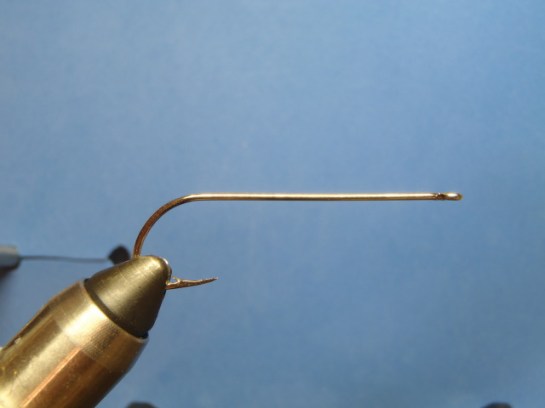
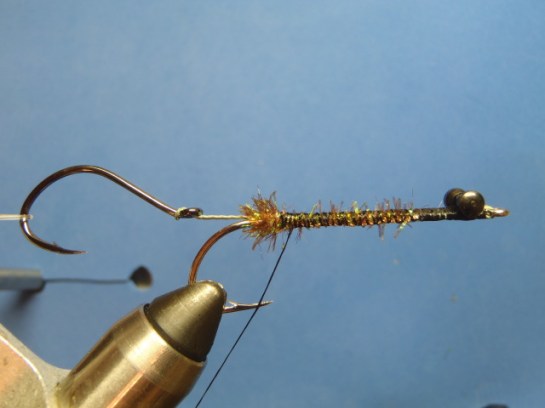
1. Mount front hook in vise. Using your choice of string, tie in the back hook onto the shank of the front hook. Wrap the string down all the way to the eye of the front hook. Insert the string tags through the eye, then wrap them back towards the bend. The fold through the eye just adds a little strength to the connection.

OLYMPUS DIGITAL CAMERA

OLYMPUS DIGITAL CAMERA

2. Tie in dumbbell eyes about one eye length back. Here, I run a line of superglue on the eye tie in and down the shank of the hook to further strengthen the back hook connection.

OLYMPUS DIGITAL CAMERA

3. Tie in the estaz and create a bump at the rear end of the fly. This helps keep the materials from collapsing. I also tie everything down all the way to the dumbbell eyes so that I don’t get a lumpy body.

OLYMPUS DIGITAL CAMERA

4. Tie in a brown feather off a pheasant skin. Any feather can be used here. I like this feather because it is soft enough to move in the water, but stiff enough not to collapse. Tie in by the tip, palmer, and tie off. Don’t cut the excess as we will tie it in along the shank to avoid a bump.

OLYMPUS DIGITAL CAMERA

5. Using your favorite method (split thread, loop, brush …) spin up some craft fur and palmer it right in front, and up against the feather. I used the split thread method used here in these videos. http://www.theweeklyfly.com/TWF/tyer/marcpetitjean/ . I split the thread, insert the craft fur though the split while still attached to the backing, then cut off the backing, then spin as seen in the video.

OLYMPUS DIGITAL CAMERA

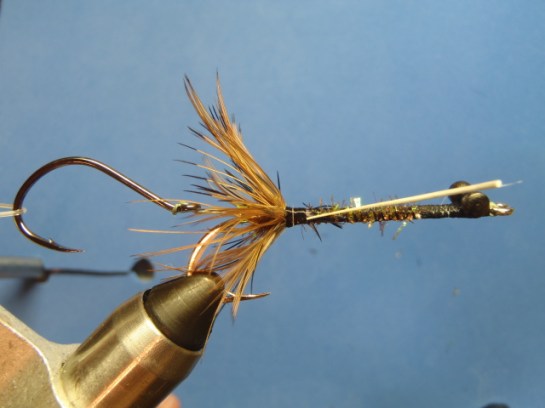
6. Tie in the body braid  and tidy up the hood shank by wrapping down all the extra materials.

OLYMPUS DIGITAL CAMERA

7. Lay down a layer of hard as nails, then wrap the body braid to a spot behind the dumbbells that will give you enough room to finish the head.

OLYMPUS DIGITAL CAMERA

8. Tie in estaz and create a bump. Tie off.

OLYMPUS DIGITAL CAMERA

9. Again, tie in a pheasant feather and palmer.

OLYMPUS DIGITAL CAMERA

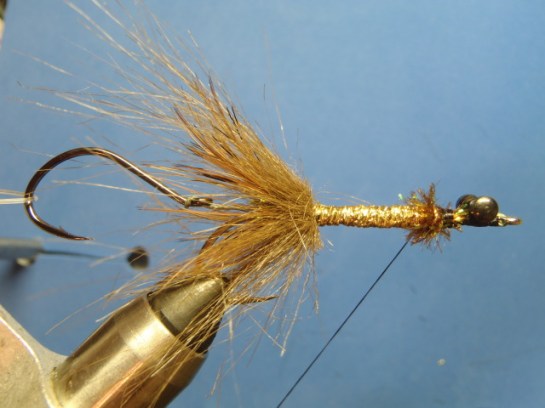
10. Again, spin some craft fur in a loop of some sort and palmer.

OLYMPUS DIGITAL CAMERA

11. Next, spin some herl in a loop. I again use the method seen in the petitjean video. Wrap this right up against the craft fur.

OLYMPUS DIGITAL CAMERA

12. Next, dub the head. I tie a clump of dubbing behind the eyes on the bottom and top of the hook and then dub around the dumbbell eyes using figure 8 wraps. Part off thread.

OLYMPUS DIGITAL CAMERA

13. Cut off the front hook right at the rear of the fly. Finished Fly, so far it has caught reds, drum, and sheepshead.

OLYMPUS DIGITAL CAMERA

OLYMPUS DIGITAL CAMERA

IMGP7540